Perspective - (2025) Volume 11, Issue 6
Received: 01-Nov-2025, Manuscript No. jfim-26-178594;
Editor assigned: 03-Nov-2025, Pre QC No. P-178594;
Reviewed: 17-Nov-2025, QC No. Q-178594;
Revised: 24-Nov-2025, Manuscript No. R-178594;
Published:
29-Nov-2025
, DOI: 10.37421/2572-4134.2025.11.380
Citation: Mwangi, Daniel A.. ”Microbial Lipids: Healthier, Sustainable Food Ingredients.” J Food Ind Microbiol 11 (2025):380.
Copyright: © 2025 Mwangi A. Daniel This is an open-access article distributed under the terms of the Creative Commons Attribution License, which permits unrestricted use, distribution and reproduction in any medium, provided the original author and source are credited.
Microbial lipids, also known as single-cell oils, are increasingly recognized for their potential as valuable ingredients in food applications, owing to their distinct nutritional profiles and functional properties. Research has explored a variety of microbial sources, including yeasts, fungi, and microalgae, alongside their extraction methodologies, highlighting their suitability as alternatives to traditional fats and oils by offering enhanced fatty acid compositions, particularly in omega-3 and omega-6 polyunsaturated fatty acids. These lipids find applications as emulsifiers, texture modifiers, and carriers for bioactive compounds in numerous food products [1].
Further investigations have delved into the biosynthesis pathways and lipid accumulation strategies within oleaginous microalgae, specifically for food applications. This review covers cultivation techniques, genetic engineering approaches, and downstream processing for high-value lipid isolation, emphasizing the potential of microalgal lipids as sustainable sources for essential fatty acids like DHA and EPA, crucial for human health and incorporable into diverse food matrices [2].
The functional properties of microbial lipids are paramount for their successful integration into food systems. Studies have examined the emulsifying capacity, oxidative stability, and textural attributes of lipids derived from selected fungal strains, demonstrating how specific fatty acid profiles and molecular structures influence their performance, offering advantages in texture and shelf-life enhancement for products such as dressings and baked goods [3].
Enzymatic modification of microbial lipids represents a significant avenue for improving their functional characteristics for food applications. Research exploring the use of lipases to alter fatty acid composition and positional distribution within triglycerides has shown promising results in enhancing emulsifying and gelling abilities, indicating the potential for tailoring these lipids to meet specific food processing demands and drive innovation in product development [4].
From a sustainability perspective, the scalability of microbial lipid production is a critical factor for industrial adoption in the food sector. Various fermentation strategies, including submerged and solid-state fermentation, have been reviewed for optimizing lipid yield and productivity in oleaginous yeasts and fungi. These studies also assess the environmental impact and cost-effectiveness of these processes, positioning microbial lipids as a more environmentally friendly alternative to conventional oils [5].
The exploration of microbial lipids as sources of conjugated linoleic acid (CLA) for functional foods is also a growing area of interest. Research has focused on isolating and characterizing CLA-rich lipids from specific bacterial strains and evaluating their incorporation into dairy products, underscoring the health benefits of CLA and the role of microbial sources in providing a sustainable and controllable supply for the food industry [6].
Microbial lipids are increasingly being recognized for their potential as natural emulsifiers in food systems. Investigations into the interfacial properties and emulsifying activity of lipids from selected yeasts have demonstrated their efficacy in stabilizing oil-in-water emulsions, with performance comparisons to conventional emulsifiers suggesting their suitability for creating clean-label food products [7].
The challenges and opportunities associated with the industrial-scale production of microbial lipids for food applications are a subject of ongoing research. Advancements in bioreactor design, process optimization, and purification techniques are being examined to ensure cost-effectiveness and product quality, alongside discussions on regulatory aspects and consumer acceptance of products containing these novel ingredients [8].
Microbial lipids are also being investigated as sources of specialty fats for confectionery and bakery applications. Research into the physicochemical properties of lipids produced by selected yeasts and their potential to substitute for cocoa butter or shortenings has evaluated their melting behavior, solid fat content, and crystallization patterns, confirming their suitability for novel food formulations with desirable textures and mouthfeel [9].
Overall, the current landscape and future prospects of microbial lipids in the food industry are shaped by technological advancements in microbial strain selection, fermentation optimization, and downstream processing. The nutritional benefits, functional properties, and sustainability advantages of microbial lipids position them as key ingredients for developing healthier and more environmentally conscious food products [10].
Microbial lipids, often referred to as single-cell oils, are garnering significant attention as promising ingredients for the food industry due to their beneficial nutritional profiles and versatile functional characteristics. This area of research encompasses the diverse sources of these lipids, including yeasts, fungi, and microalgae, along with the various extraction methods employed. Their potential as viable replacements for conventional fats and oils is a key focus, particularly their ability to enhance the fatty acid composition, especially in the realm of omega-3 and omega-6 polyunsaturated fatty acids. Applications explored include their use as emulsifiers, texture modifiers, and carriers for bioactive compounds within a wide array of food products [1].
Delving deeper into specific sources, oleaginous microalgae are being studied for their biosynthesis pathways and lipid accumulation strategies pertinent to food applications. The review of cultivation techniques, genetic engineering approaches, and downstream processing for isolating valuable lipids from these organisms is crucial. This work highlights the significant potential of microalgal lipids as sustainable alternatives for producing critical fatty acids such as DHA and EPA, which are essential for human health and can be readily incorporated into various food matrices [2].
The functional attributes of microbial lipids are central to their successful integration into food systems. Investigations into the emulsifying capacity, oxidative stability, and textural properties of lipids extracted from selected fungal strains provide critical insights. This research demonstrates how the unique fatty acid profile and molecular structure of microbial lipids directly influence their performance as food ingredients, offering tangible advantages in terms of texture and shelf-life enhancement for products like salad dressings and baked goods [3].
Significant progress is being made in the enzymatic modification of microbial lipids to enhance their functional properties for a broader range of food applications. Studies have explored the utility of lipases in altering the fatty acid composition and positional distribution of triglycerides, leading to improvements in emulsifying and gelling capabilities. This research showcases the feasibility of tailoring microbial lipids to meet precise food processing requirements, thereby fostering innovation in food product development [4].
From an industrial perspective, the sustainability and scalability of microbial lipid production are crucial considerations for their widespread adoption in the food sector. A review of various fermentation strategies, including submerged and solid-state fermentation, focuses on optimizing lipid yield and productivity in oleaginous yeasts and fungi. Concurrently, assessments of the environmental impact and cost-effectiveness of these production processes are vital, reinforcing the positioning of microbial lipids as a greener alternative to traditional oils [5].
The potential of microbial lipids as a source for conjugated linoleic acid (CLA) for use in functional foods is a notable area of investigation. This research involves the isolation and characterization of CLA-rich lipids from specific bacterial strains and their subsequent evaluation for incorporation into dairy products. The study underscores the recognized health benefits associated with CLA and highlights the role of microbial sources in providing a sustainable and controllable supply for the food industry [6].
The application of microbial lipids as natural emulsifiers in food systems is an area of increasing interest and development. This work specifically investigates the interfacial properties and emulsifying activity of lipids derived from selected yeast species. The research demonstrates their effectiveness in stabilizing oil-in-water emulsions and provides a comparative analysis of their performance against conventional food emulsifiers, suggesting their strong potential for the creation of clean-label food products [7].
Addressing the practicalities of industrial implementation, this article examines the challenges and opportunities associated with the large-scale production of microbial lipids for food applications. It scrutinizes advancements in bioreactor design, process optimization, and purification techniques aimed at ensuring both cost-effectiveness and high product quality. Furthermore, the paper delves into regulatory considerations and consumer acceptance of food products that incorporate microbial lipids [8].
Microbial lipids are also being explored as a source of specialty fats for use in confectionery and bakery applications. This particular research focuses on the physicochemical properties of lipids generated by selected yeast strains and assesses their potential to serve as replacements for ingredients like cocoa butter or shortenings. The study evaluates key characteristics such as melting behavior, solid fat content, and crystallization patterns, confirming their suitability for developing novel food formulations with desirable textural properties and mouthfeel [9].
In summary, this paper provides a comprehensive review of the current status and future outlook for microbial lipids within the food industry. It discusses technological advancements in areas such as microbial strain selection, fermentation optimization, and downstream processing. The article emphasizes the nutritional advantages, functional attributes, and sustainability benefits associated with microbial lipids, positioning them as pivotal ingredients for the development of healthier and more sustainable food products [10].
Microbial lipids, also known as single-cell oils, are emerging as valuable ingredients in the food industry, offering nutritional benefits and functional properties. Research highlights their potential as replacements for traditional fats, providing enhanced fatty acid profiles, particularly omega-3 and omega-6. Various sources like yeasts, fungi, and microalgae are being explored, along with efficient extraction and modification methods, including enzymatic treatments. These lipids show promise as emulsifiers, texture modifiers, and carriers for bioactive compounds, with applications in confectionery, bakery, and dairy products. Sustainability, scalability, and cost-effectiveness of production are key considerations for industrial adoption, alongside regulatory and consumer acceptance. Microbial lipids are positioned as key ingredients for developing healthier, more sustainable food products.
None
None
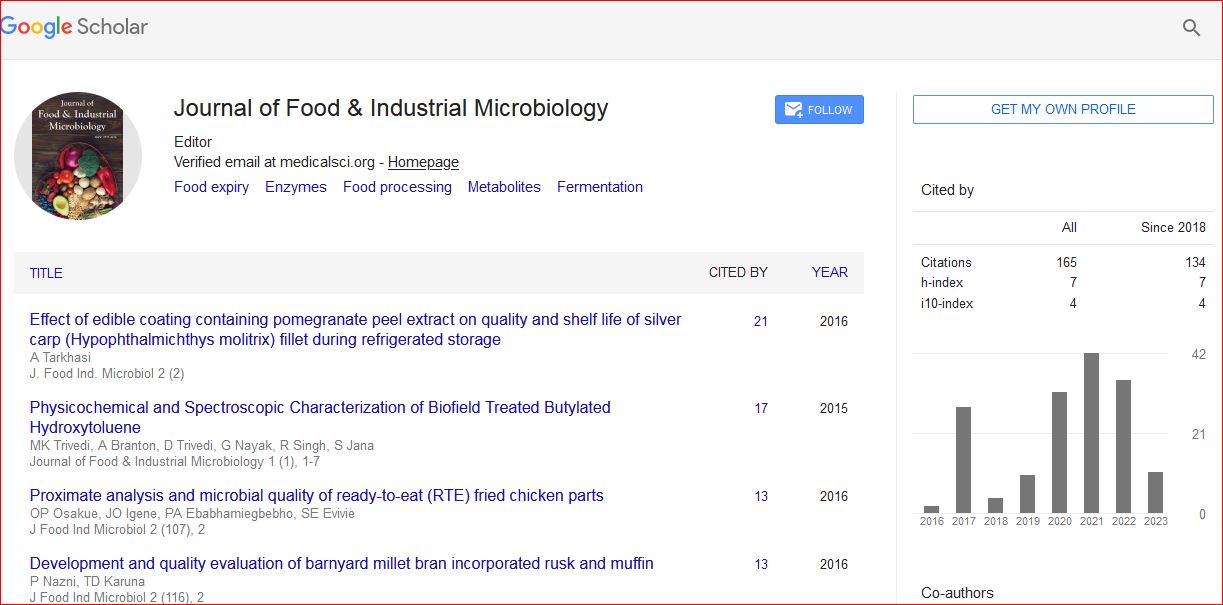
Journal of Food & Industrial Microbiology received 160 citations as per Google Scholar report