Perspective - (2025) Volume 10, Issue 6
Received: 01-Dec-2025, Manuscript No. cgj-26-186553;
Editor assigned: 03-Dec-2025, Pre QC No. P-186553;
Reviewed: 17-Dec-2025, QC No. Q-186553;
Revised: 22-Dec-2025, Manuscript No. R-186553;
Published:
29-Dec-2025
, DOI: 10.37421/2952-8518.2025.10.346
Citation: Al-Saadi, Hassan M.. ”Gastrointestinal Complications Of Infectious Diseases: A Comprehensive Review.” Clin Gastroenterol J 10 (2025):346.
Copyright: © 2025 Al-Saadi M. Hassan This is an open-access article distributed under the terms of the Creative Commons Attribution License, which permits unrestricted use, distribution and reproduction in any medium, provided the original author and source are credited.
Infectious diseases frequently present with a broad spectrum of gastrointestinal (GI) complications, significantly complicating both their diagnosis and subsequent management. These manifestations can range from mild symptoms to severe, life-threatening conditions, necessitating a thorough understanding of the underlying infectious agents and their impact on the GI tract. This review aims to explore the diverse array of GI presentations arising from various infectious etiologies, including bacterial, viral, parasitic, and fungal pathogens, providing a comprehensive overview of their clinical significance [1].
Clostridioides difficile infection (CDI) poses a particular challenge, especially in vulnerable patient populations such as those with inflammatory bowel disease (IBD). Studies indicate that IBD patients exhibit a higher susceptibility to CDI and often experience more severe clinical courses and poorer treatment outcomes compared to individuals without IBD. The intricate clinical overlap between CDI flares and IBD exacerbations underscores the critical need for early suspicion and prompt diagnostic testing to prevent severe complications [2].
Viral infections, notably Cytomegalovirus (CMV) and Epstein-Barr virus (EBV), can also lead to substantial gastrointestinal morbidity. These viruses are capable of inducing a wide range of GI issues, from inflammation of the esophagus and stomach to colitis and malabsorption, particularly in immunocompromised individuals. Effective management relies on timely recognition and appropriate antiviral therapies, alongside accurate diagnostic approaches [3].
Parasitic infections, encompassing both helminths and protozoa, represent another significant cause of gastrointestinal distress worldwide. Infections such as Giardiasis, Cryptosporidiosis, and amebiasis can manifest as chronic diarrhea, malabsorption syndromes, and profound nutrient deficiencies. The global health burden and impact on GI health necessitate comprehensive diagnostic strategies and effective antiparasitic treatments [4].
Severe sepsis and septic shock can profoundly disrupt gastrointestinal function, often leading to a cascade of complications. The concept of the 'gut-liver axis' and the role of bacterial translocation are crucial in understanding how systemic inflammation can increase intestinal permeability, exacerbating organ dysfunction. Mitigating GI-related complications in critically ill patients requires early recognition and supportive care strategies, including nutritional support [5].
Human Immunodeficiency Virus (HIV) infection, particularly in its advanced stage, AIDS, is associated with a high incidence of gastrointestinal complications. These can include opportunistic infections, malabsorption, and HIV enteropathy itself. The advent of highly active antiretroviral therapy (HAART) has significantly altered the landscape of these complications, but effective management of GI symptoms remains vital for improving patient quality of life and nutritional status [6].
Tuberculosis (TB), specifically intestinal TB, presents unique diagnostic and therapeutic challenges within the GI tract. Symptoms can be non-specific, including abdominal pain and weight loss, demanding a high index of suspicion, especially in endemic regions. Advanced imaging techniques and endoscopic evaluations are crucial for accurate diagnosis and timely initiation of standard anti-TB therapy [7].
The intricate relationship between the gut microbiome and infectious diseases is increasingly recognized. Dysbiosis, or an imbalance in the gut microbiota, can heighten susceptibility to infections and modulate the severity of GI manifestations. Emerging therapeutic strategies targeting the microbiome, such as probiotics and fecal microbiota transplantation, hold promise for managing infectious gastroenteritis and related GI disorders [8].
Fungal infections, predominantly by Candida species, can lead to serious gastrointestinal complications, especially in immunocompromised hosts. Esophagitis, gastritis, and disseminated fungal disease can result in significant morbidity. Early diagnosis through endoscopic biopsies and cultures, coupled with prompt antifungal treatment, is paramount for favorable patient outcomes [9].
Infectious diarrhea in adults is a common clinical presentation with diverse etiologies, including bacterial, viral, and parasitic pathogens. Differentiating infectious from non-infectious causes is essential, and diagnostic approaches often involve stool testing and serology. Evidence-based management includes fluid and electrolyte replacement, dietary adjustments, and judicious use of antimicrobial therapy when indicated [10].
Infectious diseases frequently manifest with gastrointestinal (GI) complications that can significantly impact their diagnosis and management. This broad category encompasses a wide range of GI manifestations stemming from diverse infectious etiologies, including bacterial, viral, parasitic, and fungal infections. Common presentations include diarrhea, nausea, vomiting, and abdominal pain, with more severe sequelae such as pseudomembranous colitis, bowel perforation, and toxic megacolon also occurring. Effective treatment and prevention of long-term GI sequelae rely on a thorough clinical history, targeted diagnostic investigations (microbiological cultures, serology, imaging), and appropriate antimicrobial or antiparasitic therapy [1].
Clostridioides difficile infection (CDI) is a notable concern, particularly in patients with inflammatory bowel disease (IBD). IBD patients demonstrate an elevated risk of developing CDI, which often follows a more severe clinical trajectory with poorer treatment outcomes compared to non-IBD individuals. The diagnostic challenge of differentiating CDI flares from IBD exacerbations necessitates a high index of suspicion and prompt stool testing in IBD patients presenting with new or worsening diarrhea to prevent complications [2].
Viral infections, especially Cytomegalovirus (CMV) and Epstein-Barr virus (EBV), are associated with significant GI complications. These viruses can induce a spectrum of GI pathology, from esophagitis and gastritis to colitis and malabsorption, particularly in immunocompromised individuals. Diagnostic approaches involve PCR and biopsy with immunohistochemistry, and timely recognition is critical for initiating effective antiviral therapies and averting severe morbidity [3].
Parasitic infections, caused by helminths and protozoa, contribute substantially to global GI morbidity. Infections such as Giardiasis, Cryptosporidiosis, and amebiasis can result in chronic diarrhea, malabsorption, and significant nutrient deficiencies. Comprehensive diagnostic methods, including stool microscopy, antigen detection, and serology, alongside targeted antiparasitic drug treatments, are essential for managing these widespread infections and their impact on GI health [4].
Severe sepsis and septic shock can lead to profound gastrointestinal dysfunction, often exacerbated by systemic inflammation and bacterial translocation. This process can increase intestinal permeability, contributing to a cycle of organ dysfunction. Management strategies focus on mitigating GI-related complications in critically ill patients through early enteral nutrition and supportive care, acknowledging the complex 'gut-liver axis' interactions [5].
Gastrointestinal complications are a significant concern in Human Immunodeficiency Virus (HIV) infection, especially in the context of acquired immunodeficiency syndrome (AIDS). These include opportunistic infections such as CMV and Cryptosporidium, malabsorption syndromes, and HIV enteropathy. The impact of highly active antiretroviral therapy (HAART) on these complications is substantial, and managing GI symptoms remains critical for improving the quality of life and nutritional status of HIV-positive individuals [6].
Gastrointestinal tuberculosis (TB), particularly intestinal TB, presents substantial diagnostic and therapeutic challenges due to often non-specific symptoms like abdominal pain and weight loss. A high index of suspicion, especially in TB-endemic areas, is crucial. Diagnostic modalities include imaging techniques and endoscopic findings, with early diagnosis and standard anti-TB therapy being key to effective management [7].
The gut microbiome's role in the pathogenesis and complications of infectious diseases is an area of growing interest. Dysbiosis can increase susceptibility to infections and influence the severity of GI manifestations. Therapeutic interventions targeting the microbiome, such as probiotics and fecal microbiota transplantation, are being explored for their potential in managing infectious gastroenteritis and other GI disorders [8].
Fungal infections, primarily caused by Candida species, can lead to serious GI complications in immunocompromised patients, including esophagitis, gastritis, and disseminated disease. Diagnosis typically involves endoscopic biopsy and cultures, with antifungal treatment being essential. Early detection and prompt management are critical for improving patient outcomes in these cases [9].
Infectious diarrhea in adults is a common condition with varied bacterial, viral, and parasitic causes. Effective management requires distinguishing infectious from non-infectious etiologies through diagnostic tools like stool testing and serology. Treatment strategies emphasize fluid and electrolyte replacement, dietary modifications, and appropriate antimicrobial therapy when indicated [10].
This collection of research highlights the significant gastrointestinal (GI) complications associated with various infectious diseases. It covers the impact of bacterial, viral, parasitic, and fungal infections on the GI tract, ranging from common symptoms like diarrhea to severe conditions such as colitis and bowel perforation. Specific focus is given to Clostridioides difficile infection in inflammatory bowel disease patients, and GI issues related to HIV and tuberculosis. The importance of timely diagnosis through microbiological tests, imaging, and endoscopy, alongside appropriate antimicrobial, antiviral, or antiparasitic therapies, is consistently emphasized across different infectious agents. The role of the gut microbiome in susceptibility and severity, and the challenges in managing GI dysfunction in critical illness like sepsis, are also explored. Overall, the reviewed literature underscores the need for a comprehensive approach to identifying and treating GI manifestations of infections to improve patient outcomes and prevent long-term sequelae.
None
None
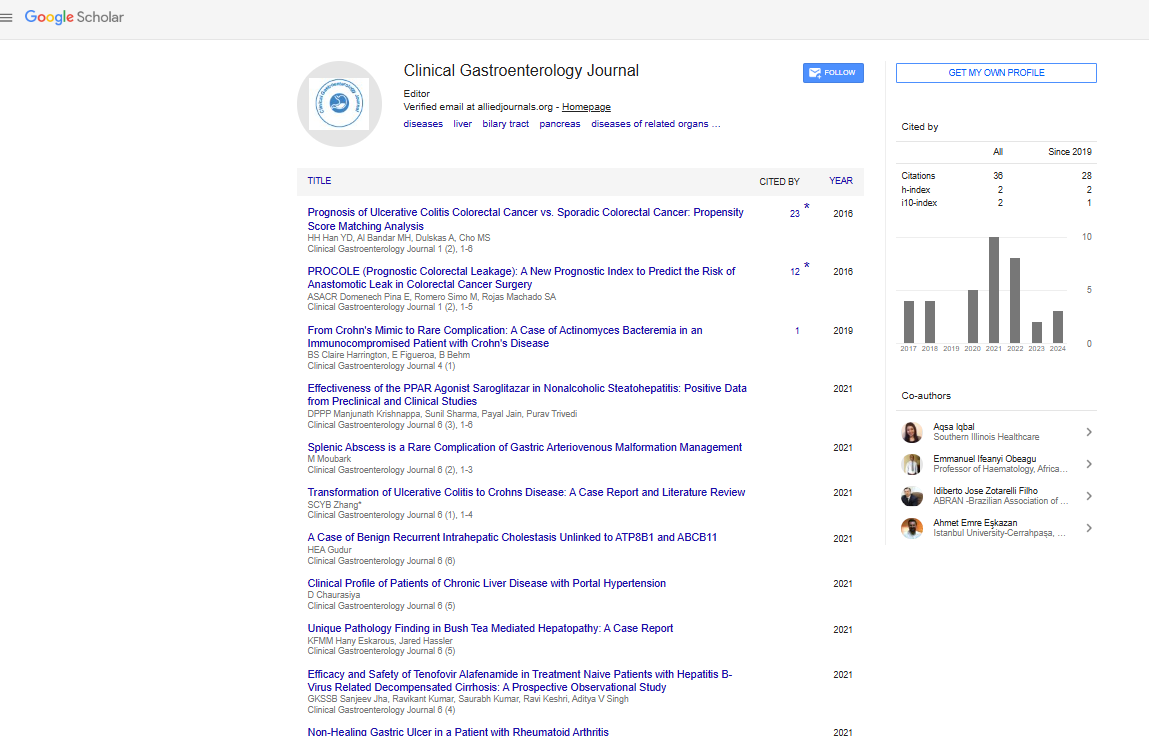
Clinical Gastroenterology Journal received 33 citations as per Google Scholar report