Short Communication - (2025) Volume 11, Issue 4
Received: 01-Jul-2025, Manuscript No. jefc-26-188272;
Editor assigned: 03-Jul-2025, Pre QC No. P-188272;
Reviewed: 17-Jul-2025, QC No. Q-188272;
Revised: 22-Jul-2025, Manuscript No. R-188272;
Published:
29-Jul-2025
, DOI: 10.37421/2472-0542.2025.11.553
Citation: Petrova, Elena. ”Bioactive Plant Compounds: Health enefits and Food Applications.” J Exp Food Chem 11 (2025):553.
Copyright: © 2025 Petrova E. This is an open-access article distributed under the terms of the Creative Commons Attribution License, which permits unrestricted use, distribution and reproduction in any medium, provided the original author and source are credited.
This study delves into the intricate chemical composition of bioactive compounds found in a diverse range of edible plants, emphasizing their identification and quantification, with a particular focus on phytochemicals like flavonoids, phenolic acids, and carotenoids, and their significant contributions to human nutrition and disease prevention. The research meticulously explores the extraction and analytical methodologies employed in understanding these profiles, which are crucial for the development of functional foods and the optimization of dietary recommendations. The significance of these naturally occurring compounds in promoting health and well-being has been a subject of extensive scientific inquiry, with ongoing efforts to elucidate their precise mechanisms of action and bioavailability. The interplay between dietary intake of these phytochemicals and various physiological processes underscores their importance in maintaining a balanced and healthy lifestyle. Understanding the complex matrix of these compounds within different plant matrices is fundamental to unlocking their full therapeutic and nutritional potential, paving the way for evidence-based dietary guidelines and food product development. [1] The investigation further expands into the realm of edible fruits, with a specific emphasis on berries, characterizing the rich array of bioactive compounds such as anthocyanins and other polyphenols. This research links their presence to distinct sensory attributes and well-documented health-promoting properties. Furthermore, it critically discusses advanced analytical techniques for their identification and proposes effective strategies for preserving these valuable compounds during various food processing stages. The role of berries as exceptionally rich sources of health-promoting phytochemicals continues to be a focal point in nutritional science, with ongoing research seeking to maximize their beneficial impact through optimized cultivation and processing. Their vibrant colors are often indicative of high antioxidant content, making them valuable additions to a health-conscious diet. The synergistic effects of various compounds within berries contribute to their broad spectrum of health benefits. [2] Expanding the scope to leafy green vegetables, this research thoroughly explores their bioactive profiles, highlighting the substantial contribution of chlorophylls, carotenoids, and essential vitamins to their overall nutritional value. It presents a comprehensive analysis of these compounds and their potential impact on human health, including notable antioxidant and anti-inflammatory effects. The study critically emphasizes the inherent variability in compound concentration influenced by cultivation and processing methods, thereby providing a foundational understanding for maximizing their health benefits through dietary intake. The importance of leafy greens in a balanced diet is well-established, and ongoing research continues to uncover new facets of their nutritional and medicinal properties. Their rich micronutrient profiles are essential for numerous bodily functions, and their phytochemicals play vital roles in cellular protection and disease mitigation. [3] The article critically investigates the impact of diverse agricultural practices on the accumulation of beneficial phytochemicals in staple crops such as rice and wheat. It details the comprehensive profiling of phenolic compounds, tocopherols, and phytosterols, rigorously assessing their antioxidant potential and their direct contribution to disease prevention. The findings strongly suggest that the adoption of sustainable farming methods can significantly enhance the nutritional quality and bioactive compound content of these globally essential food sources. The continuous pursuit of sustainable agriculture aims to not only improve crop yields but also to enrich the nutritional profile of our food supply, addressing both food security and public health concerns. The application of advanced analytical techniques allows for a deeper understanding of how agricultural inputs and environmental factors influence the biosynthesis of these valuable compounds. [4] This research ventures into the chemical diversity of bioactive compounds present in medicinal plants traditionally incorporated into diets, providing a detailed characterization of various secondary metabolites. This includes a thorough examination of alkaloids, saponins, and essential oils, along with their associated pharmacological activities. The study underscores the considerable potential of these plants as sources of novel therapeutic agents and valuable functional food ingredients, emphasizing the paramount need for rigorous chemical profiling and stringent safety assessments. The historical use of medicinal plants provides a rich foundation for modern scientific investigation, seeking to validate traditional knowledge with empirical evidence and to harness their therapeutic potential in a safe and effective manner. The complexity of plant secondary metabolites offers a vast reservoir for drug discovery and the development of innovative health-promoting products. [5] The research meticulously focuses on identifying and quantifying the volatile organic compounds (VOCs) that are primarily responsible for the distinct aroma profiles of edible flowers. It adeptly employs advanced gas chromatography-mass spectrometry (GC-MS) techniques to elucidate the complex mixtures of esters, aldehydes, and terpenes. The study establishes a direct link between specific VOCs and the unique sensory characteristics of various edible flowers, significantly contributing to their application in culinary arts and the development of novel food flavorings. The sensory experience of food is profoundly influenced by its aroma, and understanding the chemical basis of these aromas allows for greater control and innovation in food product development and culinary applications. The intricate interplay of volatile compounds creates the unique olfactory signatures that define different foods. [6] This work critically examines the impact of various post-harvest treatments on the chemical stability and overall bioactive content of root vegetables. It rigorously investigates the degradation kinetics of key antioxidants, such as vitamin C and phenolic compounds, under a range of storage conditions and processing methods. The study offers valuable insights and practical information for optimizing handling and preservation strategies, aiming to maintain the high nutritional quality and inherent health benefits of these vital food sources. The careful management of root vegetables from harvest to consumption is essential for preserving their valuable nutritional components and ensuring they deliver their full health benefits to consumers. Innovations in post-harvest technology play a crucial role in reducing food waste and maximizing the nutritional value of agricultural produce. [7] The research explores the significant potential of underutilized edible seeds as valuable sources of essential bioactive compounds, including high-quality proteins, beneficial lipids, and potent antioxidants. It provides a detailed chemical profile of selected seeds and rigorously evaluates their functional properties and associated health benefits. The study strongly advocates for the increased incorporation of these seeds into the human diet as a means to enhance overall nutritional intake and diversify dietary sources, addressing micronutrient deficiencies and promoting food security. The exploration of underutilized crops offers a promising avenue for improving global nutrition and promoting biodiversity in agriculture, providing access to a wider range of essential nutrients and beneficial compounds. These seeds often possess unique nutritional compositions that can complement more commonly consumed foods. [8] This study delves into the complex phytochemical profile of edible algae, with a primary focus on the precise identification of valuable polysaccharides, pigments, and bioactive peptides. It meticulously highlights their significant antioxidant, anti-inflammatory, and immunomodulatory properties. The research strongly emphasizes the escalating importance of algae as a highly sustainable and abundant source of essential nutrients and functional ingredients for the global food industry. The marine environment represents a vast and largely untapped resource for novel bioactive compounds with significant health implications, and algae are at the forefront of this exploration due to their rapid growth and rich chemical diversity. Their unique biochemical composition makes them ideal candidates for functional food development and nutraceutical applications. [9] This article critically examines the profound impact of various processing methods, such as fermentation and drying, on the overall bioactive compound profile of fermented edible plants. It provides a detailed account of the changes observed in microbial metabolites, organic acids, and antioxidant compounds, systematically assessing their influence on the final health benefits of the fermented products. The study offers valuable insights into optimizing fermentation processes to achieve enhanced nutritional and functional properties in fermented foods. Fermentation is a time-honored technique that not only preserves food but also transforms its nutritional and bioactive composition, often leading to improved digestibility and the generation of novel health-promoting compounds. Understanding these transformations is key to developing superior fermented food products. [10]
This study delves into the chemical composition of bioactive compounds present in various edible plants, highlighting the identification and quantification of key phytochemicals, such as flavonoids, phenolic acids, and carotenoids, and their potential health benefits. The research emphasizes the importance of these compounds for human nutrition and disease prevention, offering insights into their extraction and analysis methods. Understanding this profile is crucial for developing functional foods and optimizing dietary recommendations. The multifaceted roles of these compounds in cellular protection and disease mitigation continue to be a subject of intensive research, underscoring their significance in a balanced diet. Their presence in plant-based foods contributes to the overall health-promoting attributes of these dietary staples. The synergistic interactions among various phytochemicals within a plant matrix can lead to enhanced biological activities. [1] The investigation focuses on the diverse array of bioactive compounds found in common edible fruits, particularly berries. It details the characterization of anthocyanins and other polyphenols, linking their presence to specific sensory attributes and health-promoting properties. The article discusses advanced analytical techniques used for their identification and proposes strategies for preserving these valuable compounds during food processing. This work underscores the role of berries as rich sources of health-promoting phytochemicals. Their vibrant colors are often associated with high antioxidant capacities, making them desirable for both their aesthetic and health benefits. The consumption of berries has been linked to improved cardiovascular health and cognitive function. [2] This research explores the bioactive profiles of leafy green vegetables, emphasizing the contribution of chlorophylls, carotenoids, and vitamins to their nutritional value. It presents a comprehensive analysis of these compounds and their potential impact on human health, including antioxidant and anti-inflammatory effects. The study highlights the variability in compound concentration based on cultivation and processing methods, providing a foundation for maximizing their health benefits through dietary intake. The essential role of leafy greens in a nutrient-dense diet is well-established, and ongoing research continues to uncover novel aspects of their health-promoting properties. Their rich micronutrient content supports a wide range of physiological functions, contributing to overall well-being. [3] The article investigates the impact of different agricultural practices on the accumulation of beneficial phytochemicals in staple crops like rice and wheat. It details the profiling of phenolic compounds, tocopherols, and phytosterols, assessing their antioxidant potential and contribution to disease prevention. The findings suggest that sustainable farming methods can enhance the nutritional quality and bioactive compound content of these essential food sources. The pursuit of sustainable agriculture aims to bolster crop yields while simultaneously enriching the nutritional value of our global food supply, addressing critical issues of food security and public health. Advanced analytical techniques are instrumental in understanding how agricultural inputs and environmental conditions influence the biosynthesis of these vital compounds. [4] This study explores the chemical diversity of bioactive compounds in medicinal plants used in traditional diets. It provides a detailed characterization of secondary metabolites, including alkaloids, saponins, and essential oils, and their associated pharmacological activities. The research highlights the potential of these plants as sources of novel therapeutic agents and functional food ingredients, emphasizing the need for rigorous chemical profiling and safety assessments. The historical use of medicinal plants provides a valuable foundation for contemporary scientific investigation, seeking to validate traditional knowledge with empirical evidence and to harness their therapeutic potential safely and effectively. The intricate chemical structures of plant secondary metabolites offer a vast reservoir for drug discovery and the development of innovative health-promoting products. [5] The research focuses on identifying and quantifying the volatile organic compounds (VOCs) responsible for the aroma profiles of edible flowers. It employs advanced gas chromatography-mass spectrometry (GC-MS) techniques to elucidate the complex mixture of esters, aldehydes, and terpenes. The study links specific VOCs to the unique sensory characteristics of different edible flowers, contributing to their application in culinary arts and the development of novel food flavorings. The sensory experience associated with food is significantly shaped by its aroma, and a thorough understanding of the chemical basis of these aromas enables greater control and innovation in food product development and culinary applications. The subtle interplay of volatile compounds creates the distinctive olfactory signatures that characterize various food items. [6] This work examines the impact of post-harvest treatments on the chemical stability and bioactive content of root vegetables. It investigates the degradation kinetics of key antioxidants like vitamin C and phenolic compounds under various storage conditions and processing methods. The study provides valuable information for optimizing handling and preservation strategies to maintain the nutritional quality and health benefits of these important food sources. Prudent management of root vegetables from harvest through to consumption is paramount for preserving their inherent nutritional components and ensuring they deliver their full health benefits to consumers. Advancements in post-harvest technology play a critical role in minimizing food waste and maximizing the nutritional value of agricultural produce. [7] The research explores the potential of underutilized edible seeds as sources of valuable bioactive compounds, including proteins, lipids, and antioxidants. It provides a detailed chemical profile of selected seeds and evaluates their functional properties and health benefits. The study advocates for the incorporation of these seeds into the diet to enhance nutritional intake and diversify food sources. The exploration of underutilized crops presents a promising avenue for enhancing global nutrition and fostering agricultural biodiversity, granting access to a wider spectrum of essential nutrients and beneficial compounds. These seeds often possess unique nutritional compositions that can effectively complement more commonly consumed food items. [8] This study investigates the complex phytochemical profile of edible algae, focusing on the identification of polysaccharides, pigments, and bioactive peptides. It highlights their antioxidant, anti-inflammatory, and immunomodulatory properties. The research emphasizes the growing importance of algae as a sustainable source of nutrients and functional ingredients for the food industry. The marine environment represents a vast and largely untapped reservoir of novel bioactive compounds with significant health implications, and algae are at the forefront of this exploration due to their rapid growth and inherent chemical diversity. Their distinct biochemical composition makes them ideal candidates for functional food development and nutraceutical applications. [9] The article examines the impact of processing methods, such as fermentation and drying, on the bioactive compound profile of fermented edible plants. It details the changes in microbial metabolites, organic acids, and antioxidant compounds, assessing their influence on the overall health benefits. The study provides insights into optimizing fermentation processes for enhanced nutritional and functional properties of fermented foods. Fermentation, a long-standing technique, not only preserves food but also transforms its nutritional and bioactive composition, often resulting in improved digestibility and the generation of novel health-promoting compounds. Understanding these transformations is crucial for developing superior fermented food products. [10]
This collection of research highlights the critical role of bioactive compounds in various edible plants, fruits, vegetables, grains, medicinal plants, edible flowers, root vegetables, seeds, and algae. Studies focus on identifying and quantifying phytochemicals such as flavonoids, phenolic acids, carotenoids, anthocyanins, polyphenols, chlorophylls, vitamins, tocopherols, phytosterols, alkaloids, saponins, essential oils, volatile organic compounds, polysaccharides, pigments, and peptides. These compounds are linked to significant health benefits including antioxidant, anti-inflammatory, and immunomodulatory properties, contributing to disease prevention and enhanced nutrition. The research also explores the influence of agricultural practices, post-harvest treatments, and processing methods like fermentation on the concentration and stability of these beneficial compounds. The findings underscore the importance of these natural sources for developing functional foods, optimizing dietary recommendations, and promoting sustainable food systems.
None
None
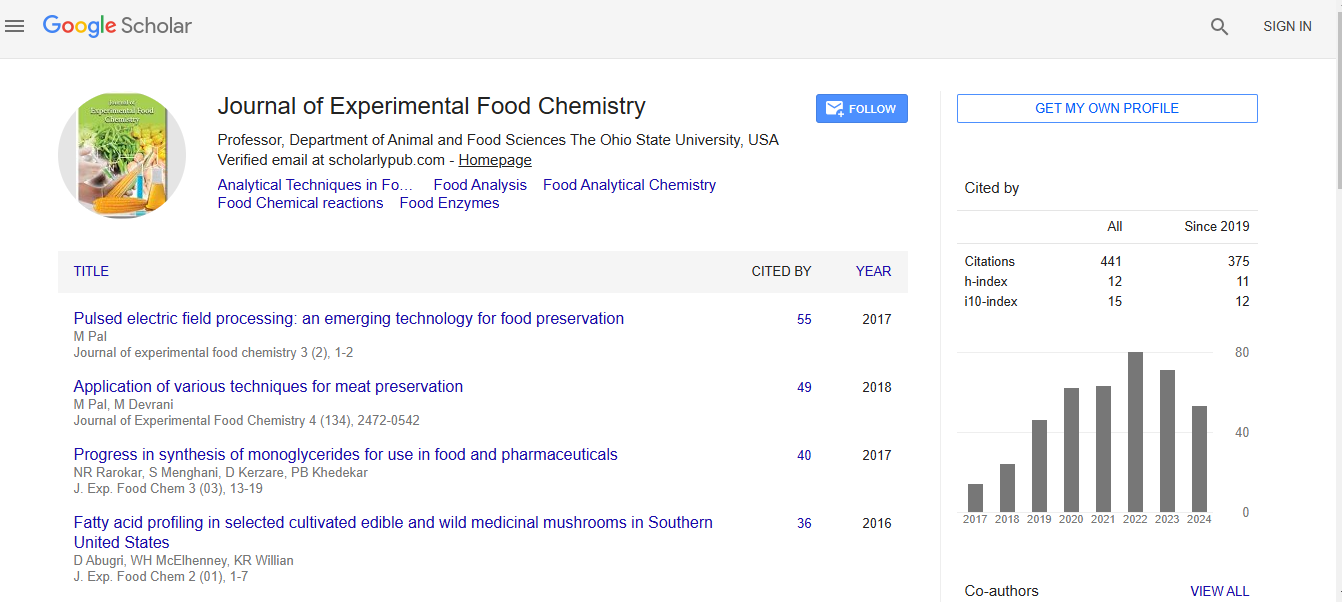
Journal of Experimental Food Chemistry received 389 citations as per Google Scholar report