Perspective - (2025) Volume 11, Issue 4
Received: 01-Jul-2025, Manuscript No. jfim-26-178573;
Editor assigned: 03-Jul-2025, Pre QC No. P-178573;
Reviewed: 17-Jul-2025, QC No. Q-178573;
Revised: 22-Jul-2025, Manuscript No. R-178573;
Published:
29-Jul-2025
, DOI: 10.37421/2572-4134.2025.11.359
Citation: Hassan, Noor A.. ”Seafood Safety: Microbial Hazards, Detection, and Control.” J Food Ind Microbiol 11 (2025):359
Copyright: © 2025 Hassan A. Noor This is an open-access article distributed under the terms of the Creative Commons Attribution License, which permits unrestricted use, distribution and reproduction in any medium, provided the original author and source are credited.
Seafood products, while a vital source of nutrition, are inherently susceptible to a wide array of microbiological hazards that can significantly impact public health. These hazards encompass bacteria, viruses, parasites, and naturally occurring toxins, necessitating stringent control measures throughout the entire supply chain. The safe handling, processing, and storage of seafood are paramount to mitigating these risks and ensuring consumer well-being. This review underscores the critical importance of establishing robust microbial control strategies, from the initial harvest of seafood to its final consumption, with a particular emphasis on the indispensable roles of accurate detection methods and comprehensive risk assessment protocols [1].
Among the bacterial concerns, the presence of Vibrio species, notably Vibrio parahaemolyticus and Vibrio vulnificus, in seafood presents a substantial public health challenge. These pathogens are notorious for their ability to induce severe gastrointestinal illnesses and potentially life-threatening wound infections upon exposure. Research dedicated to understanding the prevalence and genetic diversity of Vibrio in shellfish, especially in warmer coastal environments, highlights the urgent need for enhanced monitoring programs and more effective control strategies to safeguard public health [2].
Viral contamination of seafood is another significant public health threat, with norovirus identified as a primary causative agent of foodborne illness on a global scale. Contaminated shellfish, particularly oysters, frequently serve as common vehicles for norovirus transmission. The application of advanced molecular techniques, such as real-time PCR, has demonstrated remarkable effectiveness in the rapid and sensitive detection and quantification of norovirus in bivalve mollusks, proving crucial for robust public health surveillance efforts [3].
In the realm of ready-to-eat seafood products, Listeria monocytogenes represents a severe and persistent risk. Effective control and prevention strategies are essential to combat its contamination. This paper delves into the efficacy of hurdle technologies, including modified atmosphere packaging and mild heat treatments, which are instrumental in enhancing the safety of smoked fish products by creating multiple barriers against Listeria proliferation [4].
Parasitic infections transmitted through seafood consumption continue to be a global health concern of considerable magnitude. A comprehensive review of recent findings elucidates the prevalence of Anisakis and other significant parasites in commercially important fish species. This synthesis also discusses current methodologies for their detection and inactivation, stressing the vital importance of heightened consumer awareness and the consistent application of proper cooking practices to eliminate these parasitic threats [5].
Marine toxins, such as the potent ciguatoxins and various shellfish poisoning toxins, pose a serious and often insidious threat to consumers of seafood. The development of rapid and highly sensitive biosensors for the detection of these toxins in seafood products is an active area of research. The ultimate goal is to improve early warning systems and thereby prevent outbreaks of marine biotoxin-related illnesses, thereby protecting public health more effectively [6].
The exploration of bacteriophages as natural biocontrol agents against pathogenic bacteria in seafood is an increasingly promising avenue. This study specifically evaluates the efficacy of certain bacteriophages in reducing Salmonella levels in raw shrimp. The findings demonstrate the substantial potential of bacteriophages as a safe and naturally derived alternative to conventional chemical treatments for microbial control in seafood [7].
Antibiotic resistance among bacteria that can be transmitted through seafood is a growing and alarming public health concern. This research systematically analyzes the prevalence of antibiotic-resistant bacteria, including critical pathogens like E. coli and Staphylococcus aureus, found in various fish and shellfish products. The findings underscore the pressing need for responsible antibiotic stewardship in aquaculture practices and the implementation of enhanced surveillance systems [8].
The integrity of the cold chain is absolutely paramount for preserving the microbiological quality and safety of seafood products. This study critically evaluates the detrimental impact that temperature fluctuations during the distribution of frozen fish can have on the growth and survival of both spoilage microorganisms and potential pathogens. The research strongly emphasizes the absolute necessity of strict adherence to rigorous cold chain management practices throughout the entire distribution network [9].
Pathogenic viruses, such as the Hepatitis A virus (HAV), can contaminate seafood, primarily through exposure to contaminated water sources. This paper provides a thorough review of the current understanding of HAV contamination in shellfish. It details various analytical methods used for its detection and outlines effective strategies for risk mitigation, encompassing regulatory approaches and the enhancement of sanitation practices throughout the seafood industry [10].
Seafood products are a significant source of foodborne hazards, including a diverse range of microbiological agents such as bacteria, viruses, parasites, and toxins, all of which pose substantial risks to public health. Consequently, the rigorous implementation of proper handling, processing, and storage protocols is indispensable for effectively mitigating these inherent risks. This review article underscores the profound importance of adopting and maintaining robust microbial control strategies across every stage of the seafood supply chain, from the initial harvest to the point of consumption, with a dedicated focus on the critical roles played by advanced detection methodologies and comprehensive risk assessment frameworks [1].
The presence and proliferation of Vibrio species, particularly Vibrio parahaemolyticus and Vibrio vulnificus, within seafood ecosystems represent a considerable public health concern. These microorganisms are well-documented causes of severe gastrointestinal illnesses and invasive wound infections. The research presented herein delves into the prevalence and genetic variability of Vibrio in commercially important shellfish, thereby highlighting the urgent requirement for intensified monitoring efforts and strengthened control measures, especially in susceptible warm coastal water environments [2].
Norovirus stands out as a leading global pathogen responsible for foodborne illnesses, with contaminated shellfish, especially oysters, frequently implicated as common vehicles for its transmission. The study employs sophisticated molecular techniques for the precise detection and quantification of norovirus in bivalve mollusks. It effectively demonstrates the superior efficacy of real-time PCR as a tool for rapid and highly sensitive detection, which is an absolutely crucial capability for effective public health surveillance [3].
Listeria monocytogenes poses a serious and often life-threatening risk, particularly in ready-to-eat seafood products. This paper critically examines various control and prevention strategies aimed at mitigating Listeria contamination in smoked fish. A key focus is placed on assessing the effectiveness of hurdle technologies, such as modified atmosphere packaging and carefully controlled mild heat treatments, in significantly enhancing product safety [4].
Parasitic infections acquired through the consumption of seafood continue to represent a significant global health issue. This review offers a synthesized overview of the most recent findings concerning the prevalence of Anisakis and other relevant parasites in fish species that are of substantial commercial importance. It further discusses contemporary methods for their detection and inactivation, emphasizing the critical importance of robust consumer education and adherence to proper cooking techniques [5].
Marine toxins, including but not limited to ciguatoxins and various types of shellfish poisoning toxins, present a serious threat to public health through seafood consumption. This research is dedicated to the advancement of biosensors that offer rapid and sensitive detection capabilities for these toxins in seafood products. The overarching objective is to bolster early warning systems and effectively prevent outbreaks of marine biotoxin-related illnesses [6].
The utilization of bacteriophages as a viable biocontrol agent against pathogenic bacteria present in seafood is experiencing a notable increase in research interest and application. This specific study provides a rigorous evaluation of the efficacy of selected bacteriophages in successfully reducing Salmonella levels in raw shrimp. The results clearly indicate their potential as a natural and safe alternative to traditional chemical treatments for microbial control in seafood [7].
Antibiotic resistance exhibited by seafoodborne pathogens is a rapidly escalating concern for global public health. This research undertakes a comprehensive analysis of the prevalence of antibiotic-resistant bacteria, including common culprits like E. coli and Staphylococcus aureus, within various fish and shellfish products. The findings strongly underscore the imperative for judicious and responsible antibiotic use within aquaculture settings and the necessity for enhanced surveillance programs [8].
Maintaining the integrity of the cold chain is of utmost importance for ensuring the microbiological quality and safety of seafood. This study meticulously evaluates the adverse impact that temperature fluctuations can exert on the growth and survival of spoilage microorganisms and potential pathogens during the distribution of frozen fish. The findings strongly advocate for unwavering adherence to strict cold chain management practices throughout the entire logistical process [9].
Pathogenic viruses, such as Hepatitis A virus (HAV), can contaminate seafood products, often originating from polluted water sources. This paper presents a comprehensive review of the current body of knowledge regarding HAV contamination in shellfish. It details the analytical methods employed for its detection and discusses effective strategies for risk mitigation, including the implementation of appropriate regulatory frameworks and improvements in sanitation practices [10].
Seafood safety is a critical concern due to microbiological hazards like bacteria, viruses, parasites, and toxins. Maintaining robust microbial control strategies from harvest to consumption is essential, supported by effective detection methods and risk assessment. Vibrio species are a notable bacterial threat in shellfish, necessitating enhanced monitoring. Norovirus contamination in shellfish is a leading cause of foodborne illness, with real-time PCR proving effective for detection. Listeria monocytogenes poses a risk in ready-to-eat products, managed through hurdle technologies. Parasitic infections, such as Anisakis, remain a global issue, requiring consumer awareness and proper cooking. Marine toxins require rapid detection via biosensors. Bacteriophages show promise as natural biocontrol agents against pathogens like Salmonella. Antibiotic resistance in seafoodborne bacteria is a growing concern, highlighting the need for responsible antibiotic use. Cold chain integrity is vital to prevent microbial growth during seafood distribution. Hepatitis A virus contamination in shellfish is managed through improved detection and sanitation practices.
None
None
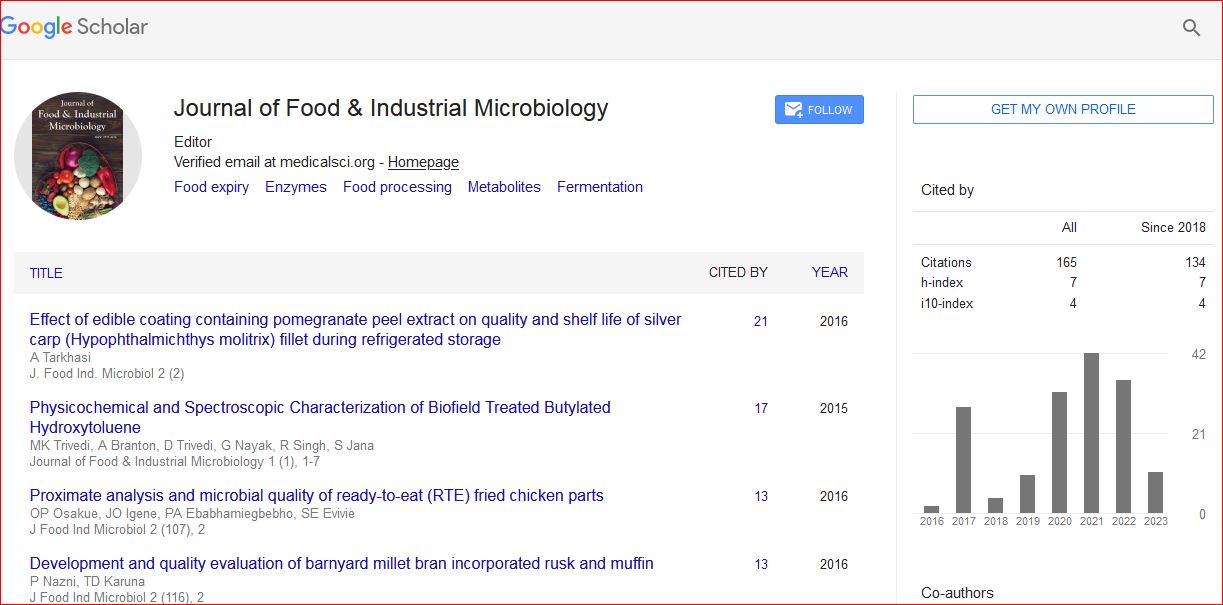
Journal of Food & Industrial Microbiology received 160 citations as per Google Scholar report