Perspective - (2025) Volume 11, Issue 3
Received: 01-May-2025, Manuscript No. jefc-26-188215;
Editor assigned: 05-May-2025, Pre QC No. P-188215;
Reviewed: 19-May-2025, QC No. Q-188215;
Revised: 22-May-2025, Manuscript No. R-188215;
Published:
29-May-2025
, DOI: 10.37421/2472-0542.2025.11.541
Citation: Martinez, Sofia. ”Protein Transformations: Impacting Food Structure, Function, and Quality.” J Exp Food Chem 11 (2025):541.
Copyright: © 2025 Martinez S. This is an open-access article distributed under the terms of the Creative Commons Attribution License, which permits unrestricted use, distribution and reproduction in any medium, provided the original author and source are credited.
Proteins are fundamental macromolecules that play a critical role in the structure and function of food systems. Their intricate chemical transformations during processing and preservation significantly influence food quality, safety, and nutritional value. Heat treatments, such as pasteurization and sterilization, are widely employed to ensure microbial safety and extend shelf life, but they also induce significant protein modifications. These modifications can range from denaturation, where the protein loses its native three-dimensional structure, to more complex reactions like cross-linking, which can alter texture and digestibility. The Maillard reaction, a non-enzymatic browning reaction between amino acids and reducing sugars, is another crucial transformation that occurs during heating, contributing to flavor development but also potentially leading to nutrient loss. Enzymatic modifications, driven by specific enzymes, are also integral to many food processing techniques, such as cheese making and bread production, where they are used to achieve desired textural and sensory attributes. The stability of proteins is further influenced by environmental factors like pH and water activity. Adjusting these parameters can inhibit microbial growth and maintain protein integrity, thereby extending the shelf life of food products. Understanding these multifaceted protein alterations is paramount for food scientists and technologists seeking to optimize food processing strategies and develop innovative food products with enhanced functional and sensory properties. This comprehensive review delves into the complex chemical transformations proteins undergo during food processing and preservation, highlighting key insights into how various treatments impact protein structure and function [1].
High-pressure processing (HPP) has emerged as a promising non-thermal processing technology for modifying the structural and functional properties of proteins. This method involves subjecting food products to intense hydrostatic pressure, which can induce protein unfolding and aggregation. These structural changes can significantly affect the functional attributes of proteins, such as their emulsifying and foaming capacities. Furthermore, HPP has shown potential in altering protein susceptibility to enzymatic hydrolysis and even reducing allergenicity, making it an attractive alternative for dairy product development where protein modification is often desired. The application of HPP offers a method to achieve microbial inactivation and extend shelf life without the detrimental effects associated with thermal processing on certain food components. Research in this area is continuously exploring the nuanced effects of HPP on various protein types and their implications for food product innovation and consumer health. The impact of high-pressure processing (HPP) on the structural and functional properties of milk proteins is explored in detail, providing valuable insights into its potential applications [2].
Enzymatic cross-linking, particularly using transglutaminase (TGase), presents a powerful strategy for enhancing the functional properties of plant-based proteins. As the demand for plant-based alternatives to animal products grows, improving the texture and water-holding capacity of plant proteins becomes critical. TGase catalyzes the formation of covalent cross-links between protein molecules, leading to the formation of a more robust and stable protein network. This enzymatic modification has been shown to significantly improve the gelation properties of proteins derived from sources like soy and peas. The resulting gels exhibit enhanced firmness and water-holding capacity, which are desirable attributes for developing meat alternatives with appealing sensory characteristics. The use of TGase represents a targeted approach to protein modification that can overcome some of the limitations of plant-based proteins in food applications. This research investigates the role of enzymatic cross-linking using transglutaminase (TGase) in improving the gelation properties of plant-based proteins, specifically soy and pea proteins [3].
Thermal processing is a cornerstone of food preservation, but the way it affects protein structure and functionality can vary considerably depending on the method employed. Studies examining hen egg white proteins under different thermal treatments, such as roasting, boiling, and microwave heating, reveal significant structural changes, including denaturation and aggregation. The extent of these alterations is often dependent on the specific processing conditions, such as temperature, time, and power intensity. Interestingly, certain thermal processing conditions have been observed to enhance the release of bioactive peptides with improved antioxidant activity. This finding opens up avenues for developing functional foods that not only offer preservation benefits but also provide health-promoting properties through the generation of these valuable peptides. The influence of different thermal processing methods on the structural changes and antioxidant activity of hen egg white proteins is examined, revealing important implications for food development [4].
Osmotic dehydration is a well-established pre-treatment method used to reduce water content in food materials, often employed before freezing or drying. Its application to protein-rich foods, such as cod surimi, can significantly impact their structural integrity and functional properties. Osmotic dehydration, particularly when combined with cryoprotectants, has been shown to minimize protein denaturation and prevent protein aggregation during subsequent frozen storage. This preservation technique is crucial for maintaining the gel-forming ability of surimi, ensuring the quality of surimi-based products. By controlling water migration and stabilizing protein structures, osmotic dehydration plays a vital role in preserving the desired texture and functionality of seafood products. This study explores the effect of osmotic dehydration on the structural and functional properties of cod surimi, highlighting its benefits in protein preservation [5].
During bread making, wheat gluten proteins undergo significant chemical modifications that are essential for dough viscoelasticity and the final bread texture. The development of a stable gluten network relies heavily on the formation of disulfide bonds, which are covalent linkages between cysteine residues in gluten proteins. Oxidation plays a key role in facilitating this disulfide bond formation. The intricate interplay between ingredients, such as flour composition and added components, and processing parameters, including mixing time and temperature, profoundly influences these gluten network developments. Understanding these chemical changes is crucial for bakers and food scientists to control dough properties and achieve desirable bread characteristics. This article details the chemical changes occurring in wheat gluten proteins during bread making, focusing on oxidation and disulfide bond formation [6].
Gamma irradiation is a physical method of food preservation that can induce substantial changes in protein structure and functionality. Research on bovine serum albumin (BSA) subjected to gamma irradiation reveals that this process can lead to protein fragmentation and aggregation. These alterations in protein structure can subsequently affect its functional properties, such as emulsifying and gelling capabilities. Furthermore, irradiation can induce oxidation and modify the secondary and tertiary structures of proteins. Quantifying these changes provides valuable insights into the mechanisms by which irradiation impacts protein integrity and functionality, informing its application as a preservation technique and its potential effects on food matrices. This paper examines the consequences of gamma irradiation on the structural and functional properties of bovine serum albumin (BSA) [7].
The effect of salt concentration on the thermal denaturation of myofibrillar proteins, particularly those found in fish, is a critical consideration in the processing of seafood. Studies have indicated that salt concentration plays a complex role in protein stability. Generally, increasing salt concentration can stabilize proteins against thermal denaturation up to a certain point. However, beyond this optimal concentration, salt can begin to promote protein aggregation. This nuanced relationship has direct implications for processing techniques such as surimi production and the thermal processing of fish products, where controlling protein behavior is essential for achieving desired textures and maximizing yield. Understanding these effects is vital for optimizing seafood processing. The study investigates the influence of different salt concentrations on the thermal denaturation of myofibrillar proteins from fish [8].
Acid hydrolysis offers a method to modify proteins, leading to structural changes and the generation of bioactive peptides. When applied to whey proteins, controlled acid treatment can cause protein unfolding, making them more susceptible to enzymatic digestion. This process facilitates the release of peptides that possess potential health benefits, including antioxidant and antihypertensive properties. The ability to generate these functional peptides through a controlled chemical process is of significant interest for the food industry, particularly for the development of functional ingredients and nutraceuticals. The structural modifications induced by acid hydrolysis are key to unlocking the potential of these bioactive components. This article examines the consequences of acid hydrolysis on whey proteins, focusing on structural changes and the generation of bioactive peptides [9].
Pulsed electric fields (PEF) represent a non-thermal processing technology with considerable potential for altering the structural integrity and functionality of proteins. Investigations into the effects of PEF on egg white proteins demonstrate that this treatment can induce protein unfolding and enhance solubility. These changes can lead to improved functional properties, such as enhanced whipping and emulsifying capabilities. The application of PEF offers a means to modify the performance of egg proteins in various food applications without the use of high temperatures. This technology is being explored for its ability to improve the functional characteristics of food ingredients and contribute to the development of innovative food products. This study explores the effect of pulsed electric fields (PEF) on the structural integrity and functionality of egg white proteins [10].
The intricate field of food processing and preservation is deeply intertwined with the complex chemical transformations that proteins undergo. These modifications are pivotal in dictating the final characteristics of food products, encompassing aspects of texture, digestibility, allergenicity, flavor, and shelf life. Heat treatments, such as pasteurization and sterilization, are primary methods for microbial inactivation, but they concurrently induce protein denaturation and cross-linking, fundamentally altering protein structures. Concurrently, the Maillard reaction contributes significantly to flavor development, though it can also lead to a reduction in the nutritional value of proteins. Enzymatic modifications, critical in processes like cheese and bread making, harness specific enzymes to achieve desired textural outcomes. Moreover, environmental factors like pH and water activity play crucial roles in modulating protein stability and inhibiting microbial proliferation, thereby extending product longevity. These diverse interventions collectively underscore the profound impact of processing on protein functionality and food quality. This article provides a comprehensive review of protein modifications during food processing and preservation, highlighting key insights [1].
High-pressure processing (HPP) stands out as a non-thermal technology capable of inducing significant structural and functional alterations in milk proteins. This method can lead to protein unfolding and aggregation, which in turn affects critical functional properties like emulsifying and foaming capacities. Notably, HPP has the potential to modify how proteins interact with enzymes and can also contribute to a reduction in allergenicity. These attributes make HPP an attractive option for the dairy industry, offering a means to innovate in product development while potentially enhancing consumer health benefits. The exploration of HPP's effects on milk proteins is essential for unlocking its full potential in creating novel dairy products. The impact of high-pressure processing (HPP) on the structure, function, and allergenicity of milk proteins is explored, offering insights into its technological applications [2].
Enzymatic cross-linking, particularly through the action of microbial transglutaminase (TGase), offers a highly effective method for enhancing the gelation properties of plant-based proteins. In the context of developing plant-based meat alternatives, improving the textural attributes and water-holding capacity of proteins from sources like soy and peas is paramount. TGase facilitates the formation of a stable, three-dimensional protein network through covalent cross-linking, resulting in firmer gels and improved overall texture. This enzymatic approach provides a valuable tool for overcoming some of the textural limitations often associated with plant proteins, paving the way for the creation of more appealing and functional plant-based food products. This research investigates the role of enzymatic cross-linking using transglutaminase (TGase) in improving the gelation properties of plant-based proteins, specifically soy and pea proteins [3].
Thermal processing methods exert varied influences on the structural configurations and intrinsic antioxidant activities of hen egg white proteins. Investigations into roasting, boiling, and microwave treatments reveal that each method induces distinct patterns of protein denaturation and aggregation. The extent of these structural changes is highly dependent on the specific processing parameters employed. An important finding is that certain thermal conditions can foster the release of bioactive peptides endowed with enhanced antioxidant potential. This observation suggests a dual benefit of thermal processing: preservation and the generation of functional ingredients for nutraceutical applications. The influence of different thermal processing methods on the structural changes and antioxidant activity of hen egg white proteins is examined, highlighting processing-dependent outcomes [4].
Osmotic dehydration, often employed as a pre-treatment step, plays a significant role in preserving the structural and functional integrity of cod surimi. This process, particularly when cryoprotectants are incorporated, effectively mitigates protein denaturation and hinders protein aggregation during frozen storage. By controlling water loss and stabilizing protein structures, osmotic dehydration is instrumental in maintaining the critical gel-forming ability of surimi. This preservation strategy is crucial for ensuring the quality and desirable textural properties of surimi-based products throughout their shelf life, especially those intended for frozen consumption. This study explores the effect of osmotic dehydration on the structural and functional properties of cod surimi, demonstrating its efficacy in protein preservation [5].
Chemical modifications, specifically oxidation and the subsequent formation of disulfide bonds, are integral to the transformation of wheat gluten proteins during baking. These reactions are fundamental to the development of dough viscoelasticity and the characteristic texture of bread. The structural evolution of the gluten network is intrinsically linked to the properties of the raw ingredients and the precise control of processing parameters. Understanding these chemical dynamics allows for greater control over dough behavior and the optimization of final bread quality, influencing everything from crumb structure to loaf volume. This article details the chemical changes occurring in wheat gluten proteins during bread making, focusing on oxidation and disulfide bond formation [6].
Gamma irradiation, as a method for food preservation, induces notable structural and functional changes in proteins such as bovine serum albumin (BSA). This physical treatment can result in protein fragmentation and aggregation, leading to alterations in key functional attributes like emulsifying and gelling properties. The process is accompanied by quantifiable changes in oxidation levels and modifications to both secondary and tertiary protein structures. These insights are crucial for understanding the impact of irradiation on protein matrices and for optimizing its application as a preservation technique while ensuring the desired functional characteristics of the treated food products are maintained. This paper examines the consequences of gamma irradiation on the structural and functional properties of bovine serum albumin (BSA) [7].
The concentration of salt significantly impacts the thermal denaturation behavior of myofibrillar proteins found in fish. Research indicates a complex relationship: increasing salt concentrations generally enhance protein stability against thermal denaturation up to a certain threshold. However, exceeding this optimal concentration can paradoxically promote protein aggregation. This understanding is critical for optimizing processing techniques such as surimi production and the thermal processing of various fish products, as it directly influences final texture and yield. Careful management of salt concentration is therefore essential for achieving desired product outcomes in seafood processing. The study investigates the influence of different salt concentrations on the thermal denaturation of myofibrillar proteins from fish [8].
Acid hydrolysis of whey proteins leads to discernible structural changes and the generation of bioactive peptides with potential health benefits. Controlled exposure to acidic conditions promotes the unfolding of whey proteins, thereby increasing their susceptibility to enzymatic digestion. This breakdown yields peptides possessing valuable properties, such as antioxidant and antihypertensive activities, which are highly sought after for functional food development. The controlled modification of whey proteins via acid hydrolysis offers a pathway to produce specialized ingredients with enhanced nutritional and physiological attributes for the food and health industries. This article examines the consequences of acid hydrolysis on whey proteins, focusing on structural changes and bioactive peptide generation [9].
Pulsed electric fields (PEF) represent a non-thermal processing technology that can effectively alter the structural integrity and functional properties of egg white proteins. This method induces protein unfolding and leads to increased solubility, which can positively influence desirable functional characteristics like whipping and emulsifying abilities. PEF offers a promising avenue for enhancing the functional performance of egg proteins in a variety of food applications without the degradation associated with conventional thermal treatments. Its application is being explored as a means to create value-added ingredients and improve the overall quality of food products utilizing egg proteins. This study explores the effect of pulsed electric fields (PEF) on the structural integrity and functionality of egg white proteins [10].
Proteins undergo significant chemical changes during food processing and preservation, impacting their structure and functionality. Thermal treatments like pasteurization and sterilization cause denaturation and cross-linking, while Maillard reactions influence flavor and nutrient content. Enzymatic modifications are crucial for texture development in products like cheese and bread. Non-thermal methods such as high-pressure processing (HPP) and pulsed electric fields (PEF) can alter protein structure and function, potentially reducing allergenicity and improving emulsifying properties. Acid hydrolysis and osmotic dehydration are used to generate bioactive peptides and preserve protein integrity, respectively. Salt concentration affects protein stability during thermal processing, and controlled chemical modifications like gluten cross-linking are vital for dough properties. Understanding these transformations is key to optimizing food quality, safety, and nutritional value.
None
None
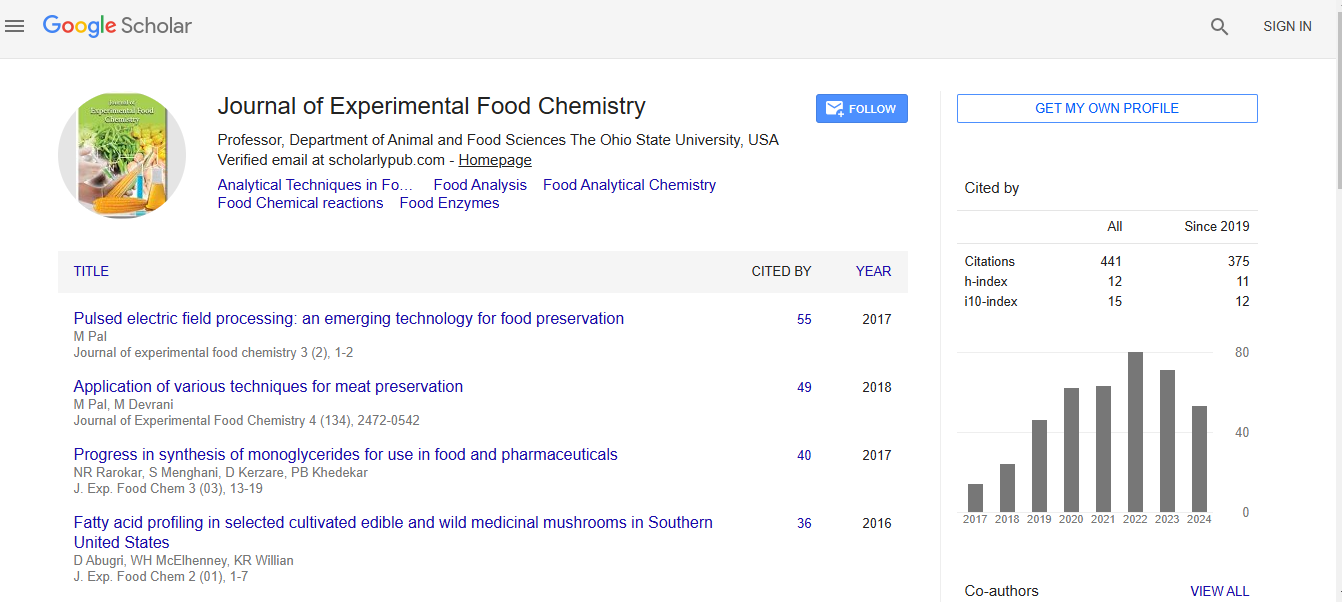
Journal of Experimental Food Chemistry received 389 citations as per Google Scholar report