Brief Report - (2025) Volume 11, Issue 5
Received: 01-Sep-2025, Manuscript No. jfim-26-178579;
Editor assigned: 03-Sep-2025, Pre QC No. P-178579;
Reviewed: 17-Sep-2025, QC No. Q-178579;
Revised: 22-Sep-2025, Manuscript No. R-178579;
Published:
29-Sep-2025
, DOI: 10.37421/2572-4134.2025.11.365
Citation: Abdullahi, Hafsa M.. ”Microbial Food Ecosystems: Interactions, Functions, and Implications.” J Food Ind Microbiol 11 (2025):365.
Copyright: © 2025 Abdullahi M. Hafsa This is an open-access article distributed under the terms of the Creative Commons Attribution License, which permits unrestricted use, distribution and reproduction in any medium, provided the original author and source are credited.
The intricate world of food ecosystems is largely shaped by the complex web of microbial interactions that occur within them. These interactions are not only fundamental to the processes of food safety and quality but also play a pivotal role in fermentation, a cornerstone of food preservation and flavor development across diverse cultures. Understanding the dynamic interplay between various microbial species, including bacteria, yeasts, and molds, is crucial for optimizing food production and ensuring consumer health by influencing metabolite production and the development of desirable sensory attributes in various food products. This foundational knowledge is essential for harnessing the full potential of microbial communities in food applications [1].
The human gut microbiome, often considered a complex food ecosystem in itself, showcases the profound influence of commensal and pathogenic microbes on host health. The delicate balance within this ecosystem is intricately linked to dietary components and microbial metabolism, which together dictate host immunity and susceptibility to disease. Consequently, the study of these relationships is paramount for the development of targeted interventions, such as probiotics and prebiotics, aimed at modulating gut health and preventing illness. The significance of this internal food ecosystem cannot be overstated [2].
In the realm of dairy fermentation, the synergistic and antagonistic interactions among lactic acid bacteria and other starter cultures are key drivers of product characteristics. These microbial consortia are responsible for imparting unique flavor profiles, desirable textural properties, and extended shelf-life to fermented dairy products like cheese and yogurt. Research in this area provides critical insights for selecting and managing specific microbial communities to achieve improved product quality and consistency, making dairy fermentation a prime example of controlled microbial interaction [3].
Sourdough bread production offers another compelling example of microbial ecology in action, focusing on the interactions between lactic acid bacteria and yeasts. These interactions profoundly influence the production of organic acids and volatile compounds, which are instrumental in the leavening process and contribute to the characteristic flavor, aroma, and texture of sourdough. The research underscores the vital importance of microbial diversity for the successful artisanal production of this staple food, highlighting how balanced microbial communities create unique sensory experiences [4].
Beyond desirable fermentations, microbial interactions can also lead to food spoilage, as exemplified by the study of fungal-bacterial interactions in raw meat. These interactions can identify key microbial consortia responsible for off-flavor development and texture degradation. The role of secondary metabolites produced by fungi in influencing bacterial growth, and vice versa, is a critical factor in spoilage processes. These findings are vital for developing effective strategies to extend the shelf-life of meat products and minimize economic losses [5].
Fermented vegetables, such as kimchi, present a fascinating case study of microbial dynamics and interactions within their unique ecosystems. The sequential activity of lactic acid bacteria and yeasts contributes significantly to the characteristic acidity, flavor, and texture of these products. Understanding how environmental factors and substrate composition influence these microbial community dynamics and their metabolic outputs is crucial for consistent production and quality control [6].
The surface of fruits and vegetables hosts a complex microbial community, known as the epiphytic microbiome. The interactions among these resident microbes, as well as their interactions with external contaminants, significantly influence post-harvest spoilage and the potential transmission of foodborne pathogens. A thorough understanding of these interactions is essential for improving the safety and quality of produce from farm to table [7].
Communication between bacteria within food environments is often mediated by quorum sensing systems. These cell-to-cell communication mechanisms are pivotal in regulating critical processes such as biofilm formation, virulence factor production, and the generation of antimicrobial compounds. These activities have a direct impact on food spoilage and safety, suggesting that targeting quorum sensing pathways could be a promising strategy for microbial control in food systems [8].
In the context of industrial food fermentations, bacteriophages play a significant role in shaping microbial communities. These viruses can profoundly influence the dynamics of starter cultures, sometimes leading to fermentation failures but also capable of promoting desirable traits through modulation of the microbial ecosystem. The strategic application of bacteriophages is being explored as a valuable tool for precise fermentation control [9].
Finally, the very act of food processing exerts a substantial influence on microbial interactions and the resulting food matrix. Treatments such as thermal processing, pH adjustments, and the addition of preservatives can dramatically alter the competitive and cooperative relationships among microorganisms. Understanding these effects is crucial for predicting and controlling product stability and safety, providing a basis for optimizing processing parameters to manage microbial behavior effectively [10].
The foundational understanding of food systems is increasingly being redefined by the intricate microbial interactions that govern them. These relationships are central to ensuring food safety, maintaining product quality, and driving the essential processes of fermentation, a time-honored method of food preservation and enhancement. The dynamic interplay between diverse microbial populations, including bacteria, yeasts, and molds, dictates their collective impact on metabolite production, the prevention of spoilage, and the cultivation of desirable sensory characteristics across a broad spectrum of food products. Thus, a comprehensive grasp of these microbial dynamics is indispensable for optimizing food production methodologies and safeguarding consumer well-being [1].
The human gut microbiome, functioning as a sophisticated internal food ecosystem, is critically influenced by the presence and activity of both beneficial commensal microbes and potentially harmful pathogenic species. The complex interplay between dietary inputs and the metabolic activities of gut microbes significantly impacts host health, immune responses, and vulnerability to various diseases. Recognizing this intricate relationship underscores the importance of research aimed at developing precise interventions, such as tailored probiotic and prebiotic strategies, to foster a healthier gut environment and mitigate disease risks [2].
Within the domain of dairy fermentation, the intricate balance of synergistic and antagonistic interactions among starter cultures, predominantly lactic acid bacteria, is a determinant factor in the final product's attributes. These microbial consortia are instrumental in crafting the unique flavor profiles, achieving optimal textural properties, and ensuring the extended shelf-life characteristic of fermented dairy goods. Scientific investigations in this area offer vital guidance for the judicious selection and effective management of microbial communities, thereby facilitating the consistent production of high-quality dairy products [3].
Artisanal sourdough bread production serves as a clear illustration of microbial ecology in practice, particularly highlighting the cooperative and competitive interactions between lactic acid bacteria and yeasts. These microbial engagements directly influence the biosynthesis of organic acids and volatile compounds, which are indispensable for the dough's leavening action and contribute significantly to the bread's distinctive taste, aroma, and crumb structure. This research emphasizes that microbial diversity is a key factor in successful artisanal bread making [4].
Conversely, microbial interactions can also be the primary drivers of food spoilage, a phenomenon extensively studied in the context of fungal-bacterial interactions during the deterioration of raw meat. This research identifies specific microbial groupings responsible for generating undesirable off-flavors and compromising the meat's texture. The critical role of secondary metabolites generated by fungi in modulating bacterial proliferation, and vice versa, is a crucial element in spoilage mechanisms, providing essential insights for devising effective strategies to prolong the shelf-life of meat products [5].
Fermented vegetables, exemplified by the popular dish kimchi, offer a vivid demonstration of microbial dynamics and interactions within specialized food ecosystems. The sequential colonization and metabolic activity of lactic acid bacteria and yeasts are responsible for the characteristic acidity, flavor, and texture of these products. Research highlights the significant influence of external conditions and the composition of the food substrate on the evolutionary pathways of microbial communities and their subsequent metabolic outputs [6].
The external surfaces of fruits and vegetables are populated by a diverse array of microorganisms, forming what is known as the epiphytic microbiome. The interactions occurring within this microbial community, along with their exchanges with external contaminants, critically impact the rate of post-harvest spoilage and pose a potential risk for the dissemination of foodborne pathogens. A comprehensive understanding of these complex interactions is therefore paramount for enhancing the safety and quality of fresh produce throughout the supply chain [7].
Bacterial communities residing in food environments often engage in sophisticated communication through quorum sensing systems. These mechanisms of cell-to-cell signaling regulate fundamental processes such as the formation of protective biofilms, the expression of virulence factors, and the synthesis of antimicrobial substances. The collective impact of these activities directly influences the trajectory of food spoilage and poses significant implications for food safety, suggesting that interventions targeting quorum sensing could be a viable approach for microbial control [8].
Within the complex environment of industrial food fermentations, bacteriophages emerge as significant modulators of microbial community structure and function. These viral agents can exert substantial control over the population dynamics of starter cultures, potentially leading to fermentation process failures or, conversely, fostering the development of desirable characteristics through indirect ecosystem modulation. Consequently, the application of bacteriophages is being actively investigated as a precise tool for managing and optimizing fermentation processes [9].
Furthermore, the fundamental processes of food manufacturing exert a profound influence on the intricate network of microbial interactions and the physical food matrix itself. Technologies such as thermal treatments, adjustments in pH, and the incorporation of chemical preservatives can significantly recalibrate the competitive and cooperative relationships among resident microorganisms. This modulation directly affects product stability and safety, underscoring the importance of research that provides a basis for optimizing processing parameters to effectively guide microbial behavior [10].
This compilation of research explores the multifaceted world of microbial interactions within various food ecosystems. Studies cover the intricate relationships in fermented foods, the gut microbiome as a food ecosystem, and microbial consortia in dairy fermentation and sourdough bread. It also addresses the role of microbial interactions in the spoilage of raw meat, fermented vegetables, and on the surface of fruits and vegetables. The research highlights mechanisms like quorum sensing and the influence of bacteriophages and food processing on microbial communities. Understanding these interactions is crucial for food safety, quality, and the development of innovative food production and preservation strategies.
None
None
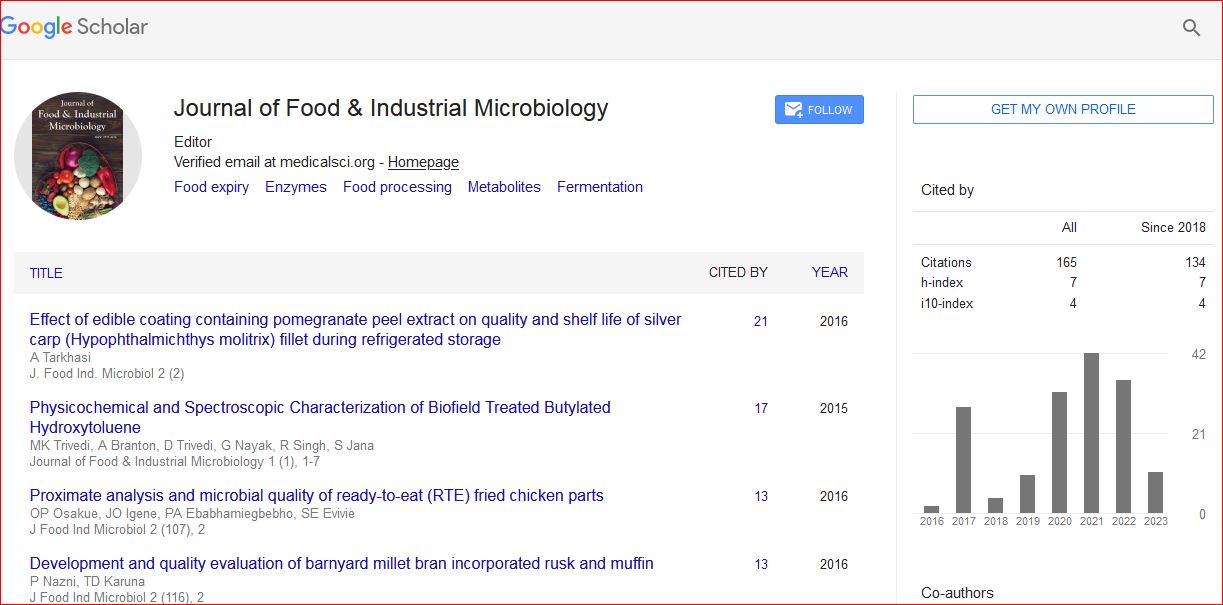
Journal of Food & Industrial Microbiology received 160 citations as per Google Scholar report