Opinion - (2025) Volume 11, Issue 4
Received: 01-Jul-2025, Manuscript No. jfim-26-178572;
Editor assigned: 03-Jul-2025, Pre QC No. P-178572;
Reviewed: 17-Jul-2025, QC No. Q-178572;
Revised: 22-Jul-2025, Manuscript No. R-178572;
Published:
29-Jul-2025
, DOI: 10.37421/2572-4134.2025.11.358
Citation: Conti, Marco R.. ”Microbial Fermentation: Transforming Plant-Based Foods.” J Food Ind Microbiol 11 (2025):358.
Copyright: © 2025 Conti R. Marco This is an open-access article distributed under the terms of the Creative Commons Attribution License, which permits unrestricted use, distribution and reproduction in any medium, provided the original author and source are credited.
Recent scientific endeavors are significantly propelling the plant-based food sector through sophisticated microbial fermentation techniques. These advancements are crucial for enhancing the quality and appeal of plant-derived alternatives, addressing consumer demands for healthier and more sustainable food options. The intricate processes involved in microbial fermentation offer a potent avenue for modifying plant-based ingredients, unlocking their full potential in terms of flavor, texture, and nutritional value. This introduction will explore the multifaceted contributions of microbial fermentation to the burgeoning field of plant-based foods, drawing from recent research to illustrate its impact. The transformation of plant-based foods is undergoing a revolution driven by innovative applications of microbial fermentation. This process, rooted in ancient food preservation, is now being harnessed with scientific precision to create a new generation of palatable and nutritious alternatives to animal products. The ability of specific microorganisms to break down complex plant compounds and produce desirable metabolites is central to this evolution, offering solutions to challenges such as off-flavors, poor texture, and limited bioavailability of nutrients. The optimization of fermentation processes using carefully selected microbial strains is at the forefront of this innovation. Research is demonstrating how such precision can dramatically improve the sensory profiles and nutritional content of plant-based products, making them more competitive with their animal-derived counterparts. The benefits extend beyond mere palatability, encompassing enhanced digestibility and the reduction of naturally occurring anti-nutritional factors found in many plant sources, thereby increasing the overall healthfulness and usability of these ingredients. The exploration of microbial metabolic pathways has become increasingly sophisticated, aided by the application of omics technologies. This deep understanding allows researchers to precisely control and predict the outcomes of fermentation, ensuring consistent quality and generating novel functional ingredients. The diverse array of plant sources available offers a rich substrate for these microbial transformations, promising a wide spectrum of new products and ingredient functionalities. Specific microbial consortia are being engineered with the explicit goal of imparting desirable sensory attributes and improving the textural characteristics of plant-based meat analogues. This targeted approach seeks to overcome some of the primary barriers to consumer acceptance, such as the characteristic mouthfeel and flavor profiles of traditional meat products. By carefully selecting and combining microbial species, researchers are able to achieve synergistic effects that profoundly influence the final product. The synergistic effects observed in specific microbial consortia, such as combinations of lactic acid bacteria and yeasts, are proving particularly effective. When applied to protein isolates like those from peas, these consortia can significantly mitigate undesirable off-flavors while simultaneously amplifying desirable notes, such as umami. This targeted manipulation of flavor development is a key aspect of creating truly appealing plant-based alternatives. Beyond flavor, fermentation also exerts a substantial influence on the functional properties of plant proteins, including their emulsifying and foaming capabilities. These properties are critical for mimicking the textural attributes of animal-derived products, such as the richness and mouthfeel of dairy and meat. Understanding and controlling these changes through fermentation is essential for developing realistic and satisfying plant-based alternatives. The application of precision fermentation is extending to the production of highly specific functional ingredients, including bioactive peptides and exopolysaccharides, derived from plant-based substrates. This high-value ingredient generation taps into the health-promoting aspects of fermented foods, offering enhanced nutritional benefits. The ability to create these specialized compounds opens up new possibilities for functional food development. For example, the use of specific fungal strains like Aspergillus oryzae for the biotransformation of agricultural by-products, such as oat bran, is yielding valuable bioactive peptides. These peptides have demonstrated significant antioxidant and anti-inflammatory properties, showcasing the potential for fermentation to imbue plant-based foods with added health-promoting qualities, moving beyond basic nutrition to functional benefits. The development of novel fermented plant-based products is critically dependent on the careful selection and strategic application of robust starter cultures. Identifying and characterizing microorganisms with specific traits, such as thermophilic lactic acid bacteria, is a key area of research. These cultures can be isolated from traditional fermented foods and then evaluated for their suitability in new product development, ensuring both efficacy and desirable sensory outcomes. Finally, the integration of advanced technologies, such as high-throughput screening and artificial intelligence, is accelerating the discovery and optimization of microbial strains for plant-based food fermentation. Machine learning algorithms are being employed to predict the fermentation performance of novel strains, allowing for the efficient identification of those best suited for producing desired flavor and texture characteristics in plant-based dairy alternatives, thereby streamlining product development. [1][2][3][4][5][6][7][8][9][10]
The realm of plant-based food innovation is increasingly reliant on the strategic deployment of microbial fermentation to enhance product quality and consumer appeal. Recent advancements underscore the transformative power of optimizing fermentation processes with specific microbial strains, leading to marked improvements in flavor profiles, nutritional density, and overall product excellence in plant-based alternatives [1].
This research highlights how fermentation significantly boosts digestibility, diminishes the presence of undesirable anti-nutritional factors, and facilitates the creation of novel functional ingredients from a wide array of plant sources, leveraging sophisticated understanding of microbial metabolic pathways and omics technologies for precise control over fermentation outcomes, thereby yielding more palatable and sustainable food products [1].
Furthermore, the engineering of specific microbial consortia plays a pivotal role in imparting desirable sensory attributes and enhancing the textural qualities of plant-based meat analogues. This study meticulously examines the synergistic impact of lactic acid bacteria and yeasts in the fermentation of pea protein isolates, reporting a notable reduction in off-flavors and a significant increase in umami notes. The research also investigates the profound effect of fermentation on the emulsifying and foaming properties of plant proteins, which are critical for effectively replicating the mouthfeel of animal-derived products [2].
The application of precision fermentation is being advanced for the targeted production of functional ingredients, such as bioactive peptides and exopolysaccharides, derived from plant-based substrates. This paper details the utilization of Aspergillus oryzae for the biotransformation of oat bran, successfully generating high-value peptides with confirmed antioxidant and anti-inflammatory properties, thereby demonstrating the potential for tailored fermentation to create novel ingredients that elevate the health benefits of plant-based foods [3].
Crucial to ensuring consistency and quality in fermented plant-based dairy alternatives is a deep understanding of the microbial ecology and metabolic flux during fermentation. This research employs metagenomic and metabolomic approaches to elucidate the complex interactions within the microbial communities of fermented soy and almond beverages. The findings offer profound insights into the enzymatic activities responsible for flavor development and texture modification, paving the way for more controlled and predictable fermentation processes [4].
The development of innovative fermented plant-based products is fundamentally dependent on the judicious selection and effective application of robust starter cultures. This paper focuses on the isolation and characterization of thermophilic lactic acid bacteria sourced from traditional fermented foods, evaluating their potential for use in the production of fermented oat-based products. The study assesses their probiotic potential and their influence on the sensory characteristics and shelf-life of the resulting products [5].
Fermentation serves as a pivotal strategy for enhancing the functionality of legume-based proteins, particularly in the context of meat and dairy analogues. This research investigates the impact of sourdough fermentation on fava bean protein isolates, observing marked improvements in solubility, emulsifying capacity, and overall digestibility. The study also identifies key volatile compounds generated during the fermentation process that contribute to a more appealing aroma profile [6].
The adoption of novel fermentation technologies, such as solid-state fermentation, presents a promising avenue for the valorization of agricultural by-products into valuable ingredients for plant-based foods. This study explores the solid-state fermentation of rice bran using indigenous fungal strains to produce protein-rich flours with superior functional properties. The research underscores the potential for sustainable ingredient development and effective waste reduction through this method [7].
Biocatalysis, driven by fermentation with specific yeast strains, offers a pathway to unlock novel flavors and textures in plant-based products derived from oilseeds. This paper examines the fermentation of sunflower protein using selected Saccharomyces cerevisiae strains, which resulted in the development of savory and umami notes, coupled with a substantial enhancement in emulsion stability. The study contributes to the growing understanding of yeast-mediated biotransformation for improved plant-based food ingredients [8].
Enzyme-assisted fermentation, involving a synergistic combination of microbial enzymes and starter cultures, represents a potent approach for modifying plant proteins to achieve enhanced techno-functional properties. This study validates the efficacy of using xylanase and a consortium of lactic acid bacteria to ferment wheat bran, leading to a significant increase in soluble protein content and improved emulsification properties, thus making the material highly suitable for diverse plant-based food applications [9].
Finally, the integration of high-throughput screening and artificial intelligence is significantly accelerating the discovery and optimization of microbial strains for plant-based food fermentation. This research employs machine learning algorithms to predict the fermentation performance of novel yeast strains intended for the production of plant-based dairy alternatives. The findings highlight the considerable potential of AI-driven approaches in identifying superior strains that yield desired flavor and texture characteristics, thereby optimizing product development efficiency [10].
Recent advancements in microbial fermentation are revolutionizing the plant-based food sector. Researchers are optimizing fermentation processes with specific microbial strains to enhance flavor, nutritional value, and overall quality of plant-based alternatives. Fermentation improves digestibility, reduces anti-nutritional factors, and generates novel functional ingredients. Specific microbial consortia, like lactic acid bacteria and yeasts, are engineered to improve sensory attributes and texture in meat analogues, reducing off-flavors and increasing umami. Precision fermentation is used to produce bioactive peptides and exopolysaccharides from plant substrates, adding health benefits. Metagenomic and metabolomic studies are unraveling microbial interactions in fermented dairy alternatives for better process control. The development of robust starter cultures is key, with research focusing on thermophilic lactic acid bacteria for oat-based products. Sourdough and enzyme-assisted fermentation are enhancing protein functionality, solubility, and digestibility in ingredients like fava bean and wheat bran. Solid-state fermentation of agricultural by-products like rice bran is creating protein-rich flours. Yeast fermentation of sunflower protein is developing savory flavors and improving stability. High-throughput screening and AI are accelerating strain discovery for efficient product development.
None
None
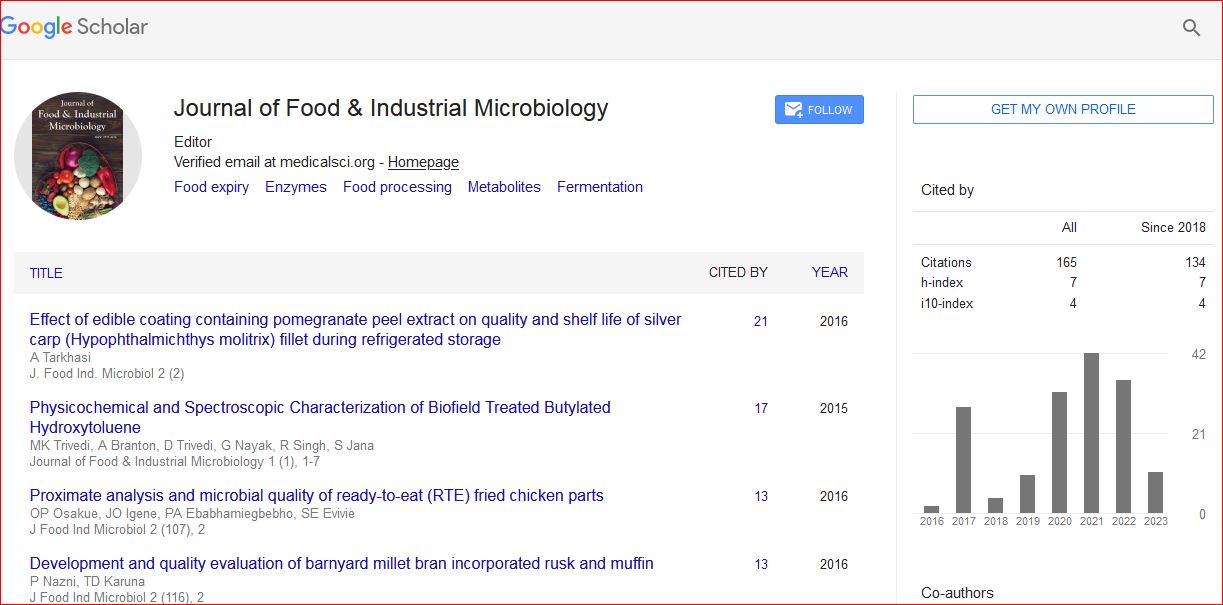
Journal of Food & Industrial Microbiology received 160 citations as per Google Scholar report