Perspective - (2025) Volume 11, Issue 3
Received: 02-May-2025, Manuscript No. jfim-26-178564;
Editor assigned: 05-May-2025, Pre QC No. P-178564;
Reviewed: 19-May-2025, QC No. Q-178564;
Revised: 23-May-2025, Manuscript No. R-178564;
Published:
30-May-2025
, DOI: 10.37421/2572-4134.2025.11.350
Citation: Ncube, Tawanda. ”Microbes: Shaping Functional Foods and Novel Ingredients.” J Food Ind Microbiol 11 (2025):350.
Copyright: © 2025 Ncube T. This is an open-access article distributed under the terms of the Creative Commons Attribution License, which permits unrestricted use, distribution and reproduction in any medium, provided the original author and source are credited.
Microorganisms represent a cornerstone in the advancement of functional foods and the creation of novel food ingredients, offering a diverse array of benefits that span from nutritional enhancement to improved sensory qualities. Their intrinsic metabolic capabilities allow for the transformation of raw materials into products with desirable attributes and extended shelf life. This biotechnological potential is being increasingly recognized and leveraged across the food industry. The intricate biochemical processes orchestrated by these microscopic entities are fundamental to achieving desired food characteristics and introducing innovative product categories that cater to evolving consumer demands for health and convenience. These contributions are not merely additive but transformational, enabling the development of entirely new food paradigms. [1] Among the microbial players, probiotic bacteria, particularly those belonging to the Lactobacillus and Bifidobacterium genera, stand out as pivotal in the design of functional foods. Their resilience in traversing the gastrointestinal tract and their proven capacity to confer health benefits, such as the restoration of gut microbiota equilibrium and the modulation of immune responses, position them as indispensable components in a wide range of products. This includes, but is not limited to, fermented dairy items, dietary supplements, and emerging novel food matrices designed for targeted health outcomes. [2] Yeast, with Saccharomyces cerevisiae being a prime example, exhibits a similarly profound impact on the food sector, extending far beyond its traditional roles in baking and brewing. These versatile microorganisms are instrumental in the production of a spectrum of fermented foods and are increasingly explored for generating novel ingredients. Their metabolic plasticity facilitates the synthesis of a rich diversity of compounds, which not only elevate food quality but also imbue products with unique functional properties, opening avenues for new product development. [3] Complementing the roles of bacteria and yeast, molds, encompassing genera such as Aspergillus and Penicillium, are indispensable in the artisanal and industrial production of a variety of fermented foods. Their contribution is crucial for developing the characteristic flavors, textures, and aromas found in products like soy sauce, tempeh, and several types of cheese. Furthermore, their ability to generate enzymes and secondary metabolites with potential health-promoting attributes significantly broadens their utility in the expanding field of functional food innovation. [4] The antimicrobial peptides known as bacteriocins, predominantly produced by lactic acid bacteria, are emerging as highly promising agents for natural food preservation. By effectively inhibiting the growth of spoilage-causing and pathogenic bacteria, these compounds serve to prolong the shelf life of food products and reduce the necessity for synthetic chemical preservatives. This offers a pathway towards safer, cleaner-label functional foods that align with consumer preferences for natural ingredients and sustainable processing. [5] Enzymes sourced from microorganisms are foundational to modern food processing, playing a critical role in modifying food ingredients and substantially enhancing the overall quality of finished products. Enzymes such as amylases, proteases, and lipases are routinely employed to optimize dough properties in baked goods, to tenderize meat products, and to develop nuanced flavor profiles in a diverse array of novel food formulations, underscoring their broad applicability. [6] In recent years, fermented plant-based products have experienced a significant surge in popularity as a new category of functional foods. Microorganisms are strategically employed to enhance the digestibility, palatability, and nutritional completeness of plant-derived ingredients like legumes and grains. This microbial intervention facilitates the creation of a wide array of alternatives to conventional animal-based products, all while delivering augmented health benefits and catering to growing dietary trends. [7] The application of microbial exopolysaccharides in the formulation of edible films and coatings represents a particularly innovative approach to food packaging. These biocompatible materials possess the capacity to impart crucial barrier properties and can be engineered to deliver active compounds directly to the food surface. This dual functionality contributes significantly to food preservation efforts and the extension of product shelf life in an environmentally conscious manner. [8] Microbial metabolism offers a sustainable and versatile platform for the production of bio-based flavors and colorants, providing natural alternatives to synthetic additives that are often viewed with consumer apprehension. Sophisticated fermentation techniques enable the precise tailoring of these compounds, enhancing both the aesthetic appeal and functional characteristics of an ever-expanding range of novel food products, meeting demands for naturalness and authenticity. [9] Finally, the synergistic integration of omics technologies, including genomics, transcriptomics, and metabolomics, with the field of food microbiology is revolutionizing our understanding of microbial roles in food development. These advanced analytical tools facilitate the identification of beneficial microbes and the elucidation of their metabolic pathways, paving the way for the precise engineering of microbial consortia to optimize functional food production and ensure microbial safety and quality. [10]
The critical role of microorganisms in the innovation and development of functional foods and novel food ingredients cannot be overstated, as they are fundamental to processes such as fermentation and the production of valuable bioactive compounds like probiotics, prebiotics, vitamins, and peptides. These microbial activities not only improve the sensory attributes of food, including flavor and texture, but also significantly boost its nutritional value, leading to the creation of groundbreaking products such as fermented dairy items, plant-based alternatives, and advanced edible films. [1] Probiotic bacteria, notably from the Lactobacillus and Bifidobacterium genera, are indispensable in the architecture of functional foods. Their remarkable ability to survive the harsh conditions of digestion and exert positive physiological effects, such as balancing the gut microbiota and modulating the immune system, makes them key components for incorporation into various food matrices, including dairy products, supplements, and other innovative food formats. [2] Yeast, exemplified by Saccharomyces cerevisiae, serves a crucial function in the manufacturing of fermented foods and the generation of new food ingredients. Beyond its well-established applications in baking and brewing, yeast is employed to produce a variety of flavors, enzymes, and even biofuels. Its metabolic adaptability enables the synthesis of a broad spectrum of compounds that enrich food quality and introduce novel functional characteristics into food products. [3] Molds, such as species within the Aspergillus and Penicillium genera, are essential microorganisms for the production of traditional fermented foods like soy sauce, tempeh, and specific varieties of cheese. They impart distinct flavors, textures, and aromas to these foods, and their capacity to produce enzymes and secondary metabolites with potential health benefits further expands their significance in the development of functional foods. [4] Bacteriocins, which are antimicrobial peptides synthesized by lactic acid bacteria, present significant opportunities for innovative food preservation strategies. These peptides effectively inhibit the proliferation of both spoilage microorganisms and pathogenic bacteria, thereby extending product shelf life and lessening the dependence on chemical preservatives. This contributes to the creation of safer, more natural functional food options. [5] The application of enzymes derived from microbial sources is of paramount importance in the modification of food ingredients and the enhancement of product quality across the food industry. Enzymes like amylases, proteases, and lipases are widely utilized to improve dough characteristics in baking, to enhance meat tenderness, and to develop specific flavor profiles in a diverse range of new food products, demonstrating their versatility. [6] Fermented plant-based products are increasingly recognized as a significant category of novel functional foods, driven by consumer interest in sustainable and health-conscious options. Microorganisms play a key role in augmenting the digestibility, palatability, and nutritional profile of plant-based ingredients such as legumes and grains, leading to a broad spectrum of alternatives to traditional animal-derived foods that offer enhanced health attributes. [7] The development and application of edible films and coatings, often based on microbial exopolysaccharides, provide cutting-edge solutions for sustainable food packaging. These bio-based materials can effectively provide necessary barrier properties against moisture and gases, and can also be functionalized to deliver active compounds, thereby contributing to improved food preservation and an extended shelf life for packaged foods. [8] Microbial metabolic pathways can be expertly harnessed for the bio-production of natural flavors and colorants, offering compelling alternatives to synthetic additives commonly used in the food industry. Fermentation processes allow for the precise and controlled synthesis of these compounds, significantly contributing to the overall appeal and functional benefits of emerging novel food products. [9] The advancement of food microbiology is profoundly influenced by the integration of omics technologies, such as genomics, transcriptomics, and metabolomics, which offer unprecedented insights into the specific functions of microbes in food development. These powerful tools aid in the identification of beneficial microorganisms and the detailed understanding of their metabolic activities, facilitating the precise design and engineering of microbial consortia for optimized functional food production. [10]
Microorganisms are vital for developing functional foods and novel ingredients, contributing to fermentation and producing beneficial compounds. They enhance flavor, texture, and nutritional value, leading to innovative products like fermented dairy and plant-based alternatives. Probiotic bacteria, yeasts, and molds play key roles in food production and imparting unique characteristics. Bacteriocins from lactic acid bacteria offer natural food preservation, extending shelf life. Microbial enzymes are crucial for ingredient modification and improving product quality. Fermented plant-based products and edible films from microbial exopolysaccharides are emerging functional food categories. Microbes also produce natural flavors and colorants. Omics technologies are advancing our understanding of microbial contributions to food development.
None
None
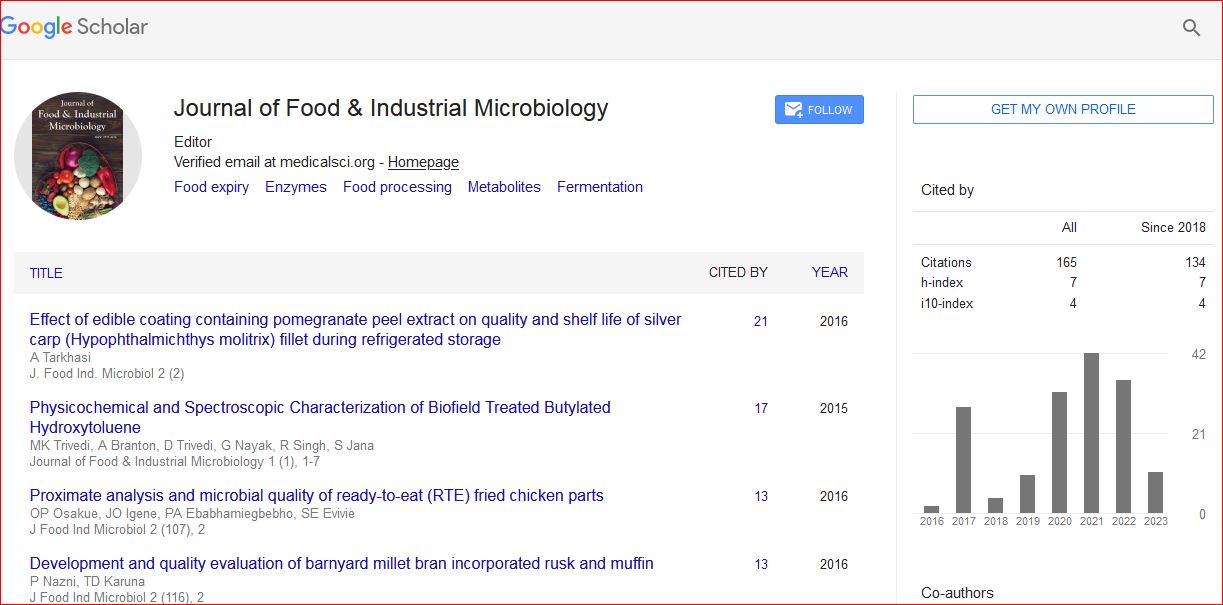
Journal of Food & Industrial Microbiology received 160 citations as per Google Scholar report