Opinion - (2025) Volume 10, Issue 5
Received: 01-Oct-2025, Manuscript No. cgj-26-186540;
Editor assigned: 03-Oct-2025, Pre QC No. P-186540;
Reviewed: 17-Oct-2025, QC No. Q-186540;
Revised: 22-Oct-2025, Manuscript No. R-186540;
Published:
29-Oct-2025
, DOI: 10.37421/2952-8518.2025.10.333
Citation: Demir, Yusuf. ”Gastrointestinal Complications in Immunocompromised Patients.” Clin Gastroenterol J 10 (2025):333.
Copyright: © 2025 Demir Y. This is an open-access article distributed under the terms of the Creative Commons Attribution License, which permits unrestricted use, distribution and reproduction in any medium, provided the original author and source are credited.
Immunocompromised patients represent a vulnerable population susceptible to a wide array of gastrointestinal (GI) complications, demanding focused clinical attention and management strategies. These complications can arise from the underlying condition, the immunosuppressive therapies employed, or opportunistic infections that thrive in a weakened immune system. The GI tract, with its intricate relationship with the immune system and its role in nutrient absorption and waste elimination, is particularly prone to dysfunction in this patient group. Understanding the spectrum of these challenges is paramount for healthcare providers aiming to optimize patient outcomes and mitigate morbidity. This review aims to synthesize current knowledge on the diagnosis and management of GI complications in immunocompromised individuals, drawing upon recent advancements and established clinical practices. The initial article provides a broad overview of the critical challenges and current strategies for managing gastrointestinal (GI) complications in immunocompromised patients. It highlights the increased susceptibility of these individuals to infections, inflammatory conditions, and treatment-related toxicities affecting the GI tract. Key areas discussed include the diagnosis and management of opportunistic infections, such as CMV colitis and C. difficile infection, as well as non-infectious complications like mucositis and chemotherapy-induced diarrhea. The emphasis is on early recognition, tailored therapeutic approaches, and multidisciplinary care to improve outcomes [1].
Focusing on a specific subset of immunocompromised patients, another review addresses the spectrum of GI issues encountered in hematopoietic stem cell transplantation (HSCT) recipients. This includes graft-versus-host disease (GVHD) of the gut, infections, and treatment-induced enteritis. It outlines diagnostic modalities and therapeutic strategies, stressing the importance of prophylaxis and early intervention. The authors also discuss novel approaches and future directions in managing these complex GI complications to mitigate morbidity and mortality [2].
Inflammatory bowel disease (IBD) patients, particularly those receiving immunosuppressive therapy, are also at an increased risk for specific GI infections. One study evaluates the incidence and management of Clostridioides difficile infection (CDI) in this population. It examines risk factors, diagnostic challenges, and treatment outcomes, emphasizing the need for heightened awareness and specific management protocols for CDI in this vulnerable population. The findings suggest that timely and appropriate CDI treatment can significantly impact IBD disease activity and patient prognosis [3].
Cytomegalovirus (CMV) infection presents a significant threat to immunocompromised hosts, especially organ transplant recipients and patients with hematologic malignancies. A review provides a comprehensive overview of CMV infection and disease in the gastrointestinal tract of these patients. It discusses the pathogenesis, clinical manifestations, diagnostic methods (including PCR and histology), and current antiviral treatment strategies. The authors highlight the challenges in differentiating CMV infection from other causes of GI symptoms and the importance of early diagnosis to prevent severe complications [4].
Chemotherapy and radiation therapy, common treatment modalities for various cancers, often lead to mucositis, a painful inflammation of the mucous membranes. This article focuses on the management of mucositis in immunocompromised patients undergoing cancer treatment. It reviews current prophylactic and therapeutic interventions, including pharmacological agents, nutritional support, and oral care protocols. The article emphasizes the impact of mucositis on treatment adherence, quality of life, and the risk of systemic infection, underscoring the need for effective management strategies [5].
The gut microbiome plays a crucial role in maintaining gastrointestinal health, and its disruption can have profound consequences, especially in immunocompromised individuals. Another article examines the role of the microbiome in gastrointestinal health and disease, particularly in the context of immunocompromised individuals. It discusses how factors like immunosuppression, antibiotics, and treatment regimens can alter the gut microbial composition, leading to an increased risk of GI complications. The review explores potential therapeutic interventions targeting the microbiome, such as probiotics and fecal microbiota transplantation, as strategies to restore gut homeostasis and prevent complications [6].
Parasitic infections, though less commonly discussed, also pose a threat to immunocompromised patients. One review focuses on the diagnosis and management of parasitic infections of the GI tract in immunocompromised patients, including those with HIV/AIDS and recipients of solid organ transplants. It covers common opportunistic parasites such as Cryptosporidium, Isospora, and Microsporidia, detailing their clinical presentations, diagnostic approaches, and the specific challenges in treatment due to altered immune status. The article stresses the importance of a high index of suspicion and appropriate laboratory investigations [7].
Neutropenic enterocolitis is a severe and potentially life-threatening GI complication that can occur in patients with neutropenia, frequently associated with chemotherapy. This article addresses the management of neutropenic enterocolitis. It discusses the pathophysiology, clinical presentation, and diagnostic workup, emphasizing the role of imaging. Current treatment strategies, including bowel rest, broad-spectrum antibiotics, and surgical intervention in select cases, are reviewed. The authors highlight the importance of early recognition and aggressive management to improve survival rates [8].
Viral infections can also manifest significantly in the gastrointestinal tract of immunocompromised patients. This paper focuses on the gastrointestinal manifestations of viral infections in immunocompromised patients, including those with HIV, post-transplant, and hematologic malignancies. It covers infections caused by viruses such as herpes simplex virus (HSV), varicella-zoster virus (VZV), and adenovirus. The authors discuss the varied clinical presentations, diagnostic tools, and therapeutic approaches, emphasizing the challenges posed by viral resistance and the need for prompt diagnosis to prevent severe morbidity [9].
Finally, fungal infections can present serious challenges in the immunocompromised host. This article reviews the management of fungal infections of the GI tract in immunocompromised patients. It highlights common opportunistic fungal pathogens, such as Candida and Aspergillus species, and discusses their clinical significance, diagnostic methods (including endoscopy and biopsies), and antifungal treatment strategies. The authors emphasize the importance of early diagnosis and appropriate antifungal therapy to prevent invasive disease and improve patient outcomes in this high-risk population [10].
The management of gastrointestinal (GI) complications in immunocompromised patients is a complex and critical area of clinical practice, necessitating a comprehensive understanding of diverse etiologies and tailored therapeutic approaches. These complications can range from infections to inflammatory processes and treatment-induced toxicities, significantly impacting patient morbidity and mortality. The increased vulnerability of these individuals underscores the importance of early recognition, accurate diagnosis, and prompt intervention to optimize outcomes. A multidisciplinary approach involving gastroenterologists, infectious disease specialists, hematologists, oncologists, and transplant physicians is often essential for effective management. This review synthesizes current knowledge and clinical strategies for addressing these challenges across various immunocompromised populations. The initial foundational article delves into the critical challenges and current strategies for managing gastrointestinal (GI) complications in immunocompromised patients, highlighting their heightened susceptibility to infections, inflammatory conditions, and treatment-related toxicities affecting the GI tract. It emphasizes early recognition, tailored therapeutic approaches, and multidisciplinary care to improve outcomes for opportunistic infections like CMV colitis and C. difficile infection, as well as non-infectious issues such as mucositis and chemotherapy-induced diarrhea [1].
Specific to hematopoietic stem cell transplantation (HSCT) recipients, a comprehensive review addresses the spectrum of GI issues, including graft-versus-host disease (GVHD) of the gut, infections, and treatment-induced enteritis. This review outlines diagnostic modalities and therapeutic strategies, stressing the importance of prophylaxis and early intervention, and discusses novel approaches and future directions for mitigating morbidity and mortality [2].
Patients with inflammatory bowel disease (IBD) on immunosuppressive therapy face unique risks, particularly for Clostridioides difficile infection (CDI). A systematic review and meta-analysis evaluates the incidence and management of CDI in this population, examining risk factors, diagnostic challenges, and treatment outcomes, and emphasizing the need for specific protocols to impact disease activity and prognosis [3].
Cytomegalovirus (CMV) infection poses a significant threat in immunocompromised hosts, especially organ transplant recipients and those with hematologic malignancies. A review provides a detailed overview of CMV infection and disease in the GI tract, covering pathogenesis, clinical manifestations, diagnostic methods, and antiviral treatment, stressing the importance of early diagnosis to prevent severe complications [4].
Chemotherapy and radiation therapy-induced mucositis is a common and debilitating side effect that profoundly affects immunocompromised patients undergoing cancer treatment. This article reviews current prophylactic and therapeutic interventions for mucositis, underscoring its impact on treatment adherence, quality of life, and the risk of systemic infection, highlighting the need for effective management strategies [5].
The gut microbiome's role in GI health and disease is particularly crucial in immunocompromised individuals. Research explores how immunosuppression, antibiotics, and treatments can alter gut microbial composition, increasing GI complication risks. It also investigates therapeutic interventions targeting the microbiome, such as probiotics and fecal microbiota transplantation, to restore gut homeostasis and prevent complications [6].
Parasitic infections are also a concern for immunocompromised patients, including those with HIV/AIDS and solid organ transplant recipients. A review focuses on GI parasitic infections, detailing common opportunistic parasites like Cryptosporidium, Isospora, and Microsporidia, their clinical presentations, diagnostic approaches, and treatment challenges due to altered immune status, emphasizing a high index of suspicion [7].
Neutropenic enterocolitis, a severe GI complication in neutropenic patients, often linked to chemotherapy, is addressed in another article. It discusses pathophysiology, clinical presentation, and diagnosis, highlighting imaging's role and reviewing current treatments including bowel rest, antibiotics, and surgery, emphasizing early recognition and aggressive management for improved survival [8].
Viral infections manifest diversely in the GI tracts of immunocompromised patients, including those with HIV, post-transplant, and hematologic malignancies. This paper covers infections by viruses like HSV, VZV, and adenovirus, discussing clinical presentations, diagnostic tools, and therapeutic approaches, noting challenges from viral resistance and the need for prompt diagnosis to prevent severe morbidity [9].
Finally, fungal infections of the GI tract in immunocompromised patients are reviewed. This article highlights common opportunistic fungal pathogens like Candida and Aspergillus, their clinical significance, diagnostic methods, and antifungal treatment strategies, emphasizing early diagnosis and appropriate therapy to prevent invasive disease and improve outcomes in this high-risk population [10].
This collection of articles addresses the multifaceted gastrointestinal (GI) complications prevalent in immunocompromised patients. It covers a wide spectrum of issues including opportunistic infections like Clostridioides difficile, Cytomegalovirus, parasitic, viral, and fungal infections. Non-infectious complications such as mucositis and neutropenic enterocolitis, often related to cancer therapies, are also detailed. Specific attention is given to patient populations like hematopoietic stem cell transplant recipients and those with inflammatory bowel disease on immunosuppression. The importance of early diagnosis, tailored treatment strategies, prophylactic measures, and multidisciplinary care is consistently emphasized across all discussions. Emerging areas like the role of the gut microbiome in preventing GI complications are also explored, highlighting the need for vigilant management and advanced therapeutic interventions to improve patient outcomes.
None
None
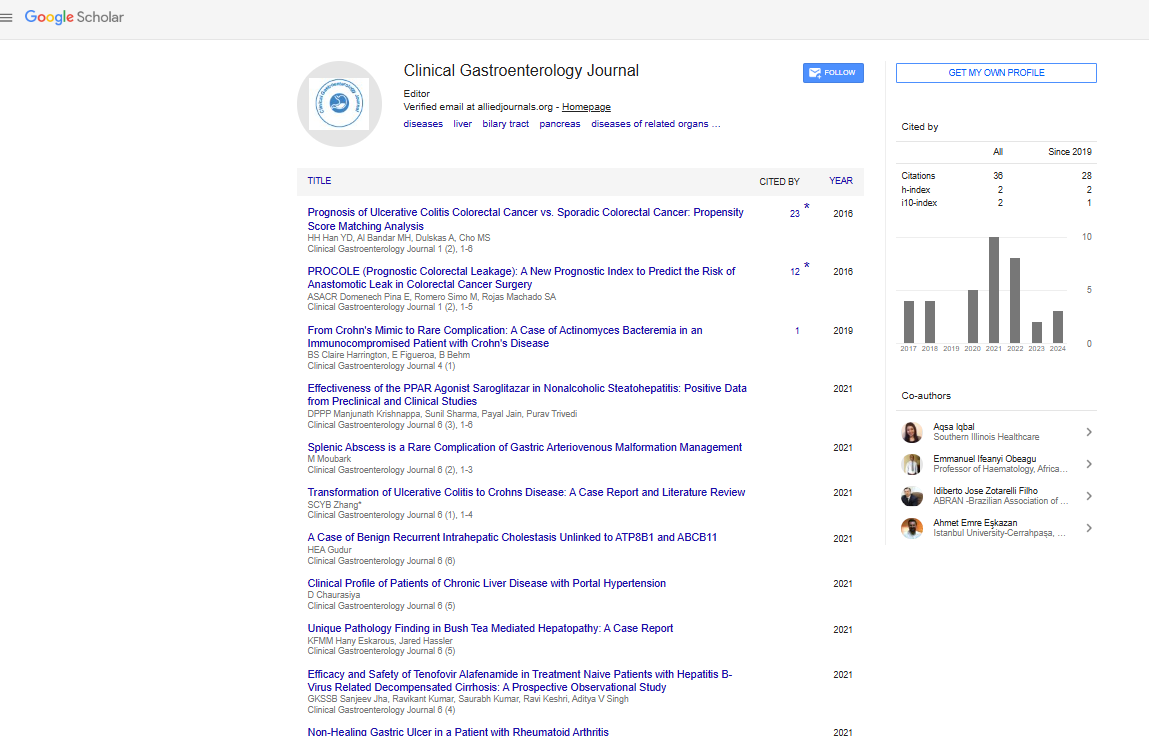
Clinical Gastroenterology Journal received 33 citations as per Google Scholar report