Opinion - (2025) Volume 11, Issue 5
Received: 01-Sep-2025, Manuscript No. jfim-26-178581;
Editor assigned: 03-Sep-2025, Pre QC No. P -178581;
Reviewed: 17-Sep-2025, QC No. Q-178581;
Revised: 22-Sep-2025, Manuscript No. R-178581;
Published:
29-Sep-2025
, DOI: 10.37421/2572-4134.2025.11.367
Citation: Lee, Sun-Young. ”Controlling Fungi And Mycotoxins: A Food Safety Imperative.” J Food Ind Microbiol 11 (2025):367.
Copyright: © 2025 Lee S. This is an open-access article distributed under the terms of the Creative Commons Attribution License, which permits unrestricted use, distribution and reproduction in any medium, provided the original author and source are credited.
Controlling mycotoxin-producing fungi in food products is a critical endeavor for ensuring food safety and safeguarding public health. This complex challenge necessitates a comprehensive and multi-faceted strategy, beginning with pre-harvest measures aimed at reducing fungal contamination at the source in agricultural crops and extending to robust post-harvest interventions. A cornerstone of these efforts involves the strategic utilization of crop varieties that exhibit inherent resistance to fungal pathogens. Furthermore, the implementation of meticulous harvesting and storage techniques, specifically focusing on minimizing moisture and maintaining optimal temperature conditions, plays a pivotal role in inhibiting fungal proliferation. The judicious application of safe chemical or biological control agents also forms an integral part of this integrated approach, offering targeted solutions for fungal management. In parallel, significant advancements in detection and monitoring technologies are indispensable for accurately identifying and quantifying the risks associated with mycotoxins, thereby enabling proactive risk mitigation strategies [1].
Biological control agents are emerging as a particularly promising avenue for the effective management of mycotoxin-producing fungi, offering an environmentally friendly alternative to conventional chemical treatments. A diverse range of microorganisms, including specific strains of yeasts and bacteria, possess the inherent capability to compete with mycotoxinogenic fungi for essential resources, thereby limiting their growth and spread. Moreover, some of these beneficial microbes are capable of producing potent antifungal metabolites that directly inhibit fungal development or even degrade existing mycotoxins that have already accumulated. Current research is intensely focused on the identification and detailed characterization of novel biocontrol agents that demonstrate high levels of efficacy and specificity against target fungi. Concurrently, significant effort is being invested in the development of stable and cost-effective formulations that can be readily applied in both agricultural settings and food processing industries, ensuring their practical viability and widespread adoption [2].
Chemical control of mycotoxin-producing fungi has historically relied on the application of fungicides, utilized either during the cultivation of crops or applied to stored commodities to prevent spoilage and contamination. While these agents have proven effective in reducing fungal loads, there is a discernible and growing emphasis on the development of safer alternatives and the optimization of application methodologies to rigorously minimize the presence of chemical residues in finished food products. This paradigm shift is driving exploration into novel antifungal compounds that possess inherently lower toxicity profiles, alongside investigations into synergistic effects achieved by combining different treatments. Such combined approaches aim to enhance overall efficacy, reduce the likelihood of resistance development in fungal populations, and ultimately contribute to a safer food supply chain [3].
Post-harvest physical and chemical treatments are of paramount importance in the relentless effort to prevent the accumulation of harmful mycotoxins in stored food commodities. These interventions encompass a range of critical strategies, including the precise control of temperature and humidity within storage environments, the utilization of modified atmosphere packaging (MAP) to alter the gaseous composition surrounding the food, and the application of physical methods such as irradiation or ozone treatment. Each of these methods presents distinct advantages and inherent limitations, varying in their efficacy against specific mycotoxins, their associated costs, and their potential impact on the overall quality of the food product. Consequently, the careful and informed selection of the most appropriate treatment is essential, tailored to the specific characteristics of the food commodity and the particular mycotoxins of concern [4].
The application of nanotechnology represents a burgeoning and innovative frontier in the ongoing battle against mycotoxin contamination in food. Nanomaterials offer unique properties that can be harnessed in various ways to enhance control strategies. They can be employed to encapsulate antifungal agents, facilitating their controlled and targeted release to maximize efficacy while minimizing off-target effects. Furthermore, nanotechnology is instrumental in the development of highly sensitive biosensors capable of the rapid and accurate detection of mycotoxins, enabling swift intervention. Nanomaterials also find application in active packaging components, designed to actively inhibit fungal growth and suppress mycotoxin production. Intensive research remains ongoing to rigorously ensure the safety and achieve regulatory compliance for these advanced nanotechnological applications within the global food industry [5].
A fundamental prerequisite for the development of truly effective control strategies against mycotoxins lies in a deep and comprehensive understanding of the intricate genetic and environmental factors that influence the biosynthesis of these toxins by fungi. Investigating the genetic makeup of fungal strains to identify and implement modifications that reduce their mycotoxigenic potential is a key area of focus. Simultaneously, breeding crop varieties that exhibit enhanced resistance to fungal colonization and subsequent mycotoxin accumulation is being pursued as a long-term, sustainable solution. These advanced breeding programs leverage cutting-edge molecular techniques to accelerate progress and develop more resilient agricultural systems capable of minimizing mycotoxin contamination from the outset [6].
The role of various food processing technologies in mitigating mycotoxin contamination is a subject of considerable scientific interest and practical importance. A range of processing methods, including thermal treatments such as pasteurization and sterilization, as well as non-thermal techniques like high hydrostatic pressure and pulsed electric fields, have demonstrated the potential to effectively reduce mycotoxin levels in processed food products. Fermentation, a traditional food processing method, can also contribute to mycotoxin reduction. However, the efficacy of these methods is not uniform and can vary significantly depending on the specific mycotoxin targeted, the composition of the food matrix, and the precise processing parameters employed. Therefore, detailed and product-specific studies are crucial for optimizing their application and maximizing their mycotoxin-reducing potential [7].
Integrated Pest Management (IPM) strategies, historically developed and refined for the control of insect pests, are increasingly being adapted and applied to the management of mycotoxigenic fungi. This innovative approach advocates for a holistic and comprehensive strategy that seamlessly integrates diverse control tactics. It emphasizes the judicious combination of cultural practices, the utilization of biological control agents, and the carefully considered application of chemical agents, with a primary focus on prevention and the minimization of any adverse environmental impact. In the context of mycotoxin control, an IPM framework would specifically target the reduction of fungal inoculum present in the environment, limit the conditions conducive to fungal growth, and establish robust monitoring systems to detect and quantify any resulting contamination [8].
The development of analytical methodologies that are both rapid and highly sensitive is absolutely essential for the effective monitoring of mycotoxin contamination throughout the food chain and for accurately assessing the efficacy of implemented control measures. Currently, techniques such as High-Performance Liquid Chromatography (HPLC), Liquid Chromatography-Mass Spectrometry/Mass Spectrometry (LC-MS/MS), and Enzyme-Linked Immunosorbent Assay (ELISA) are widely employed for mycotoxin quantification. Nevertheless, ongoing research is actively exploring novel biosensors and the development of convenient on-site testing kits. These advancements aim to facilitate real-time monitoring capabilities, both within agricultural fields and at various stages of food processing, allowing for immediate data acquisition and timely decision-making [9].
The intricate global regulatory landscape governing mycotoxins plays an undeniably significant role in shaping both the research priorities and the practical implementation of effective control strategies within the food industry. The establishment of legally binding maximum permissible levels for various mycotoxins in different food commodities, coupled with the promulgation of guidelines for good agricultural and manufacturing practices, creates a compelling impetus for the food industry. These regulatory frameworks compel businesses to adopt and rigorously implement effective measures to ensure compliance, thereby safeguarding consumer health and maintaining public trust in the safety of the food supply [10].
Controlling mycotoxin-producing fungi in food products represents a paramount concern for public health and food safety, necessitating a sophisticated, multi-pronged approach. This strategy encompasses both pre-harvest interventions aimed at minimizing fungal contamination in crops and post-harvest measures to mitigate risks in processed and stored foods. Key methods include the strategic cultivation of resistant crop varieties, alongside meticulous harvesting and storage practices that control moisture and temperature. The controlled application of approved chemical or biological agents also plays a vital role. Furthermore, the continuous advancement of detection and monitoring technologies is crucial for identifying and quantifying mycotoxin hazards, enabling proactive risk management and ensuring compliance with regulatory standards [1].
Biological control agents offer a particularly attractive and sustainable strategy for managing mycotoxin-producing fungi, presenting an environmentally conscious alternative to synthetic chemicals. These beneficial microorganisms, such as specific yeasts and bacteria, can effectively compete with pathogenic fungi for essential nutrients and space, thereby limiting their growth. Some biological agents also possess the remarkable ability to produce antifungal compounds or enzymes that can degrade existing mycotoxins. Current scientific endeavors are heavily invested in discovering and thoroughly characterizing novel biocontrol agents with superior efficacy and specificity. Simultaneously, research is dedicated to developing robust and economically viable formulations suitable for practical deployment in agriculture and the food industry, ensuring their widespread accessibility and effectiveness [2].
Chemical control measures, primarily involving fungicides applied during crop growth or to stored products, remain a significant strategy for managing mycotoxin-producing fungi. However, there is an escalating emphasis on developing safer chemical alternatives and refining application techniques to minimize potential residues in food. This research trend is driving the exploration of new antifungal compounds with improved safety profiles and the investigation of synergistic effects from combined treatments. Such approaches aim to enhance control efficacy, reduce the likelihood of resistance development in fungal populations, and contribute to a safer food supply by minimizing exposure to undesirable chemical contaminants [3].
Post-harvest physical and chemical interventions are indispensable for preventing the accumulation of mycotoxins in stored food products. These methods include critical environmental controls like temperature and humidity regulation, the use of modified atmosphere packaging (MAP) to create unfavorable conditions for fungal growth, and physical treatments such as irradiation and ozone application. Each technique possesses unique strengths and weaknesses concerning its effectiveness against specific mycotoxins, its economic feasibility, and its impact on food quality attributes. Therefore, selecting the most appropriate method requires careful consideration of the specific food commodity and the particular mycotoxins of concern to ensure optimal outcomes and minimize adverse effects [4].
The integration of nanotechnology into mycotoxin control strategies represents a dynamic and evolving field with significant potential. Nanomaterials can be utilized to encapsulate antifungal agents, allowing for their controlled release and enhanced efficacy. They are also key components in the development of advanced biosensors for the rapid and sensitive detection of mycotoxins, facilitating timely intervention. Furthermore, nanotechnology contributes to the creation of active food packaging materials designed to inhibit fungal proliferation and mycotoxin production. Ongoing research is crucial to address safety concerns and ensure regulatory approval for these innovative nanotechnological applications within the food sector [5].
Understanding the complex genetic and environmental factors that govern mycotoxin production by fungi is foundational to designing effective control strategies. Research efforts are directed towards manipulating fungal genetics to reduce their toxin-producing capabilities and breeding crop varieties that are inherently more resistant to fungal invasion and subsequent mycotoxin accumulation. These advanced molecular techniques are vital for developing long-term, sustainable solutions that address the root causes of mycotoxin contamination in agricultural commodities, thereby improving food safety from the farm to the consumer [6].
Food processing technologies play a critical role in reducing mycotoxin contamination in various food products. Thermal processing methods, such as pasteurization and sterilization, alongside non-thermal techniques including high hydrostatic pressure and pulsed electric fields, have demonstrated effectiveness in lowering mycotoxin levels. Fermentation processes can also contribute to mycotoxin mitigation. However, the efficacy of these methods is highly dependent on the specific mycotoxin, the food matrix composition, and the precise processing parameters. Therefore, detailed investigations are necessary to optimize the application of these technologies for maximum mycotoxin reduction [7].
Integrated Pest Management (IPM) principles, traditionally applied to insect control, are being progressively adapted for the management of mycotoxin-producing fungi. This holistic approach emphasizes a combination of cultural practices, biological controls, and the judicious use of chemical agents, prioritizing prevention and environmental stewardship. For mycotoxin control, an IPM strategy would focus on reducing the initial fungal inoculum, creating unfavorable environmental conditions for fungal growth, and implementing comprehensive monitoring programs to detect and manage contamination effectively throughout the agricultural and food production systems [8].
Rapid and sensitive analytical methods are indispensable for monitoring mycotoxin contamination and evaluating the effectiveness of control measures. Current techniques like HPLC, LC-MS/MS, and ELISA are widely used, but research is continuously advancing towards novel biosensors and point-of-use testing kits. These innovations aim to enable real-time monitoring in both field settings and during food processing, providing immediate data crucial for decision-making and quality assurance in the food industry [9].
The global regulatory framework for mycotoxins significantly influences the development and implementation of control strategies. International standards and national regulations that set maximum permissible levels for mycotoxins in food commodities, coupled with guidelines for good agricultural and manufacturing practices, create a strong imperative for the food industry. Adherence to these regulations is essential for ensuring consumer safety, maintaining market access, and demonstrating commitment to producing safe and high-quality food products [10].
Controlling mycotoxin-producing fungi in food is crucial for public health, requiring pre- and post-harvest strategies. These include using resistant crop varieties, proper storage, and safe chemical or biological agents. Advances in detection technology are also vital. Biological control agents offer a promising avenue, with research focusing on novel microorganisms and effective formulations. Chemical control methods are being refined for safety and residue reduction. Post-harvest treatments like temperature control, modified atmosphere packaging, and physical methods are important for preventing mycotoxin accumulation. Nanotechnology is emerging as a tool for controlled release of antifungal agents and rapid detection. Understanding fungal genetics and environmental factors is key to developing resistant crops and reducing mycotoxigenicity. Food processing technologies, both thermal and non-thermal, can reduce mycotoxin levels, though efficacy varies. Integrated Pest Management (IPM) principles are being adapted for fungal control, emphasizing prevention and monitoring. Rapid and sensitive analytical methods are essential for tracking contamination. Global regulatory frameworks drive the implementation of control strategies to ensure food safety.
None
None
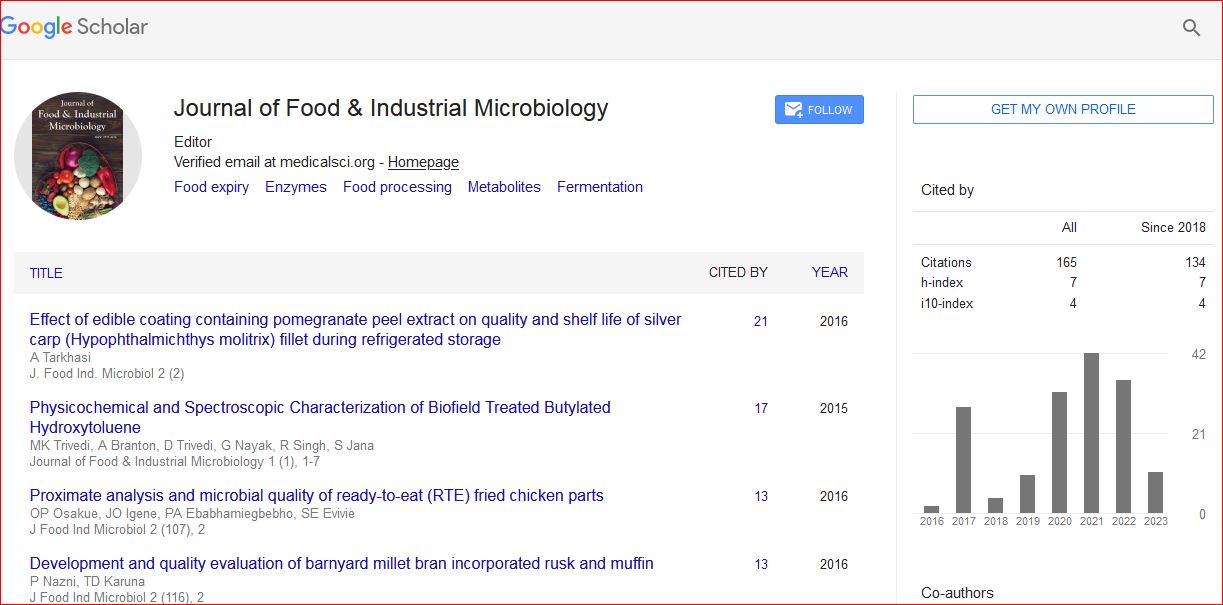
Journal of Food & Industrial Microbiology received 160 citations as per Google Scholar report