DOI: 10.37421/2157-7579.2025.16.306
DOI: 10.37421/2157-7579.2025.16.305
DOI: 10.37421/2157-7579.2025.16.304
DOI: 10.37421/2157-7579.2025.16.303
DOI: 10.37421/2157-7579.2025.16.301
DOI: 10.37421/2157-7579.2025.16.300
DOI: 10.37421/2157-7579.2025.16.299
DOI: 10.37421/2157-7579.2025.16.298
DOI: 10.37421/2157-7579.2025.16.297
DOI: 10.37421/2157-7579.2025.16.292
Gene editing technologies have emerged as powerful tools with the potential to revolutionize livestock breeding and management. This exploratory study investigates the role of gene editing in enhancing livestock health and productivity. We analyze recent advancements in CRISPR/Cas9 and other gene editing techniques, their applications in livestock, and the ethical considerations associated with genetic modifications. Through a comprehensive review of current literature and case studies, we aim to provide insights into the transformative impact of gene editing on the livestock industry and its implications for sustainable and resilient agriculture.
DOI: 10.37421/2157-7579.2025.16.293
DOI: 10.37421/2157-7579.2025.16.291
Equine orthopedic interventions play a crucial role in the management of musculoskeletal disorders affecting horses. This comparative study evaluates the efficacy and outcomes of traditional and modern surgical approaches in equine orthopedics. We examine a cohort of 60 equine subjects undergoing various orthopedic procedures, comparing traditional open surgical techniques with minimally invasive and arthroscopic approaches. Our findings provide insights into the advantages and limitations of each method, with implications for optimizing surgical outcomes and postoperative recovery in equine patients.
DOI: 10.37421/2157-7579.2024.16.290
DOI: 10.37421/2157-7579.2025.16.289
Telemedicine has emerged as a transformative force in veterinary care, offering new avenues for remote consultations and healthcare delivery. This case study assesses the impact of telemedicine on veterinary care delivery through a comprehensive analysis of a specific implementation. Utilizing a mixed-methods approach, we examine the experiences of veterinary practitioners, the perceptions of pet owners, and the overall effectiveness of telemedicine in addressing various veterinary healthcare needs. The findings provide valuable insights into the evolving landscape of telemedicine in veterinary practice and its implications for improving accessibility, efficiency, and patient outcomes.
DOI: 10.37421/2157-7579.2025.16.288
DOI: 10.37421/2157-7579.2025.16.296
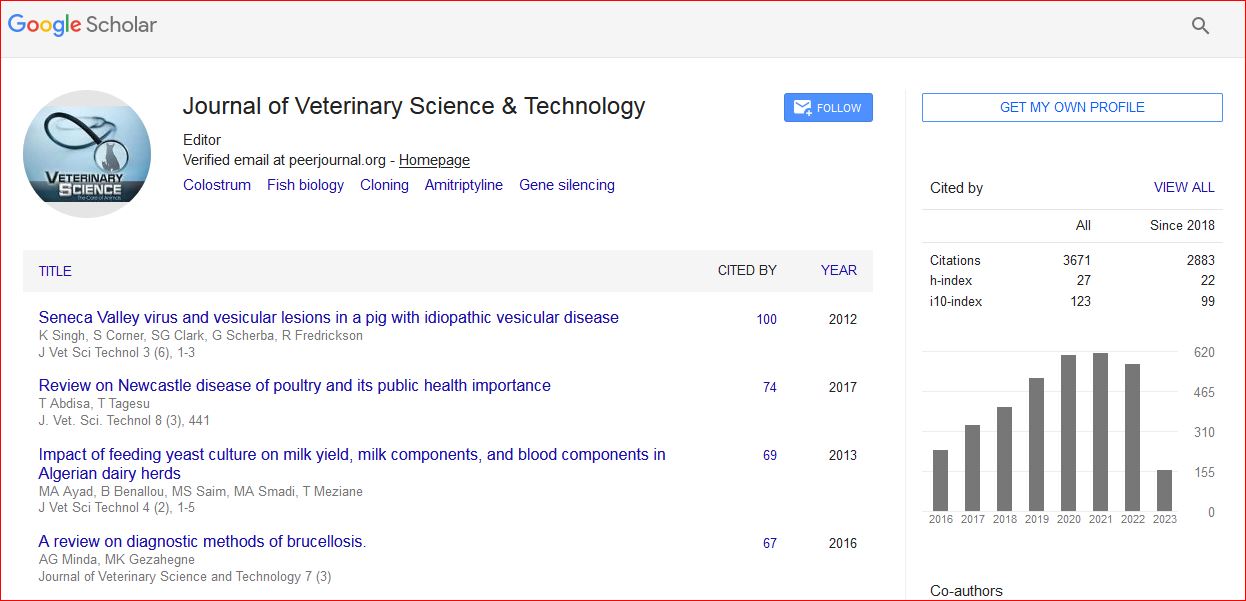
Veterinary Science & Technology received 4472 citations as per Google Scholar report
 Spanish
  Chinese
  Russian
  German
  French
  Japanese
  Portuguese
  Hindi
Hindi 