Opinion - (2025) Volume 16, Issue 3
Received: 02-Jun-2025, Manuscript No. jvst-26-188030;
Editor assigned: 04-Jun-2025, Pre QC No. P-188030;
Reviewed: 18-Jun-2025, QC No. Q-188030;
Revised: 23-Jun-2025, Manuscript No. R-188030;
Published:
30-Jun-2025
, DOI: 10.37421/2157-7579.2025.16.304
Citation: Sato, Rina. ”Advances in Veterinary Gastroenterology:
Diagnosis and Therapy.” J Vet Sci Techno 16 (2025):304.
Copyright: © 2025 Sato R. This is an open-access article distributed under the terms of the Creative Commons Attribution License, which permits unrestricted use, distribution
and reproduction in any medium, provided the original author and source are credited.
The field of veterinary gastroenterology has seen remarkable advancements in recent years, particularly in the diagnosis and management of gastrointestinal disorders affecting companion animals. These developments are crucial for improving the quality of life for pets suffering from complex digestive issues. The integration of sophisticated diagnostic tools and innovative therapeutic strategies is at the forefront of this progress, offering new hope for challenging cases [1].
The gut microbiome, a complex ecosystem residing within the digestive tract, plays a pivotal role in maintaining canine health. Recent research has elucidated the intricate relationship between microbial imbalances, known as dysbiosis, and the development of various gastrointestinal ailments. Understanding this connection is vital for developing targeted interventions that promote digestive well-being [2].
Feline inflammatory bowel disease (IBD) presents a significant diagnostic and therapeutic challenge for veterinarians. Emerging research is exploring novel treatment modalities, including immunomodulatory drugs and specialized dietary approaches, to address this debilitating condition. The focus is on developing personalized treatment plans tailored to the individual cat's clinical presentation and pathological findings [3].
In the realm of large animal medicine, advanced imaging techniques have revolutionized the diagnosis of gastrointestinal diseases. Modalities such as endoscopy, ultrasonography, and computed tomography (CT) scans offer unparalleled insights into the structural and functional integrity of the digestive system in cattle and horses, guiding therapeutic decisions with greater precision [4].
Exocrine pancreatic insufficiency (EPI) is a well-recognized disorder in dogs, characterized by the pancreas's inability to produce sufficient digestive enzymes. Comprehensive reviews of EPI highlight advancements in diagnostic testing, such as fecal elastase assays, and outline effective therapeutic strategies, including enzyme replacement and dietary adjustments, to manage the condition and its sequelae [5].
Chronic constipation in geriatric cats is a common issue that can significantly impact their well-being. Studies investigating the efficacy of dietary fiber supplementation are shedding light on how tailored nutritional management can improve fecal consistency and transit time, thereby enhancing the quality of life for older feline patients [6].
Regenerative medicine is emerging as a promising frontier in veterinary gastroenterology, with stem cell therapy showing potential for treating conditions like inflammatory bowel disease and intestinal fibrosis. While still in its early stages, research in this area holds significant promise for developing innovative therapeutic solutions [7].
Intussusception, a life-threatening condition where a segment of the intestine telescopes into another, requires prompt diagnosis and intervention. A case series on surgical management in young dogs underscores the importance of timely surgical reduction and supportive care for achieving favorable outcomes in this critical surgical emergency [8].
The detrimental effects of antibiotic use on the gut microbiota are well-documented. Research into probiotic supplementation in canines is demonstrating its efficacy in mitigating antibiotic-associated diarrhea by restoring gut barrier function and reducing inflammation, offering a valuable adjunctive therapy [9].
Diagnostic endoscopy remains a cornerstone in the evaluation of gastrointestinal diseases across various animal species. A comprehensive guide to diagnostic endoscopy details its application in assessing upper and lower gastrointestinal tract pathologies, from ulcers to foreign bodies, emphasizing the importance of appropriate instrumentation and interpretation of findings for accurate diagnosis [10].
The ever-evolving landscape of veterinary gastroenterology is marked by significant strides in diagnostic capabilities and therapeutic interventions for common gastrointestinal disorders in companion animals. A key focus is on the incorporation of minimally invasive procedures and precise pharmacological treatments for conditions such as inflammatory bowel disease and chronic enteropathies. The ultimate goal is to enhance patient outcomes and elevate the quality of life through customized treatment regimens [1].
The gut microbiomeâ??s role in canine health is increasingly recognized, with dysbiosis being identified as a contributing factor to numerous gastrointestinal ailments. Investigations into dietary interventions, including prebiotics and probiotics, are revealing their potential to positively modulate the gut microbiota, thereby improving digestive function and immune responses in dogs suffering from chronic diarrhea [2].
For feline inflammatory bowel disease (IBD), novel therapeutic avenues are being explored, with particular attention given to immunomodulatory drugs and antigen-restricted diets. The inherent difficulties in diagnosing and managing feline IBD are acknowledged, and insights are being provided into developing personalized treatment strategies based on clinical observations and histopathological assessments [3].
In the context of large animal gastrointestinal health, advanced imaging techniques such as endoscopy, ultrasonography, and CT scans are proving invaluable for diagnosis. These modalities facilitate the identification of lesions, characterization of disease, and the guidance of therapeutic interventions in species like cattle and horses, offering a comparative analysis of their diagnostic utility [4].
Exocrine pancreatic insufficiency (EPI) in dogs is thoroughly reviewed, detailing diagnostic methods like fecal elastase testing and outlining therapeutic approaches. These include enzyme replacement therapy, dietary modifications, and the management of secondary complications, providing a comprehensive approach to this disorder [5].
The impact of dietary fiber supplementation on chronic constipation in older cats is under investigation. This research evaluates how specific fiber types influence fecal consistency and transit time, alongside owner-reported quality of life metrics, suggesting a significant role for targeted nutritional interventions in improving the well-being of geriatric feline patients [6].
Regenerative medicine, especially stem cell therapy, represents a nascent yet exciting area within veterinary gastroenterology. Its potential applications for inflammatory bowel disease and intestinal fibrosis are being explored, along with the challenges and future prospects of harnessing these regenerative approaches for therapeutic benefit [7].
Surgical management of intussusception in young dogs is presented through a case series, highlighting the successful outcomes achieved with surgical reduction and temporary intestinal diversion. This underscores the critical need for prompt diagnosis and immediate surgical intervention to improve prognosis in such life-threatening situations [8].
The efficacy of specific probiotics in addressing antibiotic-associated diarrhea in canines is being studied. The findings indicate that certain probiotic strains can effectively restore gut barrier integrity and reduce inflammatory markers, thereby lessening the severity of diarrhea and promoting recovery [9].
A comprehensive guide to diagnostic endoscopy in veterinary medicine covers its extensive use in evaluating gastrointestinal tract diseases across a spectrum of animal species. It addresses essential aspects such as instrumentation, procedural considerations, and the interpretation of findings for a range of conditions, including ulcers, tumors, and foreign body ingestions [10].
This collection of research and reviews covers key advancements in veterinary gastroenterology. It highlights new diagnostic and therapeutic strategies for gastrointestinal disorders in companion animals, including minimally invasive procedures and targeted pharmacological interventions. The role of the gut microbiome and its modulation through diet, prebiotics, and probiotics for canine enteropathies is explored. Specific conditions like feline inflammatory bowel disease and canine exocrine pancreatic insufficiency are addressed with discussions on novel therapies and management strategies. Advanced imaging modalities for diagnosing gastrointestinal diseases in large animals are reviewed. Additionally, the impact of dietary fiber on constipation in older cats and the potential of regenerative medicine, particularly stem cell therapy, are examined. Surgical management of intussusception in dogs and the efficacy of probiotics in treating antibiotic-associated diarrhea are also covered, alongside a comprehensive guide to diagnostic endoscopy in veterinary medicine.
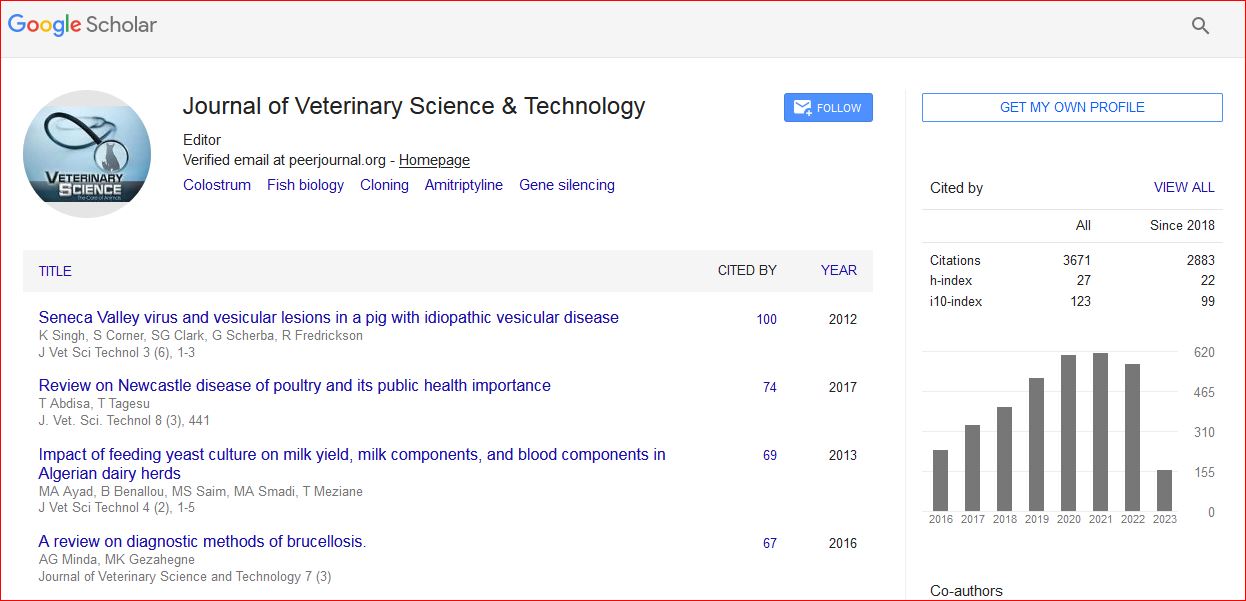
Veterinary Science & Technology received 4472 citations as per Google Scholar report