Perspective - (2025) Volume 16, Issue 3
Received: 02-Jun-2025, Manuscript No. jvst-26-188020;
Editor assigned: 04-Jun-2025, Pre QC No. P-188020;
Reviewed: 18-Jun-2025, QC No. Q-188020;
Revised: 23-Jun-2025, Manuscript No. R-188020;
Published:
30-Jun-2025
, DOI: 10.37421/2157-7579.2025.16.301
Citation: Fischer, Hannah. ”Comprehensive Strategy for Optimal
Animal Welfare.” J Vet Sci Techno 16 (2025):301.
Copyright: © 2025 Fischer H. This is an open-access article distributed under the terms of the Creative Commons Attribution License, which permits unrestricted use,
distribution and reproduction in any medium, provided the original author and source are credited.
Ensuring optimal animal welfare in veterinary care demands a comprehensive strategy, encompassing humane handling and effective pain management to create low-stress environments during examinations and procedures.
Addressing the psychological well-being of animals alongside their physical health is paramount for a truly holistic veterinary approach, recognizing and mitigating stress triggers, providing enrichment, and fostering positive human-animal interactions. Effective pain management serves as a fundamental pillar of animal welfare in veterinary medicine, necessitating accurate assessment and judicious use of analgesics and multimodal therapies. Understanding the subtle presentations of pain across diverse species and individuals allows for the tailoring of interventions, ultimately enhancing the animal's quality of life during periods of illness or recovery. The human-animal bond significantly influences animal welfare within veterinary settings, where positive interactions between staff and animals can reduce fear and anxiety, thereby making veterinary visits less stressful for both. Training veterinary teams in low-stress handling techniques is essential for cultivating a compassionate and highly effective care environment, directly impacting the animal's experience. Veterinary professionals are increasingly acknowledging the profound importance of ethical considerations in animal care, extending beyond basic needs to encompass an animal's subjective experiences and overall quality of life. Ethical decision-making frameworks and continuous education are indispensable for navigating the intricate welfare challenges that veterinary professionals encounter in their daily practice. The physical environment within veterinary clinics plays a critical role in shaping animal welfare, with the design of waiting areas, kennels, and examination rooms significantly influencing stress levels. Innovations such as telemedicine and advanced diagnostic tools, alongside better animal monitoring systems, are leveraging technology to improve animal welfare practices in veterinary care, leading to quicker diagnoses and reduced patient discomfort.A multifaceted approach is required to ensure optimal animal welfare in veterinary settings, including the implementation of humane handling techniques and the establishment of effective pain management strategies.
Creating low-stress environments during examinations and procedures is crucial, alongside addressing the psychological well-being of animals as an integral part of their physical health. Recognizing and mitigating potential stress triggers, providing appropriate environmental enrichment, and fostering positive human-animal interactions are vital components of a comprehensive veterinary approach. Effective pain management in veterinary medicine relies on accurate pain assessment and the judicious application of analgesics and multimodal therapeutic methods. Understanding the nuances of pain presentation in different species and individual animals enables more tailored and effective interventions, significantly improving the animal's quality of life. The human-animal bond is a critical factor in animal welfare within veterinary clinics, as positive interactions can reduce animal fear and anxiety, making visits less stressful. Training veterinary staff in low-stress handling techniques is fundamental to creating a compassionate and effective care environment that prioritizes animal well-being. Veterinary professionals are increasingly focusing on ethical considerations, acknowledging the importance of an animal's subjective experiences and quality of life. Navigating complex welfare challenges in daily practice necessitates robust ethical decision-making frameworks and a commitment to continuous professional education. The physical layout and design of veterinary facilities, including waiting areas and examination rooms, significantly impact animal stress levels, with features like acoustics and lighting playing a key role.Ensuring optimal animal welfare in veterinary care involves a comprehensive strategy that integrates humane handling, effective pain management, and the creation of low-stress environments. Addressing both the physical and psychological well-being of animals is paramount, requiring recognition of stress triggers, provision of enrichment, and fostering positive human-animal interactions. Pain management necessitates accurate assessment and multimodal therapies tailored to species and individuals to improve quality of life. The human-animal bond and staff training in low-stress techniques are crucial for reducing anxiety. Ethical considerations are increasingly important, guiding professionals in navigating complex welfare issues. The physical environment of veterinary clinics also plays a significant role in mitigating stress. Owner education and the application of technology, such as telemedicine, further enhance welfare. Continuous professional development ensures veterinary practices remain at the forefront of animal welfare science.
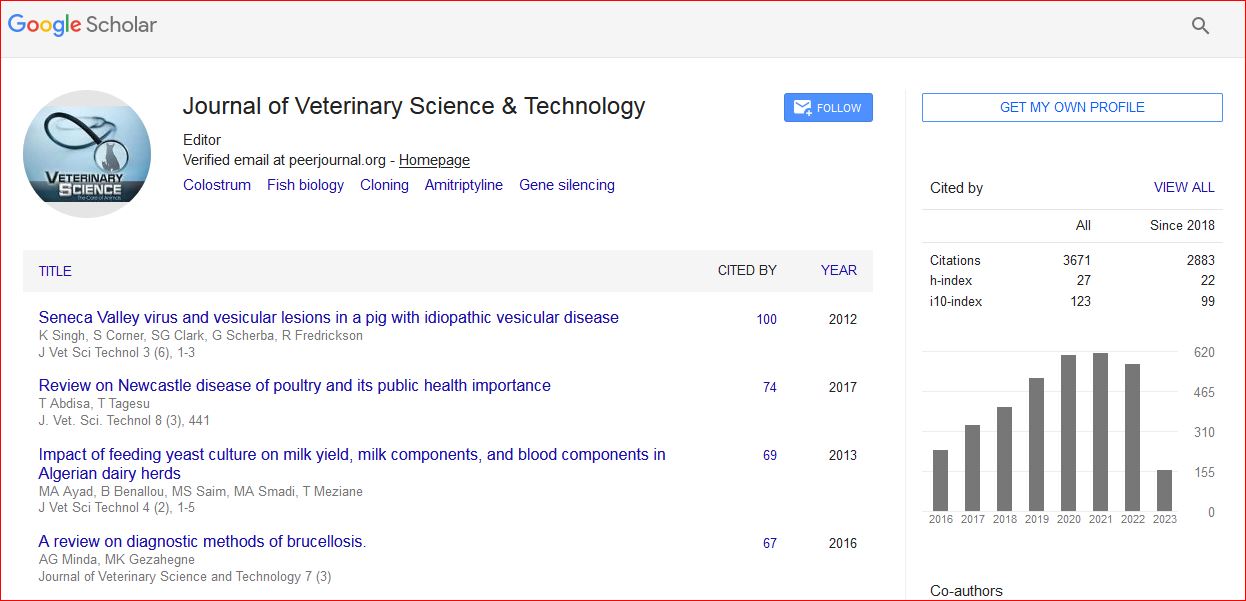
Veterinary Science & Technology received 4472 citations as per Google Scholar report