Brief Report - (2025) Volume 16, Issue 3
Received: 02-Jun-2025, Manuscript No. jvst-26-188006;
Editor assigned: 04-Jun-2025, Pre QC No. P-188006;
Reviewed: 18-Jun-2025, QC No. Q-188006;
Revised: 23-Jun-2025, Manuscript No. R-188006;
Published:
30-Jun-2025
, DOI: 10.37421/2157-7579.2025.16.297
Citation: Svensson, Greta. ”Veterinary Dermatology Advances:
Diagnosis and Treatment.” J Vet Sci Techno 16 (2025):297.
Copyright: © 2025 Svensson G. This is an open-access article distributed under the terms of the Creative Commons Attribution License, which permits unrestricted use,
distribution and reproduction in any medium, provided the original author and source are credited.
The field of veterinary dermatology has seen significant advancements in the diagnosis and management of common skin diseases affecting dogs and cats, emphasizing a comprehensive approach to patient care [1].
The intricate relationship between the skin microbiome and immune responses is increasingly recognized, particularly in the pathogenesis of canine atopic dermatitis, suggesting novel therapeutic avenues [2].
For feline allergic dermatitis, innovative treatments such as monoclonal antibodies are emerging as effective solutions for managing severe pruritus and improving clinical outcomes [3].
In canine pyoderma, the escalating issue of antimicrobial resistance necessitates a critical evaluation of antibiotic use and the exploration of alternative treatment strategies [4].
Dermatophytosis, a common fungal infection in companion animals, requires a thorough understanding of causative agents, diagnostic methods, and effective antifungal therapies to prevent its spread and zoonotic transmission [5].
The restoration and maintenance of a healthy skin barrier are crucial for managing chronic dermatological conditions in dogs, with ceramide-based formulations showing promise in enhancing barrier function [6].
Targeted therapies, like oral Janus kinase inhibitors, are revolutionizing the management of canine atopic dermatitis by effectively controlling pruritus and reducing inflammation [7].
Parasitic skin diseases continue to pose a significant challenge in veterinary dermatology, demanding up-to-date knowledge of diagnostic techniques and parasiticides to ensure effective control and prevent resistance [8].
Photodynamic therapy represents an emerging modality in veterinary dermatology, offering a non-invasive option for treating specific skin conditions and lesions in dogs and cats [9].
Understanding and diagnosing adverse cutaneous drug reactions are paramount for ensuring the safety and well-being of companion animals, requiring a vigilant approach to pharmacovigilance [10].
Current veterinary dermatological practice relies on a systematic approach to diagnose and treat common skin ailments in dogs and cats. This involves a detailed dermatological examination, appropriate diagnostic sampling techniques, and the application of evidence-based treatment protocols for conditions like atopic dermatitis, flea allergy dermatitis, and superficial pyoderma. Advances in targeted therapies and novel anti-inflammatories are continually being developed to enhance patient outcomes and improve their quality of life [1].
The canine cutaneous microbiome plays a pivotal role in the development and progression of atopic dermatitis. Imbalances in the skin's microbial flora can lead to heightened inflammation and compromise the skin's natural barrier function. Therapeutic strategies aimed at modulating the microbiome, such as topical probiotics and prebiotics, are being investigated for their potential to alleviate clinical signs and influence the immune system, suggesting a personalized approach to managing this condition by considering individual microbiome profiles [2].
A novel monoclonal antibody therapy has demonstrated significant efficacy in alleviating severe pruritus associated with allergic dermatitis in cats. This treatment targets specific inflammatory pathways, leading to substantial reductions in scratching and improvements in skin lesions. Its development offers a promising new therapeutic option for cats suffering from refractory allergic skin diseases [3].
Antimicrobial resistance is a growing concern in the treatment of canine pyoderma. A retrospective analysis of resistance patterns has identified common bacterial pathogens and their susceptibility profiles to various antibiotics commonly used in general veterinary practice. These findings underscore the critical need for judicious antibiotic stewardship, prompt susceptibility testing, and the active exploration of alternative therapeutic modalities to combat the rise of resistant infections [4].
Dermatophytosis, a common dermatological disease caused by fungal infections in companion animals, necessitates a comprehensive understanding of its etiological agents, clinical presentations, and diagnostic methodologies. Current antifungal treatment options, encompassing both systemic and topical approaches, alongside environmental decontamination strategies, are crucial for effective management. Early diagnosis and appropriate intervention are essential to prevent the transmission of these infections to humans [5].
Restoring the integrity of the skin barrier is fundamental in managing chronic skin conditions in dogs, particularly those characterized by dryness. A novel topical formulation containing ceramides has shown effectiveness in improving skin barrier function. Studies have documented reductions in transepidermal water loss and improvements in skin hydration, accompanied by clinical amelioration of scaling and pruritus. This highlights the value of barrier repair therapy as an adjunct to other dermatological treatments [6].
Oral Janus kinase (JAK) inhibitors have emerged as a highly effective and safe treatment for pruritus and skin lesions in dogs with atopic dermatitis. Clinical trials have reported significant improvements in subjective quality of life scores and a notable reduction in the need for concurrent medications. The discussion of potential adverse effects provides valuable guidance for veterinary dermatologists utilizing this therapeutic class [7].
Parasitic skin diseases, including those caused by fleas, ticks, and mites, remain a prevalent concern in companion animals. Diagnostic methods, ranging from skin scrapings to advanced imaging, are crucial for accurate identification. Current parasiticides for treatment and prevention are detailed, alongside an important discussion on emerging resistance to common ectoparasiticides, emphasizing the need for proactive and strategic parasite control programs [8].
Photodynamic therapy (PDT) is being explored for its utility in veterinary dermatology, particularly for managing specific skin conditions like superficial infections and certain neoplastic lesions in dogs and cats. Understanding the principles of PDT, including photosensitizer selection and appropriate light sources, along with its benefits and limitations, is key to its successful application. Case studies illustrate its potential, especially in refractory cases [9].
Adverse cutaneous drug reactions can significantly impact the health and well-being of companion animals. This review categorizes common drug-induced dermatoses, outlines diagnostic approaches to establish causality, and offers recommendations for management and prevention. Emphasizing the importance of obtaining a thorough drug history is critical for accurate diagnosis and subsequent patient care [10].
This collection of research papers addresses various aspects of veterinary dermatology in companion animals. It covers advances in diagnosing and treating common skin diseases like atopic dermatitis, flea allergy dermatitis, and pyoderma in dogs and cats, highlighting the importance of thorough examinations and evidence-based treatments. The role of the skin microbiome in canine atopic dermatitis is explored, with a focus on potential microbial therapies. Novel treatments, including monoclonal antibodies for feline allergic dermatitis and oral JAK inhibitors for canine atopic dermatitis, are discussed for their efficacy in managing pruritus and inflammation. The persistent issue of antimicrobial resistance in canine pyoderma is examined, stressing judicious antibiotic use. Dermatophytosis management, skin barrier repair using ceramide formulations, and the diagnosis and treatment of parasitic skin diseases are also detailed. Furthermore, photodynamic therapy is presented as an emerging treatment option, and adverse cutaneous drug reactions in companion animals are reviewed, emphasizing diagnostic approaches and prevention strategies.
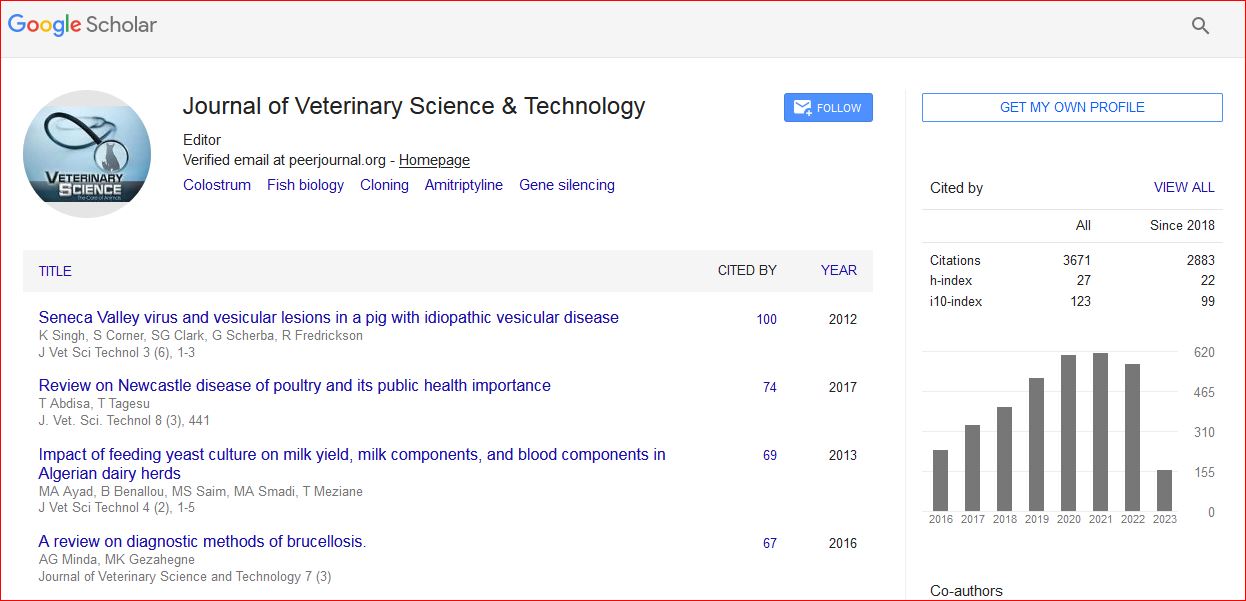
Veterinary Science & Technology received 4472 citations as per Google Scholar report