Brief Report - (2025) Volume 11, Issue 3
Received: 01-May-2025, Manuscript No. jefc-26-188212;
Editor assigned: 05-May-2025, Pre QC No. P-188212;
Reviewed: 19-May-2025, QC No. Q-188212;
Revised: 22-May-2025, Manuscript No. R-188212;
Published:
29-May-2025
, DOI: 10.37421/2472-0542.2025.11.539
Citation: Carter, Emily. ”Thermal Processing Effects On Fruit And Vegetable Nutrients.” J Exp Food Chem 11 (2025):539.
Copyright: © 2025 Carter E. This is an open-access article distributed under the terms of the Creative Commons Attribution License, which permits unrestricted use, distribution and reproduction in any medium, provided the original author and source are credited.
Thermal processing is a cornerstone of food preservation, significantly influencing the chemical composition of fruits and vegetables by affecting their nutrient content, bioactive compounds, and physical properties. These changes encompass vitamin degradation, particularly for water-soluble vitamins like C and B vitamins, and a reduction in antioxidant activity due to the loss of polyphenols and carotenoids. Alterations in cell structure also impact texture and water-holding capacity. Despite these drawbacks, certain thermal treatments can enhance the bioavailability of some nutrients and degrade antinutrients, making an understanding of these effects crucial for optimizing processing methods to preserve nutritional value and desired quality attributes [1].
Different heat treatments, such as pasteurization and sterilization, demonstrably affect the vitamin C and carotenoid content in tomatoes. Studies indicate a significant decrease in vitamin C with increasing temperature and time, while carotenoid content exhibits varying responses, with some showing stability or even slight increases due to cell wall breakdown facilitating release. This highlights a critical trade-off between microbial safety and nutrient retention in processed tomato products [2].
The influence of mild thermal processing on the antioxidant capacity and phenolic profiles of berries is also a subject of considerable research. While some sensitive phenolic compounds are reduced, others, like certain anthocyanins, can be stabilized or even enhanced by specific mild heat treatments. This suggests that carefully controlled thermal processing can maintain or even improve the health-promoting properties of berries [3].
For vegetables such as broccoli florets, blanching parameters significantly impact enzymatic activity and texture. Longer blanching times and higher temperatures lead to greater inactivation of enzymes like peroxidase, contributing to better shelf-life. However, this often results in significant softening of the tissue, a critical factor influencing consumer acceptance [4].
Microwave processing, a rapid heating method, has been shown to affect glucosinolate content and isothiocyanates in cruciferous vegetables. Findings suggest that microwave heating can lead to a substantial reduction in glucosinolates, which are precursors to beneficial isothiocyanates, due to their thermal instability. This points to a potential nutritional drawback of microwave processing for certain vegetables [5].
In contrast, high-pressure processing (HPP) emerges as a non-thermal method with distinct advantages. HPP generally preserves vitamins, antioxidants, and flavor compounds better than conventional thermal methods, while also effectively inactivating enzymes and microorganisms. The potential of HPP for producing minimally processed, high-quality products is increasingly emphasized [6].
When considering drying methods, the preservation of bioactive compounds can vary significantly. For instance, freeze-drying preserves anthocyanins and antioxidant activity in blueberries most effectively, followed by vacuum drying, whereas hot air drying leads to substantial losses. This underscores the importance of selecting appropriate drying technologies to retain valuable phytochemicals [7].
Conventional canning processes, such as retort processing, can lead to significant nutrient losses. A notable example is the reduction in thiamine (vitamin B1) content in canned peas due to thermal degradation during the retorting process. The extent of this loss is directly correlated with processing time and temperature, highlighting the vulnerability of water-soluble vitamins to severe heat treatments [8].
Other thermal treatments like steam blanching also impact product quality. Steam blanching effectively inactivates enzymes but can also lead to the loss of desirable volatile aroma compounds and alter color in products like sweet corn. The duration of steam blanching is a critical factor influencing these changes [9].
Comparisons between different thermal processing methods reveal variations in their impact on specific nutrients. For example, canning of carrots resulted in a greater loss of carotenoids, particularly beta-carotene, compared to UHT processing. Changes in the isomer composition of carotenoids were also observed after processing [10].
The impact of thermal processing on the composition of fruits and vegetables is multifaceted, affecting a wide array of compounds. Specifically, vitamin C and various B vitamins, being water-soluble, are prone to degradation under heat, leading to reduced nutritional content. Concurrently, antioxidant activity often diminishes due to the loss or modification of phenolic compounds and carotenoids. The physical structure of plant tissues is also altered, influencing texture, water-holding capacity, and overall palatability. However, a nuanced understanding reveals that certain thermal treatments can paradoxically increase the bioavailability of some nutrients and reduce antinutrients, which are compounds that can interfere with nutrient absorption. Optimizing processing parameters is therefore essential for maximizing nutrient retention and preserving desirable quality attributes in processed foods [1].
In the context of tomato processing, pasteurization and sterilization treatments have been extensively studied for their effects on key micronutrients like vitamin C and carotenoids. Research consistently shows a dose-dependent relationship between heat exposure (temperature and time) and vitamin C degradation. Carotenoids, on the other hand, display a more variable response; while some may degrade, others can become more accessible or stable due to changes in the fruit's cellular matrix, offering a complex picture of nutrient changes during processing [2].
Mild thermal processing, often applied to preserve quality attributes, can have specific effects on the phytochemical profile of fruits like berries. While some sensitive antioxidant compounds might be diminished, other beneficial compounds, such as certain anthocyanins, can exhibit increased stability or even a boost in concentration under controlled mild heat. This suggests a potential for enhancing the health-promoting aspects of berry products through carefully managed thermal interventions [3].
For vegetables, particularly those intended for freezing or canning, blanching is a common pre-treatment. The effectiveness of blanching in enzyme inactivation, which is crucial for extending shelf-life and preventing undesirable changes during storage, is directly linked to temperature and duration. However, these same parameters can lead to undesirable textural changes, such as softening, which significantly affects consumer preference and the overall quality of the final product [4].
Emerging processing technologies like microwave heating present unique challenges and opportunities. In cruciferous vegetables, microwave processing has been observed to cause a significant reduction in glucosinolates. These compounds are precursors to isothiocyanates, which possess notable health benefits. The thermal instability of glucosinolates under microwave irradiation highlights a potential nutritional compromise associated with this method for these specific vegetables [5].
High-pressure processing (HPP) offers an alternative approach by utilizing pressure rather than heat for inactivation of microorganisms and enzymes. This non-thermal method has shown a superior ability to retain vitamins, antioxidants, and volatile flavor compounds compared to conventional thermal processing. The preservation of these quality-defining components makes HPP a promising technology for producing minimally processed, high-value food products [6].
Drying technologies also play a critical role in preserving the nutritional and phytochemical integrity of fruits. For instance, the choice of drying method for blueberries significantly influences the retention of anthocyanins and overall antioxidant capacity. Freeze-drying stands out as the most effective method for preservation, followed by vacuum drying, while conventional hot air drying results in substantial losses of these valuable compounds [7].
Traditional canning methods, such as retort processing, involve high temperatures and extended processing times, which can lead to significant nutrient depletion. Thiamine (vitamin B1), a crucial water-soluble vitamin, is particularly susceptible to thermal degradation under these conditions. Studies have quantified these losses and correlated them with the severity of the retorting process, emphasizing the sensitivity of certain vitamins to extensive heat treatment [8].
Steam blanching, another common thermal pre-treatment, affects both the sensory and nutritional profiles of vegetables. While it effectively deactivates spoilage enzymes, it can also lead to the degradation of volatile compounds responsible for aroma and may cause undesirable color changes in products like sweet corn. The processing time is a key determinant of the extent of these alterations [9].
Comparing different thermal processing techniques for the same food product can reveal significant differences in their impact on nutrient content. For carrots, canning has been shown to cause more substantial losses of carotenoids, including beta-carotene, than UHT processing. Furthermore, processing can alter the specific forms or isomers of these compounds, influencing their bioavailability and functional properties [10].
Thermal processing profoundly impacts the chemical and physical characteristics of fruits and vegetables. Heat treatments can lead to the degradation of essential nutrients, particularly water-soluble vitamins and antioxidants like polyphenols and carotenoids, while also altering texture and water-holding capacity. However, some methods can enhance nutrient bioavailability or reduce antinutrients. Specific research highlights varying effects of pasteurization and sterilization on vitamin C and carotenoids in tomatoes, with higher temperatures and longer times causing greater losses in vitamin C. Mild thermal processing can stabilize or even enhance certain phenolic compounds and anthocyanins in berries. Blanching significantly impacts enzyme activity and texture in vegetables like broccoli, with longer times and higher temperatures leading to greater enzyme inactivation but also increased softening. Microwave processing can reduce beneficial glucosinolates in cruciferous vegetables due to their thermal instability. High-pressure processing is noted as a non-thermal alternative that preserves nutrients and bioactive compounds better than thermal methods. Drying methods also vary in their effectiveness, with freeze-drying superior to hot air drying for preserving anthocyanins and antioxidant activity in blueberries. Retort processing causes significant loss of thiamine in canned peas, and steam blanching can degrade volatile compounds and affect color in sweet corn. Comparisons between canning and UHT processing show greater carotenoid loss with canning.
None
None
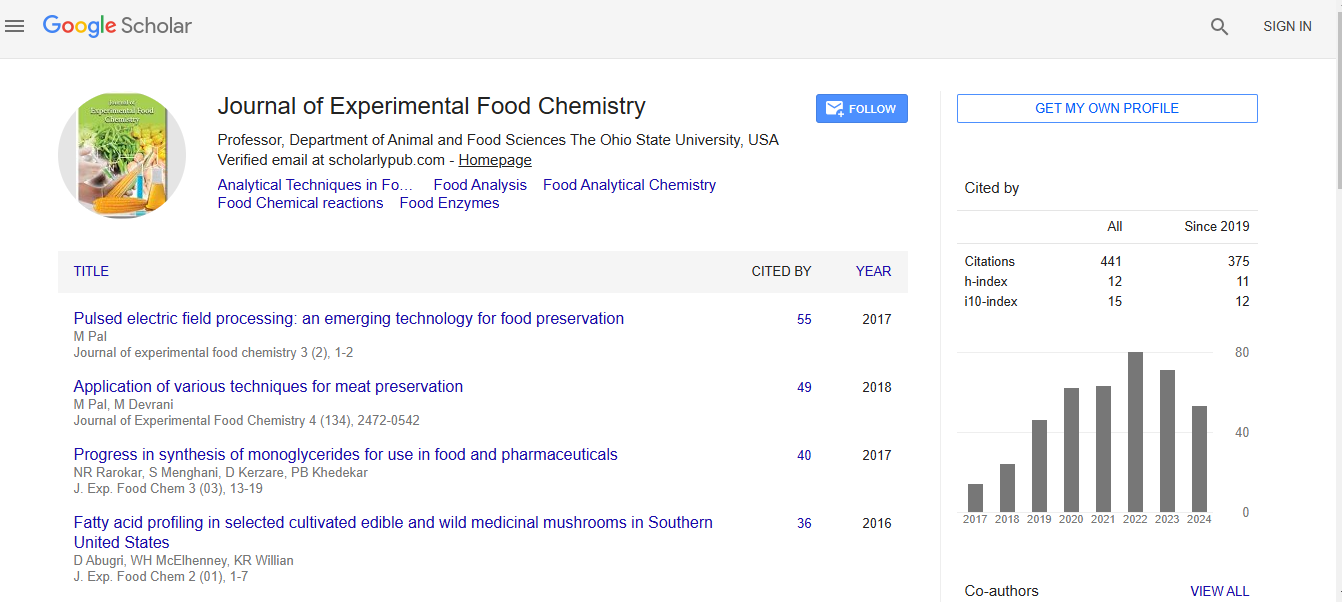
Journal of Experimental Food Chemistry received 389 citations as per Google Scholar report