Short Communication - (2025) Volume 11, Issue 6
Received: 01-Nov-2025, Manuscript No. jfim-26-178597;
Editor assigned: 03-Nov-2025, Pre QC No. P-178597;
Reviewed: 17-Nov-2025, QC No. Q-178597;
Revised: 24-Nov-2025, Manuscript No. R-178597;
Published:
29-Nov-2025
, DOI: 10.37421/2572-4134.2025.11.382
Citation: Walker, Andrew J.. ”Omics, AI, And Microbiomes Reshape Food, Industry.” J Food Ind Microbiol 11 (2025):382.
Copyright: © 2025 Walker J. Andrew This is an open-access article distributed under the terms of the Creative Commons Attribution License, which permits unrestricted use, distribution and reproduction in any medium, provided the original author and source are credited.
The field of food and industrial microbiology is undergoing a profound transformation, driven by the synergistic integration of advanced omics technologies and computational biology. This ongoing evolution is fundamentally reshaping our understanding of microbial communities within complex food matrices, enhancing food safety through sophisticated predictive modeling, and pioneering the development of sustainable bioprocesses. A significant trend involves leveraging the comprehensive power of metagenomics and metatranscriptomics to unravel the intricate interactions within microbial ecosystems, providing unprecedented insights into their functional roles and dynamics [1].
Concurrently, the application of artificial intelligence (AI) is revolutionizing crucial aspects such as rapid pathogen detection and precise strain typing, enabling quicker and more informed responses to potential threats. Furthermore, considerable effort is being directed towards the exploration and discovery of novel antimicrobial compounds derived from a vast array of microbial sources, offering new strategies to combat resistance [1].
A growing emphasis is also placed on elucidating the significant influence of the gut microbiome on overall food quality and human health, highlighting the interconnectedness of dietary microbes and host well-being [1].
This understanding facilitates the development of tailored dietary interventions and functional foods designed to promote a balanced gut microbiota. The quest for sustainable industrial solutions is further propelled by the development of highly efficient microbial consortia, engineered to optimize processes such as waste valorization and the production of essential biofuels and bioplastics [1].
Metagenomics has emerged as a groundbreaking tool, dramatically expanding our comprehension of microbial ecosystems within food systems. Moving beyond the limitations of traditional culturomics, which only captures a fraction of the microbial world, metagenomics allows for the detailed characterization of the vast majority of unculturable microorganisms. This capability provides unparalleled insights into microbial diversity, their inherent functional potential, and their specific contributions to crucial processes like food spoilage, desirable fermentation, and overall food safety. The continuous advancements in high-throughput sequencing technologies, coupled with increasingly sophisticated bioinformatics pipelines, are making these complex analyses more accessible, cost-effective, and comprehensive than ever before. Consequently, this progress is leading to the development of more accurate predictive models for food quality assessment and the identification of novel microbial candidates for use as starter cultures and probiotics [2].
Artificial intelligence (AI) and machine learning (ML) are increasingly recognized as indispensable tools within the domain of food microbiology, signaling a substantial paradigm shift in research and application. These advanced technologies possess the remarkable ability to accelerate the identification and detailed characterization of foodborne pathogens, offering rapid and precise diagnostics. Furthermore, AI and ML can accurately predict the spoilage of food products by analyzing a multitude of diverse parameters, thereby enabling proactive interventions to maintain product integrity. They are also instrumental in optimizing complex industrial fermentation processes, leading to improved yields and consistency. The inherent capacity of AI and ML to rapidly analyze vast and complex datasets, identifying subtle yet significant patterns, offers immense potential for strengthening food safety surveillance systems and significantly enhancing the overall efficiency and reliability of bioproduct manufacturing [3].
The discovery and subsequent application of novel antimicrobial compounds originating from diverse microbial sources represent a critical frontier in the ongoing battle against antimicrobial resistance. These compounds, which include well-studied bacteriocins and a wide spectrum of other secondary metabolites, are vital for preserving food and mitigating microbial threats. Current research efforts are intensely focused on isolating these valuable compounds from previously under-explored environmental niches and optimizing their production through advanced genetic engineering techniques and controlled fermentation processes. The inherent biological origin and often unique mechanisms of action of these natural antimicrobials position them as promising and sustainable alternatives for effective food preservation. Moreover, they possess the capability to complement and enhance the efficacy of existing traditional control strategies, thereby broadening the scope of microbial control in food systems [4].
The intricate interplay between the gut microbiome and the food we consume constitutes a profoundly significant and rapidly expanding area of scientific investigation. This research encompasses a broad spectrum of inquiries, including how various food processing techniques can subtly or significantly alter the composition and function of microbial communities, both within the food itself and in the host's digestive tract. It also delves into the specific impacts that diverse food components, such as prebiotics, probiotics, and other bioactive compounds, exert on the gut microbiota. Furthermore, a key objective is the development of innovative functional foods and targeted probiotic formulations specifically designed to beneficially modulate gut health and microbial balance. A comprehensive understanding of these complex relationships is pivotal for guiding the design of healthier, more efficacious food products and for advancing the implementation of personalized nutrition strategies tailored to individual needs [5].
The optimization of industrial bioprocesses through the strategic utilization of microbial consortia is steadily gaining momentum as a highly promising avenue for sustainable industrial applications. This burgeoning area of research is dedicated to the engineering of synergistic communities of microorganisms, meticulously designed to work in concert and significantly enhance the efficiency of producing a wide range of valuable compounds. These compounds span critical sectors, including the generation of renewable biofuels, the synthesis of biodegradable bioplastics, and the production of essential industrial enzymes. To achieve the sophisticated design and precise control of these complex microbial systems, researchers are employing a suite of cutting-edge molecular techniques alongside advanced computational modeling approaches, thereby paving the way for truly sustainable industrial biotechnology [6].
Predictive microbiology, significantly empowered by the advancements in data science and artificial intelligence, is rapidly becoming an indispensable component of modern food safety management. Sophisticated models are being meticulously developed to accurately predict microbial growth kinetics, survival rates, and the potential production of toxins under a wide array of processing and storage conditions encountered throughout the food supply chain. This predictive capability enables more robust and precise risk assessment, facilitates the implementation of targeted and effective control interventions, and ultimately aids in the design of safer food products that also exhibit extended shelf life, thereby reducing food waste [7].
A notable and growing trend within industrial microbiology is the systematic exploration of alternative microbial sources for the production of diverse food ingredients and various industrial products. This innovative approach encompasses the utilization of microorganisms such as microalgae, yeasts, and bacteria as sustainable and efficient sources of essential proteins, valuable lipids, and a plethora of other high-demand compounds. Current research in this field is strategically focused on developing and refining sustainable cultivation methodologies and implementing efficient downstream processing techniques. The ultimate goal is to ensure that these alternative microbial-derived products become not only economically viable but also environmentally friendly, contributing to more sustainable supply chains [8].
The development and application of advanced culture-independent techniques, notably metatranscriptomics and metaproteomics, are providing significantly deeper and more dynamic insights into microbial activity and gene expression within complex food and industrial environments. These cutting-edge methods serve as crucial complements to metagenomics, which primarily reveals the genetic potential of microbial communities. By focusing on what microbes are actively doing â?? their transcribed genes and expressed proteins â?? metatranscriptomics and metaproteomics offer a dynamic, functional view of microbial communities. This functional perspective is absolutely critical for a comprehensive understanding and effective manipulation of these intricate biological systems, whether in food production, fermentation, or environmental applications [9].
The increasing global emphasis on circular economy principles is powerfully driving innovation, particularly within the realm of industrial microbiology and its application to waste valorization. This vital area of research is dedicated to exploring and optimizing microbial processes that can effectively convert diverse waste streams â?? including agricultural byproducts, industrial residues, and municipal solid waste â?? into valuable end-products. These valuable outputs can range from renewable biofuels and biodegradable bioplastics to essential organic acids and nutrient-rich animal feed. This dual approach not only provides effective solutions to pressing waste management challenges but also fundamentally promotes enhanced resource efficiency and fosters greater sustainability across a broad spectrum of industries [10].
The field of food and industrial microbiology is experiencing rapid advancements, largely due to the integration of omics technologies and computational biology. Research is actively focused on deciphering microbial communities in complex food environments, improving food safety through predictive modeling, and developing sustainable bioprocesses. Key developments include the use of metagenomics and metatranscriptomics to understand microbial interactions, and AI for pathogen detection and strain typing. The exploration of novel antimicrobial compounds from microbial sources is also a significant area, aiming to combat resistance. Furthermore, the gut microbiome's role in food quality and human health is increasingly recognized, alongside the engineering of microbial consortia for industrial applications like waste valorization and biofuel production [1].
Metagenomics is transforming the study of food microbial ecosystems by moving beyond traditional culturomics to reveal the unculturable majority. This approach provides detailed insights into microbial diversity, functional potential, and their roles in food spoilage, fermentation, and safety. Advances in sequencing and bioinformatics are making these analyses more accessible and comprehensive, leading to improved predictive models for food quality and the identification of novel starter cultures and probiotics [2].
Artificial intelligence (AI) and machine learning (ML) are becoming crucial tools in food microbiology, accelerating pathogen identification and characterization, predicting food spoilage, and optimizing industrial fermentation. Their ability to analyze large datasets quickly and identify complex patterns offers significant potential for enhancing food safety surveillance and improving bioproduct manufacturing efficiency [3].
The discovery and application of novel antimicrobial compounds from microbial sources, such as bacteriocins, are essential for combating antimicrobial resistance. Research focuses on isolating these compounds from under-explored environments and optimizing their production through genetic engineering and fermentation, offering promising alternatives for food preservation and complementing traditional methods [4].
The complex relationship between the gut microbiome and food is a major research focus. This includes studying how food processing impacts microbial communities, how food components affect the gut microbiota, and developing functional foods and probiotics to modulate gut health. Understanding these interactions is key to designing healthier food products and personalized nutrition strategies [5].
Industrial bioprocess optimization using microbial consortia is gaining traction for applications such as producing biofuels, bioplastics, and enzymes. This involves engineering synergistic communities and employing advanced molecular techniques and computational modeling for the design and control of these complex systems for sustainable industrial biotechnology [6].
Predictive microbiology, powered by data science and AI, is becoming indispensable for food safety. Models are being developed to forecast microbial growth, survival, and toxin production under various conditions, enabling better risk assessment, targeted interventions, and the design of safer food with extended shelf life [7].
There is a growing trend in exploring alternative microbial sources for food ingredients and industrial products, including microalgae, yeasts, and bacteria. Research focuses on sustainable cultivation methods and efficient downstream processing to make these alternatives economically viable and environmentally friendly [8].
Advanced culture-independent techniques like metatranscriptomics and metaproteomics provide deeper insights into microbial activity and gene expression in complex environments. These methods reveal what microbes are actively doing, offering a dynamic view crucial for understanding and manipulating microbial communities [9].
Circular economy principles are driving innovation in industrial microbiology, particularly in waste valorization. Research focuses on using microbial processes to convert waste streams into valuable products like biofuels, bioplastics, and animal feed, promoting resource efficiency and sustainability across industries [10].
Advancements in omics technologies and computational biology are transforming food and industrial microbiology. Research focuses on understanding microbial communities, enhancing food safety through predictive modeling, and developing sustainable bioprocesses. Key areas include the use of metagenomics for microbial insights, AI for pathogen detection, and the discovery of novel antimicrobial compounds. The gut microbiome's influence on food and health is a significant focus, alongside the engineering of microbial consortia for industrial applications like waste valorization and biofuel production. Metagenomics offers detailed insights into microbial diversity and function, while AI and machine learning accelerate pathogen identification and process optimization. Novel antimicrobials from microbial sources are vital for combating resistance. The food-gut microbiome axis is being explored for healthier food design and personalized nutrition. Microbial consortia are being engineered for efficient production of biofuels and bioplastics. Predictive microbiology, powered by data science, is essential for food safety. Alternative microbial sources are being explored for sustainable ingredient production. Advanced techniques like metatranscriptomics and metaproteomics provide dynamic insights into microbial activity. Finally, microbial valorization of waste streams is a key strategy for promoting a circular economy and resource efficiency.
None
None
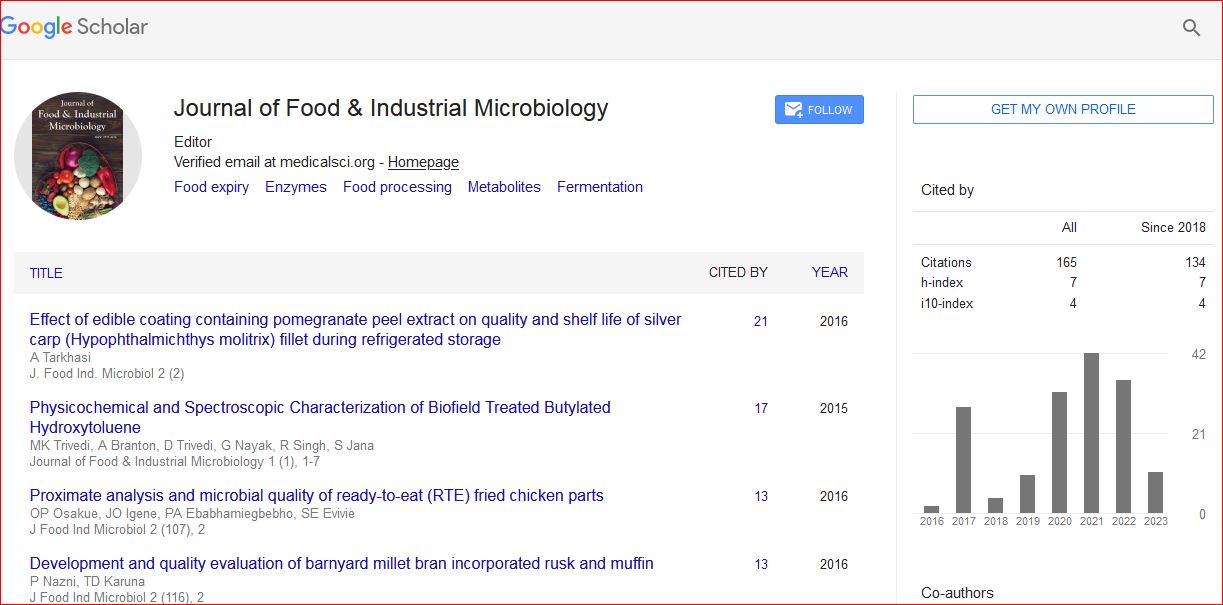
Journal of Food & Industrial Microbiology received 160 citations as per Google Scholar report