Brief Report - (2025) Volume 11, Issue 2
Received: 01-Mar-2025, Manuscript No. jfim-26-178550;
Editor assigned: 03-Mar-2025, Pre QC No. P-178550;
Reviewed: 17-Mar-2025, QC No. Q-178550;
Revised: 24-Mar-2025, Manuscript No. R-178550;
Published:
31-Mar-2025
, DOI: 10.37421/2572-4134.2025.11.336
Citation: Petrova, Elena V.. ”Probiotics In Food: Enhancing Health And Functionality.” J Food Ind Microbiol 11 (2025):336.
Copyright: © 2025 Petrova V. Elena This is an open-access article distributed under the terms of the Creative Commons Attribution License, which permits unrestricted use, distribution and reproduction in any medium, provided the original author and source are credited.
Probiotics, defined as live microorganisms that provide a health benefit when administered in adequate amounts, are increasingly being integrated into food systems to enhance their nutritional and functional properties. This review explores the diverse applications of probiotics in various foods, including dairy products, fermented foods, and novel functional foods, highlighting their critical role in promoting gut health, modulating immune responses, and facilitating the production of beneficial bioactive compounds. Challenges related to maintaining probiotic stability and viability during food processing and storage are also discussed, alongside various strategies developed to overcome these hurdles [1].
Microencapsulation has emerged as a crucial technology for the effective delivery of viable probiotics into food products, ensuring their survival and functionality. This article examines a range of microencapsulation techniques, such as spray drying, freeze-drying, and emulsification, and assesses their impact on probiotic survival rates and overall functionality. The selection of appropriate wall materials is highlighted as a significant factor influencing the protection of probiotics against harsh processing conditions and transit through the gastrointestinal tract [2].
The immune-modulatory effects of probiotics represent a significant and growing area of scientific investigation. This particular study delves into how specific probiotic strains, when incorporated into a model food matrix, exert influence on immune cell activity and the production of cytokines. The findings strongly suggest that probiotics possess the capacity to enhance both innate and adaptive immune responses, thereby presenting a promising avenue for the development of innovative immunobiotic foods [3].
Dairy products, particularly those that are fermented such as yogurt and kefir, naturally serve as effective carriers for probiotics. This paper provides a comprehensive review of the impact that the addition of probiotics has on the sensory attributes, textural properties, and overall shelf-life of these dairy products. Furthermore, it explores the synergistic interactions that occur between probiotics and the dairy matrices themselves in terms of enhancing nutrient bioavailability and facilitating the production of valuable metabolites [4].
Beyond traditional dairy products, probiotics are currently being explored for their potential in a variety of non-dairy fermented foods, including staples like kimchi, sauerkraut, and kombucha. This research investigates the inherent probiotic potential of the indigenous microflora found in these traditional foods and examines how different fermentation conditions influence probiotic viability and functionality. The findings suggest that these naturally fermented foods can serve as cost-effective and accessible vehicles for probiotic delivery [5].
The intricate balance of the gut microbiome plays a pivotal role in maintaining overall human health, and probiotics have demonstrated the capacity to positively modulate its composition and metabolic activity. This article provides an in-depth exploration of the various mechanisms through which probiotics interact with the gut microbiota. These mechanisms include competitive exclusion of pathogenic bacteria, the production of beneficial short-chain fatty acids, and the modulation of the gut barrier's integrity. The implications for the treatment of various gastrointestinal disorders are thoroughly discussed [6].
The development of novel food matrices for the effective delivery of probiotics is a critical area of research aimed at expanding their widespread application in the food industry. This study specifically explores the potential of fruit juices, smoothies, and various cereal-based products as suitable carriers for probiotics. Key factors influencing probiotic survival, such as pH, sugar content, and the presence of potentially inhibitory compounds, are rigorously evaluated, and strategies for optimizing probiotic viability within these matrices are proposed [7].
The efficacy and health benefits derived from probiotics are demonstrably strain-specific, making the selection of appropriate strains paramount for specific functional applications in foods. This research underscores the critical importance of carefully considering the known health benefits, technological properties, and compatibility with the target food matrix when selecting probiotic strains. A systematic approach to strain selection is proposed to ensure both product quality and the delivery of tangible consumer health benefits [8].
Probiotics possess the inherent ability to influence the production of various bioactive compounds within food systems, thereby contributing to enhanced health benefits for consumers. This study specifically investigates the production of essential vitamins, beneficial exopolysaccharides, and short-chain fatty acids by probiotics during the fermentation of cereal-based products. The results provide compelling evidence for the potential of probiotics to significantly enrich the nutritional profile of these widely consumed foods [9].
The sensory perception of probiotic-enhanced foods is a critical determinant of consumer acceptance and market success. This research rigorously evaluates the multifaceted impact that both the incorporation of probiotics and the application of microencapsulation techniques have on the flavor, aroma, and textural characteristics of a diverse range of food products. Strategies designed to minimize any potential negative sensory changes and thereby enhance overall consumer appeal are thoroughly discussed [10].
Probiotics, live microorganisms conferring health benefits when consumed in adequate amounts, are increasingly incorporated into food to boost nutritional and functional qualities. This review examines their diverse uses in foods like dairy, fermented products, and novel functional foods, emphasizing their roles in gut health, immune modulation, and the creation of bioactive compounds. It also addresses challenges in probiotic stability and viability during food processing and storage, along with mitigation strategies [1].
Microencapsulation is a vital technology for ensuring the survival and functionality of probiotics in food products. This article reviews various techniques, including spray drying, freeze-drying, and emulsification, and analyzes their effects on probiotic survival. The choice of wall material is crucial for protecting probiotics from harsh processing conditions and gastrointestinal transit [2].
The immune-modulatory effects of probiotics are a major research focus. This study investigates how specific probiotic strains in a model food matrix influence immune cell activity and cytokine production, suggesting probiotics can bolster innate and adaptive immunity, paving the way for immunobiotic foods [3].
Fermented dairy products like yogurt and kefir are natural probiotic carriers. This paper assesses how probiotic addition affects the sensory qualities, texture, and shelf-life of dairy products, and explores synergistic effects with dairy matrices that enhance nutrient bioavailability and metabolite production [4].
Probiotics are being explored in non-dairy fermented foods such as kimchi, sauerkraut, and kombucha. This research examines the probiotic potential of their native microflora and the impact of fermentation conditions on probiotic viability and function, indicating these foods can be cost-effective probiotic vehicles [5].
The gut microbiome is central to human health, and probiotics can positively influence its composition and activity. This article details how probiotics interact with the gut microbiota, including pathogen exclusion, short-chain fatty acid production, and gut barrier function modulation, discussing their potential for treating gastrointestinal disorders [6].
Developing new food matrices for probiotic delivery is key to broadening their applications. This study evaluates fruit juices, smoothies, and cereal products as probiotic carriers, assessing factors like pH, sugar, and inhibitory compounds on probiotic survival, and proposes optimization strategies for viability [7].
Probiotic efficacy is strain-dependent. This research highlights the importance of selecting strains based on known health benefits, technological properties, and food matrix compatibility for specific applications, proposing a systematic selection process for product quality and consumer benefits [8].
Probiotics can enhance food's health benefits by influencing the production of bioactive compounds. This study examines vitamin, exopolysaccharide, and short-chain fatty acid production by probiotics during cereal fermentation, demonstrating their capacity to enrich the nutritional value of these foods [9].
Sensory perception is crucial for consumer acceptance of probiotic foods. This research analyzes the effect of probiotic inclusion and microencapsulation on flavor, aroma, and texture, discussing methods to mitigate negative sensory changes and improve consumer appeal [10].
Probiotics, live microorganisms providing health benefits, are increasingly integrated into foods to enhance nutritional and functional properties. Their applications span dairy, fermented, and novel functional foods, impacting gut health, immune modulation, and bioactive compound production. Key challenges include maintaining probiotic viability during processing and storage, which can be addressed through technologies like microencapsulation. Various techniques such as spray drying and freeze-drying are employed, with wall material selection being critical for protection. Probiotics also influence immune cell activity and cytokine production, suggesting potential for immunobiotic foods. Traditional fermented foods like yogurt, kefir, kimchi, and sauerkraut serve as natural carriers, while research is exploring non-dairy options and novel matrices like fruit juices and cereal-based products. The strain-specific nature of probiotic effects necessitates careful selection based on health benefits and compatibility with the food matrix. Furthermore, probiotics can enrich foods by producing beneficial compounds like vitamins and exopolysaccharides. Consumer acceptance is also influenced by sensory attributes, and strategies are being developed to optimize flavor, aroma, and texture.
None
None
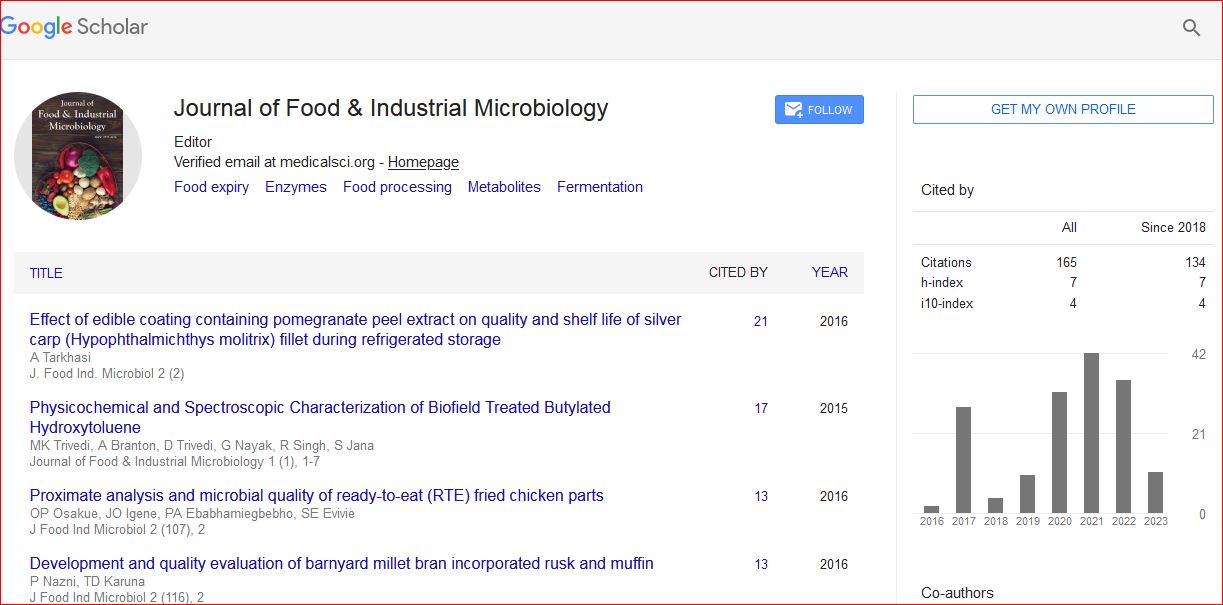
Journal of Food & Industrial Microbiology received 160 citations as per Google Scholar report