Brief Report - (2025) Volume 11, Issue 3
Received: 02-May-2025, Manuscript No. jfim-26-178560;
Editor assigned: 05-May-2025, Pre QC No. P-178560;
Reviewed: 19-May-2025, QC No. Q-178560;
Revised: 23-May-2025, Manuscript No. R-178560;
Published:
30-May-2025
, DOI: 10.37421/2572-4134.2025.11.346
Citation: Larsen, Henrik. ”Ensuring Microbiological Safety of Ready-to-Eat Foods.” J Food Ind Microbiol 11 (2025):346.
Copyright: © 2025 Larsen H. This is an open-access article distributed under the terms of the Creative Commons Attribution License, which permits unrestricted use, distribution and reproduction in any medium, provided the original author and source are credited.
The microbiological quality of ready-to-eat (RTE) foods is a critical concern for public health, necessitating robust detection and enumeration techniques to ensure safety and prevent foodborne illnesses. Current methods for assessing this quality are continually evolving to meet the demands of a globalized food supply chain. Advancements in both traditional and novel approaches are essential for identifying key pathogens and spoilage organisms that can compromise RTE products, with a strong emphasis on risk assessment and control strategies within the food industry. [1] Ensuring the safety of RTE deli meats, for instance, remains a persistent challenge due to the potential for contamination by hazardous microorganisms like Listeria monocytogenes. Studies investigating the prevalence of such pathogens highlight the ongoing need for effective detection methods. The utility of molecular techniques, such as multiplex real-time PCR assays, is increasingly recognized for their capacity for rapid and accurate identification, which is crucial for effective food safety management in production facilities. [2] Identifying the sources and transmission routes of foodborne pathogens is paramount for implementing targeted control measures. Whole-genome sequencing (WGS) has emerged as a powerful tool in this regard, offering high-resolution genetic information that aids in outbreak investigations. This technology plays a vital role in improving the safety of widely consumed products like ready-to-eat leafy green vegetables by enabling a comprehensive understanding of contamination pathways throughout the food supply chain. [3] Maintaining hygienic conditions within ready-to-eat food processing environments is fundamental to preventing microbial contamination. The effectiveness of sanitization protocols on processing surfaces is a key area of research. Evaluating different sanitizing agents and application methods provides data-driven insights into optimal practices that are essential for preventing cross-contamination and ensuring the overall safety of RTE food production. [4] The development of rapid detection technologies is crucial for enhancing food safety surveillance and response capabilities. Biosensors offer the potential for on-site, real-time microbial testing, which can significantly improve the speed and accuracy of detecting pathogens in various RTE products. The validation of such biosensor technology for specific applications, such as detecting pathogenic Escherichia coli in ready-to-eat salads, demonstrates its promise for proactive food safety management. [5] Packaging plays a significant role in extending the shelf-life and maintaining the microbiological quality of ready-to-eat meals. Investigating the impact of different packaging materials and technologies, including modified atmosphere packaging (MAP), provides valuable insights into how these methods can influence microbial growth and spoilage. This knowledge is essential for developing strategies to enhance the safety and quality of RTE food products. [6] Biological control agents, such as bacteriophages, are being explored as sustainable alternatives or complements to traditional methods for controlling foodborne pathogens. Their efficacy against specific pathogens like Salmonella in ready-to-eat poultry products highlights their potential as an environmentally friendly approach to enhancing microbiological safety. This offers a novel avenue for improving food safety alongside existing control measures. [7] The human element in food handling is a critical determinant of the microbiological quality of ready-to-eat foods. Proper hygiene practices, comprehensive training, and health surveillance of food handlers are essential to prevent contamination and ensure the safety of RTE products. This is particularly important in food service settings where direct consumer contact with food occurs. [8] Environmental monitoring programs (EMPs) are vital for controlling persistent microbial threats like Listeria monocytogenes in ready-to-eat food processing plants. The design and implementation of effective EMPs, including well-defined sampling strategies and robust data analysis, are key to minimizing the risk of product contamination. Such programs are crucial for ensuring regulatory compliance and maintaining a high standard of food safety. [9] Microbiological contamination of ready-to-eat sandwiches and wraps presents a public health concern, especially given their widespread availability in retail settings. Identifying common microbial flora, including potential pathogens, and understanding the contributing factors to contamination are essential. This underscores the need for stringent hygiene practices and rigorous quality control throughout the entire production and distribution chain to safeguard consumers. [10]
The review of current methods for assessing the microbiological quality of ready-to-eat (RTE) foods emphasizes the critical need for robust detection and enumeration techniques to safeguard public health. It delves into the intrinsic and extrinsic factors contributing to microbial contamination in RTE products, exploring advancements in culture-based, molecular, and rapid detection methods, with a focus on identifying key pathogens and spoilage organisms. The article highlights the importance of risk assessment and control strategies within the food industry for maintaining food safety. [1] The prevalence of Listeria monocytogenes in ready-to-eat deli meats has been investigated using both traditional culture methods and a novel multiplex real-time PCR assay. This comparative study underscores the persistent challenge posed by L. monocytogenes contamination in RTE products. It also highlights the utility of molecular techniques for rapid and accurate detection, which are crucial for effective food safety management in production facilities, ensuring consumer protection from this dangerous pathogen. [2] Whole-genome sequencing (WGS) has been explored for its application in tracking the source and transmission of Salmonella in ready-to-eat leafy green vegetables. The research demonstrates the power of WGS in providing high-resolution genetic information essential for effective outbreak investigations. This technology enables the implementation of targeted control measures throughout the food supply chain, thereby significantly improving the safety of these widely consumed products. [3] This paper examines the effectiveness of sanitization protocols in reducing microbial loads on surfaces within ready-to-eat food processing environments. It evaluates various sanitizing agents and application methods, offering data-driven insights into optimal practices. These insights are vital for preventing cross-contamination and maintaining the highly hygienic conditions that are absolutely essential for ensuring the safety of RTE food production. [4] The development and validation of a rapid biosensor for detecting pathogenic Escherichia coli in ready-to-eat salads is the focus of this research. The study highlights the significant potential of biosensor technology to provide on-site, real-time microbial testing. This capability can substantially enhance food safety surveillance and response capabilities within the food industry, allowing for quicker interventions. [5] This article investigates the impact of various packaging materials on the shelf-life and microbiological quality of ready-to-eat meals. It examines how different packaging technologies, including modified atmosphere packaging (MAP), influence microbial growth and spoilage. The findings provide crucial insights for extending the safety and maintaining the overall quality of RTE food products, addressing concerns about microbial degradation. [6] The efficacy of bacteriophages as a biological control agent against foodborne pathogens, specifically Salmonella, in ready-to-eat poultry products is evaluated in this study. The research highlights the promising potential of phage therapy as a sustainable and environmentally friendly approach. This method can enhance the microbiological safety of RTE poultry, acting as a valuable complement to existing control measures. [7] This article examines the crucial role of food handlers in maintaining the microbiological quality of ready-to-eat foods. It strongly emphasizes the paramount importance of proper hygiene practices, thorough training, and diligent health surveillance of food handlers. These measures are essential for preventing contamination and ensuring the safety of RTE products, particularly within food service environments. [8] This research explores the application of environmental monitoring programs (EMPs) for effectively controlling Listeria monocytogenes in ready-to-eat food processing plants. It provides detailed guidance on the design and implementation of effective EMPs, including critical sampling strategies and data analysis techniques. These programs are designed to minimize the risk of product contamination and ensure strict regulatory compliance. [9] This study investigates the microbiological contamination of ready-to-eat sandwiches and wraps commonly found in retail settings. It identifies prevalent microbial flora, including potential pathogens, and discusses the various factors contributing to contamination. The findings emphasize the critical need for stringent hygiene practices and robust quality control throughout the entire production and distribution chain to ensure consumer safety. [10]
This collection of research focuses on ensuring the microbiological safety of ready-to-eat (RTE) foods. Studies cover the review of current assessment methods, the prevalence and detection of pathogens like Listeria monocytogenes and Salmonella using both traditional and molecular techniques, and the application of whole-genome sequencing for tracing contamination sources. The impact of sanitization protocols, rapid biosensor development, and packaging technologies on microbial quality are also explored. Furthermore, the role of food handlers and environmental monitoring programs in preventing contamination is highlighted, along with the exploration of biological control agents like bacteriophages. The microbiological quality of specific RTE products like deli meats, leafy greens, poultry, and sandwiches is examined.
None
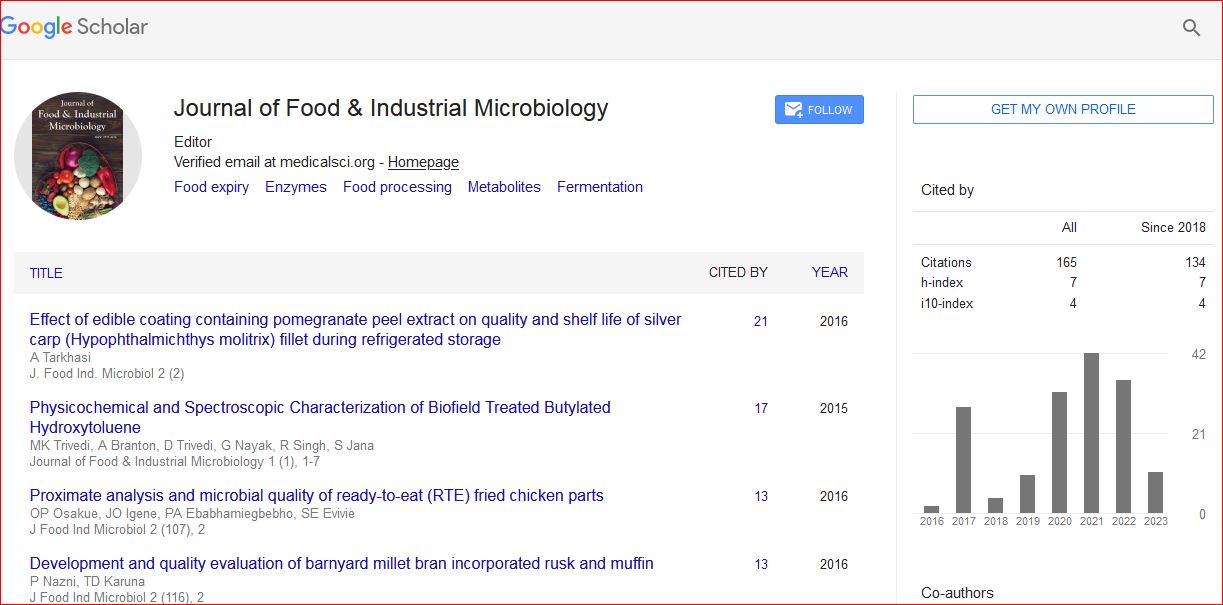
Journal of Food & Industrial Microbiology received 160 citations as per Google Scholar report