Commentary - (2025) Volume 11, Issue 3
Received: 01-May-2025, Manuscript No. jefc-26-188260;
Editor assigned: 03-May-2025, Pre QC No. P-188260;
Reviewed: 19-May-2025, QC No. Q-188260;
Revised: 22-May-2025, Manuscript No. R-188260;
Published:
29-May-2025
, DOI: 10.37421/2472-0542.2025.11.547
Citation: Rossi, Maria. ”Controlling Enzymatic Browning in Fresh Produce.” J Exp Food Chem 11 (2025):547.
Copyright: © 2025 Rossi M. This is an open-access article distributed under the terms of the Creative Commons Attribution License, which permits unrestricted use, distribution and reproduction in any medium, provided the original author and source are credited.
Enzymatic browning is a significant post-harvest physiological process that negatively impacts the visual appeal and shelf-life of many fruits and vegetables. This phenomenon is primarily driven by the enzymatic oxidation of phenolic compounds catalyzed by polyphenol oxidase (PPO) in the presence of oxygen. This study investigates the enzymatic browning process in fresh produce, focusing on the role of polyphenol oxidase (PPO) activity and substrate availability. It highlights how processing methods like cutting and bruising accelerate browning by increasing enzyme-substrate contact. The research also explores natural inhibitors and their potential to mitigate browning, offering insights into extending the shelf-life of fruits and vegetables [1].
Significant efforts have been made to understand and control this process, employing various technological and biochemical strategies. Blanching, a heat treatment, is one of the most common methods used to inactivate enzymes responsible for browning and extend the shelf-life of horticultural products. This paper delves into the impact of various blanching treatments on the enzymatic browning and quality attributes of cut apple slices. It quantifies the effectiveness of different temperatures and durations in inactivating polyphenol oxidase (PPO) while assessing the trade-offs with nutrient loss and textural changes. The findings provide practical guidance for optimizing blanching parameters to minimize browning without compromising overall quality [2].
In addition to thermal treatments, non-thermal processing methods are gaining traction for their ability to preserve quality attributes while controlling enzymatic browning. These include the application of edible coatings, which can act as physical barriers and sometimes possess inhibitory properties. The study examines the efficacy of different edible coatings, including chitosan and alginate, in preventing enzymatic browning and maintaining the visual appeal of minimally processed leafy greens. It elucidates the barrier properties of these coatings against oxygen and their potential to sequester phenolic substrates. Results indicate that specific coating formulations can significantly extend the shelf-life of these products [3].
Natural compounds, particularly antioxidants, have also been explored extensively for their ability to inhibit PPO activity and thereby reduce browning. These compounds often work by reducing the quinones formed during the enzymatic reaction or by directly inhibiting the enzyme. This research investigates the inhibitory effects of natural compounds, such as ascorbic acid and citric acid, on polyphenol oxidase activity in various fruit juices. The study quantifies the reduction in browning intensity and color change under different concentrations of these inhibitors. It provides a comparative analysis of their effectiveness, suggesting optimal usage levels for industrial applications [4].
The intrinsic characteristics of different produce varieties, such as their PPO isoenzyme profiles and phenolic content, also play a crucial role in their susceptibility to enzymatic browning. Understanding these varietal differences can inform breeding strategies for more browning-resistant cultivars. The study explores the biochemical mechanisms underlying enzymatic browning in different varieties of pears. It analyzes the PPO isoenzyme profiles and the phenolic compound composition, correlating these with observed browning rates. The research identifies specific pear cultivars with inherent resistance to browning, offering insights for breeding programs [5].
Further advancements in processing and preservation technologies, such as modified atmosphere packaging (MAP), have shown promise in extending the shelf-life of fresh-cut products by controlling the atmospheric conditions surrounding the produce. This paper investigates the role of modified atmosphere packaging (MAP) in controlling enzymatic browning of fresh-cut mushrooms. The study evaluates the impact of different gas compositions (e.g., low oxygen, high carbon dioxide) on PPO activity and the development of off-colors. It demonstrates that optimized MAP conditions can significantly extend the shelf-life and maintain the visual quality of mushrooms [6].
Emerging non-thermal technologies, including ultrasound and cold plasma, are also being investigated for their potential to inactivate PPO and mitigate enzymatic browning without negatively affecting product quality. The research explores the potential of ultrasound treatments as a non-thermal method to inhibit enzymatic browning in avocado pulp. It assesses the effect of different ultrasound parameters on PPO inactivation and the overall color stability of the avocado. The study suggests that ultrasound can be a promising technique for reducing browning and improving the shelf-life of avocado products [7].
Alternative approaches, such as optimizing dipping solutions containing inhibitory agents, are also evaluated for their effectiveness in controlling browning in minimally processed produce. This study investigates the enzymatic browning of freshly cut potato slices and the influence of various dips on its control. It compares the effectiveness of treatments involving ascorbic acid, citric acid, and sodium metabisulfite in reducing PPO activity and preventing discoloration. The findings provide insights into selecting appropriate dipping solutions to maintain the visual quality of processed potatoes [8].
Cold plasma treatment represents another innovative non-thermal method that has shown efficacy in enzyme inactivation and microbial decontamination, with potential applications in extending the shelf-life of food products. The paper examines the impact of cold plasma treatment on the inactivation of polyphenol oxidase and the subsequent enzymatic browning in strawberry homogenates. It explores the mechanism by which cold plasma affects enzyme activity and the resulting changes in color and antioxidant content. This study suggests cold plasma as a novel non-thermal processing technology for shelf-life extension [9].
Understanding the specific biochemical pathways and the types of phenolic compounds involved in browning for different commodities is crucial for developing targeted control strategies. This knowledge aids in optimizing preservation techniques for diverse agricultural products. This research investigates the role of phenolic compounds and their oxidation products in the enzymatic browning of banana fruit. It identifies key phenolic substrates involved in the browning reaction and analyzes the activity of PPO isoenzymes under different storage conditions. The study offers a deeper understanding of the browning process in bananas, informing strategies for quality management [10].
Enzymatic browning is a complex biochemical process predominantly observed in plant-based foods, leading to undesirable color changes. This process is initiated by the enzyme polyphenol oxidase (PPO), which catalyzes the oxidation of phenolic substrates into quinones. These quinones then undergo further polymerization and condensation reactions, resulting in the formation of brown pigments. This study investigates the enzymatic browning process in fresh produce, focusing on the role of polyphenol oxidase (PPO) activity and substrate availability. It highlights how processing methods like cutting and bruising accelerate browning by increasing enzyme-substrate contact. The research also explores natural inhibitors and their potential to mitigate browning, offering insights into extending the shelf-life of fruits and vegetables [1].
Processing techniques often disrupt cellular integrity, leading to the mixing of PPO and phenolic substrates, thereby accelerating the browning reaction. Consequently, various methods are employed to control this enzymatic activity and preserve the quality of fresh and minimally processed produce. This paper delves into the impact of various blanching treatments on the enzymatic browning and quality attributes of cut apple slices. It quantifies the effectiveness of different temperatures and durations in inactivating polyphenol oxidase (PPO) while assessing the trade-offs with nutrient loss and textural changes. The findings provide practical guidance for optimizing blanching parameters to minimize browning without compromising overall quality [2].
Blanching, a mild heat treatment, is a widely adopted method for inactivating PPO and other enzymes responsible for degradation in fruits and vegetables. The efficacy of blanching is dependent on factors such as temperature, duration, and the specific characteristics of the produce. In addition to thermal treatments, the application of edible coatings has emerged as a promising strategy to create a protective barrier on the surface of produce, limiting oxygen diffusion and enzymatic activity. The study examines the efficacy of different edible coatings, including chitosan and alginate, in preventing enzymatic browning and maintaining the visual appeal of minimally processed leafy greens. It elucidates the barrier properties of these coatings against oxygen and their potential to sequester phenolic substrates. Results indicate that specific coating formulations can significantly extend the shelf-life of these products [3].
Edible coatings can also incorporate active compounds that further enhance their anti-browning properties, either by inhibiting PPO or by acting as antioxidants. Natural compounds, such as ascorbic acid (Vitamin C) and citric acid, are well-known for their antioxidant properties and their ability to inhibit PPO activity. They can reduce the quinones formed during the oxidation process or chelate copper ions in the active site of the enzyme. This research investigates the inhibitory effects of natural compounds, such as ascorbic acid and citric acid, on polyphenol oxidase activity in various fruit juices. The study quantifies the reduction in browning intensity and color change under different concentrations of these inhibitors. It provides a comparative analysis of their effectiveness, suggesting optimal usage levels for industrial applications [4].
The inherent biochemical composition of different fruit and vegetable cultivars significantly influences their susceptibility to enzymatic browning. Variations in PPO isoenzyme profiles and the types and amounts of phenolic compounds present can lead to differential browning rates. The study explores the biochemical mechanisms underlying enzymatic browning in different varieties of pears. It analyzes the PPO isoenzyme profiles and the phenolic compound composition, correlating these with observed browning rates. The research identifies specific pear cultivars with inherent resistance to browning, offering insights for breeding programs [5].
Modified atmosphere packaging (MAP) is another technique that manipulates the gaseous environment around produce to slow down respiration and enzymatic reactions, including browning. This paper investigates the role of modified atmosphere packaging (MAP) in controlling enzymatic browning of fresh-cut mushrooms. The study evaluates the impact of different gas compositions (e.g., low oxygen, high carbon dioxide) on PPO activity and the development of off-colors. It demonstrates that optimized MAP conditions can significantly extend the shelf-life and maintain the visual quality of mushrooms [6].
Advanced non-thermal processing technologies, such as ultrasound and cold plasma, are being explored as novel approaches to control enzymatic browning. These methods offer the advantage of inactivating enzymes without the detrimental effects of high temperatures. The research explores the potential of ultrasound treatments as a non-thermal method to inhibit enzymatic browning in avocado pulp. It assesses the effect of different ultrasound parameters on PPO inactivation and the overall color stability of the avocado. The study suggests that ultrasound can be a promising technique for reducing browning and improving the shelf-life of avocado products [7].
Dip treatments using various inhibitory solutions have also been investigated for their effectiveness in controlling enzymatic browning on the surface of cut fruits and vegetables. This study investigates the enzymatic browning of freshly cut potato slices and the influence of various dips on its control. It compares the effectiveness of treatments involving ascorbic acid, citric acid, and sodium metabisulfite in reducing PPO activity and preventing discoloration. The findings provide insights into selecting appropriate dipping solutions to maintain the visual quality of processed potatoes [8].
Cold plasma, an ionized gas, has demonstrated potential in inactivating enzymes like PPO and reducing enzymatic browning through various reactive species generated during the treatment. The paper examines the impact of cold plasma treatment on the inactivation of polyphenol oxidase and the subsequent enzymatic browning in strawberry homogenates. It explores the mechanism by which cold plasma affects enzyme activity and the resulting changes in color and antioxidant content. This study suggests cold plasma as a novel non-thermal processing technology for shelf-life extension [9].
A detailed understanding of the phenolic composition and PPO isoenzyme activity within specific commodities is crucial for tailoring effective browning control strategies. This knowledge allows for targeted interventions based on the unique biochemical profiles of different food products. This research investigates the role of phenolic compounds and their oxidation products in the enzymatic browning of banana fruit. It identifies key phenolic substrates involved in the browning reaction and analyzes the activity of PPO isoenzymes under different storage conditions. The study offers a deeper understanding of the browning process in bananas, informing strategies for quality management [10].
Enzymatic browning in fresh produce is primarily caused by the enzyme polyphenol oxidase (PPO) and phenolic substrates. Processing methods like cutting and bruising accelerate this reaction. Various strategies are employed to control browning, including blanching, edible coatings, and the use of natural inhibitors like ascorbic acid and citric acid. The intrinsic characteristics of produce, such as PPO isoenzymes and phenolic profiles, also influence browning susceptibility. Advanced techniques like modified atmosphere packaging (MAP), ultrasound treatments, and cold plasma are also effective in reducing browning and extending shelf-life. Understanding the specific biochemical mechanisms and phenolic compounds involved in different fruits and vegetables is key to developing targeted preservation strategies.
None
None
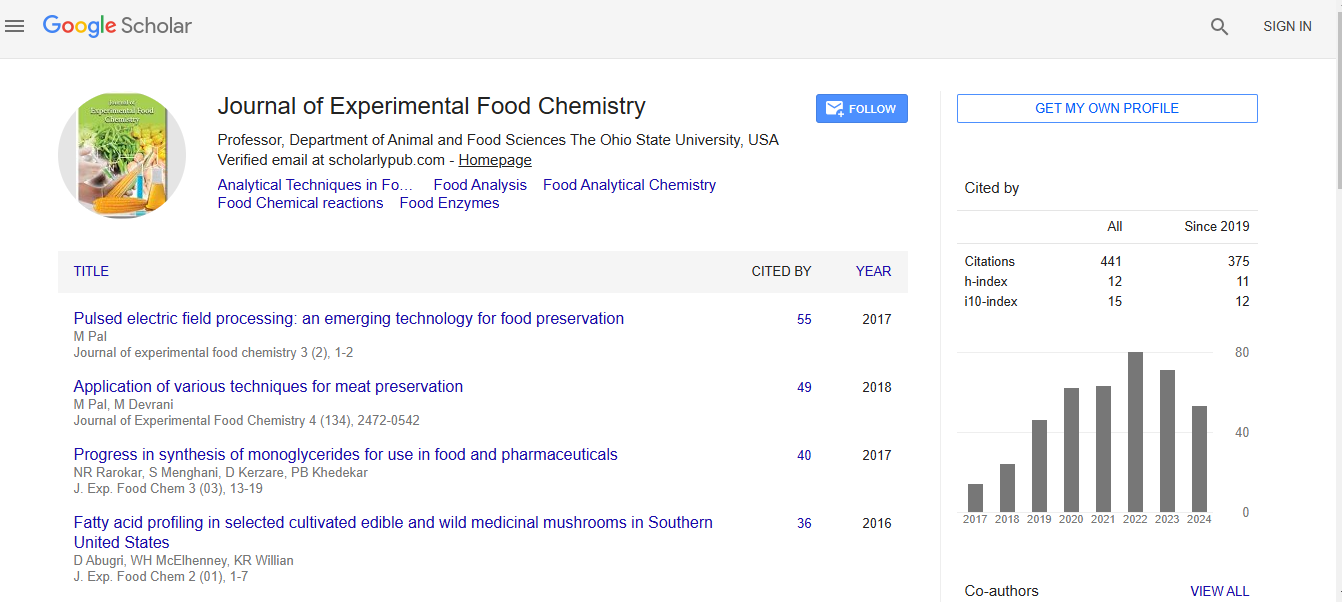
Journal of Experimental Food Chemistry received 389 citations as per Google Scholar report