Opinion - (2025) Volume 11, Issue 3
Received: 02-May-2025
Editor assigned: 05-May-2025
Reviewed: 19-May-2025
Revised: 23-May-2025
Published:
30-May-2025
, DOI: 10.37421/2572-4134.2025.11.348
Citation: Silva, Miguel J. "Microbial Biotransformation: Sustainable Flavor Production Advancements." J Food Ind Microbiol 11 (2025):348.
Copyright: © 2025 Silva J. Miguel This is an open-access article distributed under the terms of the Creative Commons Attribution License, which permits unrestricted use, distribution and reproduction in any medium, provided the original author and source are credited.
Microbial biotransformation presents a sustainable and efficient methodology for generating a diverse array of flavor and aroma compounds, leveraging enzymes or whole microbial cells to convert precursor molecules into desirable volatile substances that enrich food sensory attributes. This approach is distinguished by its specificity, mild reaction conditions, and a reduced environmental footprint compared to conventional chemical synthesis, marking a significant shift towards greener food processing techniques [1].
Recent advancements have intensely focused on enzyme engineering and the optimization of metabolic pathways to elevate the efficiency of microbial flavor production, leading to the design of robust enzymes with superior activity and stability under demanding food processing environments. Directed evolution and rational design are instrumental in tailoring microbial strains for high-yield synthesis of specific aroma molecules, while omics technologies facilitate the manipulation of metabolic flux towards desired products, fostering innovation in flavor ingredients [2].
The strategic deployment of immobilized enzymes and microbial cells offers substantial benefits for industrial biotransformation, including simplified separation, enhanced reusability, and improved stability, making it a preferred method for various applications. Refined immobilization techniques, such as entrapment and covalent attachment, are crucial for maximizing enzyme loading and activity retention, especially for continuous production systems and the synthesis of high-value flavor compounds, thus promoting process intensification and cost-effectiveness in the food sector [3].
Lactones, integral to the aroma profiles of dairy products, fruits, and baked goods, are effectively synthesized through microbial biotransformation, with yeasts and bacteria commonly utilized for the bioconversion of fatty acids into various lactones that impart floral, fruity, and creamy notes. Ongoing research is dedicated to discovering and characterizing novel microbial strains with enhanced lactone production capabilities and optimizing fermentation conditions to boost yield and purity, further diversifying flavor options [4].
The microbial biotransformation of sulfur compounds is pivotal for imparting meaty, savory, and alliaceous aromas to food products, employing microorganisms to convert sulfur-containing amino acids and other precursors into volatile sulfur compounds (VSCs) such as thiols, sulfides, and disulfides. Active research continues to address the challenges associated with managing strong odors and optimizing bioconversion pathways to achieve specific VSC profiles, thereby enhancing sensory impacts in food systems [5].
Biocatalysis mediated by yeasts, encompassing both Saccharomyces cerevisiae and non-Saccharomyces species, is a well-established technique for producing a broad spectrum of esters, which are essential for the fruity and floral notes found in many foods and beverages. Enhanced understanding of yeast metabolism and enzymatic capabilities is enabling targeted production of specific ester profiles through careful strain selection and fermentation optimization, presenting a sustainable alternative to chemical synthesis for natural flavor ingredients [6].
The development of novel microbial platforms for the biosynthesis of complex flavor molecules represents a rapidly expanding research frontier, involving the engineering of non-conventional microorganisms and the enhancement of existing metabolic pathways for producing rare or high-value aroma compounds. The increasing application of synthetic biology tools allows for the design and construction of artificial metabolic pathways, enabling the production of compounds not naturally synthesized by host organisms, thereby broadening the spectrum of available flavor ingredients [7].
Terpenoids, recognized for their wide range of aromas from citrus to pine, are increasingly being produced via microbial fermentation, with metabolic engineering strategies in hosts like *E. coli* and yeast being employed to construct and optimize pathways for the biosynthesis of various monoterpenes, sesquiterpenes, and diterpenes. This bio-based production route offers a sustainable alternative to plant extraction, which is often resource-intensive and susceptible to climatic variability [8].
The strategic integration of traditional fermentation processes with targeted biotransformation steps offers a robust strategy for developing intricate flavor profiles, where the natural metabolic activities of starter cultures are combined with specific enzymatic or microbial conversions. This synergistic approach allows for the generation of complex flavor compounds that are challenging to achieve through single-step processes, proving particularly valuable for products such as dairy, meat, and baked goods [9].
Significant challenges persist in scaling up microbial biotransformation processes for flavor production, including maintaining microbial viability, managing by-product formation, and ensuring consistent product quality. Rigorous process optimization, encompassing bioreactor design, aeration, pH control, and substrate feeding strategies, is crucial for efficient industrial implementation, alongside advances in downstream processing for cost-effective recovery and purification of high-purity flavor compounds [10].
Microbial biotransformation stands as a cornerstone for sustainable and efficient flavor and aroma compound generation, employing enzymes or whole microbial cells to convert precursor molecules into volatile substances that significantly enhance food's sensory appeal. This biotechnological route offers distinct advantages over traditional chemical synthesis, including high specificity, operation under mild conditions, and a markedly reduced environmental impact, positioning it as a key technology for the future of food ingredient production [1].
The field is witnessing rapid progress in enzyme engineering and metabolic pathway optimization, crucial for boosting the efficiency of microbial flavor production. Researchers are actively designing enzymes with enhanced stability and activity suitable for food processing conditions, while methods like directed evolution and rational design are employed to engineer microbial strains capable of high-yield production of specific aroma compounds. The integration of omics technologies is proving invaluable for understanding and manipulating metabolic flux towards desired products, paving the way for the development of novel flavor ingredients [2].
The industrial application of immobilized enzymes and microbial cells is gaining traction due to significant advantages such as ease of separation, reusability, and improved operational stability. Advanced immobilization techniques, including entrapment and covalent attachment, are continually refined to maximize enzyme loading and activity retention, which is particularly beneficial for continuous production systems and the synthesis of high-value flavor molecules, ultimately contributing to cost-effectiveness and process intensification within the food industry [3].
Lactones, vital aroma compounds contributing to the characteristic notes of dairy, fruits, and baked goods, are effectively synthesized via microbial biotransformation. Yeasts and bacteria are the primary microorganisms utilized for the bioconversion of fatty acids or their derivatives into various lactones, thereby generating desirable floral, fruity, and creamy aromas. Current research efforts are focused on identifying novel microbial strains with superior lactone production capabilities and optimizing fermentation parameters to enhance both yield and purity [4].
Volatile sulfur compounds (VSCs), essential for imparting meaty, savory, and alliaceous aromas, are another key area of microbial biotransformation. The process involves using microorganisms to convert sulfur-containing amino acids or other suitable precursors into VSCs, such as thiols, sulfides, and disulfides. A significant challenge remains in managing the potent odors associated with these compounds and optimizing the bioconversion pathways to achieve specific VSC profiles that contribute desirable sensory impacts to food systems [5].
Biocatalysis using yeasts, including both Saccharomyces cerevisiae and various non-Saccharomyces species, is a well-established and highly effective method for producing a wide array of esters, which are critical for delivering fruity and floral notes in foods and beverages. Continuous advances in understanding yeast metabolism and enzyme capabilities are enabling more targeted production of specific ester profiles through meticulous strain selection and optimized fermentation processes, offering a sustainable alternative to chemical synthesis for natural flavor ingredients [6].
The exploration of novel microbial platforms for the biosynthesis of complex flavor molecules is a burgeoning area of research, particularly involving the engineering of non-conventional microorganisms or the enhancement of existing metabolic pathways to produce rare or high-value aroma compounds. The increasing utilization of synthetic biology tools facilitates the design and construction of artificial metabolic pathways, thereby enabling the production of compounds that are not naturally synthesized by the host organism, significantly expanding the available palette of flavor ingredients [7].
Terpenoids, renowned for their diverse aromatic profiles, ranging from citrus to pine, are increasingly being produced through microbial fermentation. By applying metabolic engineering strategies in microbial hosts like *E. coli* and yeast, researchers are successfully constructing and optimizing pathways for the biosynthesis of various monoterpenes, sesquiterpenes, and diterpenes. This bio-based production approach provides a sustainable alternative to traditional extraction from plants, which can be resource-intensive and subject to considerable climatic variations [8].
The integration of conventional fermentation processes with specific biotransformation steps represents a powerful strategy for developing complex and nuanced flavor profiles. This hybrid approach leverages the natural metabolic activities of starter cultures in conjunction with targeted enzymatic or microbial conversions, leading to the generation of synergistic flavor compounds that are difficult to achieve through simpler, single-step processes. This method is particularly relevant for enhancing the flavor complexity of products such as dairy, meat, and bakery goods [9].
Scaling up microbial biotransformation processes for flavor production presents several inherent challenges, including the maintenance of microbial viability, the management of unwanted by-product formation, and the assurance of consistent product quality. Extensive process optimization, which involves careful consideration of bioreactor design, aeration, pH control, and substrate feeding strategies, is essential for achieving efficient industrial implementation. Furthermore, advancements in downstream processing are critical for the cost-effective recovery and purification of flavor compounds to meet high-purity standards [10].
Microbial biotransformation offers a sustainable and efficient method for producing diverse flavor and aroma compounds, utilizing enzymes or whole microbial cells to convert precursors into volatile substances. This approach provides specificity, mild reaction conditions, and reduced environmental impact compared to chemical synthesis. Key advancements include enzyme engineering, metabolic pathway optimization, and the use of immobilized enzymes for improved efficiency and reusability. Specific flavor compounds like lactones, volatile sulfur compounds, esters, and terpenoids are being produced through tailored microbial processes. Emerging technologies like synthetic biology are enabling the biosynthesis of novel and complex flavor molecules. Integrated fermentation and biotransformation strategies are also being employed for complex flavor development. However, challenges remain in scaling up these processes, requiring optimization of bioreactor design, process control, and downstream purification to ensure economic viability and consistent product quality.
None
None
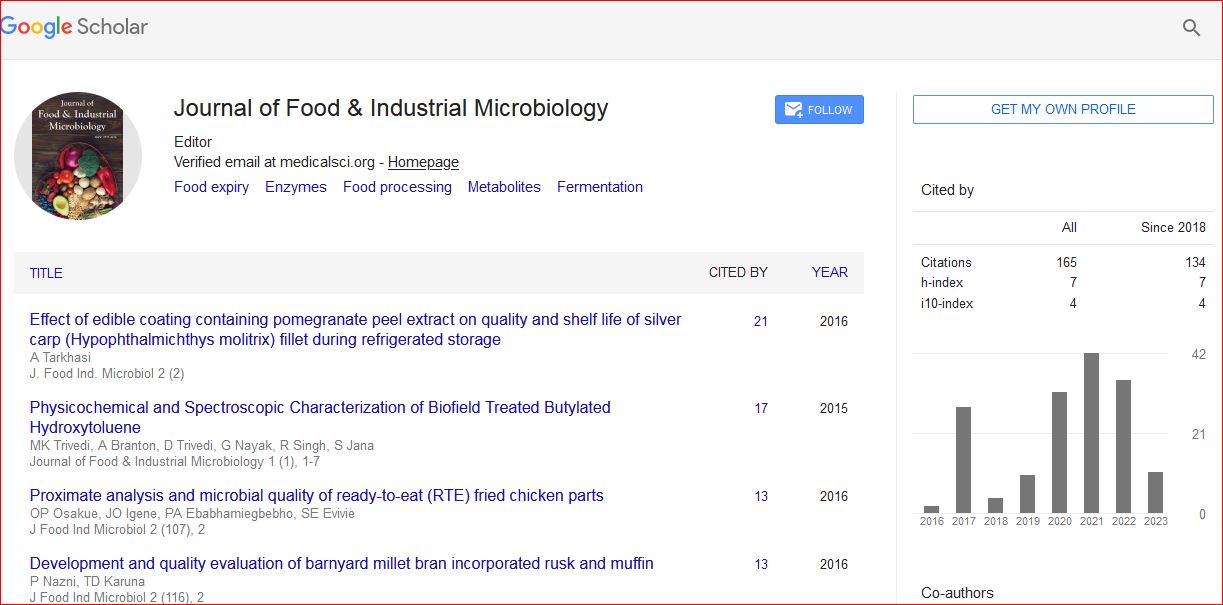
Journal of Food & Industrial Microbiology received 160 citations as per Google Scholar report