Thrips are some of the most damaging insect pests to the leaves of onions globally. Although there are many species of thrips, the western flower and onion thrips are the most common species and they can attack many garden crops, but most commonly cause serious damage to onions, leeks and garlic, tomato, sweet pepper, eggplant, roses, chrysanthemum, gerbera, carnations, bulbs and many others. Both onion thrips and western flower thrips strike onion, but onion thrips are believed to be more frequent and harmful than western flower thrips. In many areas have both onion thrips and western flower thrips, but their numbers can change over the season. The key to minimizing losses caused by onion thrips will involve the combination of cultural and chemical controls, and use of resistant and tolerant varieties that suppress onion thrips populations and reduce feeding damage.
Market Analysis: Journal of Experimental Food Chemistry
Market Analysis: Journal of Experimental Food Chemistry
Research Article: Journal of Experimental Food Chemistry
Research Article: Journal of Experimental Food Chemistry
Review Article: Journal of Experimental Food Chemistry
Review Article: Journal of Experimental Food Chemistry
Research Article: Journal of Experimental Food Chemistry
Research Article: Journal of Experimental Food Chemistry
Research Article: Journal of Experimental Food Chemistry
Research Article: Journal of Experimental Food Chemistry
Posters & Accepted Abstracts: Chemical Sciences Journal
Posters & Accepted Abstracts: Chemical Sciences Journal
Scientific Tracks Abstracts: Chemical Sciences Journal
Scientific Tracks Abstracts: Chemical Sciences Journal
Accepted Abstracts: Medicinal Chemistry
Accepted Abstracts: Medicinal Chemistry
Posters: Medicinal Chemistry
Posters: Medicinal Chemistry
Scientific Tracks Abstracts: Journal of Experimental Food Chemistry
Scientific Tracks Abstracts: Journal of Experimental Food Chemistry
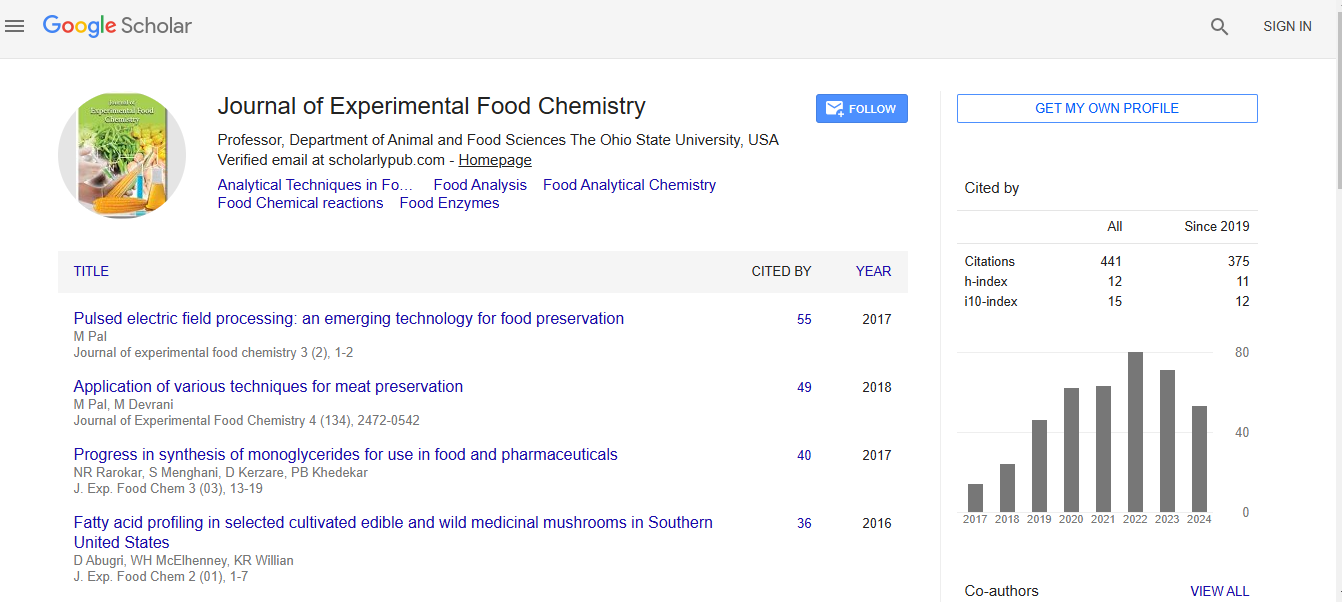
Journal of Experimental Food Chemistry received 389 citations as per Google Scholar report

 Spanish
  Chinese
  Russian
  German
  French
  Japanese
  Portuguese
  Hindi
Hindi 