Microscopic colitis can be defined as a clinical syndrome, of unknown etiology, consisting of chronic watery diarrhea, with little or no change seen at colonoscopy. Therefore, a definitive diagnosis is only possible by histology. The epidemiological characteristics of this disease have become more elaborate in recent years and most of the data comes from Western countries. Microscopic colitis includes two histological subtypes [collagenous colitis (CC) and lymphocytic colitis (LC)] without differences in clinical presentation and management. Collagenous colitis is characterized by a thickening of the subepithelial layer of collagen which is not visible in LC. The main characteristic of LC is an increase in the density of intraepithelial lymphocytes in the surface epithelium. A number of theories have been proposed over the years regarding the pathogenesis of this entity, including the role of luminal agents, autoimmunity, eosinophils, genetics (human leukocyte antigen), bile acids, infections, changes in fibroblasts and taking medication; drugs such as ticlopidine, carbamazepine or ranitidine are particularly associated with the development of LC, while CC is more frequently linked to cimetidine, nonsteroidal anti-inflammatory drugs and lansoprazole.
Market Analysis: Clinical Gastroenterology Journal
Market Analysis: Clinical Gastroenterology Journal
Case Report: Clinical Gastroenterology Journal
Case Report: Clinical Gastroenterology Journal
Research Article: Clinical Gastroenterology Journal
Research Article: Clinical Gastroenterology Journal
Case Report: Clinical Gastroenterology Journal
Case Report: Clinical Gastroenterology Journal
Editorial: Clinical Gastroenterology Journal
Editorial: Clinical Gastroenterology Journal
Short Communication: Clinical Gastroenterology Journal
Short Communication: Clinical Gastroenterology Journal
Letter to Editor: Clinical Gastroenterology Journal
Letter to Editor: Clinical Gastroenterology Journal
Scientific Tracks Abstracts: Journal of AIDS & Clinical Research
Scientific Tracks Abstracts: Journal of AIDS & Clinical Research
Scientific Tracks Abstracts: Journal of AIDS & Clinical Research
Scientific Tracks Abstracts: Journal of AIDS & Clinical Research
Scientific Tracks Abstracts: Journal of Advanced Practices in Nursing
Scientific Tracks Abstracts: Journal of Advanced Practices in Nursing
Scientific Tracks Abstracts: Journal of Advanced Practices in Nursing
Scientific Tracks Abstracts: Journal of Advanced Practices in Nursing
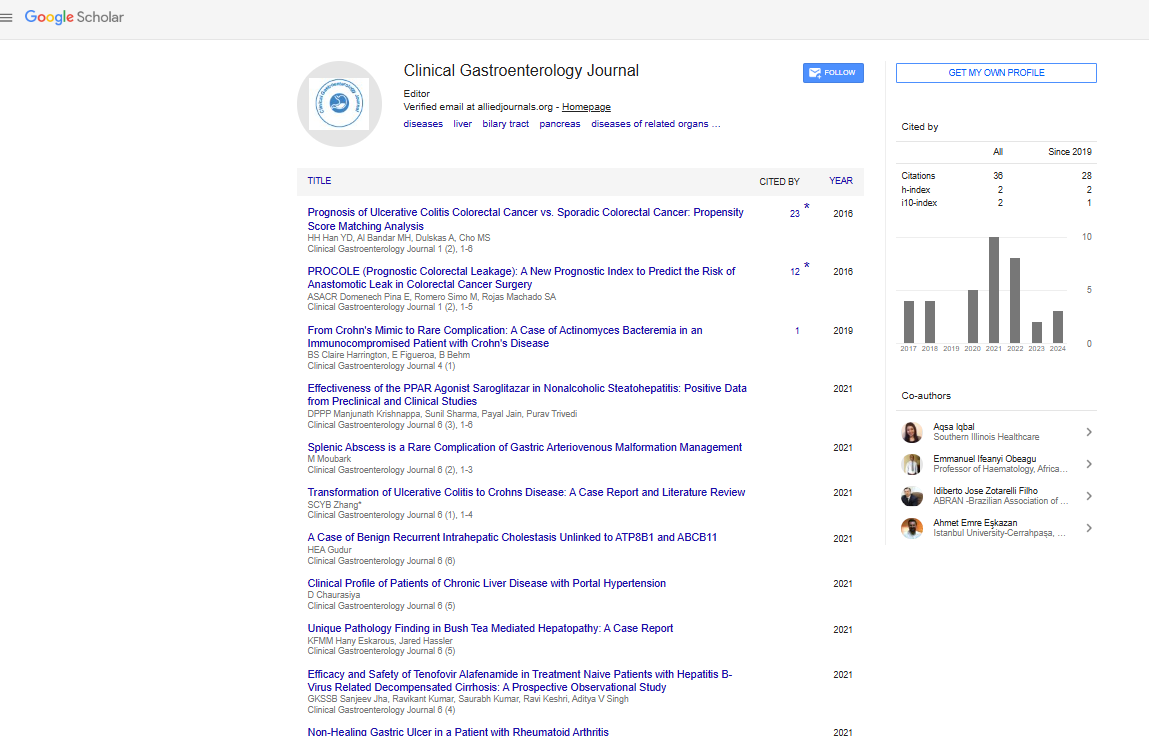
Clinical Gastroenterology Journal received 33 citations as per Google Scholar report


 Spanish
  Chinese
  Russian
  German
  French
  Japanese
  Portuguese
  Hindi
Hindi 