Dahi is produced by bacterial fermentation of milk. The bacteria used to make dahi are known as "dahi cultures". A freeze dried thermophilic culture for dahi is also available with NDDB. Fermentation of lactose by these bacteria produces lactic acid, which acts on milk protein to give dahiits texture and its characteristic tang. The process of manufacturing product at a dairy plant consists of easily adaptable processing steps. Dahi can be packed easily in polythene pouches and cups. It has a shelf-life of 7 days in polypack and 15 days in polypropylene cups when stored under refrigeration (80C or below).
Review Article: Journal of Experimental Food Chemistry
Review Article: Journal of Experimental Food Chemistry
Review Article: Journal of Experimental Food Chemistry
Review Article: Journal of Experimental Food Chemistry
Research Article: Journal of Experimental Food Chemistry
Research Article: Journal of Experimental Food Chemistry
Research Article: Journal of Experimental Food Chemistry
Research Article: Journal of Experimental Food Chemistry
Keynote: Chemical Sciences Journal
Keynote: Chemical Sciences Journal
Posters & Accepted Abstracts: Chemical Sciences Journal
Posters & Accepted Abstracts: Chemical Sciences Journal
Scientific Tracks Abstracts: Chemical Sciences Journal
Scientific Tracks Abstracts: Chemical Sciences Journal
Keynote: Medicinal Chemistry
Keynote: Medicinal Chemistry
Scientific Tracks Abstracts: Journal of Experimental Food Chemistry
Scientific Tracks Abstracts: Journal of Experimental Food Chemistry
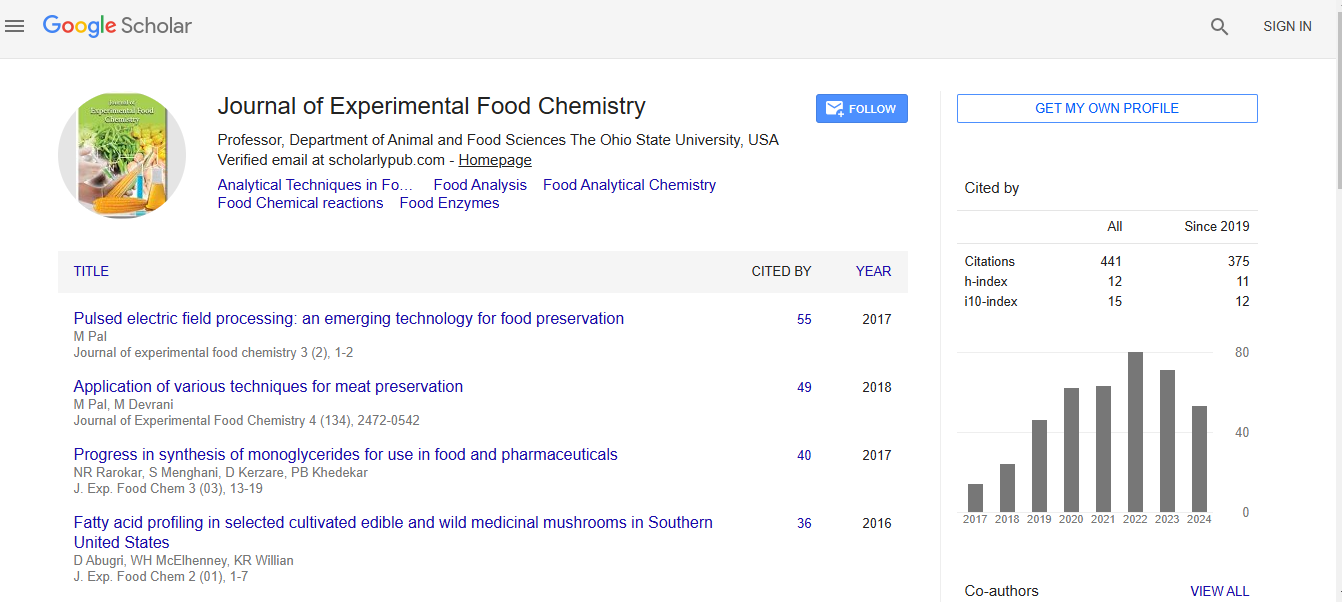
Journal of Experimental Food Chemistry received 389 citations as per Google Scholar report
 Spanish
  Chinese
  Russian
  German
  French
  Japanese
  Portuguese
  Hindi
Hindi 