Brief Report - (2025) Volume 11, Issue 4
Received: 01-Jul-2025, Manuscript No. jfim-26-178570;
Editor assigned: 03-Jul-2025, Pre QC No. P-178570Q;
Reviewed: 17-Jul-2025, QC No. Q-178570;
Revised: 22-Jul-2025, Manuscript No. R-178570;
Published:
29-Jul-2025
, DOI: 10.37421/2572-4134.2025.11.356
Citation: Laurent, Sophie. ”Phages: Eco-Friendly, Targeted Food Safety Solution.” J Food Ind Microbiol 11 (2025):356.
Copyright: © 2025 Laurent S. This is an open-access article distributed under the terms of the Creative Commons Attribution License, which permits unrestricted use, distribution and reproduction in any medium, provided the original author and source are credited.
Bacteriophages are emerging as a highly promising and environmentally friendly alternative to traditional chemical sanitizers for the effective control of foodborne pathogens. This innovative technology harnesses the power of naturally occurring viruses that possess the unique ability to specifically infect and eliminate bacteria, thereby offering a targeted and highly effective decontamination strategy. Phages can be applied in various ways, including direct application to food surfaces, integration into food processing environments, and even incorporation into food packaging materials to bolster overall food safety protocols. A significant advantage of phage application is their specificity, which minimizes any adverse impact on beneficial microorganisms, a stark contrast to the broad-spectrum effects of many conventional antimicrobial agents. Extensive research and development efforts are currently focused on the creation of sophisticated phage cocktails, designed to circumvent bacterial resistance mechanisms and broaden the overall spectrum of their application in food safety [1].
The application of lytic bacteriophages has demonstrated remarkable efficacy in controlling the proliferation of Listeria monocytogenes, particularly on ready-to-eat meat products. These phage preparations are capable of substantially reducing bacterial loads directly on food surfaces, presenting a viable non-thermal and non-chemical intervention option. Current research strongly emphasizes the critical importance of careful phage selection, precise concentration determination, and optimized application methodologies to achieve the most effective bacterial reduction and to proactively prevent the emergence of phage resistance among bacterial populations [2].
Salmonella Enteritidis contamination within poultry products represents a significant and persistent concern for food safety. In response to this challenge, bacteriophages have been identified as a viable and promising strategy to effectively mitigate this particular food safety risk. Scientific studies consistently show that phage-based treatments can lead to a considerable reduction in Salmonella levels on chicken carcasses, importantly without any detrimental impact on the meat's quality or its sensory attributes. The development of commercial phage products specifically for this purpose is advancing steadily towards widespread market availability [3].
The incorporation of phages into edible films and coatings signifies an innovative and forward-thinking approach to active food packaging systems. By embedding bacteriophages directly within these advanced material structures, it becomes possible to achieve continuous and localized protection against a range of foodborne pathogens, including critically important ones like Escherichia coli O157:H7. This sophisticated method allows for a sustained and controlled release of phages, thereby significantly enhancing the microbiological safety of foods that have been packaged using these novel materials [4].
Bacterial resistance to phages represents a critical factor that must be thoroughly considered to ensure the long-term efficacy of any phage-based intervention strategies. A deep understanding of the diverse mechanisms through which bacteria develop resistance to phages is paramount, alongside the development of robust strategies designed to mitigate this resistance. Approaches such as the deployment of diverse phage cocktails or the utilization of genetically modified phages are actively being pursued as ongoing research priorities. These efforts are essential to guarantee the sustained and reliable effectiveness of phage technology in safeguarding food safety applications [5].
The regulatory framework governing the approval and use of bacteriophage products within the food safety sector is currently undergoing a dynamic evolution. While bacteriophages are broadly recognized for their inherent safety, specific applications necessitate comprehensive and rigorous safety assessments, followed by formal regulatory approvals. The harmonization of international regulations and the establishment of clear, unambiguous guidelines are considered essential prerequisites for facilitating the widespread and successful adoption of phage technology across the global food industry [6].
The application of bacteriophages as a means to control Shiga toxin-producing Escherichia coli (STEC) within beef production systems presents a highly targeted and precise approach to significantly reduce contamination levels. Phage treatments, whether applied directly to the surface of meat or integrated into the processing stages, have proven effective in lowering STEC populations. This contributes substantially to enhanced food safety without causing any undesirable alterations to the intrinsic quality of the meat itself, offering a sustainable alternative to conventional chemical decontamination methods [7].
Phage-based biocontrol agents are actively being developed for various post-harvest applications with the primary goal of protecting fruits and vegetables from spoilage and the proliferation of pathogenic bacteria. By specifically targeting common contaminants such as Erwinia amylovora or various Xanthomonas species, phages can effectively extend the shelf life of produce and simultaneously improve its overall safety for consumption. A key advantage of this approach is its inherent specificity, which ensures the preservation of the natural and beneficial microbial communities present on the food product [8].
The integration of bacteriophages into various processes within the dairy industry offers a highly targeted and effective strategy for controlling both spoilage bacteria and pathogenic microorganisms. For instance, phages can be strategically employed to prevent contamination by other bacteriophages within starter cultures, thereby ensuring consistent and predictable fermentation processes. Furthermore, ongoing research is actively exploring their potential application in reducing the presence of undesirable microbes, including Listeria species, in a wide range of dairy products [9].
The environmental impact and overall sustainability of phage-based food safety solutions represent significant and compelling advantages. In direct contrast to conventional chemical sanitizers, bacteriophages are readily biodegradable and exhibit minimal residual effects on the environment. Their inherent specificity also plays a crucial role in preserving the beneficial microbial communities found within food processing environments, thereby contributing to the development of a more sustainable and resilient food system. Key factors for broader adoption include scaling up production capabilities and optimizing delivery systems for wider application [10].
Bacteriophages are a natural and eco-friendly alternative to chemical sanitizers for controlling foodborne pathogens, utilizing viruses that specifically target and kill bacteria for effective decontamination. Their application spans food surfaces, processing areas, and packaging to enhance safety. Phages' specificity distinguishes them from broad-spectrum antimicrobials by sparing beneficial microbes. Research focuses on phage cocktails to overcome resistance and broaden their utility [1].
Lytic bacteriophages have shown significant effectiveness in controlling Listeria monocytogenes on ready-to-eat meats, reducing bacterial loads on food surfaces through non-thermal, non-chemical means. Optimizing phage selection, concentration, and application methods is crucial for maximum bacterial reduction and preventing resistance [2].
Bacteriophages are a viable strategy to mitigate the significant risk of Salmonella Enteritidis contamination in poultry products. Studies confirm that phage treatments effectively reduce Salmonella levels on chicken carcasses without negatively impacting meat quality or sensory characteristics, with commercial product development progressing [3].
Phages integrated into edible films and coatings represent an innovative approach to active food packaging. This method provides continuous protection against pathogens like Escherichia coli O157:H7 through localized and sustained phage release, thereby enhancing the microbiological safety of packaged foods [4].
Bacterial resistance to phages is a critical challenge for the long-term efficacy of phage-based interventions. Understanding resistance mechanisms and developing mitigation strategies, such as using phage cocktails or genetically modified phages, are key research priorities to ensure sustained effectiveness in food safety [5].
The regulatory landscape for bacteriophage products in food safety is evolving. While generally recognized as safe, specific uses require rigorous safety assessments and approvals. Harmonizing international regulations and providing clear guidelines are essential for widespread industry adoption [6].
Bacteriophages offer a targeted method for controlling Shiga toxin-producing Escherichia coli (STEC) in beef production, reducing contamination on meat surfaces and during processing without altering meat quality. This approach serves as a sustainable alternative to chemical decontamination [7].
Phage-based biocontrol agents are being developed for post-harvest applications to protect fruits and vegetables from spoilage and pathogens. They target contaminants like Erwinia amylovora, extending shelf life and improving produce safety while preserving beneficial microflora due to their specificity [8].
In the dairy industry, bacteriophages provide a targeted approach to control spoilage and pathogenic bacteria. They are used to prevent contamination in starter cultures for consistent fermentation and are being explored for reducing Listeria and other undesirable microbes in dairy products [9].
The environmental benefits of phage-based food safety solutions include biodegradability and minimal residual effects, unlike chemical sanitizers. Their specificity preserves beneficial microflora, promoting a sustainable food system. Scaling up production and optimizing delivery are crucial for wider adoption [10].
Bacteriophages offer an eco-friendly and targeted alternative to chemical sanitizers for controlling foodborne pathogens across various food products and processing environments. They are effective against specific bacteria like Listeria monocytogenes, Salmonella Enteritidis, and Escherichia coli O157:H7, with applications ranging from direct surface treatment to integration into edible films and packaging. Research is actively addressing phage resistance through cocktail development and exploring their use in produce, meat, and dairy industries. While regulatory frameworks are evolving, the sustainability and specificity of bacteriophages present significant advantages for future food safety strategies.
None
None
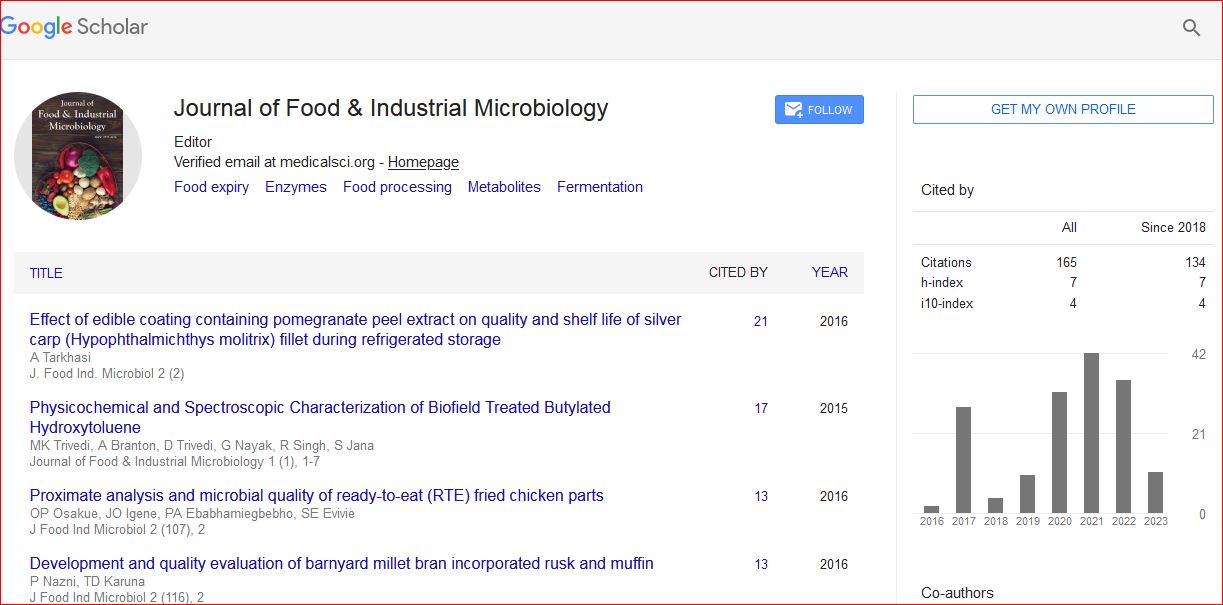
Journal of Food & Industrial Microbiology received 160 citations as per Google Scholar report