Commentary - (2025) Volume 10, Issue 2
Received: 01-Apr-2025, Manuscript No. cgj-26-186509;
Editor assigned: 03-Apr-2025, Pre QC No. P-186509;
Reviewed: 17-Apr-2025, QC No. Q-186509;
Revised: 22-Apr-2025, Manuscript No. R-186509;
Published:
29-Apr-2025
, DOI: 10.37421/2952-8518.2025.10.305
Citation: Okoye, Samuel T.. ”NAFLD/MAFLD: Managing a Growing Global Health Issue.” Clin Gastroenterol J 10 (2025):305.
Copyright: © 2025 Okoye T. Samuel This is an open-access article distributed under the terms of the Creative Commons Attribution License, which permits unrestricted use, distribution and reproduction in any medium, provided the original author and source are credited.
Non-alcoholic fatty liver disease (NAFLD) has emerged as a significant global health challenge, characterized by the accumulation of fat in the liver unrelated to excessive alcohol intake. Recent diagnostic refinements have led to the concept of metabolic dysfunction-associated fatty liver disease (MAFLD) to better delineate the metabolic underpinnings of this condition [1].
The shift towards the MAFLD classification underscores the crucial role of metabolic dysregulation in the development of fatty liver disease. This redefinition aims to unify comprehension and management by recognizing its strong ties to obesity, type 2 diabetes, and dyslipidemia [2].
Weight loss, achieved through dietary adjustments and regular exercise, remains the cornerstone of therapeutic interventions for NAFLD/MAFLD. Even a modest reduction in body weight, typically 5-10%, has been shown to significantly improve liver fat content, inflammation, and fibrosis [3].
The development of pharmaceutical agents targeting NAFLD/MAFLD has been a prominent area of research. Various agents are in different phases of clinical development, addressing diverse aspects of the disease pathology [4].
Fibrosis is a critical determinant of prognosis in NAFLD/MAFLD, and strategies aimed at halting or reversing its progression are urgently needed. For instance, ELAFIBRANOR, an FXR agonist, has demonstrated promising results in reducing liver inflammation and fibrosis in patients with NASH [5].
Precision medicine approaches are increasingly vital in the management of NAFLD/MAFLD. Genetic factors significantly influence disease susceptibility and progression, and understanding these predispositions can facilitate earlier identification of at-risk individuals and more tailored treatment strategies [6].
The management of NAFLD/MAFLD necessitates a multidisciplinary team. Gastroenterologists, hepatologists, endocrinologists, cardiologists, and registered dietitians all contribute essential expertise to address the complex and often comorbid nature of the disease [7].
Hepatocellular carcinoma (HCC) represents a serious complication of advanced NAFLD/MAFLD. The escalating prevalence of NAFLD is anticipated to correlate with an increase in HCC incidence, highlighting the importance of early detection [8].
The gut microbiome is implicated in the pathogenesis of NAFLD/MAFLD. Dysbiosis, or an imbalance in gut bacteria, can contribute to increased intestinal permeability, inflammation, and altered lipid metabolism, thereby exacerbating liver disease [9].
Bariatric surgery has become an effective treatment option for severe obesity and has shown notable benefits for patients with NAFLD/MAFLD, particularly those with advanced fibrosis. The substantial weight loss achieved through these procedures can lead to significant improvements in liver health [10].
Non-alcoholic fatty liver disease (NAFLD) is a growing global health concern, characterized by fat accumulation in the liver not related to alcohol consumption. Recent advancements have refined diagnostic criteria, moving towards 'metabolic dysfunction-associated fatty liver disease' (MAFLD) to better capture the underlying metabolic drivers. Current therapeutic strategies focus on lifestyle modifications, including diet and exercise, which remain the cornerstone of management. Emerging pharmacotherapies are targeting specific pathophysiological pathways, such as inflammation, fibrosis, and insulin resistance, with promising results in clinical trials for drugs like obeticholic acid, resmetirom, and elafibranor, though further research is ongoing to establish their long-term efficacy and safety profiles. The interdisciplinary approach involving gastroenterologists, hepatologists, endocrinologists, and dietitians is crucial for effective patient care [1].
The shift towards the MAFLD classification emphasizes the central role of metabolic dysregulation in the pathogenesis of fatty liver disease. This renaming aims to unify the understanding and management of the condition by acknowledging its strong association with obesity, type 2 diabetes, and dyslipidemia. Research is increasingly focusing on stratifying patients based on fibrosis severity, as advanced fibrosis is the main driver of adverse outcomes, including hepatocellular carcinoma and liver-related mortality. Understanding the complex interplay of genetics, environment, and metabolic factors is key to developing targeted interventions [2].
Weight loss through diet and exercise remains the primary therapeutic intervention for NAFLD/MAFLD. Studies consistently demonstrate that even modest weight loss (5-10%) can lead to significant improvements in liver fat content, inflammation, and fibrosis. The Mediterranean diet, characterized by its emphasis on fruits, vegetables, whole grains, and healthy fats, has shown particular benefit. However, adherence to lifestyle changes can be challenging, necessitating individualized approaches and ongoing support [3].
The development of pharmacotherapies for NAFLD/MAFLD has been a significant area of research. Several agents are in various stages of clinical development, targeting different aspects of the disease. Pioglitazone and vitamin E have demonstrated benefits in non-diabetic patients with NASH and fibrosis, although concerns about long-term safety and efficacy persist. Newer agents like obeticholic acid, a farnesoid X receptor (FXR) agonist, have shown improvements in liver histology, but liver injury remains a concern. Resmetirom, a thyroid hormone receptor-beta (TRβ) selective agonist, has demonstrated significant improvements in liver fat and fibrosis in clinical trials [4].
Fibrosis is the key determinant of prognosis in NAFLD/MAFLD. Strategies to halt or reverse fibrosis are urgently needed. ELAFIBRANOR, an FXR agonist, has shown promising results in reducing liver inflammation and fibrosis in patients with NASH, as demonstrated in the FUSION study. This highlights the potential of targeting metabolic pathways to impact fibrogenesis. The continued evaluation of these agents in larger, longer-term studies is essential [5].
Precision medicine approaches are becoming increasingly important in NAFLD/MAFLD management. Genetic factors play a significant role in disease susceptibility and progression. Understanding these genetic predispositions could allow for earlier identification of at-risk individuals and more personalized treatment strategies. Biomarkers for disease activity and fibrosis are also crucial for monitoring treatment response and predicting outcomes [6].
The management of NAFLD/MAFLD requires a multidisciplinary team. Gastroenterologists, hepatologists, endocrinologists, cardiologists, and registered dietitians all play vital roles in addressing the multifaceted nature of the disease, which often coexists with other metabolic conditions. Effective communication and coordinated care plans are essential for optimizing patient outcomes and preventing complications [7].
Hepatocellular carcinoma (HCC) is a significant complication of advanced NAFLD/MAFLD. The increasing prevalence of NAFLD is projected to lead to a rise in HCC incidence. Current strategies focus on early detection through regular screening of patients with advanced fibrosis or cirrhosis. Research into novel therapeutic targets for NAFLD-associated HCC is ongoing, aiming to improve survival rates for this challenging malignancy [8].
The gut microbiome plays a role in the pathogenesis of NAFLD/MAFLD. Dysbiosis, an imbalance in gut bacteria, can contribute to increased intestinal permeability, inflammation, and altered lipid metabolism, all of which can exacerbate liver disease. Emerging research is exploring the potential of modulating the gut microbiome through probiotics, prebiotics, or fecal microbiota transplantation as therapeutic strategies, although more robust clinical evidence is needed [9].
Bariatric surgery has emerged as an effective treatment for severe obesity and has shown significant benefits in patients with NAFLD/MAFLD, particularly those with advanced fibrosis. Weight loss achieved through bariatric procedures can lead to remarkable improvements in liver fat, inflammation, and even fibrosis. However, careful patient selection and postoperative monitoring are essential to maximize benefits and minimize risks [10].
Non-alcoholic fatty liver disease (NAFLD), now increasingly referred to as metabolic dysfunction-associated fatty liver disease (MAFLD), is a growing global health issue driven by metabolic dysregulation. Current management primarily relies on lifestyle modifications such as diet and exercise, which are crucial for improving liver fat, inflammation, and fibrosis. Emerging pharmacotherapies are being developed to target specific disease pathways, with agents like obeticholic acid, resmetirom, and elafibranor showing promise in clinical trials. Fibrosis is a key prognostic factor, and strategies to halt or reverse it are of significant interest. Precision medicine, considering genetic predispositions, and advancements in biomarker identification are becoming integral to personalized treatment. The management of NAFLD/MAFLD requires a multidisciplinary team approach. While hepatocellular carcinoma (HCC) is a serious complication of advanced disease, early detection through screening is emphasized. Emerging research also explores the role of the gut microbiome and potential interventions. Bariatric surgery is a beneficial option for severe obesity and advanced liver disease in this population. Continued research is vital to establish long-term efficacy and safety profiles of new treatments.
None
None
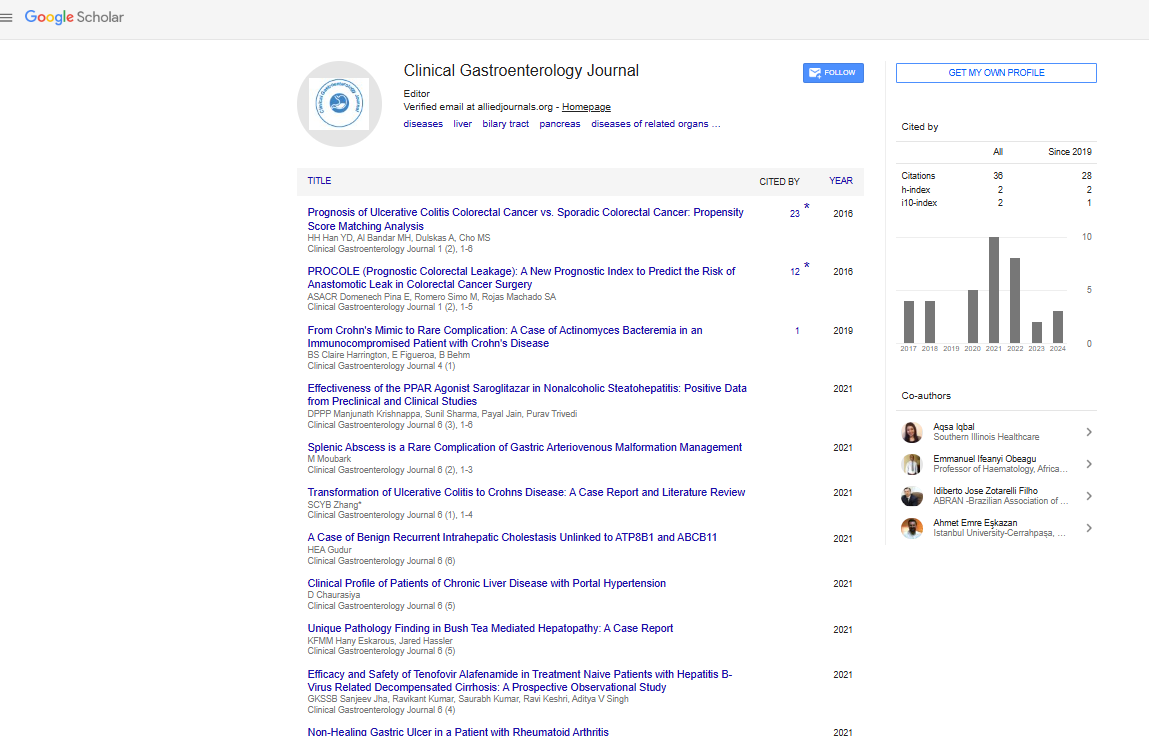
Clinical Gastroenterology Journal received 33 citations as per Google Scholar report