Commentary - (2025) Volume 14, Issue 6
Received: 01-Nov-2025, Manuscript No. jamk-25-177327;
Editor assigned: 03-Nov-2025, Pre QC No. P-177327;
Reviewed: 17-Nov-2025, QC No. Q-177327;
Revised: 24-Nov-2025, Manuscript No. R-177327;
Published:
29-Nov-2025
, DOI: 10.37421/2168-9601.2025.14.583
Citation: Laurent, Amélie. ”Modern Financial Management: Integration and Agility.” J Account Mark 14 (2025):583.
Copyright: © 2025 Laurent A. This is an open-access article distributed under the terms of the Creative Commons Attribution License, which permits unrestricted use, distribution and reproduction in any medium, provided the original author and source are credited.
This article explores how budgeting, forecasting, and strategic performance measurement systems intertwine. This fundamental perspective underscores the necessity for modern organizations to transcend mere numerical planning, actively linking financial resource allocation with overarching corporate objectives. Such integration not only streamlines operational execution but also enhances the capacity for strategic oversight, ensuring that all budgetary decisions contribute cohesively to long-term success and adaptability in competitive markets.[1].
This research investigates how predictive analytics influences budgetary slack and overall performance. The application of sophisticated data analysis techniques allows firms to forecast financial requirements with greater precision, thereby mitigating the tendency for departments to overstate their budgetary needs. This reduction in informational asymmetry fosters a more transparent and equitable distribution of resources, ultimately leading to superior organizational performance and a more robust financial infrastructure.[2].
This study examines the importance of clear budget goals and participatory budgeting in boosting performance. Engaging employees in the budget formulation process instills a sense of ownership and responsibility, aligning individual efforts with collective organizational aims. When budget goals are clearly articulated and understood, it minimizes ambiguity and enhances focus, contributing directly to an environment where targets are more likely to be met or even exceeded, bolstering both morale and financial outcomes.[3].
This research explores strategic planning and budgeting in public sector organizations through a configurational lens. For public sector entities, effective strategic planning and budgeting are paramount for delivering public services efficiently and accountably. This research highlights that the alignment of resource allocation with defined strategic mandates is not a one-size-fits-all endeavor but requires a tailored approach to ensure that public funds are utilized in a manner that maximizes societal benefit and adheres to governance principles.[4].
This article delves into using machine learning for detecting earnings management and improving earnings forecasting accuracy. The advancement of machine learning offers a powerful toolkit for financial analysts to detect subtle irregularities in financial reporting, which might indicate earnings management. Furthermore, its ability to process vast datasets and discern complex relationships enables significantly more accurate predictions of future earnings, providing a critical advantage in investment appraisal and risk assessment compared to traditional models.[5].
This case study examines the implementation challenges and benefits of zero-based budgeting in the public sector. Zero-based budgeting (ZBB) represents a rigorous approach to financial management, especially within the public sector, where every expense must be justified anew each budget cycle. Although implementation can be challenging due to its demanding nature, ZBB demonstrably enhances fiscal discipline, eliminates redundant expenditures, and promotes a culture of continuous scrutiny and accountability for public resources.[6].
This multiple case study investigates how 'Beyond Budgeting' principles are implemented and what outcomes they yield in practice. 'Beyond Budgeting' offers a paradigm shift from conventional, rigid annual budgeting to a more flexible, adaptive management philosophy. Organizations embracing these principles often report increased agility in responding to market changes, greater empowerment of frontline managers, and a reduction in the administrative burden associated with traditional budgeting, fostering a more dynamic and responsive enterprise.[7].
This review synthesizes research on budgeting practices and financial performance in small and medium-sized enterprises (SMEs). Small and medium-sized enterprises (SMEs) often face unique constraints in resource availability and managerial expertise, making effective budgeting critical for their sustainability. This review underscores the importance of developing context-specific budgeting practices that cater to the scale and operational nuances of SMEs, thereby bolstering their financial health and growth prospects amidst competitive pressures.[8].
This article explores how big data analytics influences capital budgeting decisions. The emergence of big data analytics provides an unprecedented opportunity to refine capital budgeting decisions by integrating diverse and voluminous information sources. This analytical capability allows for a more nuanced evaluation of potential investments, improving the accuracy of projections for future returns and risks, which is vital for making sound long-term strategic allocation choices.[9].
This paper presents a conceptual framework for integrating environmental costs into budgeting processes and provides empirical evidence. Integrating environmental costs into standard budgeting frameworks moves organizations towards a more holistic understanding of their financial and ecological impact. By explicitly recognizing and quantifying these costs and benefits, companies can enhance their sustainability performance, improve resource efficiency, and communicate a more complete picture of their financial stewardship to stakeholders.[10].
This article explores how budgeting, forecasting, and strategic performance measurement systems intertwine. This integration ensures that financial plans are not merely operational documents but active instruments of strategic execution, continuously refined by performance feedback. It marks a transition from static financial control to a vibrant system that supports organizational agility and sustained competitive advantage by aligning every financial decision with strategic objectives.[1]. This research investigates how predictive analytics influences budgetary slack and overall performance. Predictive analytics, through its capacity to process vast historical and real-time data, significantly refines the accuracy of financial forecasts and budget allocations. This technological advancement empowers management to make more informed decisions, minimizing inefficiencies related to over- or under-budgeting, thereby enhancing overall operational effectiveness and resource optimization.[2]. This study examines the importance of clear budget goals and participatory budgeting in boosting performance. The emphasis on clarity in budget goals ensures that all organizational members have a coherent understanding of financial targets, fostering a unified direction. When coupled with participatory budgeting, this approach cultivates higher levels of employee engagement and commitment, transforming budget compliance into a shared endeavor that contributes positively to both operational and financial metrics.[3]. This research explores strategic planning and budgeting in public sector organizations through a configurational lens. Public sector organizations, inherently driven by mandates rather than profit, require robust strategic planning and budgeting frameworks to maximize public value. This research underscores that successful public finance management involves meticulously aligning resource allocation with specific public policy objectives, employing varied approaches suited to the unique governmental context to ensure efficient and effective service delivery.[4]. This article delves into using machine learning for detecting earnings management and improving earnings forecasting accuracy. Machine learning algorithms represent a sophisticated tool for enhancing financial transparency and foresight. Their capacity to learn from complex datasets allows for the detection of subtle anomalies indicative of earnings manipulation, alongside providing more robust and reliable earnings forecasts. This capability significantly augments the analytical arsenal available to auditors and investors for assessing corporate financial health.[5]. This case study examines the implementation challenges and benefits of zero-based budgeting in the public sector. Implementing zero-based budgeting (ZBB) within governmental bodies, though demanding, has proven effective in fostering a culture of fiscal prudence and accountability. By mandating a complete justification for all expenditures each cycle, ZBB challenges ingrained spending habits, drives a rigorous evaluation of programs, and ultimately contributes to greater cost efficiency and better utilization of taxpayer money.[6]. This multiple case study investigates how 'Beyond Budgeting' principles are implemented and what outcomes they yield in practice. The 'Beyond Budgeting' philosophy advocates for a shift towards decentralized decision-making and continuous adaptive planning, moving away from the constraints of traditional annual budgets. This approach cultivates a more responsive organizational structure, empowering teams to react swiftly to changing conditions and promoting an environment of continuous performance improvement rather than static target achievement.[7]. This review synthesizes research on budgeting practices and financial performance in small and medium-sized enterprises (SMEs). For small and medium-sized enterprises (SMEs), effective budgeting is a critical determinant of long-term viability and growth potential, especially given their often-limited financial and human capital. This comprehensive review highlights the necessity for SMEs to adopt flexible and scalable budgeting strategies that not only manage immediate cash flows but also support strategic expansion and mitigate financial risks.[8]. This article explores how big data analytics influences capital budgeting decisions. Big data analytics revolutionizes capital budgeting by offering an unparalleled depth of insight into potential investments, encompassing market trends, operational risks, and financial projections. By integrating and analyzing vast, disparate datasets, organizations can make more evidence-based, strategic capital allocation decisions, significantly enhancing the likelihood of achieving long-term profitability and sustainable growth.[9]. This paper presents a conceptual framework for integrating environmental costs into budgeting processes and provides empirical evidence. The imperative to integrate environmental costs into organizational budgeting reflects a growing awareness of corporate social responsibility and sustainability. By systematically accounting for environmental impacts, companies can identify opportunities for cost savings, enhance their green credentials, and build a more accurate financial model that reflects the true economic and ecological footprint of their operations.[10].
Recent scholarly work reveals a comprehensive evolution in financial management practices, emphasizing the integration of budgeting, forecasting, and strategic performance measurement systems. This shift moves organizations towards dynamic performance management, moving beyond rigid traditional models. Technological advancements, particularly predictive analytics, machine learning, and big data, are crucial in refining budgetary accuracy, reducing slack, and improving capital allocation decisions. These tools enhance foresight, optimize resource deployment, and strengthen financial performance across various sectors. Furthermore, the human element of financial planning is highlighted through the importance of clear budget goals and participatory budgeting, which collectively boost employee commitment and overall operational results. Specific applications and challenges in the public sector are explored, examining approaches like configurational budgeting and the complex but beneficial implementation of zero-based budgeting for enhanced accountability and cost efficiency. The evolving landscape also includes adaptive frameworks like 'Beyond Budgeting,' promoting agility and decentralized decision-making. Research in small and medium-sized enterprises (SMEs) stresses the need for tailored budgeting strategies to ensure their survival and growth. Finally, the integration of environmental costs into budgeting processes is presented as a means to achieve sustainability performance and provide a more holistic view of an organization's financial and ecological health. These diverse studies collectively underscore a trend towards more sophisticated, integrated, and responsive financial planning across all organizational types.
None
None
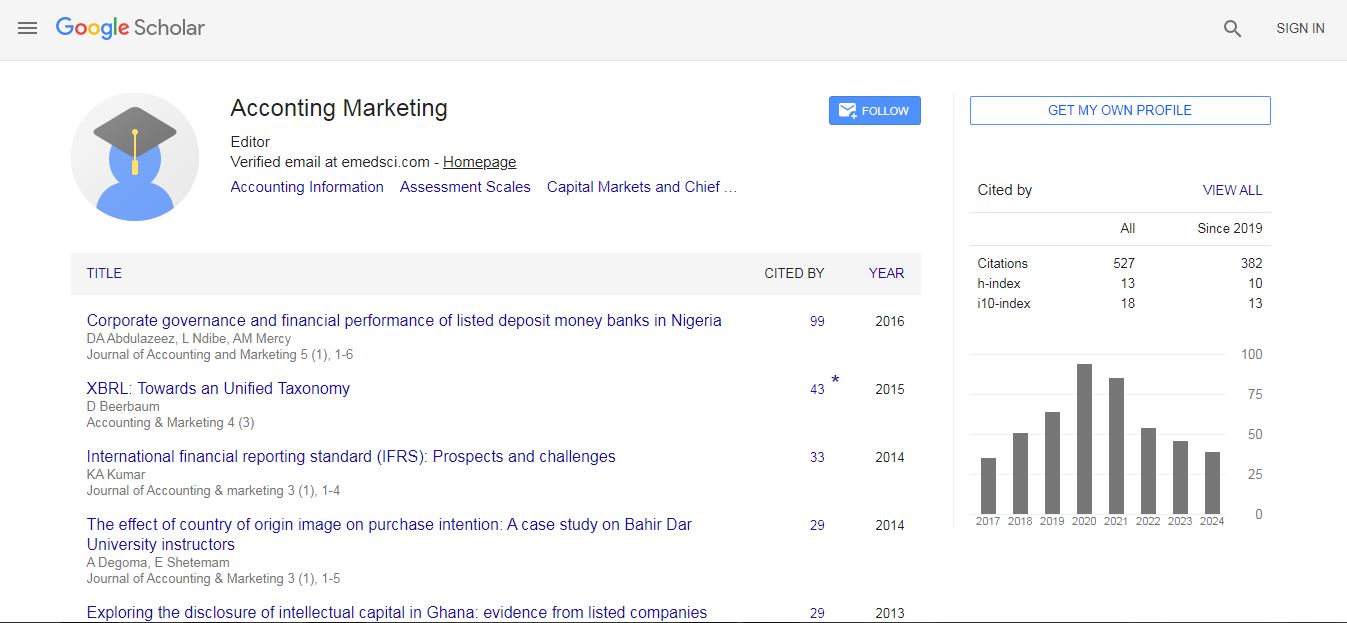
Accounting & Marketing received 487 citations as per Google Scholar report