Benish Shabbir1*, Qiu Xiaodong1 and Hassan Siddique2
This study examines the occurrence of cronyism and shed light on its negative effect on the workplace. Cronyism plays mediating role and power distance plays a moderating role in this study. The targeted population of related study is public and private sector organizations of Pakistan. Primary data were collected from 173 employees of different organizations, such as educational sector, banking sector, development sector and aviation industry of Pakistan. Power distance moderates the relationship between big five personality traits and cronyism, as well as cronyism also mediates the relationship between personality traits and workplace deviance. Data was analyzed through SPSS and different analysis, such as correlation, regression, moderation and mediation analysis were tested. Implications of the study were also discussed.
Tsfira Grebelsky-Lichtman* and Gal Grinstein
An essential challenge when advertising during wartime is how to market products positively despite the negative warlike emotional and social atmosphere. Grounded in marketing theoretical perspective, this study develops a theoretical and analytical framework that analyzes patterns of verbal vs. nonverbal discrepancies as a marketing strategy during wartime. We analyzed all advertisements of governmental agencies and commercial companies from the commercial television channels in Israel (n=744) during the war period (November/2023-March/2024). One-way ANOVA tests in addition to Scheffé post-hoc analyses were computed to expose significant differences in patterns of verbal vs. nonverbal discrepancies of strategic marketing tool during wartime. The findings revealed significant proportions of discrepant verbal/nonverbal patterns in advertisements aired during wartime. Moreover, we found significant relationships between the usage of discrepancy and the progress of the war. As time passed, while the intensity of the war reduced, the amount of discrepancy in advertisements decreased dramatically. Our conclusions contribute an advanced marketing theoretical framework that delineates patterns of verbal vs. nonverbal discrepancies and their important roles as a strategic marketing tool during wartime. Furthermore, the presented framework contributes composite theoretical accounts for the mediating factors that explain discrepant verbal/nonverbal communication as a marketing strategy during wartime, which have theoretical and practical implications.
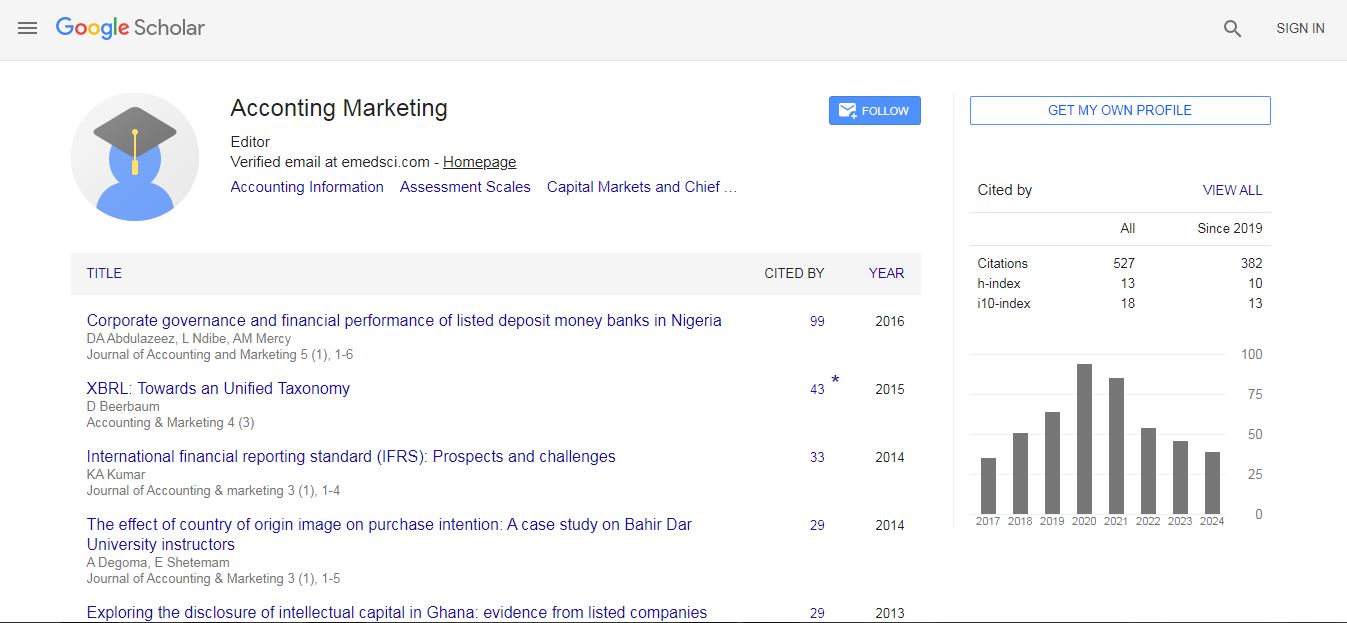
Accounting & Marketing received 487 citations as per Google Scholar report