Perspective - (2025) Volume 11, Issue 3
Received: 02-May-2025, Manuscript No. jfim-26-178563;
Editor assigned: 05-May-2025, Pre QC No. P-178563;
Reviewed: 19-May-2025, QC No. Q-178563;
Revised: 23-May-2025, Manuscript No. R-178563;
Published:
30-May-2025
, DOI: 10.37421/2572-4134.2025.11.349
Citation: Park, Eun‑Ji. ”Microbial Ecology: Novel Food Preservation Strategies.” J Food Ind Microbiol 11 (2025):349.
Copyright: © 2025 Park E. This is an open-access article distributed under the terms of the Creative Commons Attribution License, which permits unrestricted use, distribution and reproduction in any medium, provided the original author and source are credited.
The intricate relationship between food processing technologies and microbial communities is a critical area of study for ensuring food safety and quality. Various processing methods exert profound influences on the microbial landscape of food products, leading to significant reductions in spoilage and pathogenic microorganisms. However, these interventions can also lead to substantial shifts in the populations of beneficial bacteria, underscoring the complexity of food preservation [1].
The specific impacts are heavily contingent on the chosen processing method, its intensity, and the inherent characteristics of the food matrix itself, necessitating a nuanced understanding of these dynamics to develop both safe and functional foods [1].
Non-thermal technologies, such as high-pressure processing (HPP), offer promising alternatives to traditional thermal methods. HPP effectively inactivates vegetative bacteria, yeasts, and molds while largely preserving the sensory and nutritional qualities of food. Despite its advantages, its efficacy against bacterial spores can be variable, and there is evidence suggesting it may induce stress responses in surviving microorganisms, potentially influencing their future behavior and physiology. The interaction between HPP and microbial enzymes also contributes to the overall impact [2].
Thermal processing, including pasteurization and sterilization, continues to be a foundational approach in food preservation, relying on the application of heat to inactivate a wide array of microorganisms. The precise control of temperature and time is paramount; insufficient treatment can allow for microbial survival and outgrowth, whereas excessive heat can compromise food quality. The inherent heat resistance of different microbial species and their physiological state play significant roles in determining the effectiveness of these thermal treatments [3].
Irradiation stands out as a potent method for microbial decontamination, demonstrating efficacy against bacteria, viruses, fungi, and even parasites. This technology can significantly extend the shelf life of food products and guarantee microbial safety without inducing substantial heat-related changes. Nevertheless, potential concerns regarding organoleptic alterations and consumer acceptance necessitate careful optimization of irradiation doses. The mechanism of action involves direct damage to microbial DNA and indirect damage mediated by the formation of free radicals [4].
Pulsed electric fields (PEF) represent another non-thermal technology for microbial inactivation, particularly effective against bacteria by inducing transient pores in cell membranes. PEF is frequently employed in conjunction with mild heat or other hurdle technologies to achieve more comprehensive microbial control. Its effectiveness is influenced by critical parameters such as field strength, pulse duration, and the electrical conductivity of the food matrix [5].
The principle of hurdle technology, which involves the strategic combination of multiple mild preservation methods, is gaining increasing recognition for its efficacy in managing food microbiota. This approach, incorporating factors like pH, water activity, temperature, and novel processing technologies, aims to create an inhibitory environment for microbial growth without compromising food quality. It represents a sophisticated strategy for ensuring both food safety and extended shelf life [6].
Ozone treatment, leveraging its potent oxidizing properties, is capable of inactivating a broad spectrum of microorganisms on food surfaces and within processing water. The effectiveness of ozone is governed by its concentration, contact time, and the presence of organic matter. While it serves as an efficient antimicrobial agent, careful control is essential to prevent detrimental effects on food quality, such as undesirable flavor changes [7].
The impact of processing on the food microbiome extends beyond the simple elimination of undesirable microbes. Non-thermal technologies, in particular, can foster the survival and even promote the growth of beneficial bacteria, such as probiotics. This capability opens up new avenues for the development of functional foods with enhanced health benefits, provided that processing conditions are carefully optimized to support these valuable microbial populations [8].
Ultrasonic processing can also contribute significantly to microbial inactivation, especially when applied at high intensities and frequencies. The process generates cavitation, which leads to cell lysis. Ultrasonication can be utilized as a standalone preservation method or integrated with other techniques to achieve synergistic antimicrobial effects. Its effectiveness is modulated by factors including frequency, power, duration, and the specific food matrix [9].
The microbial ecology of foods is a complex system characterized by an intricate interplay between inherent microbial populations and their responses to processing interventions. While many technologies are designed for broad microbial reduction, a deep understanding of their specific effects on diverse microbial groups, including beneficial ones, is paramount. Advances in analytical techniques are continuously enhancing our ability to monitor these microbial shifts and to develop more targeted and effective preservation strategies [10].
Processing technologies play a pivotal role in shaping the microbial communities found in food products. These methods significantly reduce the presence of spoilage and pathogenic microorganisms through techniques such as pasteurization and irradiation. However, it is crucial to acknowledge that these processes can also alter the balance of beneficial bacteria within the food. The degree of these impacts is inherently tied to the specific processing technique employed, its intensity, and the composition of the food itself. Therefore, a thorough understanding of these microbial dynamics is essential for maintaining food safety and quality, as well as for innovating functional foods that capitalize on desirable microbial populations [1].
High-pressure processing (HPP) is recognized as a non-thermal technology capable of effectively inactivating vegetative bacteria, yeasts, and molds. A key advantage of HPP is its ability to preserve the sensory and nutritional attributes of food. However, its effectiveness against bacterial spores can be inconsistent, and some research suggests that HPP may induce stress responses in surviving microbes, potentially influencing their subsequent physiological activities and behavior. The interaction between HPP and enzymes within microorganisms also contributes to the overall outcome [2].
Thermal processing, encompassing methods like pasteurization and sterilization, remains a cornerstone of food preservation strategies. These techniques rely on the application of heat to eliminate a wide spectrum of microorganisms. The efficacy of thermal processing is critically dependent on the selected temperature and duration; insufficient heat treatment can lead to the survival and subsequent outgrowth of microbes, while excessive heat can result in undesirable degradation of food quality. The heat resistance characteristics of different microbial species and their physiological states are significant factors that influence the effectiveness of these treatments [3].
Irradiation is a powerful technology for microbial decontamination, showing effectiveness against a broad range of pathogens including bacteria, viruses, fungi, and parasites. It offers the benefit of significantly extending food shelf life and ensuring microbial safety without causing substantial heat-induced changes to the food. However, potential concerns regarding changes in organoleptic properties and consumer perception necessitate careful determination and optimization of the irradiation dose. The underlying mechanism involves direct damage to microbial DNA and indirect damage through the generation of reactive free radicals [4].
Pulsed electric fields (PEF) provide a non-thermal method for inactivating microorganisms, demonstrating particular effectiveness against bacteria by creating transient pores within their cell membranes. PEF is often utilized in combination with mild heat or other hurdles in a multi-barrier approach to achieve more comprehensive control of microbial populations. The success of PEF treatment is influenced by several parameters, including the applied field strength, the duration of the electrical pulses, and the electrical conductivity of the food product [5].
Hurdle technology, a strategy involving the combination of multiple mild preservation methods, is becoming increasingly significant in the effective management of food microbiota. This approach encompasses various factors, such as adjusting pH, water activity, temperature, and employing novel processing technologies, all aimed at creating an environment that inhibits microbial growth without compromising the overall quality of the food. It represents a more sophisticated and integrated approach to ensuring both safety and extended shelf life [6].
Ozone treatment, utilizing its potent oxidizing capabilities, can effectively inactivate a diverse array of microorganisms present on food surfaces and in processing water. The antimicrobial efficacy of ozone is contingent upon factors such as its concentration, the duration of contact, and the presence of organic matter, which can interfere with its activity. While ozone is an efficient antimicrobial agent, meticulous control over its application is necessary to prevent any detrimental effects on food quality, particularly regarding flavor profiles [7].
The influence of processing technologies on the food microbiome is not exclusively focused on the elimination of undesirable microorganisms. Non-thermal methods, in particular, have shown potential in promoting the survival and even encouraging the growth of beneficial bacteria, such as probiotics. This opens up significant opportunities for the development of functional foods that offer enhanced health benefits, provided that the processing conditions are carefully optimized to support and maintain the viability and functionality of these valuable microbial populations [8].
Ultrasonic processing is another technology that can contribute to microbial inactivation, especially when applied at high intensities and frequencies. The physical effect of cavitation, generated by ultrasound, leads to cell lysis. Ultrasonication can be used as a standalone preservation technique or in conjunction with other preservation methods to achieve synergistic antimicrobial effects. The efficiency of this process is influenced by parameters such as the frequency and power of the ultrasound, the processing time, and the specific characteristics of the food matrix [9].
The microbial ecology of foods is a dynamic and complex system, involving the intrinsic microbial populations and their responses to various processing interventions. While many food processing technologies are designed for broad microbial reduction, a comprehensive understanding of their specific impacts on different microbial groups, including the beneficial ones, is of paramount importance. Ongoing advancements in analytical techniques are continuously improving our capacity to monitor these microbial shifts and to develop more precise and targeted preservation strategies [10].
Food processing significantly impacts microbial communities, reducing pathogens but potentially affecting beneficial bacteria. Technologies like high-pressure processing (HPP), irradiation, pulsed electric fields (PEF), ozone treatment, and ultrasonic processing offer non-thermal alternatives that can preserve food quality while inactivating microbes, though efficacy varies and spore inactivation can be challenging. Thermal processing remains a standard but requires careful control to avoid quality degradation. Hurdle technology, combining multiple mild methods, offers a sophisticated approach to food preservation. The development of functional foods can benefit from non-thermal methods that support probiotic survival. Understanding the complex microbial ecology during processing is key to ensuring food safety and developing innovative preservation strategies.
None
None
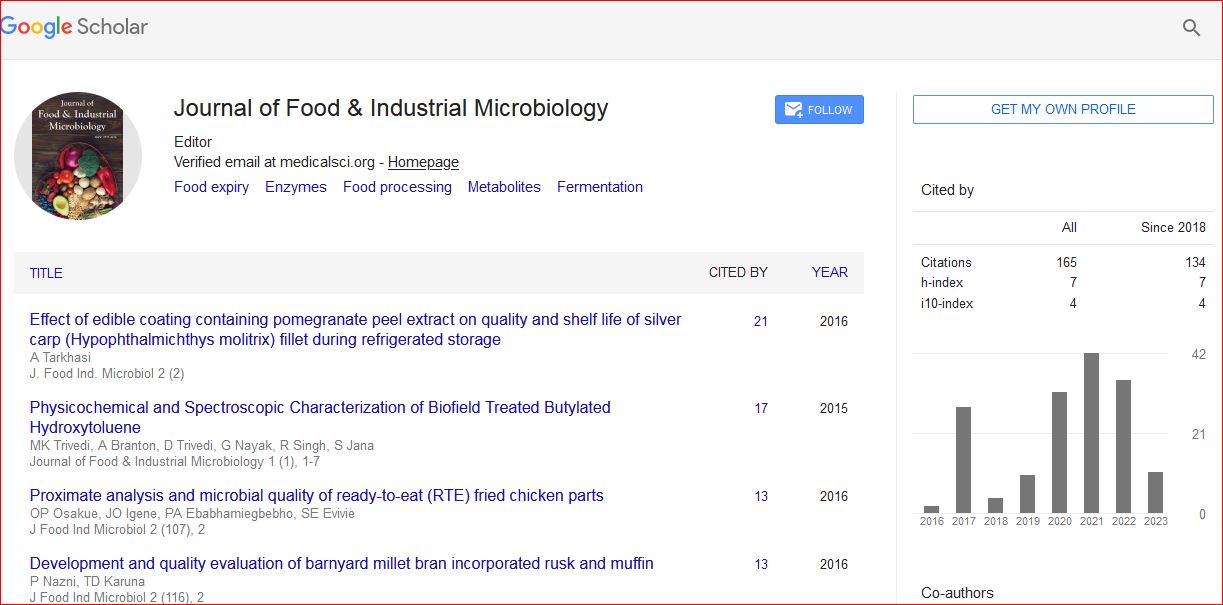
Journal of Food & Industrial Microbiology received 160 citations as per Google Scholar report