Opinion - (2025) Volume 14, Issue 4
Received: 02-Jul-2025, Manuscript No. jamk-25-177295;
Editor assigned: 04-Jul-2025, Pre QC No. P-177295;
Reviewed: 18-Jul-2025, QC No. Q-177295;
Revised: 23-Jul-2025, Manuscript No. R-177295;
Published:
30-Jul-2025
, DOI: 10.37421/2168-9601.2025.14.566
Citation: Matthews, Linda. ”Internal Controls and ERM: Critical Strategic Assets.” J Account Mark 14 (2025):566.
Copyright: © 2025 Matthews L. This is an open-access article distributed under the terms of the Creative Commons Attribution License, which permits unrestricted use, distribution and reproduction in any medium, provided the original author and source are credited.
The contemporary business landscape increasingly emphasizes the criticality of robust internal controls and effective risk management practices for organizational stability and financial integrity. Research has consistently demonstrated that deficiencies in internal control mechanisms can lead to a myriad of adverse outcomes, impacting audit processes, financial reporting quality, and overall firm value. Auditors, in particular, are highly attuned to these weaknesses, viewing them as significant indicators of elevated audit risk, which often translates into increased audit fees. This perception holds true even when such weaknesses do not formally classify as material weaknesses under regulations like Sarbanes-Oxley, underscoring the broad impact of control environments on external scrutiny [1].
Enterprise Risk Management (ERM) frameworks are designed to identify, assess, and mitigate potential risks across an organization. Studies examining the implementation of ERM have revealed a positive correlation between its adoption and a firm's financial performance. Specifically, in contexts such as Malaysian public listed companies, the maturity level of ERM systems has been shown to amplify these positive financial outcomes. This suggests that merely implementing ERM is not sufficient; the effectiveness and sophistication of its integration within corporate operations are paramount for realizing its full benefits [2].
The quality of internal controls extends its influence beyond compliance and operational efficiency, directly affecting a firm's intrinsic value. In developing economies, where institutional environments may be less mature or developed, the impact of strong internal controls on firm value becomes even more pronounced. Research conducted in China, for instance, illustrates that superior internal control quality contributes significantly to higher firm valuation, highlighting its role as a fundamental driver of corporate success, particularly in regions with evolving regulatory frameworks [3].
The nexus between internal control systems, financial reporting quality, and corporate governance mechanisms is a central theme in accounting research. It has been established that well-designed and implemented internal controls are instrumental in enhancing the quality and reliability of financial reporting. Furthermore, effective corporate governance structures play a crucial mediating role, amplifying the positive effects of internal controls on reporting quality. This synergistic relationship underscores that internal controls and governance mechanisms are not isolated components but rather interconnected elements working in concert to foster transparency and accountability [4].
The escalating threat of cybersecurity risks presents a novel challenge to the efficacy of traditional internal control frameworks. From a regulatory standpoint, increasing cyber threats necessitate a continuous evolution and strengthening of internal controls. This regulatory imperative is crucial for safeguarding sensitive information and maintaining the integrity of financial systems. Consequently, robust cybersecurity-driven internal controls significantly influence audit quality and the overall reliability of financial reports, as they address a critical and rapidly evolving risk landscape [5].
Audit committees, as key components of corporate governance, play a vital oversight role in monitoring internal control systems. Their characteristics, such as independence and financial expertise, have been consistently linked to the prevalence of internal control weaknesses within firms. Evidence from Chinese firms, for example, demonstrates that audit committees comprising members with higher independence and specialized financial knowledge are associated with fewer reported control problems. This reinforces the notion that a competent and independent audit committee is critical for effective internal control oversight and governance [6].
The ongoing wave of digitalization across industries profoundly impacts the design and operation of internal control systems. For European firms, the adoption of digital technologies is shown to reshape internal controls, leading to potential enhancements in audit quality. Digitalization facilitates more effective risk assessment and control monitoring, thereby improving the efficiency and reliability of the audit process. This transformation suggests that leveraging technological advancements is key to modernizing and strengthening internal control environments in an increasingly digital business world [7].
Effective internal controls have practical implications for the audit process itself, extending to the timeliness of audit report issuance. Research conducted in Saudi Arabia indicates that the presence of solid and effective internal control systems directly contributes to a reduction in audit reporting lag. This acceleration in the audit timeline signifies enhanced audit efficiency and provides stakeholders with timely financial information, further underscoring the operational benefits derived from a robust control environment [8].
Beyond internal controls, enterprise risk management (ERM) disclosure is an increasingly vital aspect of corporate transparency. The degree to which companies disclose their ERM practices has been found to be inversely related to firm risk. This relationship is further moderated by the characteristics of the board of directors. Specifically, boards characterized by greater independence and diversity enhance the positive effect of ERM disclosure on reducing firm risk, indicating that strong board oversight and diverse perspectives amplify the benefits of transparent risk management practices [9].
Finally, the broader framework of environmental, social, and governance (ESG) performance is intrinsically linked to the health of internal control systems. Studies examining Chinese firms reveal a compelling association between superior ESG performance and a lower incidence of internal control deficiencies. This finding suggests that companies committed to strong governance, social responsibility, and environmental stewardship often possess more robust and effective internal control systems. This synergy highlights how comprehensive corporate responsibility contributes to overall organizational resilience and integrity [10].
This study provides an in-depth analysis of the relationship between internal control weaknesses, as identified in managementâ??s discussion and analysis (MD&A), and the subsequent impact on audit fees. It specifically details how auditors perceive these disclosed weaknesses as direct contributors to heightened audit risk, irrespective of formal Sarbanes-Oxley material weakness classifications. The research quantifies this perception by demonstrating a clear increase in audit costs for firms exhibiting these control deficiencies, offering empirical evidence of the financial consequences associated with suboptimal internal control environments [1]. The research conducted on Malaysian public listed companies delves into the mechanistic link between the adoption of enterprise risk management (ERM) and its influence on financial performance. The methodology focuses on assessing the maturity level of ERM systems within these organizations. The findings unequivocally establish a positive correlation, illustrating that companies with more advanced and thoroughly integrated ERM systems experience measurably better financial outcomes, thereby advocating for comprehensive and mature ERM frameworks rather than superficial implementation [2]. An examination of Chinese firms investigates the critical nexus between the quality of internal controls and overall firm value. This study employs a rigorous empirical approach to demonstrate that superior internal control frameworks are directly associated with an elevated firm valuation. A significant nuance revealed is the intensifying effect of internal control quality on firm value in less developed institutional environments, suggesting that robust internal controls serve as a particularly crucial differentiator and value driver in emerging markets where external governance structures might be weaker [3]. This article presents an empirical investigation into how internal control systems contribute to the quality of financial reporting, highlighting the crucial mediating role of corporate governance mechanisms. The study meticulously outlines how strong internal controls are fundamental to producing reliable and accurate financial statements. Furthermore, it explicates that the positive impact of these controls is significantly enhanced and amplified when robust corporate governance mechanisms are concurrently in place, signifying a complementary and reinforcing relationship between the two [4]. From a regulatory standpoint, this research dissects the escalating challenge posed by cybersecurity risks to the effectiveness of internal control systems. It comprehensively argues that the proliferation of cyber threats necessitates a proactive and adaptive regulatory response, demanding continuous reinforcement and modernization of internal controls. The study posits that such regulatory vigilance and enhanced controls are indispensable for maintaining high audit quality and ensuring the enduring reliability of financial reports in an increasingly digital and threat-laden operational landscape [5]. A detailed study focusing on Chinese firms elucidates the profound relationship between the characteristics of an audit committee and the prevalence of internal control weaknesses. The research provides compelling evidence that audit committees distinguished by higher levels of independence and specialized financial expertise are directly correlated with a reduction in identified internal control problems. This underscores the paramount importance of a well-composed and knowledgeable audit committee in exercising effective oversight and safeguarding the integrity of a firm's control environment [6]. This research explores the transformative impact of digitalization on internal controls and its subsequent implications for audit quality within European firms. The study reveals that the integration of digital technologies fundamentally alters the operational dynamics of internal control systems. Crucially, it demonstrates that this digitalization can lead to enhanced audit quality by facilitating more precise risk assessment processes and enabling more efficient and effective control monitoring, thereby optimizing the entire audit lifecycle [7]. Focusing on the context of Saudi Arabia, this paper provides empirical evidence concerning the tangible benefits of effective internal controls on audit efficiency, specifically measuring their impact on audit reporting lag. The findings clearly indicate that organizations possessing robust and well-implemented internal control systems consistently experience shorter audit reporting lags. This reduction in the time taken to finalize and issue audit reports is presented as a direct indicator of improved audit process efficiency and enhanced informational timeliness for stakeholders [8]. This study investigates the nuanced connection between enterprise risk management (ERM) disclosure and firm risk, emphasizing the significant moderating role played by board characteristics. It provides empirical support for the assertion that increased transparency in ERM practices generally leads to a reduction in overall firm risk. Crucially, the research demonstrates that this beneficial effect of ERM disclosure is substantially strengthened when the board of directors exhibits characteristics such as greater independence and diversity, highlighting the strategic importance of board composition [9]. An exploration into the interplay between environmental, social, and governance (ESG) performance and internal control deficiencies is presented, drawing evidence from Chinese firms. This research establishes a strong inverse relationship, revealing that companies demonstrating superior ESG performance are consistently associated with a lower incidence of internal control weaknesses. This finding suggests a synergistic relationship where strong commitment to sustainability and ethical governance practices often correlates with more robust and diligently managed internal control systems, fostering comprehensive corporate resilience [10].
The collective body of research underscores the critical importance of robust internal controls and comprehensive enterprise risk management (ERM) for organizational health, financial integrity, and stakeholder confidence. Studies consistently demonstrate that strong internal controls are foundational for high-quality financial reporting, enhanced firm value, and efficient audit processes, ultimately reducing audit fees and reporting lag. The effectiveness of these controls is influenced by various factors, including regulatory oversight, the characteristics of audit committees, and the broader corporate governance environment. Furthermore, the integration of digitalization presents opportunities to modernize and improve internal control systems, while escalating cybersecurity risks necessitate their continuous strengthening. Beyond internal controls, mature ERM systems and transparent ERM disclosures are shown to positively impact financial performance and reduce firm risk, particularly when supported by independent and diverse boards. An interesting correlation emerges between strong environmental, social, and governance (ESG) performance and fewer internal control deficiencies, suggesting that holistic corporate responsibility contributes to robust internal systems. These findings collectively emphasize that effective internal controls and risk management are not merely compliance burdens but strategic assets that drive organizational success, improve external perceptions, and build resilience.
None
None
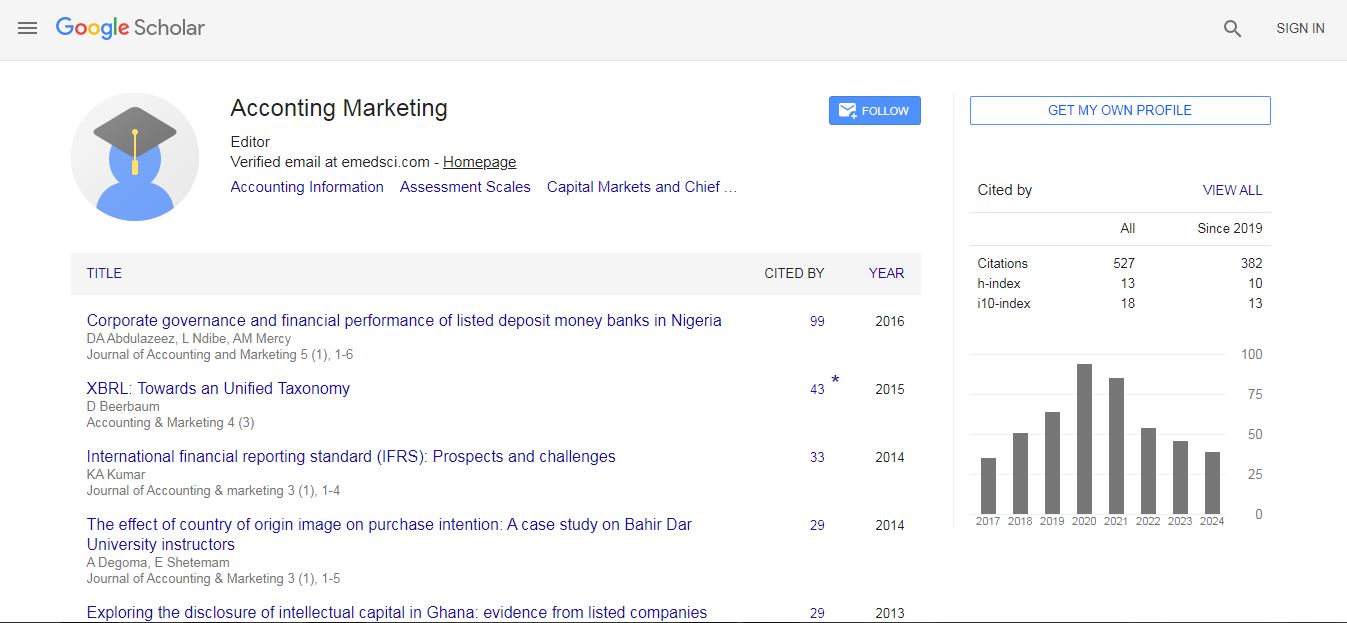
Accounting & Marketing received 487 citations as per Google Scholar report