Commentary - (2025) Volume 11, Issue 2
Received: 01-Mar-2025, Manuscript No. jfim-26-178549;
Editor assigned: 03-Mar-2025, Pre QC No. P-178549;
Reviewed: 17-Mar-2025, QC No. Q-178549;
Revised: 24-Mar-2025, Manuscript No. R-178549;
Published:
31-Mar-2025
, DOI: 10.37421/2572-4134.2025.11.335
Citation: Tanaka, Yuki. ”Starter Cultures: Food Safety And Shelf- Life Extension.” J Food Ind Microbiol 11 (2025):335.
Copyright: © 2025 Tanaka Y. This is an open-access article distributed under the terms of the Creative Commons Attribution License, which permits unrestricted use, distribution and reproduction in any medium, provided the original author and source are credited.
Starter cultures, primarily lactic acid bacteria (LAB) and some yeasts, are fundamental in modern food preservation, significantly enhancing food safety and extending shelf life through various mechanisms. They actively produce a range of antimicrobial compounds, including bacteriocins, organic acids such as lactic and acetic acid, and hydrogen peroxide, which collectively inhibit the proliferation of pathogenic and spoilage microorganisms. Their metabolic activity also leads to a reduction in pH, thereby creating an environment that is unfavorable for the growth of many undesirable microbes. This dual action, encompassing both direct inhibition and indirect environmental modification, plays a crucial role in ensuring the safety and longevity of food products [1].
The advancement in food preservation techniques now includes the utilization of probiotic starter cultures, representing a sophisticated approach to maintaining food quality and safety. These cultures are enriched with strains possessing known beneficial properties, such as the demonstrated ability to inhibit the growth of formidable pathogens like *Listeria monocytogenes* and *Staphylococcus aureus*. Beyond their direct impact on safety, these strains can also confer desirable sensory characteristics and nutritional value, indirectly contributing to shelf life by making the food more appealing for consumption over extended periods [2].
A key mechanism through which starter cultures contribute to food safety is the production of bacteriocins. These antimicrobial peptides are specifically designed to target and disrupt the cellular membranes of closely related bacterial species, which importantly include numerous foodborne pathogens. This highly targeted action makes bacteriocin-producing LAB exceptionally valuable as bio-preservatives, effectively preventing spoilage and substantially reducing the risk of foodborne illnesses [3].
The fermentation process inherently driven by starter cultures is instrumental in lowering the pH of food matrices. This acidification is a critical factor in inhibiting the growth of spoilage organisms and pathogens, which typically thrive in neutral or alkaline conditions. A prime example is seen in dairy products, where the lactic acid meticulously produced by LAB establishes an acidic milieu that naturally preserves the product and effectively prevents the proliferation of a wide array of harmful bacteria [4].
Starter cultures are also adept at competing with pathogenic bacteria for vital nutrients and for crucial binding sites on the surfaces of food. This competitive exclusion mechanism is a vital strategy for preventing the colonization and subsequent growth of spoilage and pathogenic microorganisms. Consequently, this process significantly enhances the overall microbial safety of food products and extends their viable shelf life [5].
Certain yeasts, when incorporated into starter cultures, contribute to food preservation through the production of CO2 and other volatile compounds. The generation of these gases can create an anaerobic environment within packaged foods, a condition that effectively inhibits the growth of aerobic spoilage bacteria and pathogens. This is particularly beneficial in products like baked goods and certain fermented beverages, where it contributes to improved safety and an extended shelf life [6].
Starter cultures can be strategically engineered or specifically selected for their enhanced production of particular antimicrobial metabolites, such as reuterin or diacetyl. These compounds exhibit broad-spectrum antimicrobial activity against a diverse range of foodborne pathogens, thereby offering a more potent and precisely targeted approach to ensuring food safety and preventing spoilage compared to conventional preservation methods [7].
The enzymatic activity inherent in starter cultures, exemplified by their production of proteases and lipases, plays an indirect yet significant role in food preservation. These enzymes can modify food matrices by reducing water activity and generating compounds that actively inhibit microbial growth. While primarily recognized for their contributions to flavor development, these enzymes also contribute to preservation by altering the food environment to make it less hospitable for spoilage agents [8].
The strategic use of defined mixed starter cultures, which combine multiple strains possessing complementary antimicrobial activities, can yield synergistic effects in the control of microbial spoilage and the enhancement of food safety. This multifaceted approach proves to be more robust and effective than relying on single strains, as it offers a broader spectrum of inhibition against a wider array of diverse microbial populations, thereby extending shelf life more efficiently [9].
Beyond their direct antimicrobial functions, starter cultures contribute significantly to the sensory attributes of fermented foods. These appealing sensory qualities, such as desirable flavors and textures, can indirectly influence consumer perception of freshness and overall quality, thereby affecting the perceived shelf life of the product. By making the food more desirable for consumption over a longer period, these sensory contributions complement their direct preservative actions [10].
The pivotal role of starter cultures, predominantly lactic acid bacteria (LAB) and select yeasts, in modern food preservation is undeniable, contributing to enhanced food safety and extended shelf life. These microorganisms achieve this through the synthesis of antimicrobial substances, including bacteriocins, organic acids (lactic and acetic acid), and hydrogen peroxide, effectively stifling the growth of harmful and spoilage-causing microbes. Furthermore, their metabolic processes lead to a decrease in pH, creating an environment that is inhospitable to many undesirable microorganisms. This synergistic action, combining direct antimicrobial effects with indirect environmental modification, is critical for successful food preservation [1].
An advanced strategy in food preservation involves the deployment of probiotic starter cultures, which are strains endowed with specific beneficial properties. These cultures are capable of inhibiting dangerous pathogens such as *Listeria monocytogenes* and *Staphylococcus aureus*. Their incorporation into food not only bolsters safety but also enhances the organoleptic qualities and nutritional profile of the product, indirectly prolonging its appeal and usability by making it more desirable for consumers over time [2].
The production of bacteriocins by starter cultures is a fundamental mechanism for ensuring food safety. These peptide-based antimicrobials possess the unique capability to specifically target and compromise the cell membranes of bacteria that are closely related, including many prevalent foodborne pathogens. This targeted efficacy renders bacteriocin-producing LAB highly valuable as natural preservatives, directly preventing spoilage and mitigating the risks associated with foodborne diseases [3].
A crucial aspect of starter culture activity is their role in the acidification of food matrices through fermentation. The resulting decrease in pH is paramount in hindering the growth of spoilage organisms and pathogens that typically flourish in neutral or alkaline conditions. In the context of dairy products, for instance, the lactic acid generated by LAB establishes an acidic environment that naturally preserves the product and impedes the multiplication of numerous harmful bacteria [4].
Starter cultures actively engage in a competitive exclusion process, vying with pathogenic bacteria for essential nutrients and for attachment sites on food surfaces. This competitive mechanism is indispensable for preempting the colonization and proliferation of spoilage and pathogenic microorganisms, thereby significantly improving the overall microbial safety and extending the practical shelf life of food items [5].
Certain yeasts employed in starter cultures can contribute to food preservation by generating carbon dioxide and other volatile compounds. The production of these gases can establish an anaerobic environment within packaged foods, which is effective in inhibiting the growth of aerobic spoilage bacteria and pathogens. This process is particularly advantageous for products like baked goods and certain fermented beverages, leading to enhanced safety and a longer shelf life [6].
Starter cultures can be specifically developed or modified to enhance the synthesis of distinct antimicrobial metabolites, such as reuterin or diacetyl. These compounds exhibit broad-spectrum inhibitory effects against a variety of foodborne pathogens, providing a more potent and precise method for safeguarding food and preventing spoilage compared to traditional preservation techniques [7].
The enzymatic activities of starter cultures, including the production of proteases and lipases, contribute to food preservation by modifying food matrices. These modifications can lead to a reduction in water activity and the generation of substances that inhibit microbial growth. While these enzymes are often associated with flavor development, they also indirectly aid in preservation by making the food environment less conducive to spoilage agents [8].
The strategic application of defined mixed starter cultures, integrating multiple strains with complementary antimicrobial capabilities, can result in synergistic benefits for controlling microbial spoilage and elevating food safety. This integrated approach surpasses the efficacy of single-strain cultures by offering a more comprehensive inhibition against a diverse range of microorganisms, thus achieving more effective shelf-life extension [9].
Starter cultures play a significant role in shaping the sensory characteristics of fermented foods, which can subsequently influence consumer perceptions of freshness and quality, thereby impacting the perceived shelf life. Their capacity to produce appealing flavors and textures enhances the desirability of the food for extended consumption, complementing their direct antimicrobial functions [10].
Starter cultures, primarily lactic acid bacteria and yeasts, are crucial for food safety and shelf-life extension. They achieve this by producing antimicrobial compounds like bacteriocins and organic acids, and by lowering pH to create an unfavorable environment for pathogens. Probiotic starter cultures offer advanced preservation by inhibiting specific pathogens and improving sensory qualities. Bacteriocin production provides targeted antimicrobial action. Acidification through fermentation is a key mechanism for inhibiting spoilage. Competitive exclusion for nutrients and binding sites also prevents microbial growth. Yeast-produced CO2 can create anaerobic conditions, inhibiting aerobic spoilage. Engineered starter cultures can produce enhanced antimicrobial metabolites. Enzymes produced by starter cultures indirectly contribute to preservation by modifying food matrices. Mixed starter cultures offer synergistic effects for broader microbial control. Finally, starter cultures enhance sensory attributes, indirectly extending perceived shelf life.
None
None
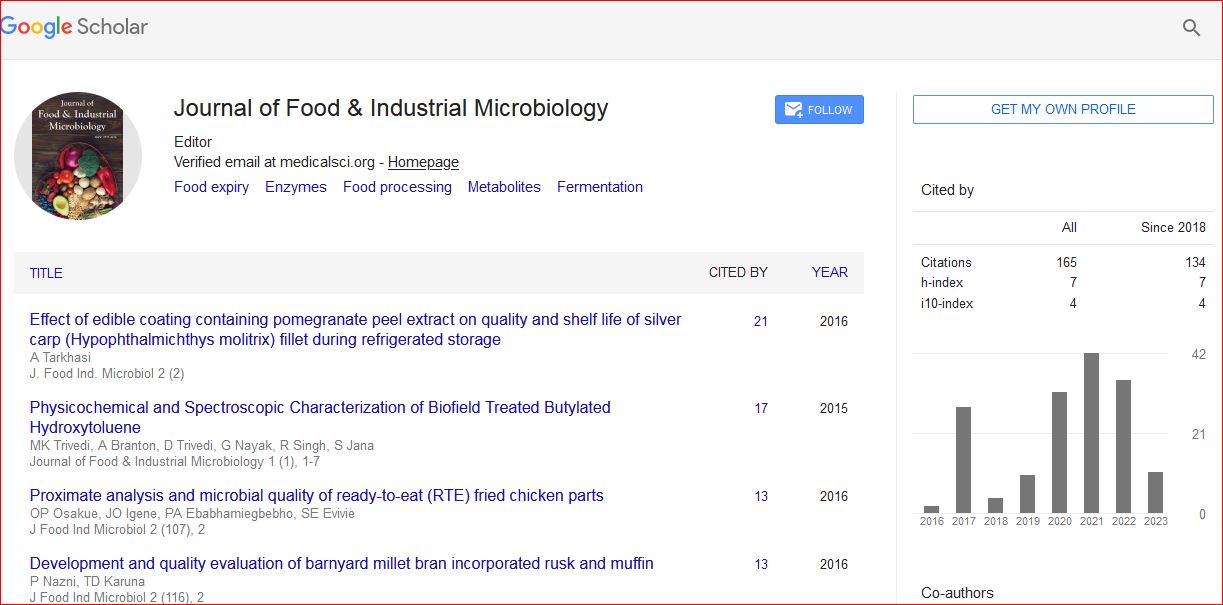
Journal of Food & Industrial Microbiology received 160 citations as per Google Scholar report