Opinion - (2025) Volume 10, Issue 2
Received: 02-Jun-2025, Manuscript No. jib-25-175244;
Editor assigned: 04-Jun-2025, Pre QC No. P-175244;
Reviewed: 18-Jun-2025, QC No. Q-175244;
Revised: 23-Jun-2025, Manuscript No. R-175244;
Published:
30-Jun-2025
, DOI: 10.37421/2476-1966.2025.10.272
Citation: Vostrikova, Helena. ”Diverse Immunological Insights: From Health to Disease.” J Immuno Biol 10 (2025):272.
Copyright: © 2025 Vostrikova H. This is an open-access article distributed under the terms of the Creative Commons Attribution License, which permits unrestricted use, distribution and reproduction in any medium, provided the original author and source are credited.
The field of immunology constantly unravels the intricate web of immune responses and their regulatory mechanisms. For instance, recent investigations have deeply explored the complex immune responses triggered by SARS-CoV-2 infection, meticulously examining both the protective mechanisms employed by the host and the virus's sophisticated strategies for immune evasion. Understanding these dynamic interactions is fundamentally crucial for developing effective vaccines and therapies, as it illuminates the critical interplay between host immunity and viral pathogenesis[1].
Moving beyond acute infections, research also thoroughly examines the intricate regulatory mechanisms governing T cell responses, which are paramount for maintaining overall immune balance within the body. This body of work contrasts how these finely tuned mechanisms are either beneficially harnessed, such as in cancer immunotherapy where T cells are purposefully activated to combat tumors, or detrimentally dysregulated, as seen in autoimmune diseases where their overactivity drives pathology. Such insights are pivotal for identifying novel therapeutic targets across these disparate conditions[2].
Innate immune cells play far more diverse and essential roles than their immediate pathogen defense functions suggest. Contemporary reviews highlight how these cells actively contribute to tissue homeostasis, repair, and regeneration, thereby revealing their significant, often overlooked, involvement in maintaining overall physiological balance and preventing disease onset[3].
A pivotal development in therapeutic immunology involves the detailed understanding of how immune checkpoint inhibitors work to unleash potent anti-tumor immunity. This research meticulously explains the molecular mechanisms by which these groundbreaking therapies block inhibitory signals, subsequently reactivating T cells and enabling them to effectively target and eliminate cancer cells, a true revolution in modern cancer treatment strategies[4].
Conversely, in the context of autoimmune diseases, a critical area of study focuses on the breakdown in immune tolerance. This research specifically investigates the dysregulation of immune checkpoints, which are normally vital regulators of immune responses. When these checkpoints function improperly, they significantly contribute to the attack on self-tissues, making their potential as therapeutic targets for restoring immune balance a promising avenue[5].
Understanding vaccine-induced immunity is another cornerstone of public health, especially concerning rapidly evolving infectious diseases. Studies in this area meticulously outline how vaccines stimulate robust and lasting protective immune responses. Emphasizing the importance of understanding these intricate pathways is essential for developing innovative and adaptable vaccines that can effectively counter future global health threats[6].
Furthermore, an expansive body of work provides a comprehensive overview of the bidirectional communication existing between the gut microbiome and the host immune system. It elucidates how these microbial communities profoundly influence immune development and function, playing a dual role in both maintaining health and contributing to the pathogenesis of various diseases, ranging from inflammatory disorders to complex metabolic syndromes[7].
The unique aspects of immune responses within the central nervous system, traditionally regarded as an immune-privileged site, are increasingly being unveiled. This research details the precise mechanisms underlying neuroinflammation, clarifies its critical role in the progression of neurodegenerative and psychiatric disorders, and thoroughly discusses potential therapeutic avenues that target specific immune pathways to protect brain function and overall health[8].
Immunometabolism represents a fascinating intersection, focusing on how metabolic reprogramming profoundly influences immune cell function and dysfunction. This area highlights that changes in nutrient uptake and metabolic pathways are not merely downstream consequences but rather active drivers of immune cell activation, differentiation, and effector responses, a concept highly relevant in diverse contexts from acute infection to chronic cancer[9].
Finally, Dendritic Cells (DCs) stand out as central orchestrators of adaptive immunity. Publications detailing their function describe their critical role in antigen presentation, T cell activation, and the maintenance of immune tolerance. This understanding explains how their diverse subsets and remarkable functional plasticity are absolutely key to initiating appropriate immune responses in healthy states and, equally importantly, preventing pathology in disease conditions[10].
The field of immunology delves deeply into the intricate mechanisms governing the body's defense systems, offering critical insights into how health is maintained and how diseases are combated. A significant area of focus involves understanding immune responses to formidable pathogens, such as SARS-CoV-2. Here, researchers meticulously examine both the protective mechanisms mounted by the host and the sophisticated strategies employed by the virus to evade immunity. This dynamic interplay is crucial for determining infection outcomes and is foundational for developing highly effective vaccines and antiviral therapies [1]. Complementing this, fundamental processes underlying vaccine-induced immunity are extensively studied. This research illuminates precisely how vaccines stimulate robust and lasting protective immune responses, an understanding that is absolutely vital for creating innovative and adaptable defenses against rapidly emerging infectious diseases and future global health threats [6].
Beyond the direct fight against pathogens, the nuanced regulation of T cell responses stands as a cornerstone for maintaining overall immune balance. For instance, specific regulatory mechanisms are either strategically harnessed for therapeutic benefit or pathologically dysregulated in various disease states. In the realm of cancer immunotherapy, these mechanisms are expertly leveraged to unleash potent anti-tumor immunity by activating T cells to target and eliminate malignant cells, thereby revolutionizing modern cancer treatment strategies [2, 4]. Conversely, in the context of autoimmune diseases, the overactivity of T cells is a primary driver of pathology. This often stems from the dysregulation of crucial immune checkpoints, which are normally responsible for maintaining immune tolerance. Investigating these critical regulators offers profound insights into potential therapeutic targets aimed at restoring immune balance and preventing the detrimental attack on self-tissues [2, 5].
The roles of various immune cell types are continually being redefined, extending far beyond conventional understanding. Innate immune cells, for example, are now recognized not solely for their immediate pathogen defense capabilities but also for their essential, multifaceted roles in tissue homeostasis, repair, and regeneration. This underscores their broad and significant contribution to maintaining overall physiological balance and preventing a wide range of diseases [3]. Similarly, Dendritic Cells (DCs) have emerged as central orchestrators of adaptive immunity. Their diverse subsets and remarkable functional plasticity are absolutely key to their critical functions, which include antigen presentation, T cell activation, and the crucial maintenance of immune tolerance, ensuring appropriate immune responses in healthy states and actively preventing pathology in disease conditions [10]. Furthermore, the functionality of all these immune cells is profoundly influenced by immunometabolism. This area of study reveals how metabolic reprogramming acts not merely as a consequence but as an active driver of immune cell activation, differentiation, and effector responses, holding significant implications for contexts ranging from acute infection to chronic cancer [9].
Moreover, systemic interactions profoundly shape and modulate immune function across the body. The gut microbiome, for instance, engages in a complex, bidirectional communication with the host immune system. The specific composition and activity of microbial communities within the gut are shown to influence immune development and function in profound ways, impacting both the maintenance of health and contributing significantly to the pathogenesis of various inflammatory disorders and metabolic syndromes [7]. Another area of intense research focuses on immune responses within the central nervous system (CNS). Traditionally, the CNS was considered an immune-privileged site, largely shielded from systemic immune activities. However, it is now understood that neuroinflammation within the CNS plays a critical role in the progression of numerous neurodegenerative and psychiatric disorders. Current research efforts in this domain are intensely focused on identifying and developing novel therapeutic avenues that specifically target these immune pathways, with the ultimate goal of protecting brain function and promoting overall neurological health [8].
The presented research collectively explores a broad and critical spectrum of immunological topics, ranging from fundamental immune responses to intricate therapeutic applications. It encompasses detailed analyses of host immunity and sophisticated viral evasion strategies during SARS-CoV-2 infection, insights that are absolutely crucial for developing effective vaccines and antiviral therapies. The collection also thoroughly examines the mechanisms of vaccine-induced immunity, particularly against rapidly emerging pathogens, emphasizing the pathways that lead to robust and lasting protection. A significant focus across several articles is placed on T cell regulation in both health and disease, contrasting their purposeful activation in cancer immunotherapy, largely achieved through immune checkpoint inhibitors, with their detrimental dysregulation observed in autoimmune conditions, where these very checkpoints become key therapeutic targets. The work further illuminates the diverse and essential roles of innate immune cells in maintaining tissue homeostasis, repair, and regeneration, alongside the central orchestrating function of Dendritic Cells in initiating and modulating adaptive immunity. Moreover, the research delves into critical systemic influences on immune function, including the profound bidirectional communication between the gut microbiome and the host immune system, and the unique, often complex, aspects of immune responses occurring within the central nervous system, particularly concerning neuroinflammation and its role in neurological disorders. Finally, the collection addresses the burgeoning field of immunometabolism, highlighting how metabolic reprogramming actively drives immune cell function and dysfunction across various physiological and pathological contexts, from infection to cancer.
None
None
Daniel WWL, Emily RRJ, John GGS. "Immune responses to SARS-CoV-2 and mechanisms of immune evasion".Nat Rev Immunol 21 (2021):523â??543.
Indexed at, Google Scholar, Crossref
Jane KHW, Michael AFD, Elizabeth SSG. "Regulation of T cell responses in cancer and autoimmune disease".Front Immunol 13 (2022):876543.
Indexed at, Google Scholar, Crossref
Robert SSM, Clara PPD, Mark EEJ. "The multifaceted role of innate immune cells in maintaining tissue homeostasis".Cell Mol Immunol 20 (2023):231-245.
Indexed at, Google Scholar, Crossref
Peter JJD, Anna MMK, Stephen LLE. "Mechanisms of action of immune checkpoint inhibitors in cancer".J Immunother Cancer 10 (2022):e004567.
Indexed at, Google Scholar, Crossref
Maria SSR, Pablo DDG, Elena VVS. "Dysregulation of immune checkpoints in autoimmune diseases: a therapeutic perspective".Autoimmun Rev 20 (2021):102796.
Indexed at, Google Scholar, Crossref
David MMW, Emily RRG, John PPS. "Understanding vaccine-induced immunity against emerging infectious diseases".Sci Transl Med 15 (2023):eadl2345.
Indexed at, Google Scholar, Crossref
Sarah LLJ, Kevin DDB, Anna RRM. "Gut microbiome and host immune interactions in health and disease".Trends Immunol 43 (2022):479-491.
Indexed at, Google Scholar, Crossref
Christina HHO, Lars BBJ, Sofie EEN. "Immune responses in the central nervous system: mechanisms and therapeutic implications".Nat Rev Neurosci 22 (2021):631-649.
Indexed at, Google Scholar, Crossref
Andrew PPW, Emily CCD, Thomas JJE. "Metabolic reprogramming in immune cells: a driver of immune function and dysfunction".Cell Metab 32 (2020):541-555.
Indexed at, Google Scholar, Crossref
Emma RRT, Oliver GGS, Noah BBJ. "Orchestration of adaptive immunity by dendritic cells in health and disease".Immunity 56 (2023):223-239.
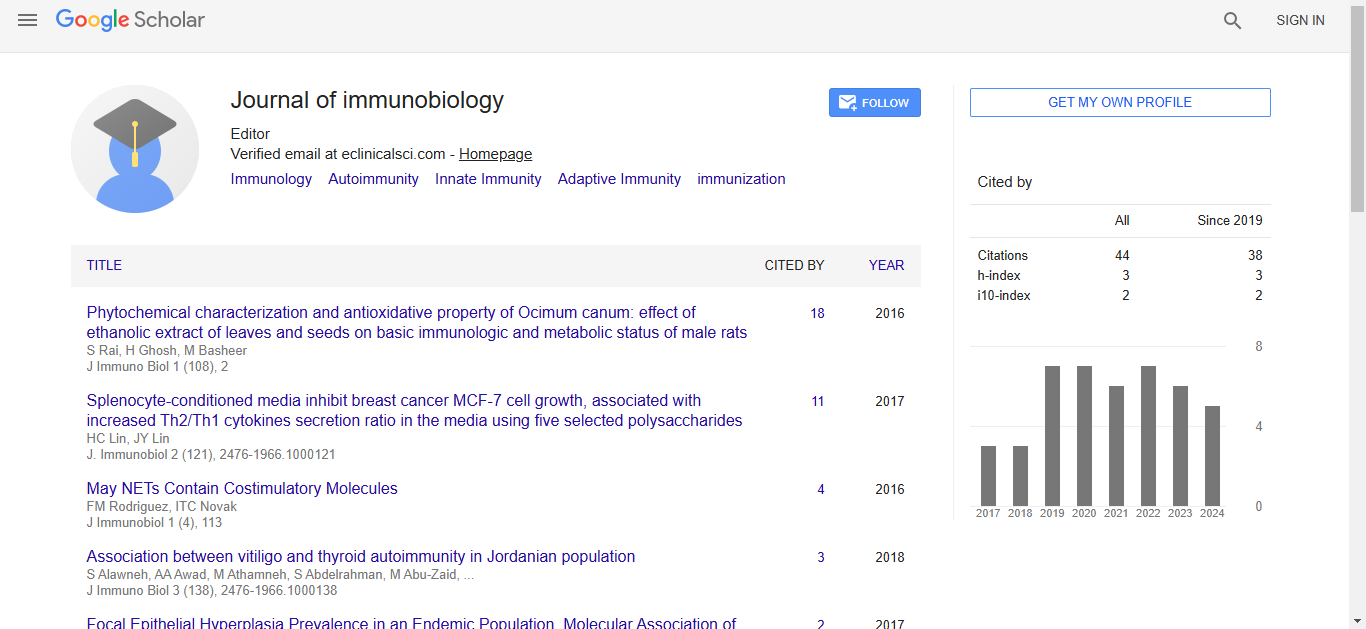
Journal of Immunobiology received 34 citations as per Google Scholar report