Commentary - (2025) Volume 11, Issue 3
Received: 01-May-2025, Manuscript No. jefc-26-188257;
Editor assigned: 03-May-2025, Pre QC No. P-188257;
Reviewed: 19-May-2025, QC No. Q-188257;
Revised: 22-May-2025, Manuscript No. R-188257;
Published:
29-May-2025
, DOI: 10.37421/2472-0542.2025.11.546
Citation: Kim, Daniel. ”Controlling Enzymatic Browning: A Multifaceted Approach for Produce.” J Exp Food Chem 11 (2025):546.
Copyright: © 2025 Kim D. This is an open-access article distributed under the terms of the Creative Commons Attribution License, which permits unrestricted use, distribution and reproduction in any medium, provided the original author and source are credited.
Enzymatic browning is a significant post-harvest physiological process that affects the visual appeal and marketability of many fruits and vegetables. This phenomenon is primarily driven by the enzymatic oxidation of phenolic compounds by polyphenol oxidase (PPO) in the presence of oxygen. Understanding the intricate biochemical mechanisms and kinetic profiles governing enzymatic browning is crucial for developing effective preservation strategies. One comprehensive review delves into the critical roles of PPO activity, substrate availability, and oxygen concentration in determining the rate and extent of browning, while also exploring various natural and synthetic inhibitors like ascorbic acid and sulfur dioxide to extend shelf life [1].
In the context of specific produce, the relationship between PPO enzyme kinetics and the development of off-colors in minimally processed apples has been experimentally quantified. This research highlights the effectiveness of antioxidant treatments, particularly ascorbic acid and its derivatives, in delaying browning and improving visual quality by influencing PPO isoforms [2].
Beyond enzymatic actions, external treatments can also significantly impact browning. For instance, the application of ozone treatment on lettuce has been investigated for its effect on enzymatic browning and phenolic compound degradation, showing potential as both a sanitizer and browning inhibitor by altering enzyme structure and activity [3].
Innovative approaches to browning inhibition also involve the use of edible coatings. Studies have explored the potential of coatings enriched with natural extracts, such as rosemary and green tea, for fresh-cut pears. These extracts act as antioxidants, scavenging free radicals and chelating metal ions, thereby reducing enzymatic browning and maintaining color stability [4].
Similarly, for fresh-cut broccoli florets, a combined strategy of modified atmosphere packaging (MAP) and ascorbic acid treatment has demonstrated synergistic effects in reducing browning and preserving visual appeal, extending marketability [5].
Certain specific compounds have also been identified for their potent browning inhibition capabilities. For example, 4-hexylresorcinol has been shown to effectively inhibit enzymatic browning in button mushrooms by modulating PPO activity and phenolic compound oxidation, presenting a viable alternative to conventional preservation methods [6].
In other instances, external factors like light wavelength can influence browning. Research on fresh-cut potatoes indicates that specific light exposures can modulate enzymatic browning and antioxidant enzyme activities, suggesting light manipulation as a novel preservation strategy [7].
Further exploring integrated processing methods, ultrasound-assisted extraction of phenolic compounds from sweet potato peels has shown promise. These extracted compounds can then be utilized to inhibit PPO activity and improve the color stability of fresh-cut sweet potatoes, highlighting the potential of combining extraction and application techniques [8].
For fresh-cut pears, a combination of calcium chloride dips and chitosan-based edible coatings has been investigated. These treatments work synergistically to strengthen cell structures and limit PPO-substrate interaction, effectively delaying browning and enhancing quality [9].
Finally, even fundamental storage conditions play a critical role in managing enzymatic browning. For fresh-cut yacon, a novel root vegetable, studies have quantified the impact of different storage temperatures on PPO activity and phenolic compound content. This research establishes optimal temperature ranges for minimizing browning and preserving the quality of the produce [10].
Collectively, these studies underscore the multifaceted nature of enzymatic browning, from its fundamental biochemical underpinnings to the diverse range of physical, chemical, and processing interventions that can be employed to mitigate its effects and preserve the quality of fresh and minimally processed produce. The ongoing research continually expands our understanding and provides practical solutions for the food industry. The pervasive issue of enzymatic browning necessitates a continuous exploration of innovative and effective control strategies. These strategies range from understanding the core enzymatic reactions to employing advanced processing techniques and packaging solutions. The economic implications of browning are substantial, leading to considerable food waste and reduced consumer acceptance, thus driving research efforts towards sustainable and efficient preservation methods. The role of polyphenol oxidase (PPO) as the central enzyme in the browning cascade cannot be overstated. Its activity is influenced by a confluence of factors, including pH, temperature, and the presence of metal ions, all of which can be manipulated through various treatments to achieve desired outcomes. Substrate availability, primarily phenolic compounds, is another key determinant of browning intensity. Therefore, treatments that can either reduce the concentration of these phenolics or modify their structure can indirectly inhibit browning. The impact of processing techniques such as blanching and modified atmosphere packaging (MAP) on browning mitigation is well-documented. Blanching, a heat treatment, can inactivate PPO, while MAP can control oxygen levels, a crucial reactant in the browning process. Natural antioxidants, derived from plant sources or synthesized, have emerged as promising alternatives to synthetic inhibitors due to consumer demand for â??clean labelâ?? products. Their efficacy lies in their ability to scavenge free radicals and interfere with the oxidation process. Minimal processing, while enhancing convenience, often exacerbates browning due to cellular damage. This makes the development of effective post-processing treatments paramount for extending the shelf life of minimally processed fruits and vegetables. The study of PPO isoforms and their specific roles in browning can lead to more targeted inhibition strategies. Different isoforms may exhibit varying sensitivities to inhibitors and environmental conditions. Novel sanitizing agents like ozone, beyond their antimicrobial properties, are being explored for their dual functionality in controlling enzymatic browning through biochemical interactions. Edible coatings offer a physical barrier against oxygen and can also deliver active compounds, such as antioxidants, directly to the produce surface, providing a multi-pronged approach to browning control. The integration of different preservation techniques, such as combining physical treatments with chemical interventions, often results in synergistic effects that are more effective than single treatments alone. Understanding the stability of produce under various storage conditions, including temperature and atmospheric composition, is fundamental for implementing effective post-harvest management strategies to maintain quality and prevent spoilage, including browning. Therefore, a comprehensive approach that considers the underlying biochemistry, the influence of processing, and the application of targeted interventions is essential for effectively managing enzymatic browning in the fresh produce sector.
The biochemical mechanisms and kinetic profiles of enzymatic browning in fruits and vegetables are extensively detailed, emphasizing the critical roles of polyphenol oxidase (PPO) activity, substrate availability, and oxygen concentration in driving the process. This comprehensive review also examines the efficacy of natural and synthetic inhibitors, such as ascorbic acid and sulfur dioxide, in controlling browning and extending shelf life, alongside the impact of processing techniques like blanching and modified atmosphere packaging (MAP) [1].
An experimental approach quantifies PPO activity in apple slices under different storage conditions, focusing on the relationship between enzyme kinetics and discoloration. The study evaluates antioxidant treatments, specifically ascorbic acid derivatives, for their ability to delay PPO-mediated browning and enhance the visual quality of minimally processed apples, noting the influence of PPO isoforms on browning intensity [2].
The impact of ozone treatment on enzymatic browning and phenolic compound degradation in lettuce is explored, with quantitative assessments of color parameters and PPO activity following various ozone exposures. Findings suggest ozone's potential as a sanitizer and browning inhibitor by affecting enzyme structure and activity, thereby preserving freshness [3].
Edible coatings enriched with natural extracts, such as rosemary and green tea, are investigated for their potential to inhibit browning in fresh-cut pears. The research analyzes the effect of these coatings on PPO activity, phenolic content, and color stability, demonstrating their capacity to scavenge free radicals and chelate metal ions, thus reducing enzymatic browning [4].
For fresh-cut broccoli florets, the combined effects of MAP and ascorbic acid treatment on enzymatic browning and quality attributes are studied. By quantifying changes in color, PPO activity, and sensory properties under varied atmospheric compositions and ascorbic acid concentrations, the research indicates that this synergistic approach significantly reduces browning and maintains visual appeal, extending marketability [5].
The enzymatic browning of button mushrooms (Agaricus bisporus) is investigated, alongside the effectiveness of 4-hexylresorcinol (4-HR) as an inhibitor. The study details the impact of 4-HR concentration on PPO activity, color development, and phenolic compound oxidation, providing insights into its mechanism as a potent browning inhibitor for mushroom preservation [6].
The role of different light wavelengths in modulating enzymatic browning and antioxidant enzyme activities in fresh-cut potatoes is explored. Specific light exposures are examined for their effects on PPO, peroxidase, and polyphenol content, influencing visual quality and shelf life, suggesting light manipulation as a novel strategy for controlling browning in processed potato products [7].
Ultrasound-assisted extraction of phenolic compounds from sweet potato peels is investigated for its subsequent application in controlling enzymatic browning in fresh-cut sweet potatoes. The research demonstrates that ultrasound treatment enhances the extraction of bioactive compounds, which then effectively inhibit PPO activity and improve color stability, highlighting the potential of integrated processing methods [8].
Enzymatic browning inhibition in fresh-cut pears is examined using a combination of calcium chloride dips and chitosan-based edible coatings. The study evaluates the effectiveness of these treatments on PPO activity, cell wall integrity, and phenolic profiles, suggesting a synergistic action to strengthen cell structures and reduce PPO accessibility to substrates, thereby delaying browning [9].
Finally, the effect of different storage temperatures on enzymatic browning and PPO activity in fresh-cut yacon (Smallanthus sonchifolius) is investigated. Changes in color, PPO activity, and phenolic compound content are quantified over time at various temperatures, establishing optimal ranges for minimizing browning and maintaining the quality of this root vegetable [10].
These studies collectively provide a comprehensive overview of the factors influencing enzymatic browning and detail a wide array of strategies, from biochemical understanding to processing interventions and packaging solutions, aimed at mitigating this common post-harvest challenge in fresh and minimally processed produce. The multifaceted nature of enzymatic browning necessitates a detailed examination of its underlying causes and the development of targeted interventions. This includes understanding the enzyme's kinetics, the availability of substrates, and the crucial role of oxygen. Control strategies are diverse, encompassing chemical treatments, physical modifications, and advanced packaging techniques, each offering unique advantages in preventing or delaying the browning process. The use of natural compounds as browning inhibitors is gaining traction due to consumer preferences and regulatory trends favouring â??clean labelâ?? ingredients. Minimal processing, while increasing consumer convenience, often leads to cellular damage that accelerates browning, making effective post-processing treatments essential for maintaining quality. Specific enzyme isoforms of PPO can have different reactivities and sensitivities, suggesting that targeted inhibition of particular isoforms might be more effective. Emerging technologies, such as ozone treatment and ultrasound-assisted extraction, offer novel ways to control browning by either inactivating enzymes or enhancing the extraction of protective compounds. Edible coatings provide a dual benefit by acting as a barrier and delivering active compounds, offering a versatile approach to produce preservation. Combinatorial approaches, where different treatments are used synergistically, often yield superior results compared to single interventions, highlighting the complexity of managing browning. Environmental factors during storage, particularly temperature, significantly influence the rate of enzymatic reactions, including browning, necessitating careful control of post-harvest conditions. The exploration of new food sources, like yacon, requires specific research into their post-harvest physiology, including their susceptibility to browning and appropriate preservation techniques. Overall, the research landscape of enzymatic browning control is dynamic, with continuous innovation in understanding and applying preservation technologies to maintain the quality and extend the shelf life of fresh produce.
Enzymatic browning in fruits and vegetables is a significant challenge impacting quality and shelf life. This phenomenon is primarily driven by polyphenol oxidase (PPO) activity, substrate availability, and oxygen. Research explores various inhibition strategies, including natural and synthetic inhibitors like ascorbic acid, physical treatments such as blanching and modified atmosphere packaging, and novel approaches like ozone treatment and edible coatings. Specific compounds like 4-hexylresorcinol show potent inhibitory effects. Factors like light wavelength and storage temperature also play crucial roles. Studies on apples, lettuce, pears, broccoli, mushrooms, potatoes, sweet potatoes, and yacon demonstrate the effectiveness of these diverse interventions in controlling browning and maintaining produce quality. Integrated processing methods and synergistic combinations of treatments are highlighted as particularly promising for extended preservation.
None
None
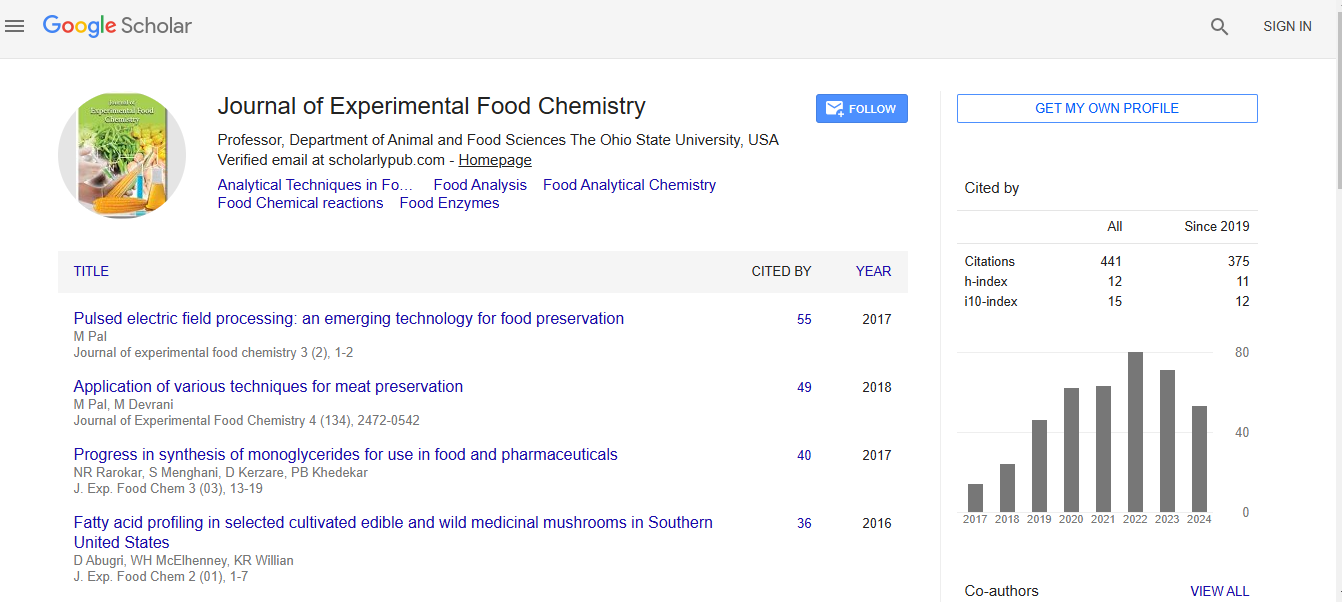
Journal of Experimental Food Chemistry received 389 citations as per Google Scholar report