Perspective - (2025) Volume 11, Issue 2
Received: 01-Mar-2025, Manuscript No. jfim-26-178553;
Editor assigned: 03-Mar-2025, Pre QC No. P-178553;
Reviewed: 17-Mar-2025, QC No. Q-178553;
Revised: 24-Mar-2025, Manuscript No. R-178553;
Published:
31-Mar-2025
, DOI: 10.37421/2572-4134.2025.11.339
Citation: Sarr, Fatima B.. ”Advanced Methods Revolutionize Food Safety Testing.” J Food Ind Microbiol 11 (2025):339.
Copyright: © 2025 Sarr B. Fatima This is an open-access article distributed under the terms of the Creative Commons Attribution License, which permits unrestricted use, distribution and reproduction in any medium, provided the original author and source are credited.
The landscape of food safety is undergoing a profound transformation, largely driven by the advent and widespread adoption of rapid microbiological testing methods. These advanced techniques are instrumental in expediting the detection of microbial contamination, a critical step in ensuring the safety and integrity of the global food supply [1].
Traditional culture-based methods, while foundational, often entail lengthy incubation periods, delaying crucial decision-making processes and potentially allowing contaminated products to enter the market. The imperative for quicker insights has therefore spurred the development and refinement of alternative approaches that promise significantly reduced turnaround times. These innovations are not merely about speed; they represent a paradigm shift towards proactive food safety management, enabling a more responsive and effective response to potential threats. The impact resonates across the entire food chain, from production to consumption, fostering greater consumer confidence and mitigating substantial economic losses that can arise from outbreaks and recalls. Among the vanguard of these revolutionary methods is quantitative polymerase chain reaction (qPCR). This molecular technique has become increasingly prevalent due to its remarkable specificity and sensitivity, allowing for the swift and accurate identification of even trace levels of pathogenic microorganisms within food samples [2].
Its ability to amplify minute quantities of microbial DNA makes it an invaluable tool for robust food safety surveillance and control programs. The streamlined workflow from sample collection to definitive result offered by qPCR significantly shortens the time-to-result compared to conventional methods. This efficiency is paramount in high-throughput food testing environments where timely data is essential for operational decisions and regulatory compliance. The precision of qPCR in detecting specific genetic sequences of target pathogens contributes to the reliability of food safety assessments. Parallel to molecular techniques, biosensor technologies are emerging as powerful allies in real-time food safety monitoring. These sophisticated devices are designed to convert biological recognition events, such as the binding of a pathogen to a specific antibody or nucleic acid probe, into a quantifiable and measurable signal [3].
This capability allows for the provision of immediate alerts upon the detection of microbial contaminants, facilitating a proactive rather than reactive approach to food safety management. By offering continuous or near-continuous monitoring, biosensors can help minimize the risk of widespread contamination events and enable swift intervention. The inherent sensitivity and potential for miniaturization of biosensors also open avenues for developing portable, on-site testing solutions that can be deployed directly within food production facilities or at critical control points in the supply chain. Impedance spectroscopy presents another non-destructive and label-free methodology for evaluating the presence and viability of microorganisms in diverse food matrices. This technique operates by measuring changes in the electrical impedance of a sample as microbial populations grow and metabolize [4].
As microorganisms proliferate, they alter the electrical properties of the growth medium, providing a detectable signal that correlates with microbial load and activity. This rapid and sensitive alternative is highly valuable for quality control and safety assessments within the food industry. Its non-destructive nature is particularly advantageous as it allows for subsequent testing or verification if necessary. The ability to monitor microbial growth in real-time without the need for labeling agents simplifies sample preparation and reduces assay complexity. Further enhancing the capabilities of rapid detection is the integration of microfluidics with established analytical techniques. Microfluidic devices, often referred to as lab-on-a-chip systems, miniaturize complex laboratory processes onto small platforms, enabling the rapid detection of foodborne pathogens through methods like PCR and immunoassays [5].
These miniaturized systems offer a suite of advantages, including enhanced sensitivity, significantly reduced assay times, and lower consumption of reagents. This technological convergence is paving the way for the development of portable and on-site testing solutions, democratizing advanced detection capabilities and making them accessible beyond specialized laboratories. The precise control of fluid flow and reaction conditions within microfluidic channels contributes to improved assay performance and reproducibility. In the realm of molecular diagnostics, CRISPR-based detection systems are rapidly emerging as potent tools for the swift and highly specific identification of foodborne pathogens. Leveraging the precise DNA-targeting capabilities of the CRISPR-Cas system, these methods offer exceptional sensitivity and remarkable versatility [6].
This allows for the multiplexed detection of multiple pathogens simultaneously from a single sample, a significant advantage in comprehensive food safety testing. The adaptability of CRISPR technology also holds promise for seamless integration into portable diagnostic platforms, facilitating on-site and rapid field testing. The programmability of guide RNAs ensures high specificity for target sequences, minimizing false positives and enhancing diagnostic confidence. Complementing the advancements in detection technologies, the development of novel sampling and enrichment strategies is paramount to maximizing the effectiveness of rapid microbiological testing. Optimized methods for sample preparation can significantly improve pathogen recovery rates and minimize interference from other food matrix components, thereby enhancing the overall accuracy and reliability of the test results [7].
Effective sample handling is often the bottleneck in rapid testing, and innovations in this area are crucial for ensuring that the inherent speed of the detection technology is not compromised. Strategies such as selective enrichment broths, improved lysis techniques, and advanced filtration methods are being explored to optimize the isolation and concentration of target microorganisms from complex food samples. The analytical power of artificial intelligence (AI) and machine learning (ML) is increasingly being harnessed to interpret the complex data generated by rapid microbiological tests. These computational approaches are proving invaluable in identifying subtle patterns, building predictive models for contamination risks, and automating data analysis pipelines [8].
By processing large datasets efficiently, AI and ML can lead to more insightful and comprehensive food safety risk assessments. Their ability to learn from historical data and adapt to new patterns can help in early detection of emerging threats and in optimizing testing strategies. The integration of AI/ML with rapid testing platforms has the potential to transform food safety surveillance from a reactive to a predictive and preventive discipline. Ensuring the widespread adoption and acceptance of rapid microbiological methods within regulatory frameworks necessitates robust validation and standardization processes. Establishing well-defined protocols and utilizing standardized reference materials are crucial steps in ensuring the reliability, accuracy, and comparability of results across different laboratories and testing platforms [9].
Without standardized validation, the full potential of these advanced methods cannot be realized, particularly in critical applications where regulatory compliance and inter-laboratory comparability are essential. Collaborative efforts between industry, academia, and regulatory bodies are vital for developing and implementing these standardization initiatives. The economic implications of implementing rapid microbiological testing in the food industry are profound and demonstrably substantial. By significantly reducing the time required for product release and minimizing the likelihood of costly product recalls, these advanced testing methods contribute to considerable cost savings, enhance supply chain efficiency, and ultimately bolster consumer safety [10].
The financial benefits extend beyond direct cost reductions, encompassing improved brand reputation and reduced liability. The ability to quickly ascertain product safety allows for faster inventory turnover and reduces the burden of holding unsalageable stock. This economic advantage, coupled with enhanced safety, makes a compelling case for the continued investment and integration of rapid testing technologies in the food sector.
The field of food safety is undergoing a significant technological revolution, driven by the rapid adoption of advanced microbiological testing methods that promise to expedite the detection of contaminants. These novel techniques offer a stark contrast to traditional culture-based approaches, which are often characterized by lengthy incubation periods and delayed results. The urgency for faster insights into foodborne hazards has propelled the development of methods such as quantitative polymerase chain reaction (qPCR), biosensors, and impedance spectroscopy, each offering unique advantages in speed, sensitivity, and specificity [1].
The ability to rapidly identify microbial threats allows for quicker release of safe food products, more effective investigations during outbreaks, and a substantial reduction in economic losses, thereby enhancing overall consumer confidence in the food supply chain. This paradigm shift is crucial for maintaining public health and the economic viability of the food industry. Quantitative polymerase chain reaction (qPCR) has emerged as a pivotal technology for pathogen detection in food products. Its high specificity ensures that only the target pathogen is detected, while its remarkable sensitivity allows for the identification of even low levels of contamination that might be missed by other methods [2].
This makes qPCR an indispensable tool in modern food safety surveillance and control programs, streamlining the entire process from sample acquisition to the final result. The amplification of specific DNA sequences provides a reliable indicator of the presence of particular microorganisms, enabling targeted interventions and preventing the distribution of contaminated food. The efficiency and accuracy of qPCR contribute significantly to regulatory compliance and risk management in the food sector. Biosensor technologies represent a forward-thinking approach to food safety, offering the potential for real-time monitoring of microbial contaminants. These devices function by translating biological recognition events into easily measurable signals, providing immediate alerts when pathogens are present [3].
This facilitates a proactive stance in food safety management, allowing for swift intervention before widespread contamination can occur. The continuous or near-continuous monitoring capabilities of biosensors can significantly reduce the risk of large-scale outbreaks and minimize economic impact. Their adaptability to various detection principles and formats makes them versatile tools for diverse food matrices and testing environments. Impedance spectroscopy offers a unique, non-destructive, and label-free method for assessing the presence and viability of microorganisms within food. This technique leverages the principle that microbial growth and metabolic activity alter the electrical properties of a food matrix. By measuring changes in electrical impedance, it provides a rapid and sensitive indication of microbial contamination [4].
This makes it an excellent tool for quality control and safety assessment in the food industry, allowing for timely decisions without compromising the integrity of the sample for further analysis. The label-free nature simplifies sample preparation and reduces the potential for interference from detection reagents. The integration of microfluidic systems with advanced detection techniques, such as PCR and immunoassays, has led to the development of sophisticated lab-on-a-chip devices. These miniaturized platforms are designed for the rapid detection of foodborne pathogens, offering enhanced sensitivity, reduced assay times, and lower reagent consumption [5].
The compact nature of these devices paves the way for portable and on-site testing solutions, enabling rapid diagnostics directly at the point of need, whether in the field, in processing plants, or at retail. This decentralization of testing capabilities can significantly improve response times and operational efficiency. CRISPR-based detection systems are emerging as highly effective tools for the rapid and precise identification of foodborne pathogens. Their ability to target specific DNA sequences with exceptional accuracy provides high sensitivity and versatility, enabling multiplexed detection of multiple pathogens simultaneously [6].
This adaptability makes them a powerful option for comprehensive food safety testing. The potential for integration into portable diagnostic platforms further enhances their utility for on-site and field applications, offering rapid and reliable pathogen identification where and when it is needed most. Advancements in sampling and sample preparation strategies are crucial for unlocking the full potential of rapid microbiological testing methods. Optimizing these initial steps can significantly improve pathogen recovery and reduce interference from the food matrix, thereby enhancing the accuracy and reliability of the final results [7].
Effective sample preparation is often the bottleneck in rapid testing protocols, and innovative approaches in this area are vital for ensuring that the speed of detection technologies is not compromised. Techniques that improve the isolation and concentration of target microorganisms are essential for achieving reliable results from complex food samples. Artificial intelligence (AI) and machine learning (ML) are playing an increasingly vital role in analyzing the complex datasets generated by rapid microbiological tests. These computational approaches aid in pattern recognition, predictive modeling, and automation, leading to more efficient and insightful food safety risk assessments [8].
By analyzing trends and correlations within large datasets, AI and ML can help identify potential contamination sources, predict outbreaks, and optimize testing strategies. This data-driven approach enhances the overall effectiveness of food safety programs and supports proactive risk management. The widespread adoption of rapid microbiological methods in regulatory settings hinges on rigorous validation and standardization. Establishing robust protocols and utilizing certified reference materials are essential to ensure the reliability and comparability of results across different laboratories and testing platforms [9].
Standardization provides a framework for confidence in the data generated by these methods, which is critical for regulatory decision-making, international trade, and consumer protection. Collaborative efforts to develop and implement standardized methodologies are key to their successful integration into global food safety systems. The economic benefits derived from the implementation of rapid microbiological testing in the food industry are substantial and multifaceted. By enabling faster product release and significantly reducing the risk and impact of costly product recalls, these methods contribute to considerable cost savings and improved supply chain efficiency [10].
These economic advantages, coupled with enhanced consumer safety, underscore the value proposition of rapid testing. The ability to quickly confirm product safety accelerates market entry, reduces inventory holding costs, and mitigates reputational damage, making rapid testing a strategically important investment for food businesses.
Rapid microbiological testing methods, including qPCR, biosensors, impedance spectroscopy, microfluidics, and CRISPR-based systems, are revolutionizing food safety by enabling quicker detection of microbial contamination. These advanced techniques offer significant advantages over traditional culture methods, leading to faster release of safe food products, more effective outbreak investigations, and reduced economic losses. Novel sampling and enrichment strategies are crucial for maximizing test effectiveness, while AI and machine learning are being employed to analyze complex data for improved risk assessment. Validation and standardization are essential for widespread adoption in regulatory settings. The economic benefits, including cost savings and improved supply chain efficiency, are substantial, ultimately enhancing consumer confidence and safety.
None
None
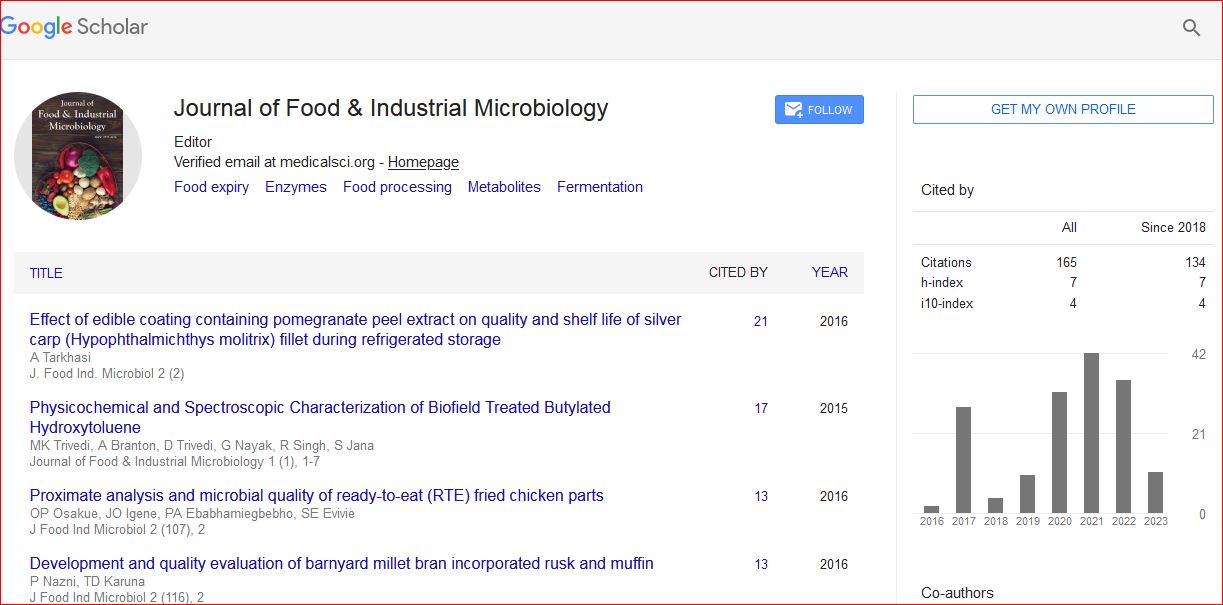
Journal of Food & Industrial Microbiology received 160 citations as per Google Scholar report