Brief Report - (2025) Volume 14, Issue 3
Received: 01-May-2025, Manuscript No. jamk-25-177276;;
Editor assigned: 03-May-2025, Pre QC No. P-177276;;
Reviewed: 17-May-2025, QC No. Q-177276;;
Revised: 24-May-2025, Manuscript No. R-177276;;
Published:
31-May-2025
, DOI: 10.37421/2168-9601.2025.14.554
Citation: Kulkarni, Pooja. ”The Bedrock of Startup Financial Success.” J Account Mark 14 (2025):554.
Copyright: © 2025 Kulkarni P. This is an open-access article distributed under the terms of the Creative Commons Attribution License, which permits unrestricted use, distribution and reproduction in any medium, provided the original author and source are credited.
Startups must embrace sound financial management from the outset. Understanding cash flow, effective budgeting, and accurate financial reporting are crucial for survival and growth. These foundational practices provide stability and insight, essential for navigating the early stages of business development and ensuring a resilient operational framework [1].
Adopting appropriate accounting information systems is critical for scaling startups. The right system streamlines operations, improves data accuracy, and offers better decision-making insights. Selecting a system that fits current needs and adapts to future growth is key for long-term efficiency and competitive advantage [2].
A founder's financial literacy directly influences business success through effective financial management. Insufficient financial understanding can hinder practices, even with a great idea. Investing in financial literacy for founders directly translates into superior business outcomes and stronger financial health [3].
Sustainability reporting is increasingly relevant for small businesses. External pressures, like consumer demand, and internal capabilities drive SMEs to engage in it. For startups, considering environmental and social impacts in accounting can provide a significant competitive edge [4].
Strong internal control systems are vital for operational effectiveness and risk management in startups. An effective framework directly contributes to better performance by managing risks. Establishing clear controls early prevents financial errors, protects assets, and lays a solid foundation for growth [5].
Tax compliance presents a common hurdle for startups. Tax knowledge, perceived complexity of regulations, and fairness perceptions influence adherence. Startups should prioritize understanding obligations and seek professional guidance to avoid penalties and ensure legal operation [6].
Cloud accounting systems offer significant advantages for startups, including cost savings and accessibility. Adoption is driven by technological readiness, organizational support, and environmental factors. Embracing cloud accounting is a strategic move for gaining efficiencies and driving early growth [7].
The quality of financial reporting directly impacts a startup's ability to secure funding. Clear, accurate, and transparent reporting signals credibility to investors. Prioritizing high-quality financial statements is a strategic move to improve access to essential finance, not just compliance [8].
Effective budgeting is a cornerstone for sustained startup growth. Well-implemented practices correlate with better financial performance and expansion. Startups should view budgeting as a flexible tool for planning, monitoring, and adapting financial resources to achieve strategic goals [9].
Managing costs effectively is non-negotiable for a startup's survival and profitability. Specific cost management practices directly impact performance. New businesses must diligently track expenses, identify savings, and implement controls for efficient resource use, translating into stronger financial health [10].
New businesses require a foundational grasp of financial management principles from inception. This includes understanding cash flow, precise budgeting, and accurate financial reporting. These elements are integral to survival and growth, providing stability and strategic insight to navigate initial entrepreneurial phases successfully [1]. Adopting suitable accounting information systems (AIS) holds immense importance for startups as they scale. A well-chosen AIS streamlines workflows, enhances data integrity, and offers enriched perspectives for strategic decision-making. Selecting an AIS that adapts to future growth ensures enduring operational efficiency [2]. A founderâ??s personal financial literacy significantly influences business success, primarily through its impact on financial management. Inadequate financial understanding can undermine effective practices. Cultivating strong financial literacy among founders is a direct investment correlating positively with improved business outcomes and sustained financial health [3]. Sustainability reporting is gaining traction within the SME sector, including startups, driven by external forces like consumer demand and internal capacities. For startups, integrating environmental and social considerations into accounting presents a tangible opportunity for competitive differentiation [4]. Robust internal control systems are paramount for ensuring a startup's operational efficacy and managing business risks. A well-structured framework directly contributes to superior performance by mitigating risks. Establishing these controls early prevents financial discrepancies, protects assets, and forms a strong basis for future scaling [5]. Tax compliance often represents a complex aspect for new businesses. Adherence to tax laws is influenced by proprietor's tax knowledge, perception of regulatory complexity, and assessment of tax system fairness. Prioritizing thorough comprehension of obligations and seeking expert advice are crucial steps [6]. Cloud accounting solutions offer compelling advantages for startups, including cost reductions and enhanced accessibility. Adoption is driven by factors like technological readiness and organizational support. Leveraging cloud accounting is a strategic move to unlock efficiencies essential for accelerating early-stage growth [7]. The caliber of a startup's financial reporting directly affects its prospects for obtaining necessary capital. High-quality financial reports, characterized by clarity, accuracy, and transparency, build trust and signal credibility to potential investors. Thus, maintaining impeccable financial statements is a strategic imperative [8]. Effective budgeting stands as a critical pillar for any startup aspiring to achieve consistent and sustainable growth. Meticulously implemented budgeting practices correlate strongly with improved financial performance and expansion. Startups should regard budgeting as an agile instrument for planning and strategically reallocating resources [9]. Prudent cost management is indispensable for safeguarding a startupâ??s viability and fostering profitability. Specific cost management strategies profoundly influence a firm's performance. New ventures must commit to rigorous expense tracking, identifying reduction opportunities, and implementing controls for optimal resource utilization [10].
Startups require robust financial management practices from their inception, including a deep understanding of cash flow, effective budgeting, and accurate financial reporting, all of which are crucial for survival and growth. The adoption of appropriate accounting information systems is equally vital, streamlining operations and improving decision-making, particularly as businesses scale. A founder's financial literacy directly influences success, highlighting the importance of investing in financial education. Beyond traditional accounting, sustainability reporting is gaining relevance for SMEs, offering a competitive edge by addressing environmental and social impacts. Strong internal control systems are essential for risk management and operational effectiveness, preventing errors and protecting assets. Navigating tax compliance, often a hurdle, necessitates understanding regulations and seeking professional guidance. Embracing cloud accounting systems can provide significant advantages through cost savings and accessibility, driving early growth. High-quality financial reporting is paramount for securing funding, as clarity and transparency build credibility with investors. Finally, diligent cost management is non-negotiable for profitability, requiring rigorous tracking and efficient resource utilization to ensure financial health. These interconnected elements form the bedrock of sustainable business development for new ventures.
None
None
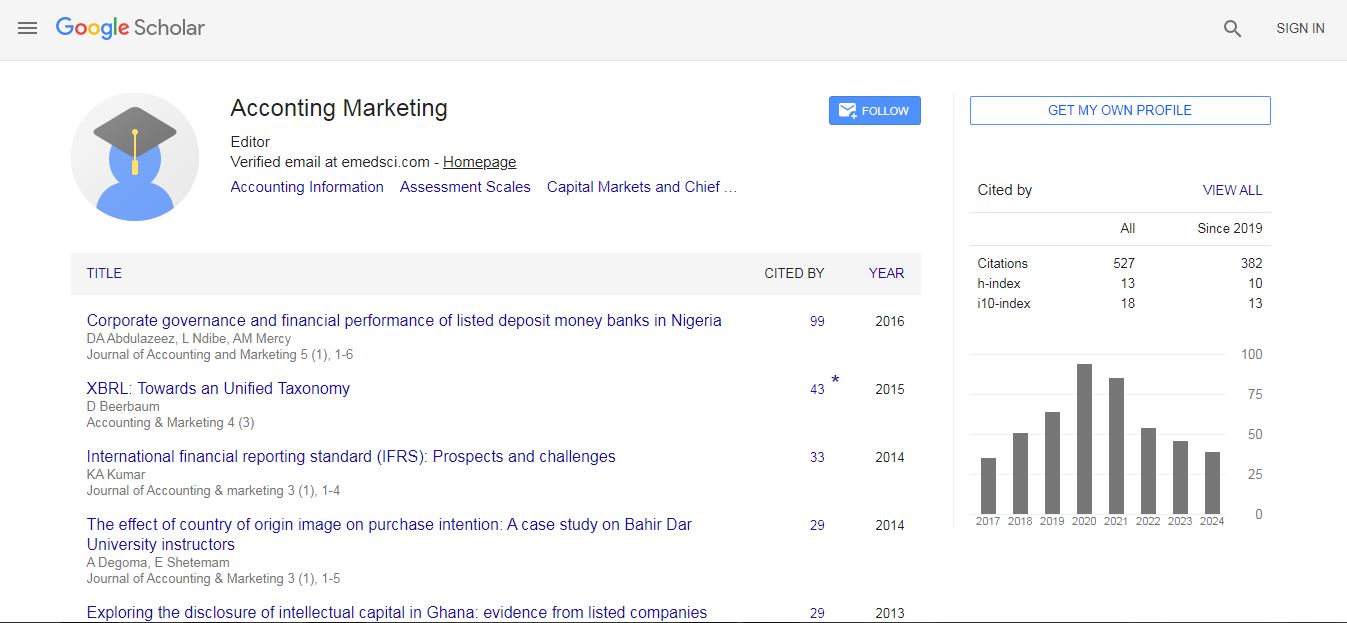
Accounting & Marketing received 487 citations as per Google Scholar report