Short Communication - (2025) Volume 14, Issue 2
Received: 01-Mar-2025, Manuscript No. jamk-25-177270;
Editor assigned: 03-Mar-2025, Pre QC No. P-177270;
Reviewed: 17-Mar-2025, QC No. Q-177270;
Revised: 24-Mar-2025, Manuscript No. R-177270;
Published:
29-Mar-2025
, DOI: 10.37421/2168-9601.2025.14.550
Citation: Deshpande, Kunal. ”Strategic Accounting: Driving Performance and Sustainability.” J Account Mark 14 (2025):550.
Copyright: © 2025 Deshpande K. This is an open-access article distributed under the terms of the Creative Commons Attribution License, which permits unrestricted use, distribution and reproduction in any medium, provided the original author and source are credited.
Effective financial management practices are crucial for the operational performance and growth of healthcare facilities, especially in resource-constrained settings. Robust accounting methods, diligent budgeting, and strong financial controls are vital for optimizing resource allocation. These practices are essential for achieving organizational sustainability and facilitating expansion within the healthcare sector, as demonstrated by studies in rural Uganda [1].
Strategic financial planning is fundamental for small and medium-sized enterprises (SMEs) to achieve sustainable growth. Careful financial forecasting, rigorous budgeting, and prudent capital management are essential accounting functions. These enable businesses to navigate economic challenges effectively and expand their operations, ensuring long-term viability and success in dynamic markets [2].
Robust performance measurement systems are critical for the long-term sustainability and growth of SMEs. When accounting data is properly analyzed and integrated into strategic frameworks, businesses can accurately track progress. This approach helps identify areas for improvement and supports informed decision-making, which is crucial for sustained organizational development and competitive advantage [3].
The quality of financial reporting significantly influences a firm's value and investment efficiency, directly linking transparent accounting practices to business growth. Accurate and reliable financial information attracts investors and optimizes capital allocation. Ultimately, these practices foster corporate expansion and enhance market perception, facilitating strategic investments for growth [4].
Effective accounting information systems (AIS) significantly contribute to the performance and resilience of SMEs, particularly during challenging times. Well-implemented accounting technology supports better financial decision-making, efficient resource management, and strategic adaptation. These capabilities are vital for sustained business operations and fostering growth in uncertain environments [5].
Management accounting practices are essential for the success of SMEs. Applying tools like comprehensive budgeting, detailed cost analysis, and insightful performance reporting provides crucial insights. These insights are instrumental for strategic planning, enhancing operational efficiency, and facilitating informed decisions that foster business growth and competitive advantage [6].
Sustainability reporting, an evolving area of accounting, demonstrates a clear impact on a company's financial performance. Transparent reporting on environmental, social, and governance (ESG) factors enhances corporate reputation and attracts responsible investors. This contributes to improved long-term financial health and promotes sustainable business growth, reflecting a broader commitment to corporate responsibility [7].
Financial literacy, underpinned by basic accounting knowledge, profoundly influences the entrepreneurial performance and growth of SMEs. A solid understanding of financial statements, disciplined budgeting, and strategic financial planning empowers entrepreneurs. This knowledge is crucial for securing funding, managing resources effectively, and making strategic decisions for business expansion [8].
The relationship between a firm's capital structure and its growth is a critical area, focusing on how accounting decisions regarding debt and equity financing impact expansion capabilities. An optimized capital structure, a key accounting and finance concern, provides the necessary financial leverage for businesses to invest and achieve substantial growth [9].
A robust internal control system, foundational to accounting and auditing, significantly impacts a firm's performance. Effective controls protect assets, ensure financial data accuracy, and promote operational efficiency. These elements contribute significantly to business stability and cultivate a strong potential for sustained growth [10].
Research on healthcare facilities in rural Uganda underscores that effective financial management practices are critical for operational performance and growth. The study demonstrates that robust accounting methods, meticulous budgeting, and strong financial controls are essential for optimizing resource allocation. These practices are fundamental for organizational sustainability and strategic expansion within the healthcare sector [1]. For small and medium-sized enterprises (SMEs) in Nigeria, sustainable growth is linked to strategic financial planning. This includes financial forecasting, detailed budgeting, and astute capital management. These accounting functions are indispensable for enabling SMEs to navigate economic challenges and expand their operations effectively, ensuring long-term viability [2]. Robust performance measurement systems are vital for the long-term sustainability and growth of SMEs. By properly analyzing and integrating accounting data into strategic frameworks, businesses can track progress and identify areas for improvement. This leads to informed decisions crucial for sustained development and competitive advantage [3]. The quality of financial reporting significantly impacts a firm's value and investment efficiency, directly connecting transparent accounting practices to business growth. Accurate financial information attracts investors and optimizes capital allocation. This fosters corporate expansion and enhances market perception, facilitating strategic investments for growth [4]. Effective accounting information systems (AIS) contribute substantially to the performance and resilience of SMEs, particularly during challenging times like the COVID-19 pandemic. Well-implemented accounting technology supports better financial decision-making, efficient resource management, and strategic adaptation, vital for sustained business operations and growth [5]. Management accounting practices are essential for the success of SMEs in regions such as Palestine. Applying tools like budgeting, cost analysis, and performance reporting provides crucial insights. These insights are instrumental for strategic planning, enhancing operational efficiency, and making decisions that foster business growth and competitive advantage [6]. Sustainability reporting, a growing area in accounting, influences a company's financial performance. Transparent reporting on environmental, social, and governance (ESG) factors enhances reputation and attracts responsible investors. This contributes to improved long-term financial health and promotes sustainable business growth, integrating ethical considerations with economic objectives [7]. Financial literacy, built on basic accounting knowledge, profoundly influences the entrepreneurial performance and growth of SMEs, as observed in Ghana. A solid understanding of financial statements, budgeting, and financial planning empowers entrepreneurs to secure funding, manage resources effectively, and make strategic decisions for business expansion [8]. The relationship between a firm's capital structure and its growth is a critical accounting and finance concern. Strategic decisions regarding debt and equity financing directly impact expansion capabilities. An optimized capital structure provides the necessary financial leverage for businesses to invest and achieve robust growth [9]. A robust internal control system, a foundational aspect of accounting and auditing, significantly impacts a firm's performance. Effective controls protect assets, ensure financial data accuracy, and promote operational efficiency. These elements contribute substantially to business stability and fortify the potential for sustained growth [10].
This collection of research underscores the pervasive and critical role of accounting practices in fostering organizational performance, sustainability, and growth across diverse sectors, including healthcare facilities and small and medium-sized enterprises (SMEs). Key themes emerge, highlighting that robust financial management, strategic financial planning, and effective budgeting are indispensable for optimizing resource allocation, navigating economic challenges, and achieving operational efficiency. The quality of financial reporting, the implementation of sophisticated accounting information systems, and strong internal controls are shown to attract investment, enhance market perception, and protect assets, all contributing to a firm's value and expansion capabilities. Furthermore, the importance of performance measurement systems, management accounting practices, sustainability reporting, and entrepreneurial financial literacy is consistently emphasized as crucial for informed decision-making, securing funding, and driving competitive advantage. Collectively, these studies illustrate that sound accounting principles and practices are not merely compliance functions but strategic tools vital for long-term organizational health and sustainable development.
None
None
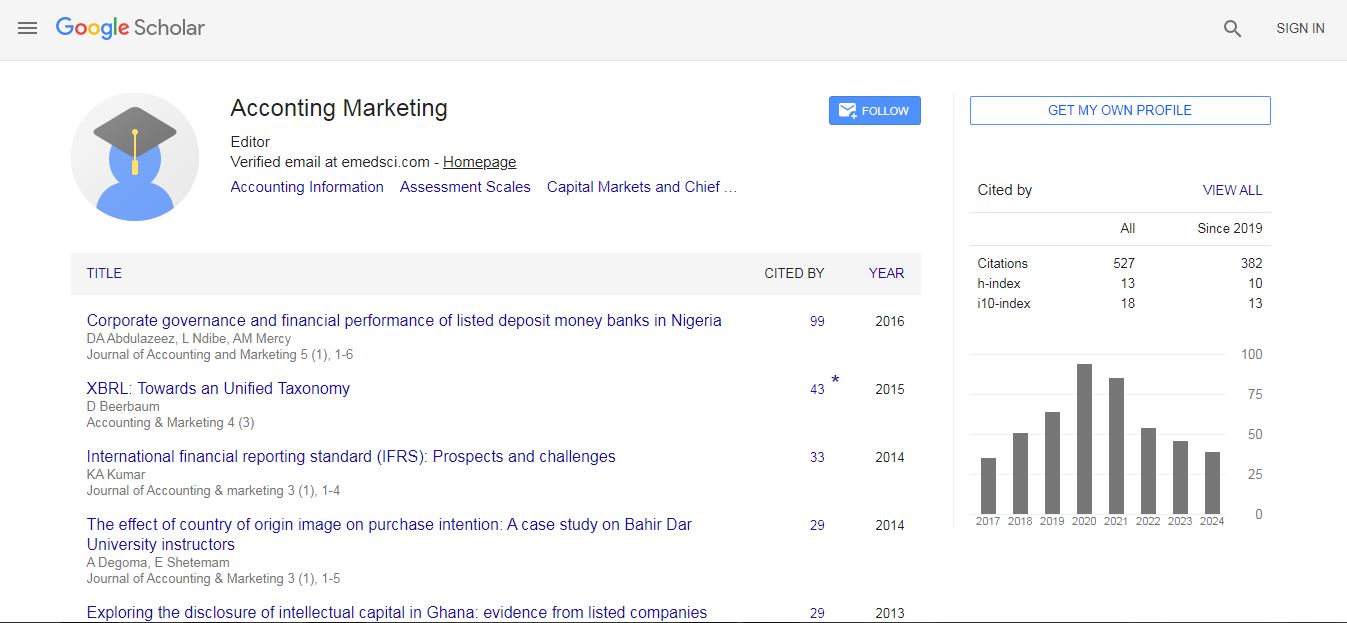
Accounting & Marketing received 487 citations as per Google Scholar report