Perspective - (2025) Volume 14, Issue 3
Received: 01-May-2025, Manuscript No. jamk-25-177283;
Editor assigned: 03-May-2025, Pre QC No. P-177283;
Reviewed: 17-May-2025, QC No. Q-177283;
Revised: 24-May-2025, Manuscript No. R-177283;
Published:
31-May-2025
, DOI: 10.37421/2168-9601.2025.14.559
Citation: Gómez, Laura. ”SME Taxation: Planning, Compliance, and Sustainability.” J Account Mark 14 (2025):559.
Copyright: © 2025 Gómez L. This is an open-access article distributed under the terms of the Creative Commons Attribution License, which permits unrestricted use, distribution and reproduction in any medium, provided the original author and source are credited.
This systematic literature review comprehensively examines the profound impact of effective tax planning on the financial performance of micro, small, and medium enterprises (MSMEs). It meticulously identifies crucial tax planning strategies that are specifically tailored for these businesses, highlighting how judicious tax management can substantially bolster their financial health and ensure long-term sustainability by optimizing tax liabilities and maximizing available resources [1].
Further research delves into the intricate relationship between tax complexity, tax avoidance behaviors, and the overall performance of Small and Medium Enterprises (SMEs). This study underscores the indispensable roles played by adequate tax knowledge and the cultivation of a positive tax culture. The findings robustly demonstrate that while inherent tax complexities can indeed impede business performance, a strong foundation of tax knowledge coupled with a sound tax culture can effectively mitigate these negative impacts and significantly enhance compliance levels [2].
An investigation into the determinants of tax compliance among micro, small, and medium enterprises (MSMEs) in an emerging economy reveals several critical factors. This research pinpointed the perceived fairness of the prevailing tax system, the level of tax knowledge possessed by entrepreneurs, and the quality and accessibility of tax services as primary influences on an MSME's willingness and ability to adhere to tax regulations, suggesting policy implications for improving compliance [3].
Another significant study explores the direct correlation between heightened tax awareness, the perceived costs associated with compliance, and the actual levels of tax compliance observed among micro and small enterprises. This research notably emphasizes that concerted efforts to enhance tax awareness among entrepreneurs and to simultaneously reduce the perceived burden and costs of compliance can lead to a substantial improvement in their adherence to the established tax laws and regulations [4].
Moreover, an examination into mechanisms for enhancing SME tax compliance focuses on the instrumental roles of rigorous tax audits, comprehensive tax education programs, and the general tax knowledge held by entrepreneurs. The conclusions drawn from this research strongly advocate that targeted educational initiatives and the implementation of robust audit mechanisms are absolutely critical components for successfully cultivating a compliant tax environment within the SME sector [5].
This paper also scrutinizes how the interplay of tax knowledge, the accuracy and integrity of accounting records, and prevailing social norms collectively influence tax compliance among MSMEs. The study profoundly illuminates that fostering improved financial literacy among entrepreneurs and actively promoting a pervasive culture of financial transparency are vital factors that can significantly boost overall tax compliance rates within this crucial economic segment [6].
Moving beyond compliance, this research investigates the intricate connections between strategic tax planning, overarching business strategy, and the subsequent financial performance of small and medium enterprises. The central argument posits that the deliberate integration of tax considerations into the core strategic business decisions of SMEs can lead to substantial enhancements in their profitability and fortify their long-term economic sustainability [7].
An assessment focusing on the effectiveness of various tax planning strategies specifically tailored for the financial performance of small and medium enterprises provides valuable insights. The findings from this investigation consistently indicate that proactive, well-informed, and strategically executed tax planning can unequivocally result in significant improvements across key metrics such as profitability and overall operational efficiency for these businesses [8].
This research provides empirical evidence from Bangladesh, investigating the tangible impact of effective tax management practices on the performance of SMEs. The studyâ??s conclusions suggest that a sophisticated approach to strategic tax management, which extends well beyond merely meeting basic compliance requirements, plays a genuinely significant and positive role in enhancing an SME's holistic business outcomes and competitive standing [9].
Finally, a study examines the complex interplay among tax awareness, the perception of tax fairness, and the actual levels of tax compliance observed among MSMEs. It crucially highlights that fostering a strong sense of equity and fairness in the tax system, alongside substantially improving the awareness of tax obligations among businesses, are fundamental prerequisites for encouraging voluntary compliance within the dynamic small business sector [10].
The foundational study on tax planning and financial performance within micro, small, and medium enterprises (MSMEs) establishes a critical link between strategic tax management and business viability. It systematically reviews existing literature to identify how various tax planning strategies can be leveraged by MSMEs to not only minimize their tax burdens but also to redirect saved resources into growth-oriented investments, thereby directly contributing to enhanced financial performance and fostering long-term sustainability [1]. Building on this, an investigation into tax complexity and avoidance behaviors in SMEs elucidates the moderating roles of tax knowledge and tax culture. The research demonstrates that where tax regulations are perceived as overly complex, SMEs often struggle with compliance, potentially leading to unintentional non-compliance or deliberate avoidance. However, a strong understanding of tax laws and an ethical tax culture act as crucial buffers, transforming potential liabilities into managed responsibilities and improving overall business performance [2]. Further analysis explores the specific determinants influencing tax compliance among MSMEs in an emerging economy, providing regional context to global challenges. This study reveals that entrepreneurs' perceptions of whether the tax system is fair and equitable significantly impacts their willingness to comply. Coupled with robust tax knowledge and access to quality tax services, these factors create an environment conducive to higher compliance rates, mitigating risks of penalties and fostering a stable business environment [3]. A separate study critically examines the relationship between tax awareness, compliance costs, and tax compliance levels among micro and small enterprises. It posits that a lack of comprehensive tax awareness often leads to misinterpretations of obligations and increased perceived compliance costs, which can deter adherence. By focusing on initiatives that elevate tax awareness and streamline compliance processes to reduce associated burdens, governments can significantly encourage greater adherence to tax laws among smaller businesses [4]. Another research effort focuses on actionable strategies to enhance SME tax compliance, particularly in Ghana, by emphasizing the roles of tax audits, education programs, and general tax knowledge. The findings indicate that while punitive measures like audits are effective, proactive strategies such as targeted tax education can empower entrepreneurs with the necessary knowledge to comply voluntarily, fostering a more collaborative and compliant tax ecosystem [5]. The influence of tax knowledge, accurate accounting records, and social norms on MSME tax compliance is also extensively investigated. This study highlights that foundational financial literacy, particularly in maintaining meticulous accounting records, is paramount. Moreover, the prevailing social norms regarding tax payment within a community can exert considerable influence, suggesting that promoting a culture of transparency and civic responsibility can significantly uplift compliance rates [6]. Connecting broader business objectives with tax strategies, research explores the nexus between tax planning, overall business strategy, and the financial performance of small and medium enterprises. This perspective advocates for a holistic approach where tax considerations are not merely an afterthought but are woven into the fabric of strategic decision-making, allowing businesses to capitalize on tax efficiencies as a driver for improved profitability and sustained growth [7]. An assessment of the effectiveness of various tax planning strategies specifically on the financial performance of small and medium enterprises in Rwanda further validates the importance of proactive tax management. The empirical evidence suggests that businesses that adopt well-informed and adaptive tax planning approaches are better positioned to optimize their financial outcomes, demonstrating enhanced profitability and operational efficiencies through minimized tax leakages [8]. Empirical evidence from Bangladesh sheds light on the direct impact of robust tax management practices on SME performance. This study distinguishes strategic tax management from mere compliance, arguing that a proactive and informed approach to managing tax affairs can lead to superior business outcomes. Effective tax management encompasses not just adherence but also optimization, contributing significantly to an SME's competitive advantage and overall success [9]. Finally, a comprehensive study examines the interplay between tax awareness, the crucial perception of tax fairness, and actual tax compliance among MSMEs in Indonesia. This research concludes that fostering an environment where taxpayers perceive the tax system as just and equitable, combined with clear and widespread awareness of tax obligations, is fundamental for encouraging voluntary compliance within the dynamic and vital small business sector. Such an approach builds trust and reduces resistance to tax obligations [10].
This collection of studies extensively explores various facets of taxation relevant to micro, small, and medium enterprises (MSMEs) and Small and Medium Enterprises (SMEs). A key theme is the significant role of tax planning and management in enhancing the financial performance and sustainability of these businesses. Several papers highlight how strategic tax planning, beyond mere compliance, can lead to increased profitability and operational efficiency. Furthermore, the importance of tax knowledge, tax awareness, and a positive tax culture is repeatedly emphasized as crucial for improving tax compliance and mitigating the negative effects of tax complexity and avoidance behaviors. Factors such as the perceived fairness of the tax system, quality of tax services, accurate accounting records, and social norms are identified as strong determinants of compliance. The research collectively suggests that a multi-faceted approach, combining education, strategic planning, fair policy, and robust oversight, is essential for fostering a healthy tax environment for SMEs.
None
None
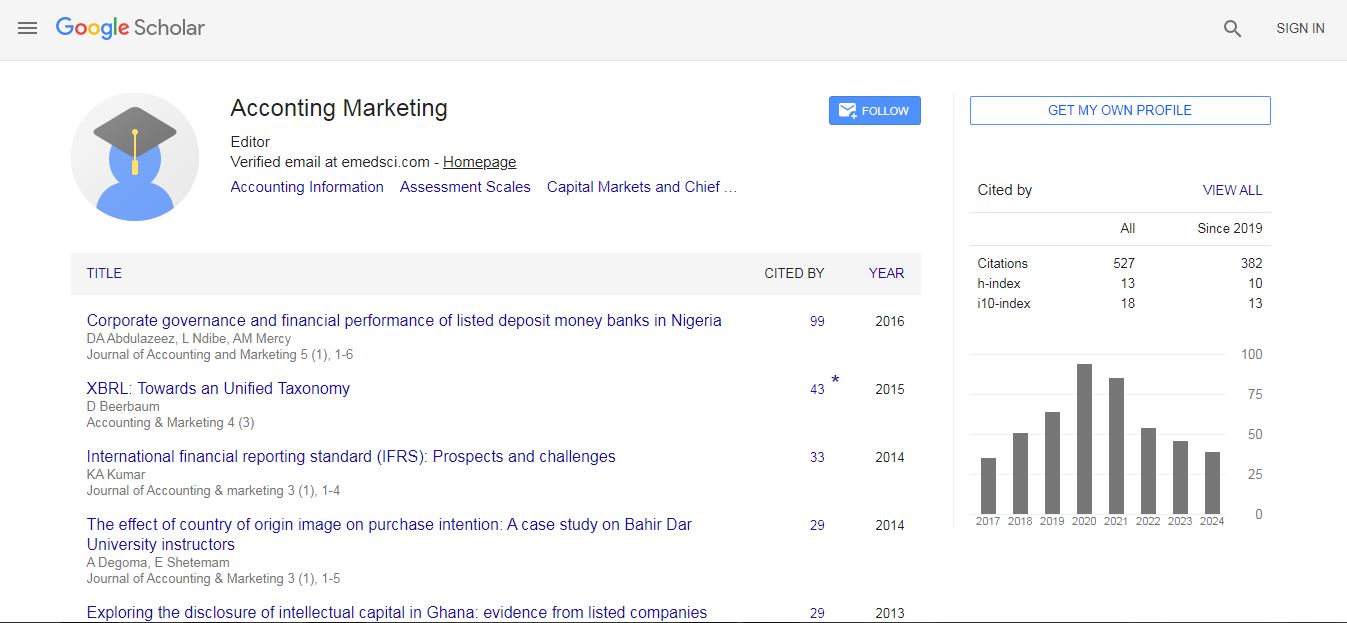
Accounting & Marketing received 487 citations as per Google Scholar report