Perspective - (2025) Volume 14, Issue 5
Received: 01-Sep-2025, Manuscript No. jamk-25-177322;
Editor assigned: 03-Sep-2025, Pre QC No. P-177322;
Reviewed: 17-Sep-2025, QC No. Q-177322;
Revised: 22-Sep-2025, Manuscript No. R-177322;
Published:
29-Sep-2025
, DOI: 10.37421/2168-9601.2025.14.579
Citation: Okoye, Samuel. ”SEO: Driving Business Growth and Digital Impact.” J Account Mark 14 (2025):579.
Copyright: © 2025 Okoye S. This is an open-access article distributed under the terms of the Creative Commons Attribution License, which permits unrestricted use, distribution and reproduction in any medium, provided the original author and source are credited.
Research consistently demonstrates the significant influence of search engine optimization (SEO) on the online performance of small and medium enterprises. A comprehensive study revealed a distinct positive correlation, indicating that strategically implemented SEO initiatives can substantially enhance digital visibility and contribute directly to the operational success of these businesses. These findings underscore the critical need for SMEs to integrate focused SEO into their broader digital marketing frameworks to secure a competitive advantage [1].
Further investigation into the practical implementation of SEO techniques has elucidated their crucial role in improving e-commerce business performance. The evidence suggests that deliberate and strategic application of SEO can lead to markedly better online visibility. Ultimately, this enhanced presence translates into stronger financial outcomes for e-commerce platforms, highlighting SEO as an indispensable tool for sustained growth and market penetration in the digital retail sector [2].
A systematic literature review comprehensively explored the foundational role of search engine optimization in the broader context of online business development. This extensive analysis concluded that SEO transcends being merely a marketing tactic; it represents a fundamental component essential for achieving sustained growth and maintaining visibility within the dynamic digital landscape. Such insights reposition SEO as a core strategic pillar for any enterprise seeking long-term online success [3].
Studies examining the interplay between content characteristics and SEO practices have shed light on their combined influence on search ranking. A principal insight derived is that the synergistic combination of high-quality, relevant content with meticulously applied SEO techniques significantly elevates a businessâ??s probability of achieving higher search engine rankings. This improved visibility is crucial for effectively reaching a wider audience of potential customers [4].
The impact of search engine optimization on key consumer metrics, such as brand awareness and purchase intention within e-commerce, has been a subject of specific inquiry. Findings indicate that highly effective SEO efforts directly contribute to increased brand recognition among target consumers. Moreover, robust SEO strategies are instrumental in guiding customers towards making a purchase, proving vital for the competitive landscape of online retail [5].
A strategic framework has been developed to guide small businesses in effectively leveraging search engine optimization. This research emphasizes that carefully tailored SEO strategies can furnish a crucial competitive advantage for smaller enterprises operating in the digital marketing realm. Such approaches enable these businesses to more efficiently identify and engage with their specific target audiences, optimizing resource allocation for maximum impact [6].
The relationship between search engine optimization, website traffic, and overall business profitability, particularly in the context of online travel agencies, has been thoroughly examined. This analysis demonstrates a direct causal link, revealing that strategic investments in SEO efforts can lead to a quantifiable increase in website visitors. Subsequently, this augmented traffic directly translates into improved financial health and sustained profitability for online businesses [7].
Research specifically investigated the influence of search engine optimization on perceived value, customer satisfaction, and loyalty within the highly competitive tourism sector. The primary finding indicates that superior SEO practices enhance the overall customer experience, cultivating greater satisfaction and fostering stronger loyalty. These elements are unequivocally crucial for service-oriented businesses, emphasizing SEO's role beyond mere visibility [8].
An exploration into the effectiveness of digital marketing strategies on SME performance, with a particular focus on SEO's mediating role, has yielded significant insights. It was discovered that search engine optimization functions as a critical intermediary, effectively translating broader digital marketing initiatives into measurable and tangible improvements in business outcomes for small and medium enterprises. This highlights SEO's strategic importance in the digital ecosystem [9].
The integration of search engine optimization with social media marketing has been identified as a powerful catalyst for business growth in the contemporary digital era. Studies reveal that a cohesive combination of robust SEO with dynamic social media strategies generates a potent synergy. This integrated approach not only drives significantly greater online visibility but also actively fosters overall business expansion and market presence [10].
A foundational study empirically investigated the correlation between search engine optimization (SEO) and the operational success of small and medium enterprises (SMEs) in the digital domain. It unequivocally established a positive and direct link, asserting that dedicated SEO initiatives are instrumental in enhancing the digital footprint and overall commercial viability of these businesses. This underscores the necessity for SMEs to proactively adopt SEO to bolster their market position and reach [1]. Focusing on the e-commerce sector, extensive research has detailed the practical mechanisms through which SEO techniques augment business performance. This work emphasizes that purposeful SEO implementation is pivotal for achieving superior online visibility, which, in turn, is a direct precursor to improved financial results for various e-commerce platforms. Therefore, strategic SEO application is critical for sustained competitiveness and revenue generation [2]. A comprehensive systematic review provided an in-depth analysis of search engine optimization's indispensable contribution to online business development. This review articulated that SEO is not merely an auxiliary marketing tool but a fundamental pillar supporting continuous growth and ensuring market presence in the digital realm. Its role extends to shaping the strategic direction for enterprises aiming for enduring online relevance and expansion [3]. Investigations into the factors determining search engine rankings have elucidated the combined power of content quality and SEO implementation. The core insight is that integrating compelling, relevant content with optimized SEO practices substantially elevates a businessâ??s position in search results. This combined strategy is essential for maximizing organic reach and effectively converting passive searchers into engaged customers, highlighting a dual necessity [4]. Specific research has addressed the pronounced influence of search engine optimization on crucial consumer behavior indicators, namely brand awareness and purchase inclination within e-commerce environments. This study confirmed that proficient SEO directly contributes to elevating a brandâ??s recognizability and strategically guides consumers toward making purchasing decisions, thereby serving as a vital driver for commercial success in online retail settings [5]. A dedicated study formulated a strategic blueprint enabling small businesses to effectively harness the capabilities of search engine optimization. It highlighted that customized SEO frameworks can provide a distinct competitive advantage for smaller entities in the crowded digital marketing ecosystem. Such precise targeting ensures that these businesses can efficiently connect with their intended audiences and optimize their online engagement [6]. Empirical research systematically evaluated the interconnectedness of search engine optimization, website traffic volume, and the overarching profitability of businesses, with a specialized focus on online travel agencies. The findings conclusively demonstrated that a well-executed SEO strategy directly translates into an increase in web visitors, which subsequently and positively impacts the financial health and revenue streams of online operations [7]. Within the tourism sector, an insightful study probed the effects of search engine optimization on consumer perceptions of value, their satisfaction levels, and ultimate loyalty. The pivotal revelation was that robust SEO practices markedly enhance the customer journey, fostering deeper satisfaction and cultivating enduring loyalty. These outcomes are particularly critical for service-oriented industries where customer experience dictates long-term success [8]. A focused study explored the intricate relationship between various digital marketing strategies and the performance of small and medium enterprises, specifically highlighting the crucial mediating function of search engine optimization. This research established that SEO acts as a vital conduit, efficiently transforming broader digital marketing efforts into measurable improvements in the overall business outcomes for SMEs, thus confirming its central strategic role [9]. Current academic discourse emphasizes the imperative for integrating search engine optimization with social media marketing to accelerate business growth in the digital age. This integrated approach, as evidenced by recent studies, generates a powerful synergistic effect. By combining SEO and social media, businesses achieve significantly greater online visibility and concurrently facilitate comprehensive expansion across various digital fronts [10].
The compiled research consistently underscores the transformative impact of search engine optimization (SEO) across various business contexts. Studies demonstrate a clear positive link between focused SEO strategies and enhanced digital visibility, operational success, and financial outcomes for small and medium enterprises (SMEs) and e-commerce platforms. SEO is not merely a marketing tactic but a foundational element for sustained online business development, significantly influencing search rankings when combined with high-quality content. Effective SEO directly contributes to increased brand awareness and guides consumer purchase intention in online retail. For small businesses, tailored SEO strategies provide a crucial competitive edge, enabling efficient audience targeting. Furthermore, SEO investments are shown to directly translate into higher website traffic and improved business profitability, as exemplified by online travel agencies. Beyond financial metrics, SEO practices enhance perceived value, customer satisfaction, and loyalty, particularly vital for service-oriented sectors like tourism. Its role extends as a critical mediator, translating broader digital marketing efforts into tangible performance improvements for SMEs. Finally, integrating SEO with social media marketing creates a powerful synergy, driving overall business growth and expanding market presence in the digital era.
None
None
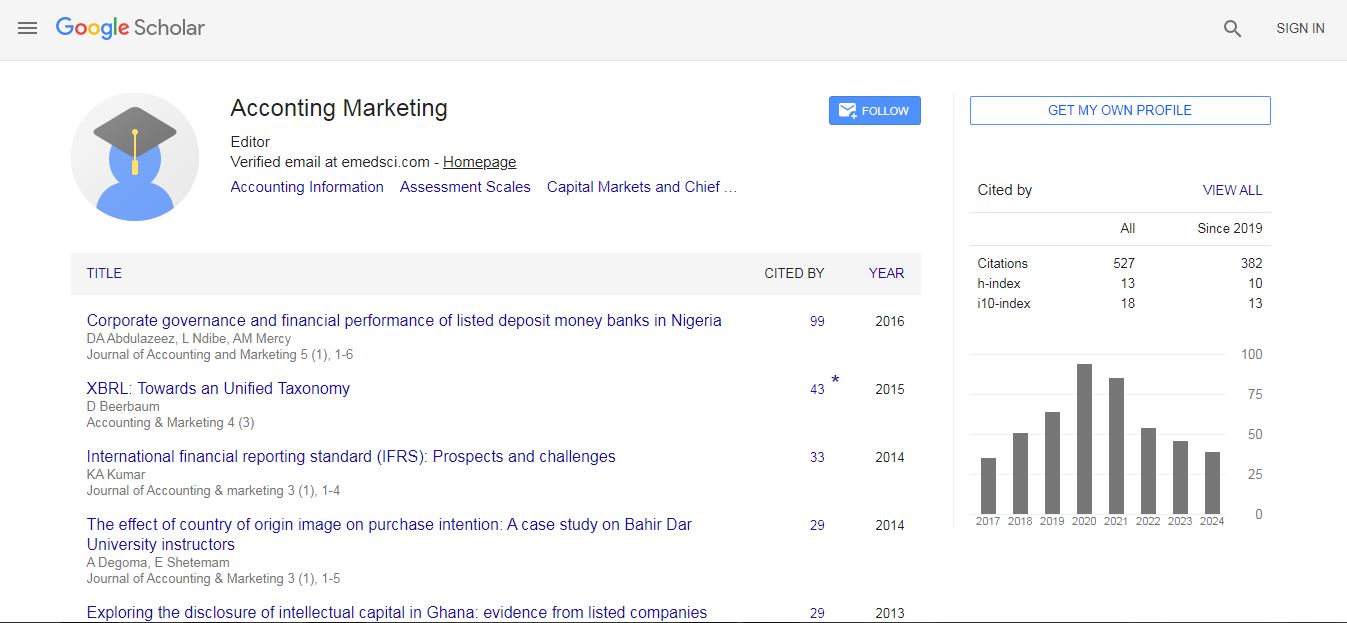
Accounting & Marketing received 487 citations as per Google Scholar report