Commentary - (2025) Volume 16, Issue 3
Received: 02-Jun-2025, Manuscript No. jar-25-176615;
Editor assigned: 04-Jun-2025, Pre QC No. P-176615;
Reviewed: 18-Jun-2025, QC No. Q-176615;
Revised: 23-Jun-2025, Manuscript No. R-176615;
Published:
30-Jun-2025
, DOI: 10.37421/2155-6113.2025.16.1063
Citation: Souza, Adriano. ”PEP Updates: Guidelines for Infection
Prevention.” J AIDS Clin Res 16 (2025):1063.
Copyright: © 2025 Souza A. This is an open-access article distributed under the terms of the Creative Commons Attribution License, which permits unrestricted use, distribution
and reproduction in any medium, provided the original author and source are credited.
Current guidelines offer comprehensive, updated recommendations for nonoccupational Human Immunodeficiency Virus (HIV) postexposure prophylaxis (PEP) in the United States. These guidelines prioritize the rapid assessment of risk following potential exposure and the prompt initiation of antiretroviral therapy. The detailed document outlines various current drug regimens, specifies appropriate treatment durations, and describes essential follow-up care for individuals who have been exposed to HIV through sexual contact, injection drug use, or other nonoccupational routes. The overarching goal is to prevent HIV seroconversion effectively, thereby safeguarding public health [1].
Rabies postexposure prophylaxis (PEP) protocols are meticulously reviewed, specifically addressing individuals who lack any prior history of rabies vaccination. This critical information clarifies the necessary steps for immediate intervention, including proper wound care, the precise administration of rabies immune globulin, and the complete vaccine series. The review underscores the profound importance of acting swiftly to prevent the development of rabies, a disease that is almost universally fatal once symptoms manifest after exposure [2].
An extensive overview of current strategies and future perspectives aims to prevent the mother-to-child transmission of Hepatitis B Virus (HBV). This review delves into the efficacy of diverse interventions, such as maternal antiviral therapy, the crucial birth dose vaccination, and the application of Hepatitis B immune globulin. It emphasizes their combined and complementary roles in significantly reducing vertical transmission rates. This work also highlights the continuous and dedicated efforts to enhance global prevention programs, ensuring broader protection for newborns [3].
Real-world experience with the JYNNEOS vaccine for mpox postexposure prophylaxis in Madrid during 2022 offers valuable insights. This study meticulously examines both the effectiveness and safety profiles of the vaccine when administered after exposure to the virus. By contributing tangible, practical data, the research deepens the understanding of the vaccine's utility in controlling mpox outbreaks and effectively protecting at-risk individuals within communities [4].
A systematic review and meta-analysis thoroughly assesses the efficacy of neutralizing monoclonal antibodies for post-exposure prophylaxis against SARS-CoV-2 infection. The comprehensive findings synthesize the latest evidence on how these antibodies can potentially prevent disease progression or initial infection in individuals who have been exposed. These insights are crucial for understanding their prospective role in mitigating COVID-19 transmission and reducing severity, particularly among vulnerable populations who face higher risks [5].
A rigorous systematic review and meta-analysis focuses on preventive treatment strategies for household contacts of individuals diagnosed with rifampicin- and multidrug-resistant tuberculosis (MDR-TB). This study synthesizes extensive evidence regarding the effectiveness and safety of various prophylactic regimens. The primary objective is to inform and refine clinical guidelines, thereby offering robust protection to close contacts from developing active drug-resistant Tuberculosis, which remains a significant global health challenge requiring concerted efforts [6].
The use of post-exposure prophylaxis for HIV and HBV among healthcare workers in Korea is thoroughly evaluated through a systematic review and meta-analysis. This important work investigates the incidence of occupational exposures in clinical settings, meticulously assesses adherence to existing PEP protocols, and examines the overall effectiveness of current guidelines in preventing seroconversion. The insights gained are instrumental in improving safety measures and substantially reducing infection risks for medical professionals [7].
An updated review provides a clear overview of current practices concerning post-exposure prophylaxis for Lyme borreliosis. It summarizes the existing recommendations for antibiotic treatment to be administered after a tick bite and thoughtfully discusses various factors that influence the decision to initiate PEP. Crucially, the review also highlights specific areas where further research and development are urgently needed to optimize current prevention strategies against this prevalent tick-borne infection, ensuring better patient outcomes [8].
A systematic review explores the current epidemiology and effective prevention strategies for bacterial meningitis in adult populations. This review encompasses the demonstrated efficacy of vaccination programs and underscores the paramount importance of post-exposure prophylaxis for close contacts, particularly during confirmed outbreaks. The findings emphasize the continuous need for vigilant surveillance and the implementation of precisely tailored preventive measures to significantly reduce the burden of this severe and potentially life-threatening infection [9].
A narrative review comprehensively examines varicella and zoster infections specifically during pregnancy, recognizing this as a critical area due to the potential for significant maternal and fetal complications. It meticulously details the inherent risks associated with exposure to these viruses, the strategic use of varicella-zoster immune globulin (VZIG) as a key post-exposure prophylaxis for susceptible pregnant women, and outlines comprehensive management strategies designed to minimize adverse outcomes for both the mother and the developing child [10].
Postexposure prophylaxis (PEP) represents a crucial intervention in preventing infectious diseases following potential exposure. Recent guidelines detail updated recommendations for nonoccupational Human Immunodeficiency Virus (HIV) PEP in the United States, advocating for rapid risk assessment and the prompt initiation of antiretroviral therapy. These guidelines meticulously cover current drug regimens, treatment durations, and essential follow-up care for individuals exposed to HIV through various nonoccupational routes, aiming to effectively prevent seroconversion [1]. Similarly, rabies PEP protocols are critical for individuals without prior vaccination history. These protocols specify immediate wound care, administration of rabies immune globulin, and the complete vaccine series, emphasizing the urgent need for intervention to prevent this almost universally fatal disease [2].
Preventive strategies extend to reducing vertical transmission of Hepatitis B Virus (HBV). An overview of current and future approaches highlights the efficacy of maternal antiviral therapy, birth dose vaccination, and Hepatitis B immune globulin, showcasing their combined impact in global prevention programs [3]. Furthermore, real-world data from Madrid in 2022 provides insights into the JYNNEOS vaccine's effectiveness and safety for mpox postexposure prophylaxis. This experience contributes valuable information on vaccine utility for controlling outbreaks and protecting at-risk populations [4].
Systematic reviews offer robust evidence for prophylaxis in widespread health challenges. One such review and meta-analysis assesses neutralizing monoclonal antibodies for SARS-CoV-2 post-exposure prophylaxis, summarizing evidence on their potential to prevent disease progression or infection, especially in vulnerable groups [5]. Another crucial systematic review investigates preventive treatment for household contacts of individuals with rifampicin- and multidrug-resistant tuberculosis (MDR-TB). This work synthesizes data on prophylactic regimens to inform clinical guidelines for protecting close contacts from developing drug-resistant Tuberculosis, addressing a significant global health threat [6].
Specific occupational and environmental exposures also necessitate tailored prophylactic approaches. For instance, a systematic review and meta-analysis evaluates HIV and HBV PEP among healthcare workers in Korea, examining occupational exposure incidence, adherence to protocols, and guideline effectiveness in preventing seroconversion. This provides vital insights for enhancing safety and reducing infection risks in clinical settings [7]. Additionally, current practices regarding post-exposure prophylaxis for Lyme borreliosis are updated, summarizing antibiotic treatment recommendations after a tick bite and discussing factors influencing PEP initiation. The review also identifies areas for further research to optimize prevention against this common tick-borne infection [8].
Beyond these, other severe infections demand effective prevention strategies. A systematic review outlines the current epidemiology and prevention strategies for bacterial meningitis in adults, covering vaccination efficacy and the importance of PEP for close contacts, particularly during outbreaks. It emphasizes ongoing surveillance and tailored measures to reduce the burden of this severe infection [9]. Lastly, a narrative review addresses varicella and zoster infections during pregnancy, a critical area due to potential maternal and fetal complications. It details exposure risks, the use of varicella-zoster immune globulin (VZIG) as PEP for susceptible pregnant women, and comprehensive management strategies to minimize adverse outcomes for both mother and child [10].
Current guidelines provide updated recommendations for nonoccupational Human Immunodeficiency Virus (HIV) postexposure prophylaxis (PEP), emphasizing rapid risk assessment and prompt antiretroviral therapy to prevent seroconversion. Rabies PEP protocols for unvaccinated individuals detail critical immediate interventions, including wound care, immune globulin, and vaccine series, to combat this fatal disease. Strategies for preventing mother-to-child transmission of Hepatitis B Virus (HBV) combine maternal antiviral therapy, birth dose vaccination, and immune globulin, aiming to reduce vertical transmission globally. Real-world data from Madrid demonstrates the effectiveness and safety of the JYNNEOS vaccine for mpox PEP, supporting its role in outbreak control. Neutralizing monoclonal antibodies show promise in SARS-CoV-2 PEP by preventing disease progression and infection in exposed, vulnerable populations. Preventive treatments for household contacts of individuals with rifampicin- and multidrug-resistant tuberculosis (MDR-TB) are crucial for informing clinical guidelines. An evaluation of HIV and HBV PEP among Korean healthcare workers highlights the importance of adherence to protocols and effective guidelines to mitigate occupational infection risks. Updates on Lyme borreliosis PEP review antibiotic treatment recommendations post-tick bite, identifying areas for optimizing prevention. Prevention strategies for bacterial meningitis in adults, including vaccination and PEP for close contacts, are vital for reducing infection burden. Finally, a review addresses varicella and zoster infections during pregnancy, detailing risks, the use of varicella-zoster immune globulin (VZIG) as PEP, and management strategies for maternal and fetal well-being.
Indexed at, Google Scholar, Crossref
Indexed at, Google Scholar, Crossref
Indexed at, Google Scholar, Crossref
Indexed at, Google Scholar, Crossref
Indexed at, Google Scholar, Crossref
Indexed at, Google Scholar, Crossref
Indexed at, Google Scholar, Crossref
Indexed at, Google Scholar, Crossref
Indexed at, Google Scholar, Crossref
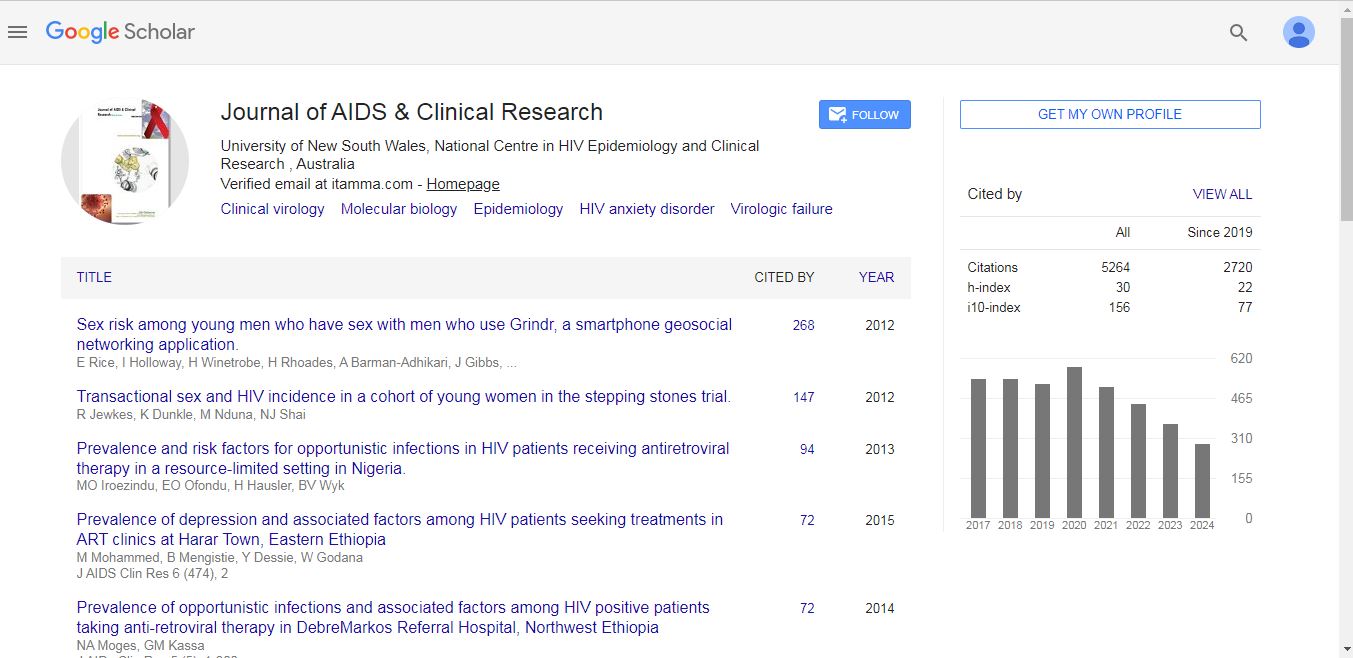
Journal of AIDS & Clinical Research received 5264 citations as per Google Scholar report