Commentary - (2025) Volume 10, Issue 2
Received: 01-Apr-2025, Manuscript No. cgj-26-186508;
Editor assigned: 03-Apr-2025, Pre QC No. P-186508;
Reviewed: 17-Apr-2025, QC No. Q-186508;
Revised: 22-Apr-2025, Manuscript No. R-186508;
Published:
29-Apr-2025
, DOI: 10.37421/2952-8518.2025.10.304
Citation: Chen, Wei. ”GERD Management: Lifestyle, Medications
Surgery, and Education.” Clin Gastroenterol J 10 (2025):304.
Copyright: © 2025 Chen W. This is an open-access article distributed under the terms of the Creative Commons Attribution License, which permits unrestricted use, distribution and reproduction in any medium, provided the original author and source are credited.
Gastroesophageal reflux disease (GERD) is a complex condition that necessitates a comprehensive and multi-faceted management strategy. At its core, treatment involves a combination of lifestyle modifications, pharmacotherapy, and, in specific instances, surgical intervention, reflecting a tiered approach to patient care. Lifestyle changes form the bedrock of GERD management, encompassing dietary adjustments to avoid triggers, effective weight management to reduce intra-abdominal pressure, and elevating the head of the bed to mitigate nocturnal reflux. These foundational elements are critical for alleviating symptoms and improving the overall quality of life for affected individuals [1].
Pharmacological interventions are indispensable in the treatment of GERD, with proton pump inhibitors (PPIs) serving as the primary therapeutic agents for achieving symptom relief and promoting the healing of esophageal lesions. Their efficacy in reducing gastric acid production has made them the mainstay of medical management for most GERD patients. However, for those with persistent or refractory symptoms despite standard therapy, a more in-depth diagnostic evaluation is warranted to identify underlying causes and guide treatment escalation, which might include higher-dose PPIs or combination therapies [1].
This clinical update emphasizes the importance of a structured, stepwise diagnostic and therapeutic approach to GERD. The initial phase of management typically involves a trial of PPIs, a common practice due to their effectiveness in reducing acid. Should symptoms persist or recur, further investigations become essential to thoroughly assess for potential complications such as erosive esophagitis, Barrett's esophagus, or even the more severe risk of esophageal adenocarcinoma. This highlights the need for continuous monitoring and evaluation of patient response to treatment [2].
Optimizing outcomes in GERD management hinges on a deep understanding of the various diagnostic tools available and tailoring therapeutic strategies based on individual patient factors and the severity of their disease. This personalized approach is key to not only alleviating current symptoms but also to preventing the long-term sequelae that can arise from inadequately controlled reflux. Recognizing the heterogeneity of GERD is paramount for effective clinical practice [2].
Advanced diagnostic techniques, particularly 24-hour esophageal pH-impedance monitoring, play a crucial role in the diagnosis of GERD, especially in patients presenting with non-erosive reflux disease (NERD) or atypical symptoms. This sophisticated method enables the detection of both acid and non-acid reflux events, providing a comprehensive assessment of the overall reflux burden experienced by the patient. Accurate interpretation of these findings is vital for informing therapeutic decisions, particularly when conventional PPI therapy has proven ineffective [3].
The comprehensive assessment provided by pH-impedance monitoring is indispensable for understanding the nuances of a patient's reflux pattern. It allows clinicians to identify instances of reflux that may not be captured by pH monitoring alone, thereby offering a more complete picture of the reflux burden. This detailed information is critical for tailoring treatment strategies, especially in challenging cases where standard pharmacological approaches have not yielded the desired results [3].
The role of upper endoscopy in the management of GERD extends significantly beyond initial diagnosis to include surveillance for potentially serious complications. It is a critical tool for monitoring the progression of conditions like Barrett's esophagus and for screening for esophageal adenocarcinoma. For individuals diagnosed with Barrett's esophagus, regular endoscopic surveillance is recommended to detect dysplasia at its earliest stages, with the frequency of these procedures guided by the presence and severity of any observed dysplasia [5].
Surgical management of GERD, predominantly through laparoscopic fundoplication, remains a viable therapeutic option for a select group of patients. These are individuals who have not responded adequately to medical therapy or who experience significant side effects from PPIs. The decision to pursue surgical intervention requires a meticulous evaluation of the patient's symptom burden, their expectations regarding treatment outcomes, and a careful consideration of the potential surgical risks and benefits involved [6].
In the pediatric population, managing GERD presents a distinct set of challenges. While lifestyle modifications and pharmacologic therapies, primarily PPIs, are utilized, careful attention must be paid to dosage, treatment duration, and the potential for adverse effects, which can differ from adults. The long-term outcomes and the evolving understanding of GERD pathophysiology in children underscore the necessity for ongoing research and strict adherence to evidence-based guidelines to ensure optimal care [4].
Finally, patient education and the practice of shared decision-making are fundamental components of successful chronic GERD management. By empowering patients with a thorough understanding of their condition, available treatment options, and the importance of lifestyle modifications, clinicians can foster improved adherence to therapy and cultivate a collaborative patient-clinician relationship. This partnership is essential for achieving better long-term outcomes and enhancing the patient's overall well-being [10].
The clinical management of GERD is characterized by a multi-faceted approach that fundamentally relies on lifestyle modifications, pharmacotherapy, and, in select cases, surgical intervention. These distinct yet interconnected strategies form the pillars of effective GERD treatment, aiming to alleviate symptoms and prevent complications. Lifestyle changes, including specific dietary adjustments, diligent weight management, and the elevation of the head of the bed, are considered foundational, setting the stage for subsequent therapeutic efforts. These initial interventions are critical for establishing a baseline of symptom control and improving the patient's overall well-being [1].
Proton pump inhibitors (PPIs) have emerged as the cornerstone of pharmacological treatment for GERD, playing a pivotal role in providing symptom relief and facilitating the healing of esophageal lesions. Their potent ability to suppress gastric acid production makes them the primary choice for medical management. For patients whose GERD proves refractory to initial treatment, further investigations such as upper endoscopy, pH monitoring, or impedance studies are crucial. These diagnostic modalities help to identify underlying causes and inform treatment escalation, potentially involving higher-dose PPIs, combination therapies, or the consideration of anti-reflux surgery [1].
This review emphasizes the critical importance of adopting a stepwise diagnostic and therapeutic strategy when managing GERD. Initial management typically involves a therapeutic trial of proton pump inhibitors (PPIs), given their established efficacy. If symptoms persist or recur despite this initial intervention, further diagnostic evaluation is strongly warranted. This evaluation aims to meticulously assess for any emerging or pre-existing complications, such as erosive esophagitis, Barrett's esophagus, or even the development of esophageal adenocarcinoma, underscoring the need for vigilant monitoring [2].
A key aspect of optimizing patient outcomes in GERD management lies in understanding the distinct roles of various diagnostic tools and, crucially, in tailoring treatment plans based on individual patient-specific factors and the documented severity of their disease. This personalized approach ensures that interventions are not only effective in the short term but also contribute to preventing the long-term sequelae that can arise from inadequately controlled reflux [2].
The utilization of advanced diagnostic techniques, most notably 24-hour esophageal pH-impedance monitoring, is considered essential for accurately diagnosing GERD. This is particularly true for patients with non-erosive reflux disease (NERD) or those presenting with atypical symptoms that may not be readily apparent through standard investigations. This method allows for the comprehensive detection of both acid and non-acid reflux events, providing a thorough assessment of the patient's reflux burden [3].
The interpretation of findings derived from pH-impedance monitoring is of paramount importance in guiding therapeutic decisions. This is especially critical in clinical scenarios where standard proton pump inhibitor (PPI) therapy has been ineffective in managing the patient's symptoms. The detailed information obtained from this advanced diagnostic tool can illuminate specific reflux patterns that may require a modified or alternative treatment strategy to achieve successful outcomes [3].
The scope of upper endoscopy in the management of GERD extends significantly beyond its role in initial diagnosis to encompass vital surveillance for complications. It is an indispensable tool for monitoring conditions such as Barrett's esophagus and for the early detection of esophageal adenocarcinoma. For individuals diagnosed with Barrett's esophagus, regular endoscopic surveillance protocols are generally recommended, with the frequency determined by the presence and grade of any observed dysplasia [5].
Surgical management, primarily involving laparoscopic fundoplication, remains a significant therapeutic option for carefully selected patients diagnosed with GERD. These patients typically include those who have not responded adequately to medical therapy or who experience intolerable side effects from proton pump inhibitors (PPIs). The decision to proceed with surgery necessitates a comprehensive evaluation, taking into account the patient's symptom burden, their expectations, and a thorough assessment of potential surgical risks and benefits [6].
In the pediatric population, the management of GERD presents unique and often complex challenges. While lifestyle modifications and pharmacologic therapy, predominantly PPIs, are employed, meticulous attention must be paid to appropriate dosage, treatment duration, and the potential for side effects, which can manifest differently than in adults. The long-term outcomes and the evolving understanding of GERD pathophysiology in children necessitate ongoing research and strict adherence to evidence-based guidelines to ensure optimal care [4].
Integral to the successful long-term management of chronic GERD is a strong emphasis on patient education and the implementation of shared decision-making. Empowering patients with a comprehensive understanding of their condition, available treatment options, and the significance of lifestyle modifications demonstrably improves treatment adherence. This collaborative approach between patient and clinician fosters a partnership that is crucial for achieving better long-term outcomes and enhancing the overall quality of life for individuals living with GERD [10].
Gastroesophageal reflux disease (GERD) management involves lifestyle changes, pharmacotherapy with proton pump inhibitors (PPIs), and potentially surgery. Initial strategies focus on diet, weight, and head elevation. PPIs are the primary medical treatment, but further investigation with endoscopy or pH monitoring is needed for refractory cases. Advanced diagnostics like pH-impedance monitoring are crucial for atypical symptoms or non-erosive disease. Upper endoscopy also plays a role in surveillance for complications like Barrett's esophagus. Surgical options like fundoplication are considered for select patients. Pediatric GERD management has unique considerations regarding dosage and long-term effects. Patient education and shared decision-making are vital for adherence and better outcomes. Novel pharmacotherapies are also being developed.
None
None
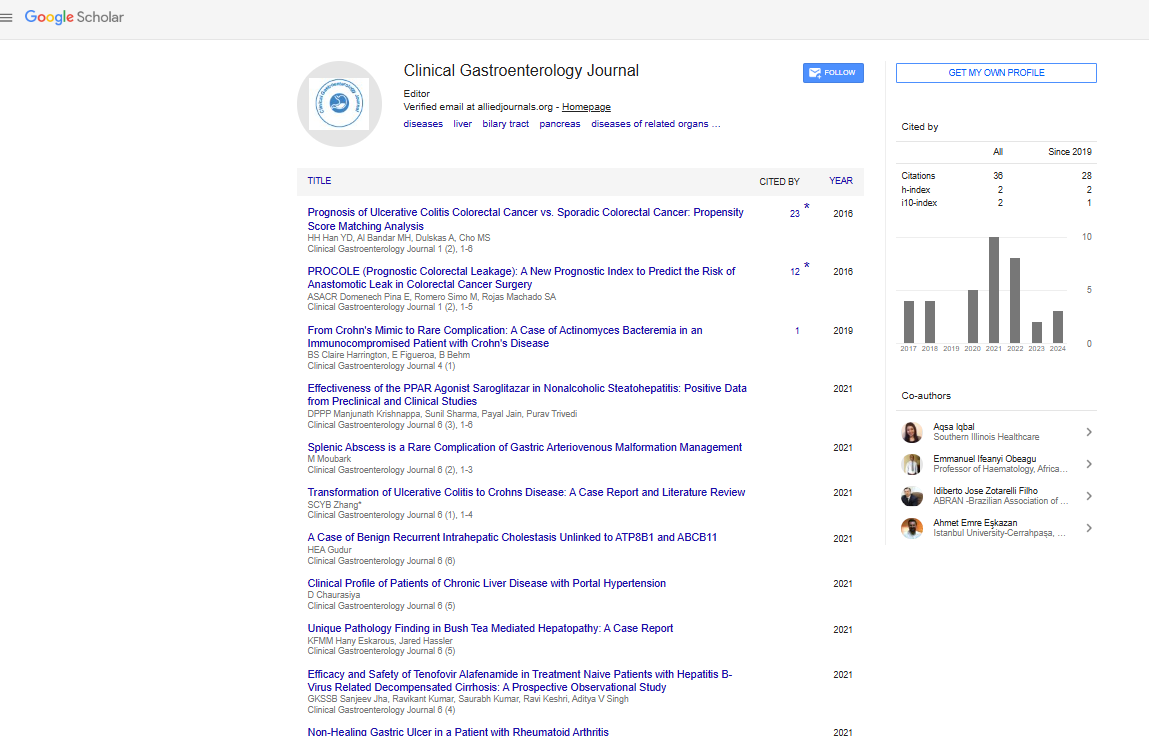
Clinical Gastroenterology Journal received 33 citations as per Google Scholar report