Commentary - (2025) Volume 10, Issue 6
Received: 01-Dec-2025, Manuscript No. cgj-26-186551;
Editor assigned: 03-Dec-2025, Pre QC No. P-186551;
Reviewed: 17-Dec-2025, QC No. Q-186551;
Revised: 22-Dec-2025, Manuscript No. R-186551;
Published:
29-Dec-2025
, DOI: 10.37421/2952-8518.2025.10.344
Citation: O’Connor, Thomas B.. ”Esophageal Motility Disorders: Diagnosis and Management.” Clin Gastroenterol J 10 (2025):344.
Copyright: © 2025 O’Connor B. Thomas This is an open-access article distributed under the terms of the Creative Commons Attribution License, which permits unrestricted use, distribution and reproduction in any medium, provided the original author and source are credited.
Esophageal motility disorders (EMDs) represent a complex group of conditions characterized by aberrant esophageal muscle function, significantly impairing the process of swallowing and often manifesting with distressing symptoms such as dysphagia and chest pain. High-resolution manometry (HRM) has emerged as the definitive diagnostic tool, providing a detailed pressure map of the esophagus that allows for the precise identification of specific patterns associated with conditions like achalasia, ineffective esophageal motility, and hypercontractile esophagogastric junction outflow obstruction. The management of these disorders is highly individualized, tailored to the specific EMD identified, and can encompass a range of interventions including pharmacological agents, endoscopic therapies such as pneumatic dilation and botulinum toxin injection, and surgical procedures like myotomy, which is particularly relevant for achalasia. Ongoing research into novel therapeutic approaches and a deeper comprehension of the underlying neuromuscular mechanisms are continuously contributing to the refinement of patient care strategies. [1] Achalasia, a primary form of esophageal motility disorder, is defined by a characteristic failure of the lower esophageal sphincter (LES) to relax appropriately and a lack of peristalsis in the esophageal body, leading to progressive difficulty in swallowing. The gold standard for its diagnosis is high-resolution manometry, which reveals distinct manometric patterns indicative of the condition. Therapeutic goals are centered on reducing the pressure of the LES and facilitating esophageal emptying. Current treatment options include pneumatic dilation, Heller myotomy (performed either laparoscopically or via per-oral endoscopic myotomy - POEM), and pharmacotherapy. POEM has gained prominence as a minimally invasive and highly effective treatment modality, especially for patients with complex cases or those experiencing persistent dysphagia after prior myotomy. Long-term monitoring is essential to detect any recurrence of symptoms or the development of complications. [2] Diffuse esophageal spasm (DES) and achalasia, while both classified as esophageal motility disorders, can present with overlapping symptoms, making their accurate differentiation a critical diagnostic challenge. High-resolution manometry plays an indispensable role in distinguishing these conditions by enabling the visualization of characteristic manometric patterns. Although historically, treatments for DES have included pharmacotherapy or surgical myotomy, recent studies suggest a more nuanced approach, with per-oral endoscopic myotomy (POEM) showing promise in managing refractory cases of DES. A thorough understanding of the underlying pathophysiology and the judicious application of precise diagnostic tools are paramount for achieving effective management outcomes. [3] Ineffective esophageal motility (IEM) is recognized as a prevalent esophageal motility disorder marked by a high frequency of failed peristaltic contractions within the esophagus. While IEM can contribute to symptoms like dysphagia and regurgitation, its precise clinical significance and the optimal strategy for its management remain subjects of ongoing discussion and research. High-resolution manometry is instrumental in precisely quantifying the contractility of the esophageal muscles. Treatment approaches often focus on enhancing esophageal transit, which may involve the use of prokinetic agents; however, the evidence supporting their long-term effectiveness in IEM is still considered limited. Patients who experience significant symptoms may derive benefit from carefully tailored interventions. [4] Esophageal hypersensitivity, a condition that can either occur concurrently with esophageal motility disorders or present with symptoms that mimic them, poses a significant diagnostic challenge, particularly as esophageal manometry results may appear normal. The Rome IV criteria provide a valuable framework for its identification. Management strategies for esophageal hypersensitivity are typically multifaceted, incorporating reassurance for the patient, modifications to lifestyle, and pharmacotherapy aimed at addressing visceral hypersensitivity, with neuromodulators being a notable class of drugs used. Distinguishing between objective motility abnormalities and functional hypersensitivity is crucial for guiding patients toward the most appropriate therapeutic pathways. [5] The field of esophageal manometry has undergone a significant transformation with the advent of high-resolution manometry (HRM), offering substantially improved spatial and temporal resolution compared to conventional manometry techniques. This advanced diagnostic modality facilitates a more accurate categorization of esophageal motility disorders, including different subtypes of achalasia, diffuse esophageal spasm, and ineffective esophageal motility. Key parameters derived from HRM, such as the integrated relaxation pressure (IRP) and various contractility indices, are essential for establishing precise diagnoses and informing therapeutic decision-making. [6] Nutcracker esophagus, a condition defined by the presence of high-amplitude peristaltic contractions detected during esophageal manometry, frequently manifests with symptoms of chest pain. While it was once considered a primary esophageal motility disorder, its direct role in causing symptoms is increasingly being questioned, with some affected individuals exhibiting esophageal hypersensitivity. Management typically involves a trial-and-error approach with pharmacological agents, including calcium channel blockers, nitrates, and anticholinergics, although their efficacy can vary considerably among patients. Lifestyle modifications and providing reassurance to the patient are also important components of comprehensive care. [7] The Chicago Classification of esophageal motility disorders, particularly its fourth iteration (version 4.0), provides a standardized and widely accepted framework for the interpretation of high-resolution manometry data. This classification system is fundamental for achieving accurate diagnoses of various conditions, including achalasia, esophageal spasm, and ineffective esophageal motility. Its application ensures more consistent reporting of findings and facilitates a better comparison of treatment outcomes across different research studies. A thorough understanding of the nuances within this classification system is indispensable for clinicians who manage patients with esophageal motility disorders. [8] Pharmacological interventions in the management of esophageal motility disorders are designed to target specific functional deficits observed in these conditions. For achalasia, certain agents like phosphodiesterase-5 inhibitors and botulinum toxin injections can provide temporary symptom relief by reducing the pressure of the lower esophageal sphincter. Ineffective esophageal motility may be addressed using prokinetic agents; however, the evidence supporting their long-term effectiveness remains limited. Effective management necessitates a personalized approach, carefully considering the severity of symptoms and any co-existing patient comorbidities. [9] The long-term outcomes and potential complications associated with surgical interventions for achalasia, such as laparoscopic Heller myotomy and per-oral endoscopic myotomy (POEM), are critical factors that must be carefully considered. While both procedures are effective in alleviating dysphagia, variations exist in their rates of recurrence, the incidence of gastroesophageal reflux disease (GERD) development, and the potential need for subsequent re-interventions. Long-term surveillance strategies and comprehensive patient education are vital for optimizing treatment outcomes and effectively managing any potential sequelae that may arise. [10]
Esophageal motility disorders (EMDs) encompass a range of conditions characterized by abnormal esophageal muscle function, leading to impaired swallowing and symptoms like dysphagia and chest pain. High-resolution manometry (HRM) is the gold standard for diagnosis, offering detailed pressure mapping to identify patterns such as achalasia, ineffective esophageal motility, and hypercontractile esophagogastric junction outflow obstruction. Management strategies are tailored to the specific EMD and may include pharmacological interventions, endoscopic therapies like pneumatic dilation or botulinum toxin injection, and surgical myotomy, especially for achalasia. Emerging therapies and a deeper understanding of the neuromuscular mechanisms are continuously refining patient care. [1] Achalasia, a primary EMD, is defined by impaired LES relaxation and aperistalsis of the esophageal body, resulting in progressive dysphagia. Diagnosis relies on HRM, which identifies characteristic patterns. Treatment aims to reduce LES pressure and improve esophageal emptying. Current options include pneumatic dilation, Heller myotomy (laparoscopic or per-oral endoscopic myotomy - POEM), and pharmacotherapy. POEM has emerged as a minimally invasive and effective option, particularly for complex cases or post-myotomy dysphagia. Long-term follow-up is crucial to monitor for recurrence and complications. [2] Diffuse esophageal spasm (DES) and achalasia are both EMDs that can present with similar symptoms, making accurate differentiation critical. HRM is indispensable for distinguishing these conditions by revealing characteristic manometric patterns. While historically managed with pharmacotherapy or surgical myotomy for DES, recent literature suggests a more nuanced approach, with POEM demonstrating promise in refractory DES cases. Understanding the underlying pathophysiology and applying precise diagnostic tools are key to effective management. [3] Ineffective esophageal motility (IEM) is a common EMD characterized by a high proportion of failed peristaltic contractions. While IEM can contribute to dysphagia and regurgitation, its clinical significance and optimal management are still debated. HRM allows for precise quantification of esophageal contractility. Treatment often focuses on improving esophageal transit, which may involve prokinetics, but evidence for their efficacy in IEM remains limited. Patients with significant symptoms may benefit from tailored interventions. [4] Esophageal hypersensitivity, often co-occurring with or mimicking EMDs, presents a diagnostic challenge as manometry may be normal. Rome IV criteria help in its identification. Management strategies are multifaceted, including reassurance, lifestyle modifications, and pharmacotherapy aimed at visceral hypersensitivity, such as neuromodulators. Understanding the distinction between objective motility abnormalities and functional hypersensitivity is crucial for guiding appropriate therapeutic pathways. [5] The diagnosis of esophageal motility disorders has been revolutionized by high-resolution manometry (HRM), offering superior spatial and temporal resolution compared to conventional manometry. This advanced technique allows for more precise categorization of EMDs, including achalasia subtypes, diffuse esophageal spasm, and ineffective esophageal motility. The integrated relaxation pressure (IRP) and contractility parameters derived from HRM are essential for accurate diagnosis and guiding therapeutic decisions. [6] Nutcracker esophagus, characterized by high-amplitude peristaltic contractions detected on manometry, often presents with chest pain. While once considered a primary EMD, its role as a cause of symptoms is increasingly questioned, with some patients exhibiting hypersensitivity. Management typically involves trial-and-error with pharmacotherapy, including calcium channel blockers, nitrates, and anticholinergics, though efficacy varies. Lifestyle modifications and reassurance are also important components of care. [7] The Chicago Classification of esophageal motility disorders, particularly version 4.0, provides a standardized framework for interpreting HRM data. This classification system is crucial for accurate diagnosis of conditions like achalasia, esophageal spasm, and ineffective motility, enabling more consistent reporting and better comparison of treatment outcomes across studies. Understanding the nuances of this classification is fundamental for clinicians managing EMDs. [8] Pharmacological management of esophageal motility disorders aims to address specific functional deficits. For achalasia, phosphodiesterase-5 inhibitors and botulinum toxin injections offer temporary relief by reducing LES pressure. Ineffective esophageal motility may be addressed with prokinetic agents, though evidence supporting their long-term efficacy is limited. Management requires a personalized approach, considering symptom severity and patient comorbidities. [9] The long-term outcomes and potential complications of surgical interventions for achalasia, such as laparoscopic Heller myotomy and POEM, are critical considerations. While both are effective in improving dysphagia, recurrence rates, GERD development, and the need for re-intervention vary. Long-term surveillance and patient education are vital to optimize outcomes and manage potential sequelae. [10]
Esophageal motility disorders (EMDs) are characterized by abnormal esophageal muscle function, impacting swallowing and causing symptoms like dysphagia and chest pain. High-resolution manometry (HRM) is the primary diagnostic tool, enabling precise identification of conditions such as achalasia, ineffective esophageal motility, and diffuse esophageal spasm. Management is tailored to the specific disorder and can include pharmacological treatments, endoscopic therapies like pneumatic dilation or botulinum toxin injection, and surgical myotomy. Achalasia management focuses on reducing LES pressure and improving emptying through options like POEM or Heller myotomy. Distinguishing between similar EMDs like DES and achalasia is crucial, with HRM playing a key role. IEM management remains debated, while esophageal hypersensitivity requires differentiating from objective motility abnormalities. The Chicago Classification provides a standardized framework for HRM interpretation. Pharmacological agents offer symptomatic relief, particularly for achalasia, but their long-term efficacy can be limited. Surgical interventions for achalasia require careful consideration of long-term outcomes and potential complications.
None
None
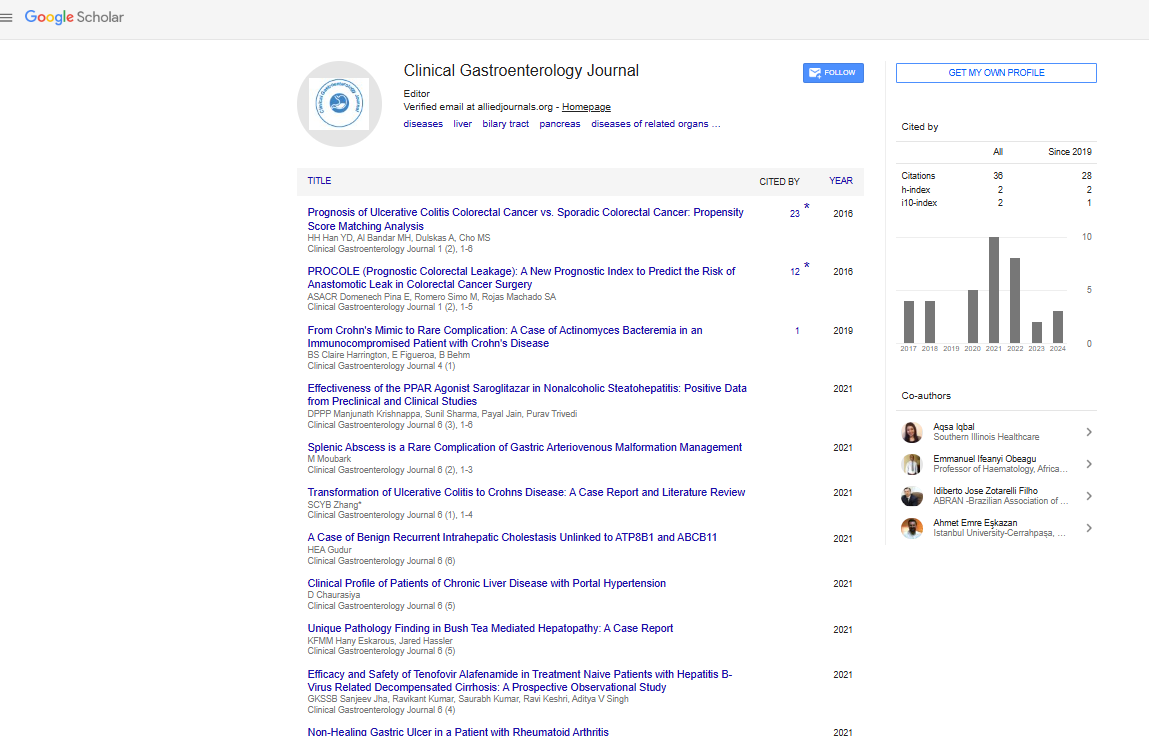
Clinical Gastroenterology Journal received 33 citations as per Google Scholar report