Commentary - (2025) Volume 14, Issue 2
Received: 01-Mar-2025, Manuscript No. jamk-25-177261;
Editor assigned: 03-Mar-2025, Pre QC No. P-177261;
Reviewed: 17-Mar-2025, QC No. Q-177261;
Revised: 24-Mar-2025, Manuscript No. R-177261;
Published:
31-Mar-2025
, DOI: 10.37421/2168-9601.2025.14.543
Citation: Roberts, Daniel. ”Digital Transformation: Accounting’s Path to a Smart Future.” J Account Mark 14 (2025):543.
Copyright: © 2025 Roberts D. This is an open-access article distributed under the terms of the Creative Commons Attribution License, which permits unrestricted use, distribution and reproduction in any medium, provided the original author and source are credited.
The adoption of cloud computing presents a substantial opportunity for small and medium-sized enterprises (SMEs) to enhance their financial performance. Studies have consistently demonstrated a positive correlation between cloud integration and improved financial outcomes, particularly in optimizing the efficiency of financial operations. This shift extends beyond mere modernization, offering a direct path to strengthening a business's fundamental financial health and bottom line [1].
Artificial intelligence (AI) is rapidly redefining the landscape of the accounting field, introducing innovative methodologies and tools. A comprehensive review of existing research illuminates AI's current impact and prognosticates its future trajectory within the industry. For small businesses, this evolving technology offers a dual perspective: a roadmap detailing potential benefits, such as automation and enhanced analytical capabilities, alongside significant challenges related to implementation and ethical considerations. The continued need for innovation in AI applications for accounting remains a prominent theme [2].
Digital transformation stands as a pivotal force reshaping accounting practices and information systems globally. Systematic reviews of this phenomenon underscore its profound influence, identifying both the considerable advantages it confers, such as increased operational efficiency and data accuracy, and the significant impediments businesses encounter during its implementation. For smaller enterprises, a nuanced understanding of these systemic shifts is paramount for maintaining competitive viability and operational effectiveness in an increasingly digital economic environment [3].
Blockchain technology emerges as a transformative innovation with significant implications for accounting and auditing practices. Its core promise lies in augmenting transparency and security in financial record-keeping, a capability that represents a fundamental shift from traditional methods. While the widespread adoption of blockchain faces hurdles, including the substantial costs associated with implementation and the ongoing need for clearer regulatory frameworks, small businesses are advised to closely monitor its development as a crucial element for future-proofing their accounting processes against evolving threats and inefficiencies [4].
FinTech, or financial technology, exerts a profound and multifaceted influence on the accounting profession. This transformative power is characterized by both new opportunities and significant challenges. Opportunities include streamlining operations, enhancing efficiency through automation, and enabling the development of novel service offerings. Concurrently, FinTech introduces challenges such as the potential for shifts in job roles, requiring a proactive approach to skill development and continuous learning within accounting teams to stay proficient with emerging tools and expertise. For SMEs, embracing these solutions can be pivotal for operational agility [5].
The systematic review of automation in accounting highlights its undeniable benefits, primarily in enhancing efficiency and ensuring accuracy in financial processes. For smaller firms, the integration of automation translates directly into a reduction of manual workload, thereby fostering more reliable financial data and freeing up valuable human capital. This reallocation of resources allows personnel to focus on more strategic analytical tasks rather than repetitive processing, ultimately promoting a smarter and more effective operational paradigm [6].
Big data analytics plays an increasingly critical role in modern accounting, fundamentally altering how financial information is processed and interpreted. Comprehensive studies systematically review how big data reconfigures accounting information systems, detailing not only the substantial benefits, such as advanced predictive modeling and fraud detection, but also the essential infrastructure requirements for its effective deployment. For small businesses, leveraging big data provides an unparalleled opportunity to derive deeper insights from their financial data, leading to more informed decision-making and a proactive stance in financial management [7].
Understanding the drivers and challenges of digital transformation in accounting is crucial for successful implementation. Research meticulously dissects factors that propel this transformation, such as the imperative for greater efficiency and escalating client demand for digital services. Simultaneously, it identifies significant impediments, including skill gaps within the workforce and complexities associated with system integration. For small enterprises, a strategic approach that consciously addresses these multifaceted factors is indispensable for fully realizing the potential benefits of digital accounting tools and ensuring a smooth transition [8].
The concept of a "smart accounting ecosystem" offers a practical and strategic framework specifically tailored for small and medium-sized enterprises. This innovative approach emphasizes the synergistic integration of various accounting technologies to facilitate seamless data exchange and enable more sophisticated, intelligent decision-making processes. Far from being a theoretical construct, this framework provides a concrete blueprint for how smaller firms can effectively harness technological advancements to cultivate a more responsive, adaptive, and insightful accounting function, moving beyond traditional operational limitations [9].
In the era of digital accounting, the competencies required of accounting professionals are undergoing continuous and rapid evolution. Systematic literature reviews identify and delineate the crucial digital skills essential for today's practitioners, underscoring the necessity of proficiency in areas such as data analytics and cloud-based systems. For small businesses, this translates into a critical mandate to prioritize the ongoing upskilling and professional development of their accounting staff, ensuring they are adequately equipped to leverage smart accounting solutions to their fullest potential and remain competitive [10].
This particular study provides an empirical analysis of cloud computing adoption within small and medium-sized enterprises, highlighting its specific influence on their financial performance. The research establishes a definitive positive relationship, indicating that businesses migrating their accounting operations to cloud-based platforms experience tangible improvements in financial efficiency and overall profitability. The implications suggest that cloud adoption is not merely a technological upgrade but a strategic move that fundamentally enhances a business's fiscal capabilities [1]. The article in question systematically reviews the literature concerning the adoption of artificial intelligence in the accounting domain. It aims to synthesize existing knowledge to present a comprehensive overview of AI's current penetration and its projected future role. This review serves as a critical resource for small businesses, offering insights into the prospective advantages, such as enhanced accuracy and automation of repetitive tasks, while also detailing the inherent challenges, including implementation complexities and the evolving skill requirements for personnel. The emphasis is placed on identifying areas where further innovation is required to fully harness AI's potential in accounting practices [2]. A systematic review of digital transformation within accounting focuses on its pervasive effects on accounting information systems. This comprehensive overview meticulously details the transformative shifts occurring, delineating both the significant benefits, such as improved data integrity and accelerated reporting, and the formidable obstacles, like technological obsolescence and resistance to change, that organizations face. For small operations, grasping these dynamic changes is not merely advantageous but imperative for ensuring sustained competitiveness and optimizing operational efficiency amidst a rapidly digitizing global economy [3]. This systematic literature review meticulously examines the integration and prospective impact of blockchain technology within accounting and auditing. The central finding underscores blockchain's profound capacity to bolster transparency and significantly enhance the security of financial transactions and records. While acknowledging these revolutionary potentials, the review also candidly addresses current limitations, particularly the substantial capital investment required for implementation and the persistent need for clear, standardized regulatory guidance. The paper thus advocates for small businesses to remain cognizant of blockchain as a key technology for future-proofing their financial infrastructure [4]. The systematic literature review explores the multifaceted impact of FinTech on the accounting profession, presenting a balanced perspective on both the opportunities and challenges it introduces. It outlines how FinTech solutions can lead to greater operational efficiencies, foster new types of service offerings, and automate various accounting functions. Conversely, the review also identifies significant challenges, including the necessity for continuous professional development to adapt to new tools and the potential for a redefinition of traditional accounting roles. For small businesses, a proactive embrace of FinTech coupled with strategic upskilling of their teams is highlighted as essential for sustained relevance [5]. This systematic review critically assesses the current state and future trajectory of automation in accounting processes. It provides compelling evidence of automationâ??s capacity to deliver substantial benefits, primarily by boosting operational efficiency and significantly improving data accuracy. The review emphasizes that for smaller entities, the adoption of automation fundamentally transforms their workflow by minimizing manual interventions, leading to more reliable financial reporting. This strategic shift enables the redeployment of human resources from routine processing to higher-value, analytical, and strategic functions, thereby fostering a smarter operational model [6]. The systematic literature review on big data analytics extensively analyzes its profound influence on accounting information systems. It thoroughly investigates how big data redefines data processing, analysis, and reporting, detailing the myriad benefits such as enhanced forensic accounting capabilities and more precise financial forecasting. The review also identifies the crucial infrastructure investments and technical expertise required for effective implementation. For small businesses, leveraging big data translates into unlocking deeper, more actionable insights from their financial datasets, facilitating superior decision-making, and enabling a significantly more proactive approach to financial stewardship [7]. This systematic literature review delves into the key drivers and formidable challenges underpinning digital transformation in the accounting sector. It identifies compelling motivations, such as the imperative for enhanced operational efficiency, increasing stakeholder demands for digital services, and competitive pressures. Simultaneously, the research highlights significant impediments, including the pervasive issue of skill gaps within the accounting workforce, complexities in integrating disparate systems, and the initial capital outlay required. For small enterprises, the effective navigation of this transformation requires a well-articulated strategy that directly addresses both the catalysts and the obstacles to fully realize the strategic advantages offered by digital accounting tools [8]. The article proposes a robust and practical framework designed to guide small and medium-sized enterprises in constructing a "smart accounting ecosystem." This framework advocates for the integrated deployment of diverse accounting technologies, ensuring seamless information flow and data sharing across various functions. The ultimate goal is to empower these firms with capabilities for more intelligent, data-driven decision-making. This blueprint transcends theoretical concepts, offering concrete guidance for smaller businesses to transform their accounting functions into dynamic, responsive, and highly insightful operational units capable of leveraging advanced technological solutions [9]. A systematic literature review meticulously investigates the evolving digital competencies essential for accountants in the contemporary digital era. It precisely delineates the crucial skills, such as advanced proficiency in data analytics, mastery of cloud-based accounting platforms, and an understanding of cybersecurity protocols, that are indispensable for today's accounting professionals. For small businesses, this review underscores the critical importance of investing in the continuous professional development and upskilling of their accounting staff. This strategic investment ensures that personnel are equipped with the necessary expertise to effectively utilize and maximize the benefits derived from advanced smart accounting solutions [10].
Digital transformation is profoundly reshaping the accounting profession, bringing significant opportunities and notable challenges for small and medium-sized enterprises. Key technologies such as cloud computing, artificial intelligence, blockchain, FinTech, and big data analytics are pivotal, offering enhanced efficiency, accuracy, transparency, and deeper financial insights. Automation plays a crucial role in reducing manual tasks and freeing up resources for strategic analysis. Successful adoption, however, is contingent on understanding driving forces like efficiency demands and addressing hurdles such as skill gaps and integration complexities. Building a "smart accounting ecosystem" through integrated technologies facilitates seamless data sharing and intelligent decision-making. Consequently, continuous upskilling of accounting staff in digital competencies like data analytics and cloud systems is essential for businesses to fully leverage these advancements and maintain competitiveness.
None
None
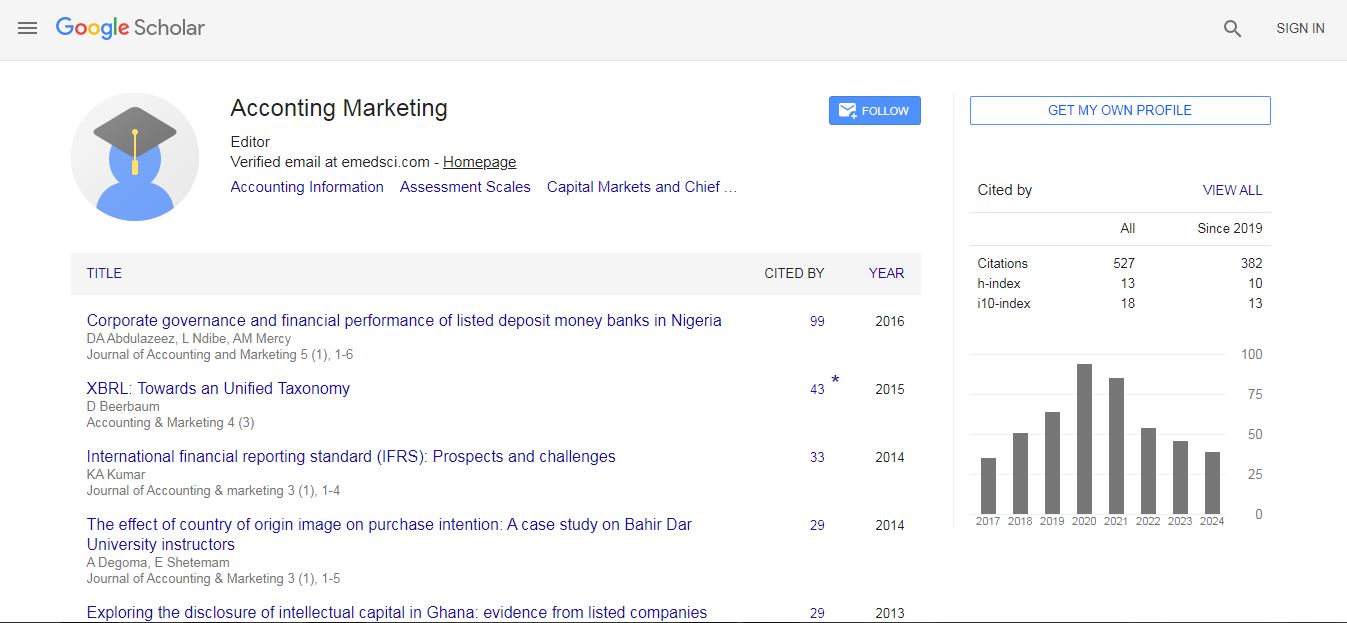
Accounting & Marketing received 487 citations as per Google Scholar report