Perspective - (2025) Volume 10, Issue 2
Received: 02-Jun-2025, Manuscript No. jib-25-175255;
Editor assigned: 04-Jun-2025, Pre QC No. P-175255;
Reviewed: 18-Jun-2025, QC No. Q-175255;
Revised: 23-Jun-2025, Manuscript No. R-175255;
Published:
30-Jun-2025
, DOI: 10.37421/2476-1966.2025.10.277
Citation: Henriksen, Jonas. ”Cytokines: Central Regulators of Health and Disease.” J Immuno Biol 10 (2025):277.
Copyright: © 2025 Henriksen J. This is an open-access article distributed under the terms of the Creative Commons Attribution License, which permits unrestricted use, distribution and reproduction in any medium, provided the original author and source are credited.
Cytokines are integral to the pathogenesis of inflammatory bowel disease (IBD), with contemporary research elucidating their profound involvement in both the initiation and progression of the condition, as well as their potential as targets for therapeutic interventions. A deeper understanding of this intricate cytokine network is opening up new pathways for treatment development, specifically by identifying particular targets to precisely modulate the inflammatory response within the gut [1].
In the rapidly advancing field of cancer immunotherapy, cytokines serve as crucial mediators, profoundly shaping the immune system's response against various tumors. Significant advancements in this area involve strategically employing different cytokines to bolster anti-tumor immunity. However, persistent challenges include optimizing their delivery methods and effectively managing systemic toxicities, which are crucial for achieving broader and more successful clinical applications [2].
Moving to autoimmune diseases, cytokines are recognized as primary orchestrators of the inflammation and immune dysregulation characteristic of these conditions. The strategic targeting of specific cytokine pathways, such as those involving Tumor Necrosis Factor-alpha (TNF-alpha) or various interleukins, constitutes a significant and continually evolving therapeutic approach. This evolution is driven by ongoing new drug developments and an ever-deepening comprehension of the underlying disease mechanisms [3].
The neurovascular unit, a vital and dynamic interface within the brain, is notably influenced by the actions of cytokines. Their precise regulatory role within this unit is fundamental for maintaining overall brain health. Conversely, any dysregulation in cytokine activity can critically contribute to the onset and progression of numerous neurological diseases. Thorough investigation into these complex cytokine-mediated interactions holds immense promise, unlocking potential avenues for novel therapeutic interventions [4].
When considering infectious diseases, cytokines demonstrate a fascinating and complex dual role: they are absolutely essential for robust host defense mechanisms, yet paradoxically, they can also significantly contribute to severe pathology. The critical challenge lies in achieving a delicate balance when modulating cytokine responses, which is paramount for effective treatment. The goal is to successfully clear the infection while simultaneously preventing excessive and damaging inflammatory responses [5].
For chronic inflammatory diseases, where persistent and uncontrolled immune activation leads to substantial tissue damage, targeting cytokines emerges as a highly promising therapeutic strategy. Contemporary research is predominantly focused on two key approaches: either inhibiting pro-inflammatory cytokines that exacerbate disease or enhancing the activity of anti-inflammatory cytokines to help restore immune homeostasis and, in turn, mitigate disease progression [6].
The phenomenon famously termed the 'cytokine storm' became a defining and devastating characteristic of severe COVID-19 cases, vividly highlighting the critical and often detrimental role cytokines play in viral pathogenesis. Gaining a comprehensive understanding of precisely how these potent mediators drive widespread inflammation and multi-organ damage has been instrumental in guiding therapeutic strategies, which aim to temper these dangerously overactive immune responses [7].
Interleukin-2 family cytokines hold a pivotal position in modern immunotherapy, particularly owing to their remarkable capacity to stimulate the proliferation and activity of T cells, which are critical components of the immune response. Recent breakthroughs in engineering these specific cytokines are focused on improving their therapeutic index, meaning boosting their anti-tumor effects while simultaneously minimizing undesirable systemic side effects, thereby offering renewed hope for countless cancer patients [8].
In the context of metabolic diseases, cytokines present themselves as a true double-edged sword. While certain cytokines are beneficial, actively promoting healthy metabolic function and enhancing insulin sensitivity, others are detrimental, contributing to chronic inflammation and metabolic dysfunction, as observed in conditions like obesity and Type 2 Diabetes. Therefore, carefully balancing their complex influence is absolutely crucial for the successful development of future therapeutic strategies [9].
Finally, 'inflammaging,' the chronic, low-grade inflammatory state commonly associated with the aging process, is profoundly influenced by cytokines. These molecular messengers play a significant role in the gradual decline of tissue function and contribute directly to an increased susceptibility to a wide array of age-related diseases. Consequently, intelligently modulating cytokine activity could very well be the key to unlocking new methods for promoting healthy aging and extending lifespan [10].
Cytokines are critical signaling molecules that orchestrate a vast array of physiological and pathological processes, acting as essential mediators in immune responses and inflammation throughout the body. Their complex interplay determines outcomes in diverse health conditions, from regulating fundamental brain functions within the neurovascular unit to influencing the systemic inflammation seen in aging [4, 10]. Understanding these versatile molecular messengers is paramount for developing targeted therapies across numerous diseases.
In the realm of inflammatory and autoimmune disorders, cytokines emerge as central figures. For example, in inflammatory bowel disease, cytokines play a crucial role in both the disease's development and in shaping potential therapeutic avenues by modulating gut inflammation [1]. Similarly, autoimmune conditions are characterized by inflammation and immune dysregulation largely driven by cytokines. Here, targeting specific cytokine pathways, such as those involving Tumor Necrosis Factor-alpha (TNF-alpha) or various interleukins, represents a significant and evolving therapeutic strategy, continually advanced by new drug developments and a deeper understanding of disease mechanisms [3]. This approach extends to chronic inflammatory diseases in general, where persistent immune activation causes substantial tissue damage. Efforts are underway to inhibit pro-inflammatory cytokines or enhance anti-inflammatory ones to restore immune balance and halt disease progression [6].
The impact of cytokines is equally profound in cancer and infectious diseases. In cancer immunotherapy, cytokines are powerful mediators that shape the immune response against tumors, with ongoing advances leveraging them to enhance anti-tumor immunity. Despite progress, challenges remain in optimizing delivery and managing systemic toxicities [2]. A striking example of cytokine dysregulation occurred during the COVID-19 pandemic, where the 'cytokine storm' in severe cases highlighted their critical, often detrimental, role in viral pathogenesis. Comprehending how these mediators drive inflammation and organ damage has guided therapeutic efforts to temper overactive immune responses [7]. Moreover, cytokines exhibit a dual role in infectious diseases overall: vital for host defense but also capable of contributing to pathology. Effective treatment necessitates a careful balance to clear infection without causing excessive inflammatory harm [5]. The Interleukin-2 family cytokines, in particular, are central to immunotherapy for their ability to stimulate T cell proliferation, with engineering efforts focused on improving their therapeutic index for cancer patients [8].
Beyond inflammation and immunity, cytokines exert significant influence on metabolic and neurological health. In metabolic diseases, their role is often a 'double-edged sword'; some promote healthy metabolic function and insulin sensitivity, while others contribute to chronic inflammation and dysfunction, as seen in obesity and Type 2 Diabetes. Balancing this influence is key to therapeutic development [9]. Simultaneously, the neurovascular unit, a critical brain interface, is profoundly affected by cytokines, which are essential for maintaining brain health. Dysregulation in this area can directly contribute to various neurological diseases, making investigations into these interactions crucial for novel interventions [4].
Lastly, the phenomenon of 'inflammaging,' a chronic low-grade inflammation associated with aging, is heavily driven by cytokine activity. These molecules contribute to the decline of tissue function and increase susceptibility to age-related diseases. Modulating cytokine activity, therefore, presents a vital strategy for promoting healthy aging [10]. Across all these contexts, from disease pathogenesis to therapeutic innovation, cytokines remain a central focus of biomedical research, promising to unlock new strategies for treating a wide spectrum of human ailments.
Cytokines are fundamental signaling molecules with diverse and critical roles across numerous physiological and pathological processes, making them central to immunity, inflammation, and disease. They are crucial players in inflammatory bowel disease, influencing both its development and therapeutic strategies by modulating gut inflammation. In cancer immunotherapy, cytokines mediate anti-tumor immune responses, with ongoing research focusing on optimizing their delivery and managing toxicities to enhance clinical success. Furthermore, cytokines orchestrate inflammation and immune dysregulation in autoimmune diseases, where targeting specific pathways like Tumor Necrosis Factor-alpha (TNF-alpha) or interleukins is a significant and evolving therapeutic approach. Their dual nature is evident in infectious diseases, where they are essential for host defense but can also contribute to pathology, necessitating a balanced modulation for effective treatment. Cytokines also impact neurological health by regulating the neurovascular unit, and their dysregulation can lead to various neurological conditions. In chronic inflammatory diseases, targeting cytokines by either inhibiting pro-inflammatory types or enhancing anti-inflammatory ones is a promising strategy to restore immune homeostasis. The concept of a "cytokine storm" in severe COVID-19 underscored their detrimental role in viral pathogenesis, guiding efforts to temper overactive immune responses. The Interleukin-2 family cytokines are particularly important in immunotherapy for stimulating T cell activity, with engineering advances aiming to improve their therapeutic profile. Moreover, cytokines have a "double-edged sword" effect in metabolic diseases, some promoting health while others contribute to chronic inflammation and dysfunction. Finally, cytokines are key drivers of "inflammaging," the chronic low-grade inflammation associated with aging, contributing to tissue decline and age-related diseases, suggesting that modulating their activity could promote healthier aging.
None
None
Yu W, Min Y, Yan Y. "The emerging roles of cytokines in inflammatory bowel disease".Front Immunol 14 (2023):1162235.
Indexed at, Google Scholar, Crossref
Lei C, Wei Z, Guang L. "Cytokines in Cancer Immunotherapy: Progress and Challenges".Cancers (Basel) 16 (2024):989.
Indexed at, Google Scholar, Crossref
Yong W, Hui Z, Yu L. "Targeting Cytokines in Autoimmune Diseases: Current Landscape and Future Perspectives".Int J Mol Sci 23 (2022):15174.
Indexed at, Google Scholar, Crossref
Hong J, Tao T, Shuhong L. "Cytokine regulation of neurovascular unit function in neurological diseases".Mol Neurodegener 16 (2021):16.
Indexed at, Google Scholar, Crossref
Varun S, Abhishek KS, Saroj M. "The Dual Role of Cytokines in Infectious Diseases: Pathogenesis and Therapeutic Targets".Mediators Inflamm 2020 (2020):6676757.
Indexed at, Google Scholar, Crossref
Yong Z, Wenting L, Hongbing Z. "Cytokines as therapeutic targets for chronic inflammatory diseases".Signal Transduct Target Ther 8 (2023):97.
Indexed at, Google Scholar, Crossref
Mandeep RM, Sunit SD, Sudarshan K. "The Role of Cytokines in COVID-19 Pathogenesis and Treatment".J Clin Immunol 42 (2022):227-243.
Indexed at, Google Scholar, Crossref
Huashan Y, Changrong M, Tingting Z. "Interleukin-2 family cytokines in immunotherapy: Advances and opportunities".Cell Mol Immunol 21 (2024):328-349.
Indexed at, Google Scholar, Crossref
Xiaoyan H, Yan Z, Huanan Y. "Cytokines in metabolic diseases: A double-edged sword".Cells 12 (2023):890.
Indexed at, Google Scholar, Crossref
Marcello P, Milena N, Stefano S. "Inflammaging and the Role of Cytokines in Aging-Related Diseases".Cells 10 (2021):1913.
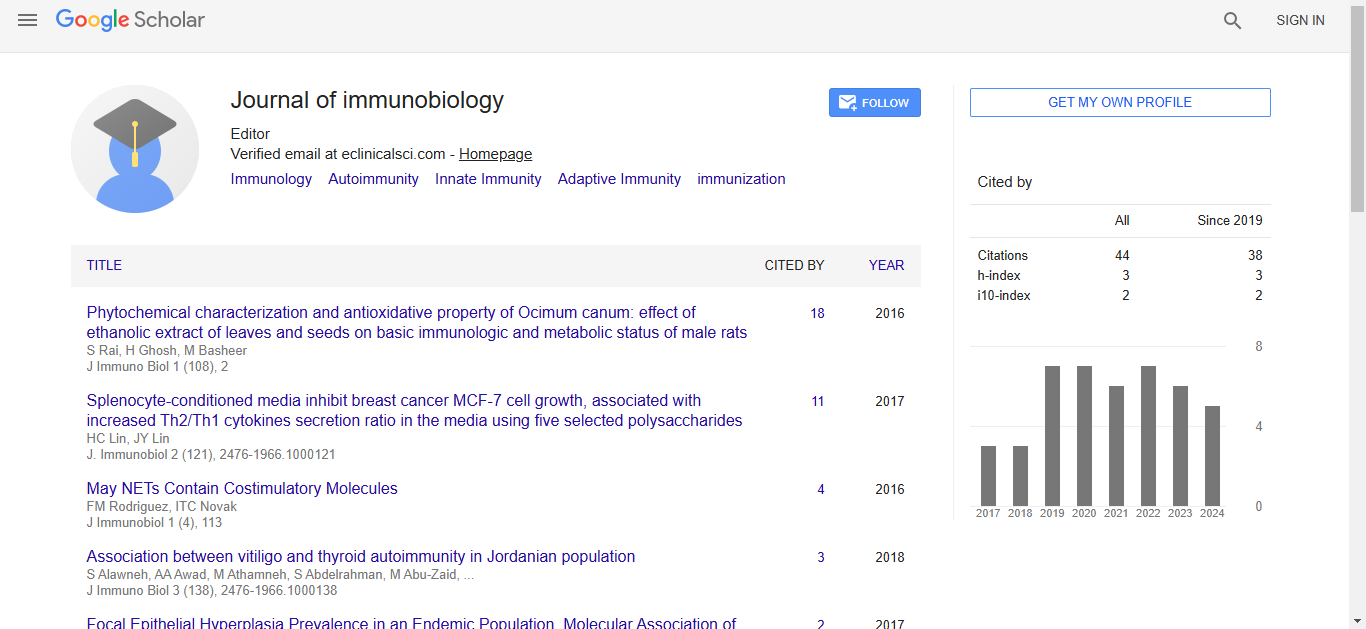
Journal of Immunobiology received 34 citations as per Google Scholar report