Short Communication - (2025) Volume 11, Issue 4
Received: 01-Jul-2025, Manuscript No. jfim-26-178575;
Editor assigned: 03-Jul-2025, Pre QC No. P-178575;
Reviewed: 17-Jul-2025, QC No. Q-178575;
Revised: 22-Jul-2025, Manuscript No. R-178575;
Published:
29-Jul-2025
, DOI: 10.37421/2572-4134.2025.11.361
Citation: Moyo, Beatrice K.. ”Controlling Microbes for Cold Chain Food Safety.” J Food Ind Microbiol 11 (2025):361.
Copyright: © 2025 Moyo K. Beatrice This is an open-access article distributed under the terms of the Creative Commons Attribution License, which permits unrestricted use, distribution and reproduction in any medium, provided the original author and source are credited.
Maintaining microbial integrity within cold chains is paramount for ensuring food safety and quality across a diverse range of perishable products. This fundamental aspect of the food supply chain is continuously challenged by various environmental and operational factors, necessitating robust control strategies and vigilant monitoring systems to prevent spoilage and mitigate the risk of foodborne illnesses [1].
The advent of innovative preservation techniques has significantly advanced the ability to control microbial growth in chilled foods. One such promising avenue involves the application of bacteriocin-based approaches, particularly through their integration into active packaging films. This strategy has demonstrated notable success in reducing spoilage bacteria and pathogenic microorganisms, even under less than ideal storage conditions, offering a sustainable alternative to conventional chemical preservatives and enhancing shelf-life [2].
Within the complex ecosystem of food processing and distribution, the formation of biofilms on contact surfaces presents a persistent threat to microbial safety. These resilient communities can harbor foodborne pathogens within cold chain infrastructure, including processing plants and transport vehicles, posing an ongoing risk to food integrity. Effective mitigation strategies often involve enhancing cleaning and disinfection protocols and exploring the use of antimicrobial coatings on surfaces to inhibit biofilm development [3].
For fresh produce, a delicate category of food products, managing microbial contamination during cold storage is crucial for extending post-harvest life and maintaining consumer appeal. The use of natural antimicrobials, such as essential oils, has emerged as a consumer-friendly approach. Specific formulations of essential oils have shown significant efficacy in inhibiting spoilage fungi and bacteria without negatively impacting the sensory attributes of fruits, presenting a valuable tool for the fruit supply chain [4].
Hurdle technology, a strategy that combines multiple mild preservation interventions, offers a synergistic approach to enhancing microbial safety and shelf-life, especially for complex food products like ready-to-eat meals. By integrating elements such as mild heat treatment, modified atmosphere packaging, and organic acids, this method can effectively inhibit the growth of psychrotrophic pathogens and spoilage organisms, creating a robust safety net within the cold chain [5].
Dairy products, due to their inherent susceptibility to microbial spoilage, face significant challenges from temperature fluctuations during cold chain distribution. Even brief excursions outside the recommended temperature range can lead to substantial microbial proliferation, compromising both product quality and safety. Addressing these risks requires improvements in insulation, real-time monitoring, and targeted antimicrobial treatments at critical control points [6].
In parallel with preservation techniques, the development of smart packaging technologies plays an increasingly vital role in microbial control and quality monitoring within the cold chain. These technologies, which can include sensors to detect spoilage indicators or track temperature history, provide real-time feedback on product condition. Such advancements are indispensable for ensuring the integrity of chilled foods and preventing the distribution of compromised products [7].
Electrolyzed water has gained attention as a non-thermal processing method for decontaminating produce destined for cold chain distribution. Its ability to effectively reduce microbial loads on fruits and vegetables without the use of chemicals makes it a compatible sanitization solution for cold storage requirements, contributing to prolonged shelf life and enhanced food safety [8].
The microbial ecology of cold-stored fish products is significantly influenced by the packaging atmosphere. Modified atmosphere packaging (MAP), particularly when containing elevated levels of carbon dioxide, has proven effective in inhibiting the growth of key spoilage bacteria and extending the shelf life of chilled fish. Optimizing MAP compositions for specific fish species is crucial for ensuring both microbial safety and product quality [9].
Post-harvest treatments represent a critical step in reducing microbial loads on fresh produce before it enters the cold chain. The efficacy of sanitizing washes and edible coatings in significantly lowering initial contamination and inhibiting pathogen growth during chilled storage has been well-documented, contributing to enhanced food safety and reduced food waste [10].
Maintaining microbial integrity within cold chains is a critical cornerstone of food safety and quality assurance for perishable goods. The impact of temperature fluctuations on microbial growth and the effectiveness of various control strategies, including hurdle technology, modified atmosphere packaging, and active packaging systems, are continuously being explored to enhance product safety and extend shelf life. The importance of validated cold chain monitoring and rapid detection methods cannot be overstated in preventing spoilage and foodborne illnesses, emphasizing the need for proactive rather than reactive approaches [1].
A novel bacteriocin-based approach for microbial control in chilled meat products has shown significant promise. By integrating bacteriocins into active packaging films, researchers have demonstrated substantial reductions in spoilage bacteria and Listeria monocytogenes, even when products are stored under suboptimal conditions. This advancement suggests that bacteriocins can serve as a sustainable and effective alternative to traditional chemical preservatives, thereby enhancing both the shelf-life and safety of cold-chain distributed foods [2].
The persistence of foodborne pathogens within cold chain infrastructure is a significant concern, particularly due to the role of biofilms. Surfaces in processing plants and transport vehicles can harbor resilient microbial communities, presenting a continuous risk. Addressing this challenge requires enhanced cleaning and disinfection protocols, alongside the development and application of antimicrobial coatings on surfaces to mitigate biofilm formation and its serious implications for food safety [3].
In the realm of fresh produce, the application of essential oils as natural antimicrobials offers a promising strategy for controlling microbial contamination during cold storage. Studies have indicated that treatments with specific essential oil formulations can effectively inhibit the growth of spoilage fungi and bacteria, leading to an extension of the post-harvest life of fruits without compromising their sensory qualities. This represents a consumer-friendly approach to microbial management in the fruit supply chain [4].
Hurdle technology, which involves the combination of multiple mild preservation interventions, is being evaluated for its efficacy in enhancing the microbial safety of ready-to-eat meals during cold storage. The synergistic effect of combining mild heat treatment, modified atmosphere packaging, and organic acids has been shown to effectively inhibit the growth of psychrotrophic pathogens and spoilage organisms, providing a robust safety net for complex food products within the cold chain [5].
Dairy products are particularly vulnerable to microbial risks associated with temperature abuse in the cold chain. Even brief temperature excursions can lead to significant microbial proliferation, negatively impacting product quality and safety. Mitigation strategies include improving the insulation of transport systems, implementing real-time temperature monitoring, and applying antimicrobial treatments at critical control points throughout the distribution process [6].
Smart packaging technologies are emerging as critical tools for microbial control and enhanced food safety monitoring within the cold chain. These advanced packaging systems often incorporate sensors that can detect microbial spoilage indicators or monitor temperature history, providing real-time feedback on product condition. Such advancements are crucial for ensuring the integrity of chilled foods and preventing the distribution of compromised products to consumers [7].
The effectiveness of electrolyzed water as a non-thermal processing method for the microbial decontamination of produce intended for cold chain distribution is a subject of ongoing research. Studies indicate that electrolyzed oxidizing water can significantly reduce the microbial load on fruits and vegetables, offering a chemical-free sanitization solution that is compatible with cold storage requirements and contributes to prolonged shelf life [8].
The influence of modified atmosphere packaging (MAP) on the microbial ecology of cold-stored fish products is a critical consideration for extending shelf life and ensuring safety. MAP formulations containing elevated levels of carbon dioxide have demonstrated a significant inhibitory effect on the growth of spoilage bacteria, including Pseudomonas species, thereby extending the shelf life of chilled fish. This highlights the importance of optimizing MAP compositions for different fish species [9].
Post-harvest treatments play a crucial role in reducing microbial loads on fresh produce before it enters the cold chain. Investigating the efficacy of sanitizing washes and edible coatings has shown that these interventions can significantly lower initial microbial contamination and inhibit the growth of pathogens during chilled storage, ultimately enhancing food safety and reducing overall food waste [10].
Maintaining microbial integrity in cold chains is crucial for food safety and quality. Research explores various control strategies, including active packaging with bacteriocins, natural antimicrobials like essential oils, and hurdle technology. Biofilms pose a persistent threat, requiring enhanced cleaning protocols. Temperature fluctuations in dairy and fish products necessitate improved monitoring and treatments. Smart packaging offers real-time feedback, while electrolyzed water and post-harvest treatments are investigated for produce decontamination. Optimized modified atmosphere packaging is key for fish safety.
None
None
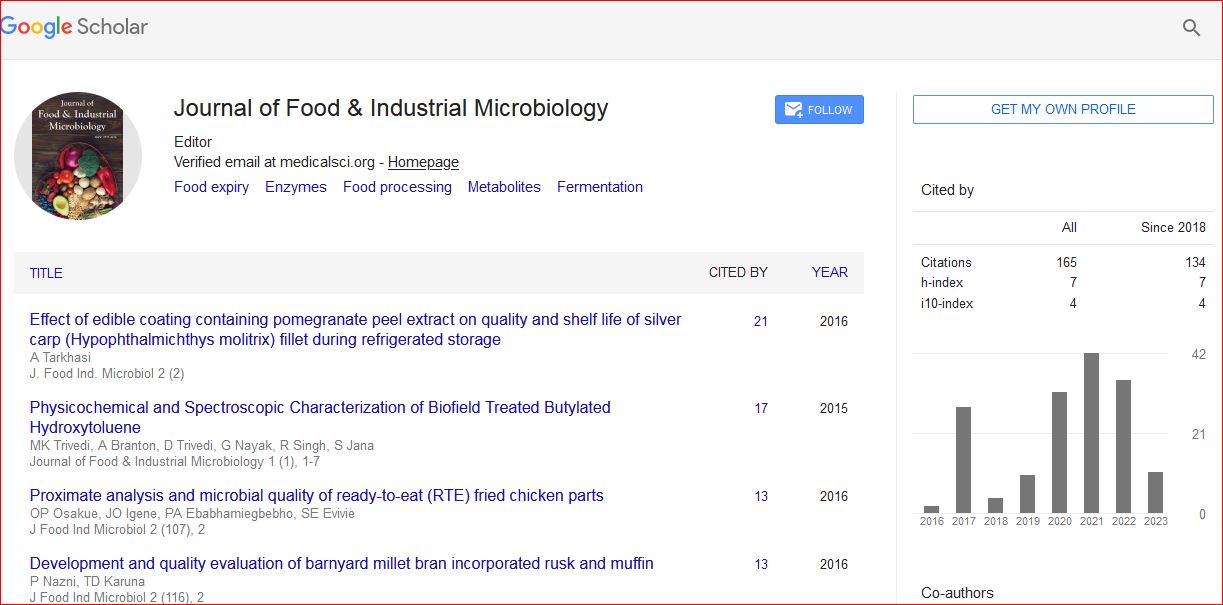
Journal of Food & Industrial Microbiology received 160 citations as per Google Scholar report