Research Article - (2026) Volume 15, Issue 1
Received: 27-Dec-2025, Manuscript No. jamk-25-178126;
Editor assigned: 03-Jan-2026, Pre QC No. P-178126;
Reviewed: 19-Jan-2026, QC No. Q-178126;
Revised: 27-Jan-2026, Manuscript No. R-178126;
Published:
06-Feb-2026
, DOI: 10.5281/zenodo.18606016
Citation: Grebelsky-Lichtman, Tsfira and Gal Grinstein. “Advertising under Fire: Verbal vs. Nonverbal Discrepancies as a Strategic Marketing Tool during Wartime.” J Account Mark 15 (2026): 600.
Copyright: © 2026 Grebelsky-Lichtman T, et al. This is an open-access article distributed under the terms of the Creative Commons Attribution License, which permits unrestricted use, distribution and reproduction in any medium, provided the original author and source are credited.
Marketing • Verbal communication • Nonverbal communication • War • Advertisement
A central dilemma of advertising during wartime is how to successfully market products and advertise despite the difficult emotions being experienced by potential consumers. During war, intense feelings of anxiety, uncertainty and grief heighten the dilemma of reconciling the need to convey a positive marketing message with the negative and painful emotions of the target audience. This inherent dilemma raised our research question: What is the marketing strategy during wartime that bridges the gap between the warlike negative atmosphere and the positive commercial marketing sphere?
Grounded in marketing theoretical perspective, this study aims to explore the connections between marketing and wartime as conflictual relationships that act in a complex, competitive environment. The current study analyzes the marketing strategies that advertisers of governmental agencies and commercial companies employ to continue advertising during times of intense warfare. This research contributes by developing a theoretical and methodological model that investigates verbal and nonverbal discrepancies as a marketing strategy during wartime that bridges the gap between the persuasive marketing message and the societal wartime mindset.
Furthermore, the proposed model accounts for the mediation factors that explain this phenomenon and analyzes the marketing usage curve of discrepancy in advertisements over time, through different stages of intensity during war. The proposed model develops a theoretical context approach that argues that verbal vs. nonverbal discrepancy, which contains dual messages, carries persuasive value during war because it reflects the inherent contradiction of simultaneously acknowledge the negative and challenging societal context of wartime mood, while also achieving the primary communicational goal of conveying a light and positive marketing message.
Marketing strategy of advertising and society
Grounded in marketing theoretical framework, social issues and societal change have marketing dimensions that are essential to an effective persuasive process [1]. Thus, marketing strategy of advertising seeks to promote products by engaging consumers through various social and cultural frameworks, which often bear little direct connection to the actual product or service being marketed [2]. Over the years, researchers have pointed to the important role of society and culture in marketing and advertising and the need to investigate it both theoretically and practically [1].
The field of marketing and advertising is deeply rooted in society. Advertising is defined as an activity aimed at informing and influencing people’s attitudes and behaviors on behalf of brands and companies [1]. Consumers want to know what brands offer, while advertisers have to express why their brands should be valued positively. Successful communication between the two is based on an understanding of shared social and cultural meanings [1]. Therefore, advertisements are considered an integral part of a society’s culture and reflect it as well [3]. A meta-analysis of 25 years of research found that culturally adapted advertisements are more persuasive and liked than advertisements with values that do not align with the cultural context [4].
Advertising aims to promote products by engaging consumers through various cultural frameworks [2]. Thus, researchers have defined advertisements as a culture of their own, a cultural system that creates meaning while conveying values and ideals that serve a dominant cultural system [3]. From this, it has been argued that advertisements are one of the key agents of socialization in modern society, as they reflect and present issues and values at the forefront of public attention. These cultural values are crucial means of distinguishing between cultural groups and targeting consumers as members of cultural communities [4]. In fact, advertisements are a cultural product of their own and they sell more than just products and services [5].
Advertisements often contain cultural values that are specifically aligned with the relevant target audience [4]. Advertising is often presented as a depiction of various aspects of the culture and society in which it is produced and is described as a dialogue that constitutes a component of social reality [3]. Advertisements serve as a conduit that transfers meanings from the abstract cultural world into products and services [5]. This leads to the conclusion that, by examining various cultural products, including advertisements, it is possible to describe a society at a given time, identify its prevailing worldviews and understand its defining characteristics.
The advertising industry is rich in resources, knowledge and capital. Advertisers employ diverse and sophisticated marketing techniques to persuade their audiences – potential customers – to utilize the goods or services offered [5]. Advertising operates as a form of social communication, but also as a complex system of interdependent relationships [2]. These relationships include social, personal and financial interactions between suppliers, clients, advertising professionals and consumers, all of which serve as social communications and are integral to the industry’s functionality [2]. Advertising is a genre that skillfully expresses the aspirations of the common person [6]. In other words, advertisers identify individuals’ beliefs, aspirations and goals within society and leverage them to increase sales. Advertisements focus on the desires of the target audience in a specific social context and aim to fulfill these desires, encouraging the purchase of the product or service being offered [7]. While advertisements present a reality, this reality is often enhanced – an idealized and desirable version of reality designed to capture the audience’s attention [8].
Marketing strategy of advertising during a crisis
A crisis disrupts and sometimes even halts, the planned trajectory of an existing process, thereby preventing a foreseeable outcome [9]. The crisis creates a variety of potential future outcomes, both good and bad, which requires unexpected cognitive effort as consumers are forced to plan their future in the new challenging context [9]. Thus, marketing strategies of advertising during crisis intentionally depict what is acceptable in society and filter out what might evoke resistance, aiming to present a conciliatory worldview to reach as wide an audience as possible [5].
Advertisements are created and aired during different ideological periods, both in times of peace and in moments of tension and conflict and interact with these situations [5]. When a crisis occurs, consumers experience feelings of loss, uncertainty and ambivalence, which can lead to emotional difficulty due to the understanding that a better future could have existed but will not materialize [9]. The primary goal of advertising during a crisis is to restore consumers’ hope and create consensus regarding a possible future in which goals are emotional, rational, existential and harmonious [9].
One marketing strategy of advertising that aims to overcome the emotions that arise in consumers during a crisis involves three stages [9]. First, advertisers should acknowledge the pain and loss caused by the crisis. Second, they need to help consumers envision a new future and offer them rational courses of action. Finally, they are required to create narratives that connect the product to the new values that have emerged as a result of the crisis [9].
Thus, advertising, society and modern economies are closely intertwined and complement one another [10]. Advertising is closely connected to the financial ups and downs of some of the largest producers in society [10]. Recent research has found that, during a crisis, even companies that were affected by it continue to advertise [11]. Companies that cut advertising budgets during social crises do not recover even when the crisis is over and the economy returns to normal [12-14]. Therefore, in addition to desperate attempts to boost sales, advertisers feel the need to say something during a crisis to reassure their customers that they are still present and that their brands should not be forgotten while addressing the crisis, the difficult social mood and the social hardships of consumers in their advertisements [11]. Advertisements during a crisis should refer to the negative and challenging atmosphere because failure to do so could evoke antagonism and feelings of detachment. As a result, advertisements during a crisis often begin with melancholy music, including reassuring messages to viewers such as “Together, we can get through this,” and the music at the end of the ad is typically more optimistic [11].
Furthermore, advertisements during a crisis often feel a need to signal virtue [11]. Virtue signaling is an explicit expression of a moral stance aimed at improving one’s standing among peers. Especially in difficult times, organizations feel the need to demonstrate that they care about the issues facing society, such as environmental sustainability, human rights, political matters and even global pandemics. In marketing, this is known as brand virtue signaling [15].
Virtue signaling offers several benefits for companies or brands, the most notable being that it supports the deliberative function of public moral discourse [16]. In fact, virtue signaling allows a company or brand to align itself with a cause that is likely to be important to a significant number of people. In doing so, a commercial entity, particularly during a crisis, can communicate that it cares and has a purpose beyond merely selling products or services for profit [11].
Linguistic and stylistic marketing strategies in wartime advertising
Marketing is likely to be based upon rhetoric, message packaging and the exploitation of perception and emotion [9]. Therefore, there is a tendency and a need to approach communications from a marketing perspective, which effectively sells the idea of the pragmatic need as well as a projected good outcome (idealism) for the target public in an effort to win their support [17]. An analysis of linguistic and stylistic strategies in marketing strategies and advertisements during wartime reveals several issues that blend linguistic, cultural and social elements [5]. The interaction between linguistic phenomena and the socio-cultural context in which the text operates is evident. Advertisers often face a range of choices when selecting linguistic expressions and typically prefer expressions that are neutral or have semantic implications. Moreover, during war advertisements highlight communal values and portray society as a solidary community using linguistics feature components indicating patriotic expressions and support for civilians in the conflict areas [5]. The significance of choosing linguistic expressions during a specific period such as wartime is measured by their ability to appeal to the emotions of the target audience, generate shared feelings and foster a sense of collective participation in significant and unusual challenging events.
Over time, certain linguistic elements in any language absorb additional meanings beyond their literal sense [5]. These associative components carry meanings that are related to attitudes, beliefs, emotions and more, with the speaker linking them to words and expressions in addition to their basic literal meaning. One prominent category of these connotations is the emotional added value associated with linguistic elements. These components can add a sense of emotive stimulation to an expression and create an emotional impact that resonates with the audience.
Verbal vs. nonverbal discrepancy as a marketing strategy during wartime
The theoretical framework of this study for analyzing patterns of discrepant communication as marketing strategies of advertising during wartime is based on the Discrepant Verbal–Nonverbal Profile (DVNP) theory [18]. The DVNP theory explains the interrelationship between verbal and nonverbal communication, which together affect communication processes. Discrepant communication is conceptualized as incongruence or contradiction between verbal and nonverbal modes [19,20] . Research on interpersonal communication argues that verbal–nonverbal discrepancy plays a central role in the interactive process [18]. In contexts of interpersonal communication, the discrepancy is often unconscious and may reflect the ‘leakage’ of unintended messages [21]. Leakage discrepancy constitutes a central theme in literature that addresses interactions involving deception [22]. Thus, researchers attach to discrepancy in interpersonal communication inhibitive influence of emotional, cognitive and communicative [21,23].
In the contexts of marketing and advertisements, by contrast, verbal vs. nonverbal discrepancy is deliberate and can potentially have persuasive power [18]. The goal of this research is to explore the use of verbal/nonverbal discrepancy as a marketing persuasive strategy during wartime and to uncover the theoretical mechanism that may contribute to persuasion, attitude change and prompting action particularly.
DVNP theory is grounded in the multimodal communication theoretical approach, which argues that verbal and nonverbal behaviors are integrated into a holistic communication event [24]. The audience receives both verbal and nonverbal messages and the relationship between these communication modes influences how messages are perceived [25]. DVNP presents an advanced approach that emphasizes the importance of examining the interaction between these two communication modes [17]. Most previous research has analyzed verbal and nonverbal communication separately. Herein lies the unique contribution of the current study.
Moreover, previous studies have mainly emphasized the negative effect of verbal vs. nonverbal discrepancy [21]. DVNP theory shows that communication discrepancies can have adaptive meanings [18]. The current study contributes a theoretical model that explains discrepancy as an adaptive communication pattern for persuasion and as a marketing strategy during wartime.
Theoretical model of patterns of discrepancy as a marketing strategy during wartime
This study develops a theoretical and analytical model (Figure 1) that explains patterns of discrepancy in advertisements during wartime as a context that intensifies the communicative adaptation of verbal vs. nonverbal communication. During the war, verbal vs. nonverbal discrepancy between positive marketing messages and the somber reality of war enables advertisers to bridge the emotional gap between consumers and the commercial message. This explains why verbal and nonverbal discrepancy may enhance persuasion, cooperation and adaptive communication in complex contexts of wartime (Figure 1).
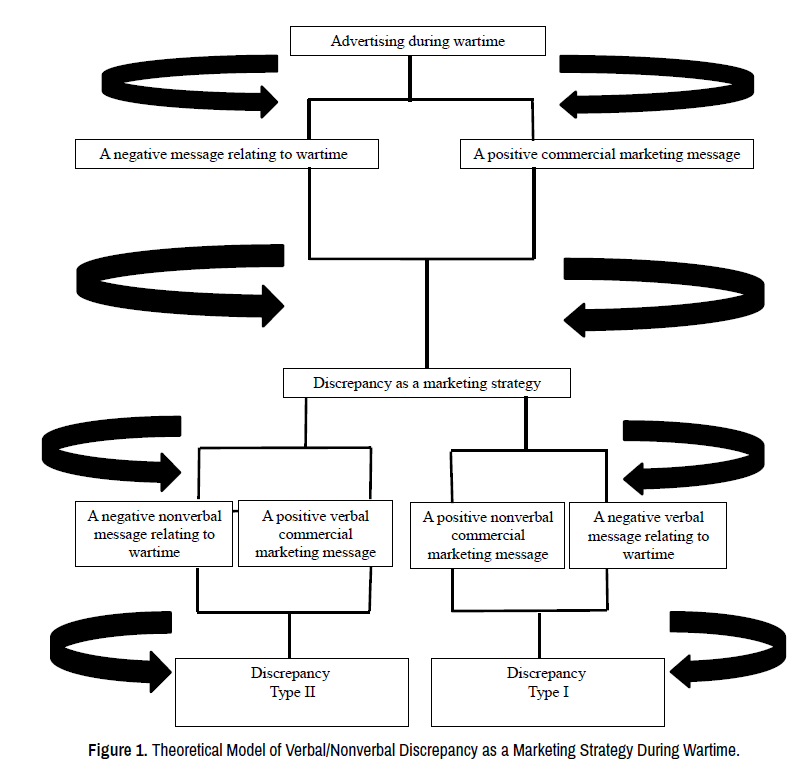
Figure 1. Theoretical Model of Verbal/Nonverbal Discrepancy as a Marketing Strategy During Wartime.
The presented model Figure 1 argues that verbal vs. nonverbal discrepancy serves as an adaptive pattern that helps soften the impact of the difficult and challenging messages that the war creates by pairing them with supportive expressions.
The model also develops two types of discrepancy:
Discrepancy Type I, where positive verbal communication is paired with negative nonverbal expressions (V+N−); and Discrepancy Type II, where negative verbal messages are accompanied by positive nonverbal signals (V−N+).
Research hypotheses
Based on the literature review and the presented theoretical framework, the following hypotheses were advanced:
H1: Verbal vs. nonverbal discrepancy will be a dominant pattern during war as a marketing strategy to bridge the gap between the negative and challenging warlike reality, of stress and sorrow and the positive commercial-marketing message that advertisers wish to convey.
H2: Advertisements during wartime will be characterized more by Discrepancy Type I (V+N−) than by the proportional usage of Discrepancy Type II (V−N+).
H3: There will be a negative correlation between the proportion of discrepancy in advertisements and the progression of the war. As the war continues and its intensity decreases, the use of discrepancy over time will diminish.
H4: There will be differences between the level of discrepancy in advertisements of commercial companies vs. public service announcements during wartime.
Corpus of the study
The corpus of this study contained all advertisements from the leading commercial television channels in Israel: Keshet 12 and Reshet 13. A total of 744 advertisements were analyzed. The rationale for analyzing the television medium was based on the objective of examining both the verbal and nonverbal aspects of the ads and their interrelations. In television, viewers are exposed to both visual and vocal messages, which makes it possible for the analysis to explore nonverbal elements such as body movements, gestures, postures, facial expressions, eye contact, intonation, voice pitch, speech pace and background music. These nonverbal aspects cannot be fully captured in other media formats.
The study analyzed all the advertisements broadcast (n=744) on commercial television channels in Israel during the war, from November 2023 to March 2024 (no advertisements were broadcast during the first month of the war, October 2023). Over time, as the intensity of the war decreased, advertising returned to its near-normal state. Thus, the selected period aimed to assess the research hypotheses from the moment advertisements returned to the screen until they almost resumed regular broadcasting after half a year of wartime.
Study design and coding system
The study design and coding system were based on analyzing both the verbal and nonverbal communication in all advertisements that were broadcasted during the war. The verbal message was analyzed to determine whether it conveyed a positive message, such as offering discounts or attractive new services, or a negative message, such as references to the war and its difficult and challenging consequences. Simultaneously, the nonverbal expressions were examined by analyzing body language parameters, including gestures, facial expressions and postures. Additionally, vocal qualities of intonation, tone and volume were coded and nonverbal cues of the background music that accompanied the advertisement were analyzed. The nonverbal analysis was also distinct between positive cues such as smiling, laughter, joyful tone and happy music and negative expressions, such as sad facial expressions, mournful tone and melancholic music.
Intercoder reliability
Intercoder reliability was calculated based on the coding of two undergraduate research assistants, who each received approximately seven hours of training. Ten percent of the corpus was randomly selected and tested based on the agreement of separate coding between the two coders. In establishing inter-coder reliability, disagreements between coders were resolved by clarifying and then reapplying the coding guidelines. Intercoder reliability for the unitizing coding using Krippendorff’s alpha for binary data was tested on the division of the advertisements into utterances =.94.
Additionally, intercoder reliability using Krippendorff’s alpha for binary nominal data was computed as follows: coding verbal communication of positive vs. negative patterns:=.96; coding nonverbal communication of positive vs. negative patterns: =.92.
Data analysis
Data analysis involved exploring the advertisements during the war (n=744) and coding both verbal and nonverbal elements simultaneously to identify patterns of discrepancy. The proportion in each advertisement that featured a discrepancy between verbal and nonverbal communication was recorded. The average percentage of discrepancy in each ad break was then computed, followed by the monthly average for all advertisements. The data were also analyzed based on the type of advertisement; that is, whether they were commercials or public service announcements.
One-way ANOVA tests were computed to expose significant differences. Scheffé post hoc tests were conducted to identify the source of differences in the data regarding discrepancy proportions during wartime. Further analyses were conducted on the types of discrepancy. Types of discrepancy were delineated in order to map verbal and nonverbal discrepant communication strategies. Discrepancy Type I was coded when the verbal message was positive while the nonverbal message was negative (V+N−). Discrepancy Type II was marked when the verbal message was negative and was accompanied by a nonverbal positive and supportive message (V−N+).
Discrepancies in advertisements as a strategic marketing tool during wartime
The findings section corresponds to our research hypotheses. Regarding the first research hypothesis, the analysis of the advertisements during the war (n=744) supported H1. A high degree of discrepancy was observed in the advertisements aired during wartime, particularly in the early phases of the war, which was measured by the number of days since the outbreak of the war. Most of the messages in the advertisements at the beginning of the war were characterized by a high level of verbal vs. nonverbal discrepancy. As can be seen in Table 1, in the first month of the war (November 2023) the average percentage of discrepancy in the advertisements was 71.69%. During the first phase of the war, most of the messages in the advertisements contained discrepancies between verbal vs. nonverbal communication. In December 2023, the discrepancy percentage dropped significantly, to 38.9%. The downward trend continued into January 2024, where the average discrepancy rate was 16.07% and by February 2024, the percentage of discrepancy had fallen to 1.33%. In March 2024, a slight increase was observed, to 2.72% was observed (Table 1).
| Number of Days into the War | N | Average Percentage of Discrepancy | Standard Deviation |
|---|---|---|---|
| 30 | 119 | 70.25 | 39.43 |
| 60 | 169 | 38.37 | 44.18 |
| 90 | 142 | 11 | 31.14 |
| 120 | 86 | 1.76 | 11.41 |
| 150 | 228 | 3.28 | 16.66 |
| Total | 744 | 23.26 | 39.78 |
Table 1. Discrepancy in Advertisements over time during the war (N=744).
Types of discrepancy in advertisements during wartime
Regarding our second research hypothesis, the analysis revealed that the two types of discrepancy of our developed theoretical mode were used in advertisements during wartime. The first pattern involved Type I discrepancy, where the verbal message was positive, while the nonverbal cues conveyed negative expressions. An example of Discrepancy Type I occurred in November 2023 in an advertisement for a bank, where the presenter promoted positive messages of benefits and discounts for the bank’s customers. While the verbal message was positive, the accompanying facial expressions of the actors conveyed sadness, with furrowed brows and a concerned look. Moreover, the background music also added a melancholic tone.
The second discrepant pattern involved Discrepancy Type, where the verbal message was negative, discussing difficult war-related topics, but the nonverbal cues were positive and supportive. For example, in a health services ad, although the verbal message dealt with complex issues like anxiety during wartime, the presenter’s body language and tone of speech were positive, conveying supportive and reassuring, with a smile and relaxed demeanor.
In line with H2, the analysis supported our hypothesis and found that Discrepancy Type I was the dominant and most frequent discrepancy pattern during wartime. Most of the advertisements during the war were characterized by Discrepancy Type I: 92.91%. In contrast, discrepancy type II was used significantly less frequently. Only 7.09% of the advertisements during the war were characterized by Discrepancy Type II.
The relationship between the usage of discrepancy and the progress of the war
The analysis confirmed the third research hypothesis. As H3 predicted, the analysis of the advertisements revealed Figure 2 that there was a dominant usage of discrepancy patterns in the early stages of the war, but as the war progressed and the trauma became more distant, the use of discrepancy in advertisements significantly decreased (Figure 2).
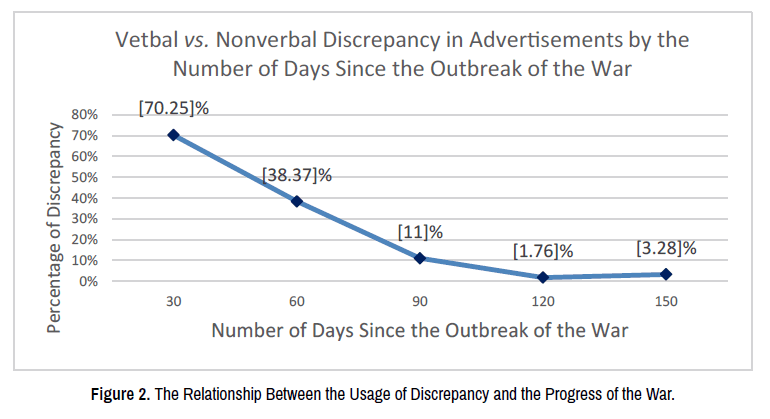
Figure 2. The Relationship Between the Usage of Discrepancy and the Progress of the War.
As Figure 2 shows, the greater the period of time from the start of the war the advertisement was aired, the lower the percentage of discrepancy displayed in the advertisement. The closer the broadcast date of the advertisements was to the traumatic event at the start of the war, the more discrepancy was present in the ads. As time passed, while the intensity of the war reduced, the amount of verbal vs. nonverbal discrepancy in advertisements decreased dramatically.
A one-way ANOVA test found that these differences were significant: F(4,739)=115.99, p<0.01. A difference in the percentage of discrepancy between time points over wartime. As Figure 2 shows, the further away the ads were broadcast from the war’s onset, the less discrepancy was observed between the verbal and nonverbal communication modes. A post hoc Scheffé test found that the primary significance raised from the sharp decrease in the discrepancy between 30 to 60 days from the beginning of the war (p<0.001), as well as a sharp significant decrease in the usage of discrepancy in advertisements between 60 and 90 days from the start of the war (p<0.001).
Discrepancy patterns of commercial ads vs. public service announcements during war
Regarding the fourth hypothesis, the finding confirmed H4 and exposed differences between the level of discrepancy in advertisements of commercial companies vs. public service announcements during wartime. As Table 2 shows, the level of discrepancy in public service announcements was consistently lower than in commercial ads at each of the five measurement points during the war. The most significant differences occurred during the first phase of the war. At this point, 78% of public service announcements were broadcast in the first two months of the war, while only 35.9% of commercial ads aired during that time. Another significant difference was delineated at the point of 90 days after the beginning of the war. At this point, advertisements of commercial companies still used discrepancy as a strategy for advertising during the war, at a rate of 11.08% while public service announcements did not display discrepancy patterns at all (0%) (Table 2).
| Commercial | Public Service | |||||
|---|---|---|---|---|---|---|
| Number of Days into the War | N | Average Percentage of Discrepancy | Standard Deviation | N | Average Percentage of Discrepancy | Standard Deviation |
| 30 | 88 | 70.99 | 38.76 | 31 | 68.17 | 41.87 |
| 60 | 161 | 38.46 | 44.32 | 8 | 36.46 | 44.03 |
| 90 | 141 | 11.08 | 31.24 | 1 | 0 | 0 |
| 120 | 80 | 1.9 | 11.83 | 6 | 0 | 0 |
| 150 | 224 | 3.34 | 16.81 | 4 | 0 | 0 |
| Total | 694 | 21.47 | 38.69 | 50 | 48.1 | 46.33 |
Table 2. Discrepancy patterns in advertisements of commercial vs. public service (N=744).
Furthermore, the analysis explored the relationships between the usage of discrepancy and the progress of the war among commercial companies and public service announcements (Figure 3). A two-way ANOVA test showed that the decrease in the average discrepancy between the time points of wartime was consistent across both commercial and service ads (F(4,734)=34.55, p<0.01). As Figure 3 demonstrates, the tests indicated that, consistent with the findings of the previous tests of this study, the use of discrepancy patterns decreased as the intensity of the war declined, as measured by the number of days since the outbreak of the war (Figure 3).
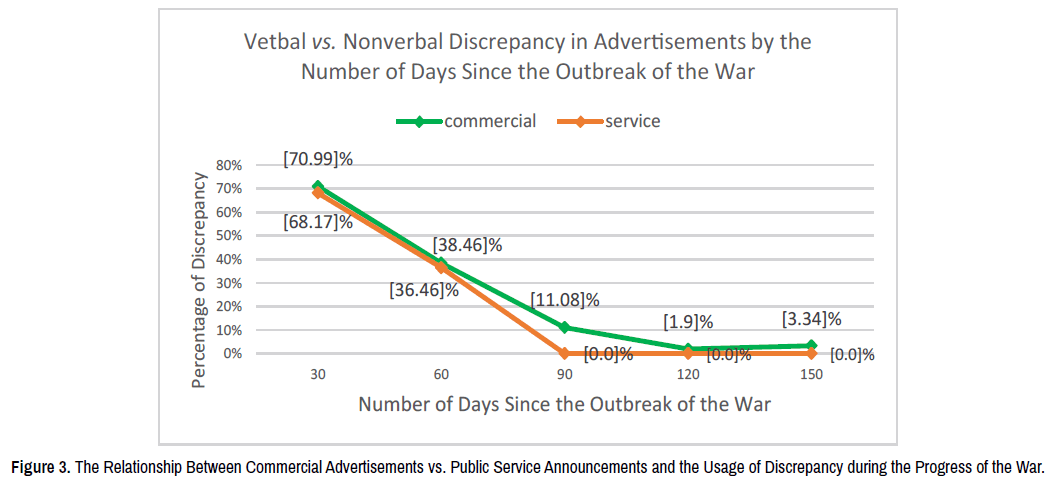
Figure 3. The Relationship Between Commercial Advertisements vs. Public Service Announcements and the Usage of Discrepancy during the Progress of the War.
Two one-way ANOVA tests were conducted separately for each type of advertisement (Figure 3). For commercial advertisements, it was determined that the differences between the time points were significant: F(4,689)=100.29, p<0.01. The findings indicated that there were differences in the average percentage of discrepancy between different time points of progress of the war. The level of discrepancy decreased significantly over time. Post hoc Scheffé tests showed that the most significant drop in discrepancy occurred between the first 30 days and 60 days (p<0.001), as well as the sharp decrease in discrepancy between 60 days and 90 days (p<0.001).
For public service announcements, the differences between the time points during wartime were significant: F(4,45)=6.64, p<0.01. The analysis exposed differences in the average percentage of discrepancy between time points during the progress of the war, with a complete drop in discrepancy after 90 days (Figure 3).
Discrepancy bridges the gap of positive persuasive message and harsh wartime reality
During war, the goal of advertisers is to successfully mediate between the positive commercial marketing message and the difficult reality shaped by war and its accompanying emotions. This study reveals the use of discrepancy between the verbal message and the nonverbal communication as a dominant marketing strategy for achieving this aim. Discrepancy serves as a tool that addresses the contradiction between the need for positive marketing communication and the negative emotional and social wartime reality. These conclusions expand marketing theoretical framework of complex messages appeal of persuasive strategies during crisis.
Theoretical accounts of discrepancy as a marketing strategy during war
This study shows that discrepancy was widely used in advertisements in wartime, especially during the early phases of the war, when the traumatic event was still fresh. Discrepancy acts as a mechanism to deal with the conflict between the need to deliver positive commercial marketing and the challenging social and emotional needs of society during difficult times.
Based on our findings, we developed a theoretical framework that presents a context approach of marketing during crisis; see Figure 4. The presented theoretical framework accounts for the mediating factors that explain the important role of discrepancy as a marketing strategy during wartime. The developed framework presents a set of theoretical accounts that focuses on the context of a war, which plays an essential role of verbal vs. nonverbal discrepancy as a communication strategy for marketing and persuasion. This study contributes by explaining the adaptive meanings of discrepant patterns that involve verbal vs. nonverbal messages as a persuasive communication marketing strategy in the context of wartime.
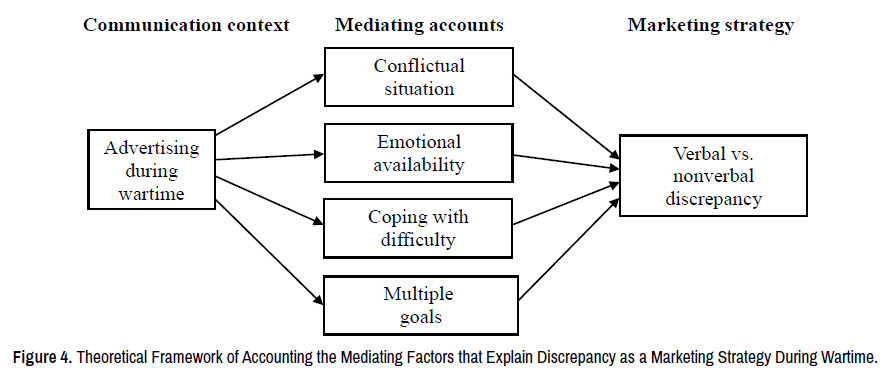
Figure 4. Theoretical Framework of Accounting the Mediating Factors that Explain Discrepancy as a Marketing Strategy During Wartime.
This conceptualization describes the potential outcomes of the communication process, based on context. The presented theoretical framework contributes a wide range of mediational processes derived from the situational context of persuasive communication. As Figure 4 shows, the framework delineates broad theoretical accounts, which explain verbal vs. nonverbal discrepant communication as a marketing strategy during wartime. The proposed framework advanced four propositions that account for discrepancy as a marketing strategy: emotional availability, conflictual situation, multiple goals and coping with difficulty (Figure 4).
Emotional availability accounts for discrepancy as a marketing strategy in wartime
Grounded in emotional availability theory, the present study expands DVNP theory Grebelsky-Lichtman T [18] by explaining that verbal vs. nonverbal discrepancy during war may bridge the gap between the cognitive and the emotive state because it expresses emotional availability to the audience negative feelings. Failure to receive full legitimacy for negative emotions, particularly during wartime, may lead to an antagonizing reaction to the marketing message. The model proffered in the present study explains that the discrepancy between verbal and nonverbal communication assists in bridging the gap between cognitive and emotional states. This pattern signals the potential consumer’s emotional availability so that either the verbal or the nonverbal expressions are aligned with the negative and complicated emotions of the audience. Thus, verbal and nonverbal discrepant communication as a marketing strategy during war may activate a reciprocal process of persuasion. This discrepancy presents expressions that are grounded in the emotions that the recipients feel due to the context of war and thus paves the way for the persuasive process.
Conflictual situation accounts for discrepancy as a marketing strategy in wartime
The presented model contributes an explanation of patterns of discrepancy, which are derived from conflictual situations that have meanings that are difficult to assemble. This account advances the Action Assembly Theory (AAT) [26] by adding an adaptive meaning to assembly difficulties. The discrepancy as a marketing strategy during war is explained in our model by conflicts between the ideal and the actual, between the social situation of a war and marketing roles of the persuasive situation and between paying attention to the recipients of the messages as the target audience and successfully accomplishing the marketing situation.
Multiple goals accounts for discrepancy as a marketing strategy during wartime
The proffered model explains that discrepancy patterns emerge because the context produces messages that aim to accomplish multiple goals. Multiple-goal situations activate assembly difficulties, given that the features of actions associated with one goal may not mesh with features relevant to other objectives [26]. Our framework argues that the end result of the assembly process, the output representation, is for the entire configuration of action features in the sequential advertising communication to follow a reciprocal discrepant pattern. This pattern that contains discrepant messages is important since it may achieve multiple goals of cognitive, emotive and behavioral aspects.
Coping with difficulty accounts for discrepancy as a marketing strategy in wartime
Coping with difficulty is defined as an attempt to deal with a situation that requires intensified cognitive, emotive and behavioral effort. The current model contributes another explanation for discrepancy as a marketing strategy, which may be reflected in problems of coordinating difficulties that the audience faces during a war. When coping with difficulty, people concentrate more on striving and pay less attention to managing communication patterns. The need to cope with difficulty creates a cognitive effort, which is accompanied by emotional and behavioral difficulty. Thus, verbal and nonverbal discrepancy may fit the communication mode of the audience that needs to cope with difficulty and may therefore pave the way to affect the target audience.
Relationship of discrepancy and the progress of a war: assimilation vs. accommodation
This study has revealed a strong relationship between discrepancy level and the progress of the war. Discrepant verbal vs. nonverbal pattern in advertising and the changes in the proportion of the usage of discrepancy during wartime are explained by the ability to combine the process of accommodation with the process of assimilation.
This finding supports the arguments of advertisers and researchers in the fields of advertising and marketing that while brands need to be consistent due to the process of assimilation, this does not mean they should remain the same over time. Rather, they must be dynamic and evolve while maintaining their core identity [27]. This calls for the process of accommodation to the social and situational context. A brand whose content does not align with its environment risks losing its strength and becoming less relevant.
The mental and physical actions involved in understanding and knowing are referred to as a ‘schema,’ which is a category of knowledge that helps us interpret and make sense of the world [27]. Processes and strategies of alignment with the environment essentially refer to changes that occur within the schema and two such strategies can be identified: assimilation and accommodation.
The current study advanced the process of assimilation to a marketing strategy during war, which occurs as new information is absorbed into existing schemas and this is the mechanism by which subjects apply their existing reality schemas while making an effort to appropriate and integrate new elements from their environment. Assimilation is the incorporation of an object or situation into an existing structure without altering it. This process is somewhat subjective, as people tend to alter experiences or information to integrate them with their pre-existing beliefs. In essence, it transforms unfamiliar things into familiar ones [27].
The second process involves the modification of existing schemas in light of new information, a process defined as accommodation [27]. Accommodation involves changing existing schemas or preconceived ideas as a result of new information or experiences. When new information contradicts the familiar, the accommodation mechanism intervenes to alter the structure and allow the integration of new elements. This is a process of modifying an existing schema (due to a failed attempt at assimilation) in order to adapt to the characteristics of the new information. New schemas can also develop during this process [27]. The present study reveals how discrepancy as a marketing strategy during the progress of a war makes it possible to balance processes of accommodation and assimilation to the extreme changes in the environmental situation during wartime.
Types of discrepancy and their adaptive meanings during wartime
This study reveals and identifies two types of discrepancy: Discrepancy Type I, where a positive verbal message is combined with negative nonverbal expression; and Discrepancy Type II, where a negative verbal message is combined with positive nonverbal expression. The finding that Discrepancy Type I is the most common pattern as a marketing strategy in advertisements during a war is a new one and it advances the theory in the field and previous studies that pointed to the proportion of this style of verbal vs. nonverbal incongruity in interpersonal communication.
Moreover, previous studies have attributed negative outcomes to Discrepancy Type I, which was termed as ‘leakage discrepancy,’ because in interpersonal communication it is mainly conveyed unintentionally [21]. Leakage discrepancy is attributed to lying and distrust and constitutes a central theme in literature that addresses deception in interpersonal communication [22]. The research literature attaches to the inhibitive influence of emotional, cognitive and communicative implications to leakage discrepancy.
The present study contributes an adaptive meaning to Discrepancy Type I for political marketing perspectives, in which verbal/nonverbal discrepancy is intentionally and enables to deliver a deeper layer of communication without explicitly saying it. The use of Discrepancy Type I as a marketing strategy in advertisements shows that the advertisers and the company are not emotionally detached from the wartime situation. This intentional use of discrepancy creates a sense that the spokesperson and, by extension, the company are also affected by the difficult circumstances, even as they continue with their positive marketing messages. The emotional connection, conveyed through nonverbal communication, allows the brand to maintain relevance without appearing disconnected from the audience’s reality.
Regarding Discrepancy Type II, the marketing aim is to verbally address complex, challenging and negative issues regarding the war, while maintaining a reassuring tone and supporting gestures and facial expressions. In Discrepancy Type II, by using positive nonverbal communication as a marketing strategy, advertisers manage to support the challenging verbal message, soften the impact of the negative message and foster a sense of calm and security among the audience.
Discrepancy as a marketing strategy during wartime and immediacy communication
This study also expands the premises of immediacy communication theory, which refers to how to signal closeness, willingness to communicate and positive emotions [28]. Our theoretical framework develops the arguments of immediacy communication theory into a multimodal interconnection of verbal and nonverbal modes of communication as a marketing strategy during wartime. Immediacy communication theory defines affiliative behaviors as those associated with warmth, involvement, psychological closeness, availability for communication and a positive influence [29]. Immediacy communication creates a sense of togetherness between a speaker and a listener Burgoon JK, et al. [30] and conveys a sense of interest and attention to another [31]. Immediacy behaviors can be both verbal and nonverbal [32].
The proffered theoretical framework explains the use of immediacy communication as a marketing strategy during wartime. The theoretical argument divides the communication modes into a communication style where the verbal message contradicts the nonverbal behavior in complex patterns of discrepancy that have an important role during wartime. Discrepancy of verbal vs. nonverbal patterns as a marketing strategy in advertisements during war displays immediacy communication in only one mode of communication, while the other mode expresses behavior of non-immediacy communication that refers to the context of a war.
The present study confirms previous research that determined that, in verbal communication, closeness is expressed through language variations that indicate [33,34]. We found that, in advertisements during wartime, the use of plural pronouns such as ‘we’ demonstrates immediacy communication, brings people closer together and emphasizes shared characteristics [35]. Verbal closeness conveys warmth and a willingness to connect with the message recipient [29]. In contrast, non-immediacy verbal behaviors, which were also observed in advertisements during wartime, include the use of formal expressions and isolated pronouns, which tend to make the recipient feel distanced from the sender [32].
The nonverbal communication research, in line with our findings regarding advertisements during wartime, argues that behaviors that express closeness, include smiling, eye contact, body orientation and body lean [29,30,33]. On the other hand, behaviors indicating a lack of closeness include melancholic tone, averting eye contact, frowning while speaking and maintaining a tense body posture [30,34-37].
This research reveal that, during wartime, advertisers utilize the discrepancy between verbal/nonverbal communication as a key marketing strategy to navigate the challenges of promoting products or services in the midst of a difficult emotional and social context. The use of discrepancy as a marketing strategy serves as a bridge between the harsh reality of war and the positive marketing message, allowing advertisers to maintain a delicate balance between empathy for the social situation and the need to continue their marketing efforts.
This study advances avenues for future research on the role of verbal vs. nonverbal discrepancy as a marketing strategy in a wide variety of crisis contexts beyond war, such as natural disasters or pandemics. Additionally, future research on marketing and accounting may adopt the presented framework to examine the long-term effects of discrepancy on audience attitudes and behavior in post-crisis periods, which could provide valuable insights for both advertisers and marketing scholars.
This study’s conclusions are profoundly meaningful and may have practical implications. The proposed model develops novel marketing strategies that may be adopted and help governmental agencies and commercial companies pave their way during times of crisis into marketing and accounting success.
None.
None.
Google Scholar, Cross Ref, Indexed at
Google Scholar, Cross Ref, Indexed at
Google Scholar, Cross Ref, Indexed at
Google Scholar, Cross Ref, Indexed at
Google Scholar, Cross Ref, Indexed at
Google Scholar, Cross Ref, Indexed at
Google Scholar, Cross Ref, Indexed at
Google Scholar, Cross Ref, Indexed at
Google Scholar, Cross Ref, Indexed at
Google Scholar, Cross Ref, Indexed at
Google Scholar, Cross Ref, Indexed at
Google Scholar, Cross Ref, Indexed at
Google Scholar, Cross Ref, Indexed at
Google Scholar, Cross Ref, Indexed at
Google Scholar, Cross Ref, Indexed at
Google Scholar, Cross Ref, Indexed at
Google Scholar, Cross Ref, Indexed at
Google Scholar, Cross Ref, Indexed at
Google Scholar, Cross Ref, Indexed at
Google Scholar, Cross Ref, Indexed at
Google Scholar, Cross Ref, Indexed at
Google Scholar, Cross Ref, Indexed at
Google Scholar, Cross Ref, Indexed at
Google Scholar, Cross Ref, Indexed at
Google Scholar, Cross Ref, Indexed at
Google Scholar, Cross Ref, Indexed at
Google Scholar, Cross Ref, Indexed at
Google Scholar, Cross Ref, Indexed at
Accounting & Marketing received 487 citations as per Google Scholar report