Short Communication - (2025) Volume 14, Issue 4
Received: 02-Jul-2025, Manuscript No. jamk-25-177304;
Editor assigned: 04-Jul-2025, Pre QC No. P-177304;
Reviewed: 18-Jul-2025, QC No. Q-177304;
Revised: 23-Jul-2025, Manuscript No. R-177304;
Published:
30-Jul-2025
, DOI: 10.37421/2168-9601.2025.14.570
Citation: Rossi, Isabella. ”Accounting’s Digital Transformation: Roles and Skills.” J Account Mark 14 (2025):570.
Copyright: © 2025 Rossi I. This is an open-access article distributed under the terms of the Creative Commons Attribution License, which permits unrestricted use, distribution and reproduction in any medium, provided the original author and source are credited.
A systematic literature review examines the profound impact of artificial intelligence and blockchain on the accounting profession. This transformative shift necessitates a comprehensive understanding of changes in tasks, required skills, and the evolving role of accountants. The study delineates both the opportunities presented by these digital advancements and the inherent challenges that emerge with their integration into established accounting practices [1].
Digital transformation within accounting and finance departments across Europe is thoroughly investigated to identify common adoption patterns. The study reveals significant challenges faced during this modernization process, alongside strategic implications for businesses committed to updating their financial operations. Understanding these dynamics is crucial for successful implementation and competitive advantage [2].
The current state of artificial intelligence in accounting is explored in depth, covering a wide array of AI applications. These range from fundamental automation processes to advanced predictive analytics capabilities. The research also pinpoints critical areas for future investigation to fully ascertain AI's comprehensive potential and its ongoing impact on the profession's trajectory [3].
The profound influence of big data analytics on accounting quality and audit efficiency is systematically reviewed. This analysis highlights the significant advantages offered by data analytics in identifying complex patterns and detecting anomalies within vast datasets. However, it also underscores new challenges pertaining to robust data governance and the requisite skill development for practitioners [4].
Recent applications and implications of artificial intelligence, machine learning, and blockchain within accounting are comprehensively reviewed. The paper elucidates the practical consequences of these technologies, providing critical insights into their deployment across various accounting domains. Specific areas include streamlined transaction processing, enhanced fraud detection mechanisms, and improved financial reporting accuracy [5].
Data analytics has emerged as a fundamental cornerstone of modern auditing practices, fundamentally reshaping the audit process. This systematic literature review meticulously explores its pivotal role, demonstrating how auditors leverage these tools to significantly enhance risk assessment. Furthermore, it details improvements in evidence gathering and the provision of deeper, more insightful analyses [6].
The integral connection between digital transformation and the increasing imperative for robust sustainability reporting is thoroughly examined. Big data analytics is identified as a crucial mediating factor, enabling organizations to efficiently collect, process, and report comprehensive environmental, social, and governance data. This capability significantly enhances transparency and accountability in corporate disclosures [7].
Industry 4.0 technologies, encompassing the Internet of Things and cyber-physical systems, exert a considerable influence on the accounting profession. This systematic review details how these advancements are actively reshaping conventional accounting functions. They demand the acquisition of new competencies and foster a more integrated, holistic approach to diverse business processes [8].
The readiness of accounting education to adequately prepare future professionals for the demands of the digital era is critically assessed. The paper identifies significant gaps within existing curricula and prevailing pedagogical approaches. It strongly advocates for urgent modifications to integrate advanced technology skills, data analytics proficiency, and enhanced critical thinking into accounting programs [9].
The future trajectory of the accounting profession is explored in the context of the pervasive rise of artificial intelligence and big data. The study forecasts substantial shifts in traditional job roles and emphasizes the critical need for continuous professional learning. It further outlines how accountants can strategically adapt to transition from mere record-keepers to indispensable strategic advisors [10].
A detailed examination of existing scholarly work reveals how artificial intelligence and blockchain technologies are profoundly disrupting the established norms of the accounting world. The analysis underscores fundamental transformations in job functions, skill demands, and the redefinition of accountants' professional identity, highlighting both opportunities and obstacles [1]. This research investigates the adoption of digital transformation strategies within accounting and finance departments across Europe. It aims to discern prevalent patterns of technology integration, identify common impediments during implementation, and evaluate strategic implications for enterprises seeking to modernize their financial operations [2]. The article offers an exhaustive survey of artificial intelligence's current applications and influence within the accounting field. It covers various AI tools, from routine process automation to sophisticated predictive modeling, and delineates critical areas for subsequent academic inquiry to fully comprehend AI's potential and its enduring impact [3]. A systematic review meticulously assesses the implications of big data analytics for both accounting quality and the efficiency of audit procedures. Findings indicate substantial benefits in uncovering intricate data patterns and anomalies, but also introduce new complexities related to data governance protocols and necessary expertise development [4]. This paper reviews the practical deployment of artificial intelligence, machine learning, and blockchain technologies in contemporary accounting environments. It elaborates on integrating these innovations, offering specific examples of their utility in areas such as transaction validation, sophisticated fraud detection, and enhancing financial reporting standards [5]. The evolving role of data analytics as a cornerstone of modern auditing is systematically explored. This review illustrates how auditors utilize data-driven insights to refine risk assessment methodologies, improve evidence gathering, and ultimately deliver more profound, actionable insights, collectively reshaping the entire audit lifecycle [6]. The nexus between pervasive digital transformation and the burgeoning importance of environmental, social, and governance (ESG) reporting is thoroughly examined. This investigation posits that big data analytics serves as an indispensable link, enabling organizations to efficiently gather, process, and report sustainability data, bolstering transparency and accountability [7]. An extensive review considers the multifaceted influence of Industry 4.0 technologies, including the Internet of Things and cyber-physical systems, on the accounting profession. This study details how these advances are reconfiguring traditional accounting functions, necessitating new competencies, and fostering integrated approaches to business processes [8]. The preparedness of accounting education to equip future professionals for the digital age is rigorously evaluated. The study identifies notable deficiencies in current curricula and prevailing pedagogical methods. It advocates for immediate reforms integrating essential technology skills, advanced data analytics, and enhanced critical thinking into accounting degree programs [9]. This forward-looking study projects the anticipated trajectory of the accounting profession, given the accelerating integration of artificial intelligence and big data technologies. It forecasts significant alterations in professional responsibilities, underscores the continuous necessity for professional development, and outlines strategies for accountants to evolve into influential strategic advisors [10].
The collective body of research underscores a profound digital transformation impacting the accounting profession globally. Key technologies such as artificial intelligence, blockchain, big data analytics, machine learning, and Industry 4.0 innovations are fundamentally reshaping traditional accounting functions, audit practices, and financial operations. These advancements automate routine tasks, enhance fraud detection, improve reporting accuracy, and provide deeper insights for risk assessment. While these technologies offer significant opportunities for efficiency, transparency, and strategic advisory roles for accountants, they also introduce substantial challenges. These challenges include the imperative for robust data governance, the continuous need for skill development, and the adaptation of accounting education curricula. The studies collectively emphasize a shift from traditional record-keeping to a more analytical and advisory role, necessitating a proactive approach to continuous learning and technological integration for future accounting professionals and organizations.
None
None
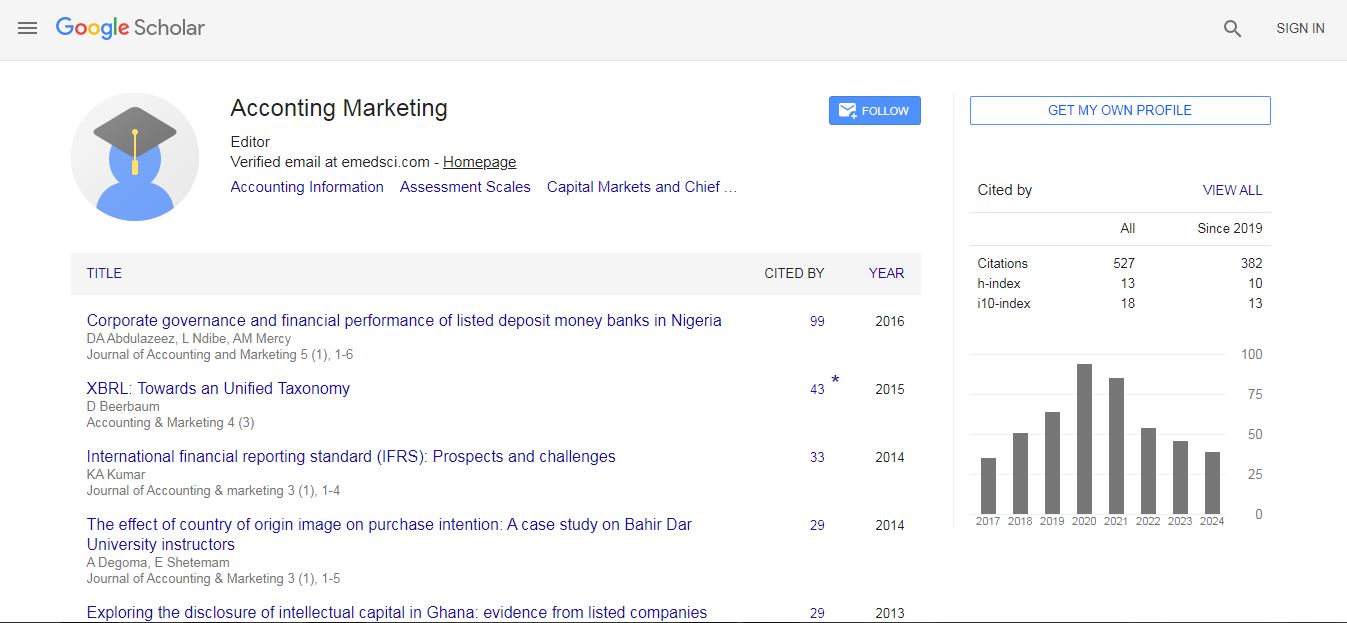
Accounting & Marketing received 487 citations as per Google Scholar report