Short Communication - (2025) Volume 14, Issue 5
Received: 01-Sep-2025, Manuscript No. jamk-25-177324;
Editor assigned: 03-Sep-2025, Pre QC No. P-177324;
Reviewed: 17-Sep-2025, QC No. Q-177324;
Revised: 22-Sep-2025, Manuscript No. R-177324;
Published:
29-Sep-2025
, DOI: 10.37421/2168-9601.2025.14.580
Citation: Park, Min-Jae. ”Storytelling: a Strategic Imperative for Modern Business.” J Account Mark 14 (2025):580.
Copyright: © 2025 Park M. This is an open-access article distributed under the terms of the Creative Commons Attribution License, which permits unrestricted use, distribution and reproduction in any medium, provided the original author and source are credited.
Brand storytelling has emerged as a critical strategy for enhancing consumer engagement and fostering brand loyalty in contemporary marketing. This approach involves crafting compelling narratives that resonate deeply with audiences, creating emotional connections that extend beyond mere transactional interactions. When consumers feel invested and committed to a brand's story, it translates into sustained loyalty and advocacy, reinforcing the brand's position in a competitive market [1].
The power of narrative persuasion is significant in influencing consumer behavior, as evidenced by research exploring its profound effects. Well-structured stories possess the unique ability to alter perceptions, shape attitudes, and guide intentions. By creating relatable experiences that deeply resonate with individuals, these narratives can effectively drive purchasing decisions and cultivate strong brand affinity, making them an invaluable tool for marketers [2].
Digital storytelling plays a crucial role in modern brand engagement, with authenticity and interactivity being paramount factors. Studies emphasize that brands must tell genuine stories and provide opportunities for interactive engagement within digital spaces. This combination significantly boosts consumer involvement, fostering stronger, more meaningful connections between the brand and its audience in an increasingly digital landscape [3].
Storytelling serves as a strategic asset for effectively communicating corporate social responsibility (CSR) initiatives to various stakeholders. Narratives can compellingly convey a company's ethical commitments and its broader social impact. This strategic communication builds essential trust and enhances the organization's reputation across diverse audiences, demonstrating genuine dedication beyond profit motives [4].
In social media marketing, emotional storytelling has a substantial impact on consumer behavior. This approach leverages narrative transportation, where consumers become deeply absorbed in a story, and empathy, where they connect with characters or situations. Both elements amplify engagement and lead to more persuasive outcomes, making emotional narratives a powerful force in digital campaigns [5].
Enhancing customer experience through brand storytelling is significantly moderated by perceived authenticity. Genuine brand narratives create more memorable and positive customer interactions. When consumers perceive a brandâ??s story as authentic, it deepens their appreciation and strengthens their loyalty, transforming routine transactions into meaningful engagements that foster long-term relationships [6].
Storytelling holds a critical role in fostering emotional engagement and encouraging charitable giving, particularly within crowdfunding campaigns. Compelling narratives that highlight beneficiaries or the impact of a cause evoke stronger emotional responses. These heightened emotions, in turn, motivate individuals to donate more readily, showcasing the persuasive power of storytelling in philanthropic contexts [7].
Digital storytelling profoundly affects consumer trust, with authenticity and transparency being key determinants in social media communications. Brands that build trust through honest and open narratives online can cultivate more loyal and confident consumer relationships. This approach is essential for establishing credibility and maintaining positive perceptions in the public digital sphere [8].
In entrepreneurial marketing, storytelling performs a crucial function in building legitimacy and attracting essential resources. Entrepreneurs who skillfully master narrative creation can more effectively communicate their vision and mission. This capability is vital for securing necessary investments and establishing credibility in highly competitive markets, positioning their ventures for success [9].
The potency of storytelling in B2B marketing has been thoroughly investigated, identifying key drivers and its positive effects on customer value. Well-crafted stories simplify complex B2B offerings, creating memorable connections with business customers. Ultimately, this strategic use of narrative enhances the perceived value of products and services, fostering stronger business relationships [10].
The foundation of successful modern marketing lies in understanding how brand storytelling can elevate consumer engagement and solidify brand loyalty. By meticulously crafting narratives that resonate on an emotional level, brands can move beyond superficial interactions. This cultivation of deeper emotional bonds encourages consumers to feel more personally invested, leading to sustained commitment and active brand advocacy over time [1]. Research into narrative persuasion unequivocally demonstrates its substantial influence on various aspects of consumer behavior. The strategic deployment of well-structured stories has been shown to effectively reshape consumer perceptions, influence attitudes, and ultimately guide purchasing intentions. Such narratives create relatable experiences that deeply connect with individuals, thereby acting as a powerful catalyst for driving consumer choices and fostering brand affinity [2]. Within the realm of digital marketing, the interplay between digital storytelling and brand engagement is increasingly critical. This domain emphasizes the indispensable roles of authenticity and interactivity. Brands that succeed in telling genuine stories and actively facilitating interactive engagement in digital environments significantly enhance consumer involvement, thereby building robust and enduring brand connections [3]. Storytelling also serves as an invaluable strategic tool for disseminating information about corporate social responsibility (CSR) to a diverse range of stakeholders. Through carefully constructed narratives, companies can effectively articulate their ethical commitments and communicate their broader social impact. This narrative approach is instrumental in building trust and substantially improving their reputation across various audience segments [4]. Explorations into emotional storytelling within social media marketing reveal its profound capacity to influence consumer behavior. Key mechanisms such as narrative transportation, where consumers become deeply absorbed in a story, and empathy, where they emotionally connect with characters or situations, are vital. These elements collectively amplify engagement and drive more persuasive outcomes for marketing campaigns [5]. Significant improvements in customer experience can be achieved through brand storytelling, with perceived authenticity acting as a crucial moderating factor. When brand narratives are perceived as genuine, they transform customer interactions into more memorable and positive experiences. This authentic connection deepens overall brand appreciation and reinforces customer loyalty, creating a distinct competitive advantage [6]. The pivotal role of storytelling in generating emotional engagement and motivating charitable giving, particularly in the context of crowdfunding, has been clearly established. Narratives that compellingly portray beneficiaries or the specific causes being supported are highly effective in evoking strong emotional responses. These emotions are a powerful driver, leading individuals to contribute more readily to philanthropic efforts [7]. Digital storytellingâ??s influence on consumer trust is profoundly shaped by the twin pillars of authenticity and transparency in social media communications. Brands committed to building trust through honest and open narratives online are more successful in cultivating loyal and confident consumer relationships. This transparent approach is essential for long-term brand credibility and consumer reliance [8]. In the dynamic field of entrepreneurial marketing, storytelling performs a crucial function in establishing legitimacy and attracting vital resources. Entrepreneurs who adeptly craft compelling narratives are better equipped to articulate their vision, thereby securing essential investments and building credibility. This narrative mastery is indispensable for navigating competitive markets and achieving business growth [9]. Investigating the efficacy of storytelling in B2B marketing highlights its significant potency, identifying key drivers and beneficial effects on customer value. Thoughtfully constructed stories simplify inherently complex B2B offerings, forging more memorable connections with business customers. This strategic application of narrative ultimately enhances the perceived value proposition for clients, strengthening inter-organizational relationships [10].
This collection of research underscores the pervasive and critical role of storytelling across various facets of business and marketing. Key findings indicate that compelling narratives are instrumental in enhancing consumer engagement, fostering brand loyalty, and influencing purchasing decisions by creating deep emotional connections. Authenticity and interactivity are consistently highlighted as essential components, particularly within digital and social media contexts, where they build trust and amplify persuasive outcomes. Storytelling proves vital for communicating corporate social responsibility, improving customer experience, and even driving charitable giving and entrepreneurial success. Across B2B and consumer markets, narratives simplify complex information, build legitimacy, and ultimately increase perceived customer value. The cumulative evidence suggests that mastering storytelling is a strategic imperative for modern organizations seeking to connect authentically and effectively with diverse audiences.
None
None
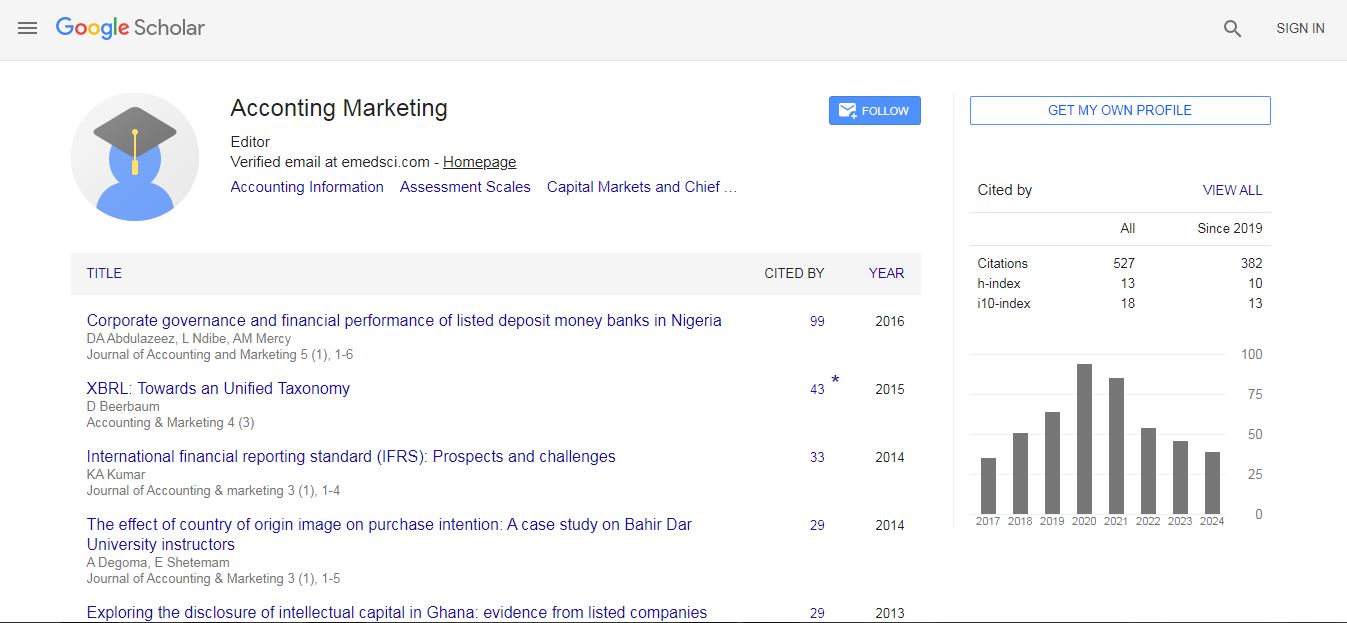
Accounting & Marketing received 487 citations as per Google Scholar report