Opinion - (2025) Volume 14, Issue 4
Received: 02-Jul-2025, Manuscript No. jamk-25-177298;
Editor assigned: 04-Jul-2025, Pre QC No. P-177298;
Reviewed: 18-Jul-2025, QC No. Q-177298;
Revised: 23-Jul-2025, Manuscript No. R-177298;
Published:
30-Jul-2025
, DOI: 10.37421/2168-9601.2025.14.567
Citation: El-Sayed, Ahmed. ”Robust Controls, Risk Management, and Governance Outcomes.” J Account Mark 14 (2025):567.
Copyright: © 2025 El-Sayed A. This is an open-access article distributed under the terms of the Creative Commons Attribution License, which permits unrestricted use, distribution and reproduction in any medium, provided the original author and source are credited.
Research highlights the critical role of internal control quality in shaping a companys financial performance. While robust internal controls are generally associated with improved outcomes their benefits can be significantly attenuated when management engages in earnings manipulation. This implies that the foundational advantages of strong control systems are undermined if financial transparency and integrity are compromised leading to a complex interplay between control effectiveness and reporting ethics [1].
The influence of enterprise risk management ERM on firm value is a prominent area of investigation with studies emphasizing the interplay of governance mechanisms. ERM typically enhances a companys overall valuation and this positive relationship is often reinforced by the presence of independent boards and high quality audit processes. These moderating factors ensure that ERM frameworks are implemented with greater oversight and transparency contributing to more reliable value creation [2].
The increasing prevalence of digital threats has brought cybersecurity risk management to the forefront of corporate governance particularly its implications for financial reporting quality. Investigations reveal a direct correlation where superior cybersecurity practices are instrumental in producing more dependable financial statements. This underscores that robust digital security measures are not merely an IT concern but are fundamental to maintaining accounting accuracy and integrity in the contemporary business environment [3].
A core tenet of effective corporate governance is the prevention of fraudulent activities within organizations particularly publicly listed companies. Empirical evidence consistently demonstrates that well implemented internal control systems serve as a potent deterrent against fraud. These controls are indispensable for safeguarding organizational assets preserving financial integrity and fostering stakeholder trust in the reliability of financial disclosures [4].
The technological landscape fundamentally impacts the reliability of financial information and the assurance provided by audits. Studies focusing on IT general controls ITGCs highlight their significant contribution to enhancing audit quality. Strong ITGCs which encompass crucial areas like data access management and system development protocols ensure the integrity and reliability of information systems that underpin financial reporting thereby improving the overall effectiveness of audits [5].
Internal control weaknesses are frequently identified as precursors to financial restatements indicating significant deficiencies in an entitys financial reporting process. However the dynamics of this relationship can be influenced by external auditing factors. Research indicates that a longer auditor tenure might mitigate the risk of restatements stemming from control weaknesses possibly due to the auditors deeper accumulated knowledge and understanding of the clients operational nuances and control environment [6].
The composition and efficacy of risk committees within corporate governance structures are increasingly scrutinized for their impact on firm performance. Research indicates that specific characteristics of these committees such as the independence of their members and their collective expertise play a pivotal role in enhancing a companys financial health. Through superior risk oversight and more strategic management of potential threats these committees contribute significantly to overall organizational success [7].
The internal audit function is a critical component in the effective implementation and continuous improvement of enterprise risk management ERM frameworks. Studies affirm that internal auditors provide essential contributions by offering assurance on risk management processes generating valuable insights into emerging risks and delivering strategic advice. This robust engagement bolsters organizational resilience and ensures the proactive identification and mitigation of potential challenges [8].
The advent of big data analytics offers transformative potential for enhancing traditional internal control systems. A conceptual framework proposes that by integrating big data capabilities organizations can move beyond conventional reactive control mechanisms to adopt real time monitoring and predictive insights. This modernization allows for more dynamic and effective control activities significantly improving the responsiveness and foresight of internal governance structures [9].
The increasing emphasis on environmental social and governance ESG factors has intertwined sustainability reporting with enterprise risk management ERM practices. Research indicates a positive association demonstrating that companies with robust sustainability reporting tend to exhibit more comprehensive and effective ERM frameworks. This suggests that ESG considerations are progressively being integrated into broader risk strategies reflecting a holistic approach to value creation and risk mitigation [10].
This paper meticulously investigates the intricate relationship between the quality of internal controls and a companys financial performance specifically examining the moderating influence of earnings management. It concludes that while strong internal controls are inherently beneficial their positive impact diminishes considerably when management manipulates earnings. The study thus underscores the vulnerability of even robust control systems to intentional misrepresentation in financial reporting [1]. A comprehensive analysis delves into how enterprise risk management ERM contributes to a firms overall value while carefully considering the roles of board independence and audit quality as moderating variables. The findings suggest that ERM generally elevates firm value a relationship that is notably strengthened when a company benefits from an independent board and high quality external audits. This ensures enhanced effectiveness and transparency in ERM implementation [2]. The article provides an in depth examination of the critical link between a companys cybersecurity risk management strategies and the integrity of its financial reporting. It posits that organizations employing superior cybersecurity practices are more likely to achieve higher quality financial statements. This research highlights that robust digital security protocols are essential extending beyond mere IT functions to fundamentally support accurate and reliable accounting processes [3]. This research empirically explores the direct impact of effective internal controls on preventing fraud within publicly traded corporations. The study unequivocally confirms that organizations with well implemented and operational internal control systems experience a significant reduction in fraudulent activities. This emphasizes the indispensable role of such controls in safeguarding corporate assets maintaining financial probity and upholding stakeholder confidence [4]. The study systematically investigates the pivotal correlation between IT general controls ITGCs and the overall quality of financial audits drawing specific evidence from Saudi Arabia. It demonstrates that robust ITGCs including crucial elements like secure data access system development and change management are instrumental in enhancing audit quality. These controls ensure the integrity reliability and accuracy of financial information systems which are foundational for credible audits [5]. This paper meticulously analyzes the nexus between identified internal control weaknesses and the subsequent occurrence of financial restatements incorporating the moderating effect of auditor tenure. It illustrates that inherent control deficiencies are significant drivers of restatements. Interestingly the study suggests that a prolonged auditor tenure might serve to attenuate this risk possibly by fostering a deeper more nuanced understanding of the clients control environment [6]. An insightful study scrutinizes the influence of risk committees on firm performance specifically focusing on the distinct characteristics embedded within these committees. The findings reveal that attributes such as the independence of committee members and their specialized expertise significantly contribute to elevating a companys overall financial performance. This is achieved through enhanced risk oversight capabilities and more strategic management approaches [7]. This research provides a thorough investigation into the vital contributions of the internal audit function to the effectiveness of enterprise risk management ERM within Malaysian listed companies. It underscores that internal auditors play an indispensable role by offering critical assurance on risk processes providing insightful perspectives on risk landscapes and delivering strategic advice. Their engagement ultimately fortifies organizational resilience against various threats [8]. The article introduces a pioneering conceptual framework designed for the seamless integration of big data analytics into existing internal control systems. It proposes that by harnessing the power of big data organizations can transcend traditional often reactive control methodologies. This framework enables the implementation of real time monitoring capabilities and predictive insights thereby substantially enhancing the proactive nature and overall effectiveness of internal controls [9]. This study explores the evolving synergy between a companys sustainability reporting initiatives and its established enterprise risk management ERM practices utilizing evidence from European listed firms. The research establishes a clear positive correlation indicating that organizations committed to comprehensive sustainability reporting also tend to possess more sophisticated and effective ERM frameworks. This signifies an increasing integration of ESG factors into core risk strategies [10].
The provided research collectively emphasizes the multifaceted importance of robust control and risk management mechanisms in enhancing firm performance financial reporting quality and fraud prevention. Internal control quality significantly boosts performance though its benefits are mitigated by earnings management. Effective internal controls are also crucial for preventing fraud in public companies. Similarly IT general controls are linked to higher audit quality by ensuring reliable financial information systems. Internal control weaknesses often lead to financial restatements a risk that longer auditor tenure might help mitigate. Enterprise risk management ERM positively influences firm value a relationship strengthened by board independence and audit quality. The internal audit function plays a critical role in enhancing ERM effectiveness by providing assurance and insights. Furthermore integrating big data analytics offers a conceptual pathway to transform internal controls through real time monitoring and predictive capabilities. Cybersecurity risk management is directly correlated with financial reporting quality highlighting its significance beyond IT. Finally robust sustainability reporting is increasingly associated with comprehensive ERM reflecting the integration of environmental social and governance factors into overall risk strategies. These studies collectively underscore the dynamic and interconnected nature of internal controls risk management and overall corporate governance in modern organizations.
None
None
None
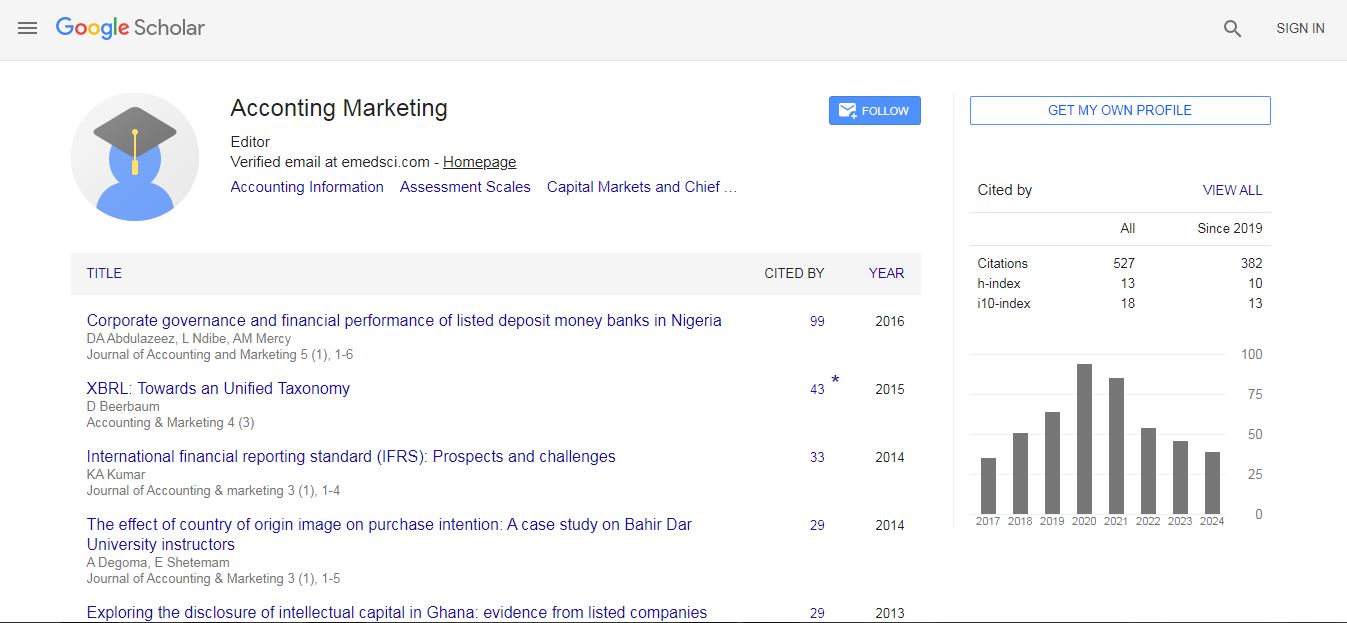
Accounting & Marketing received 487 citations as per Google Scholar report