Perspective - (2025) Volume 14, Issue 4
Received: 01-Jul-2025, Manuscript No. VTE-26-180102;
Editor assigned: 03-Jul-2025, Pre QC No. P-180102;
Reviewed: 17-Jul-2025, QC No. Q-180102;
Revised: 22-Jul-2025, Manuscript No. R-180102;
Published:
29-Jul-2025
, DOI: 10.37421/2376-1318.2025.14.385
Citation: Kim, Joseph. ”Micronutrients: Supporting Immune Health in Aging.” Vitam Miner 14 (2025):385.
Copyright: © 2025 Kim J. This is an open-access article distributed under the terms of the Creative Commons Attribution License, which permits unrestricted use, distribution and reproduction in any medium, provided the original author and source are credited.
As individuals age, their immune systems undergo a complex and multifaceted process known as immunosenescence. This natural decline in immune function significantly impacts the body's ability to combat infections effectively and diminishes the response to vaccinations. This article delves into the critical roles that various vitamins and minerals play in modulating this age-related immune decline, exploring their influence on cellular processes, inflammatory responses, and the overall resilience of the immune system. Specific micronutrients have been identified as particularly vital for maintaining robust immune health in older adults [1].
Among the essential micronutrients, vitamin D stands out for its profound effects on immune cell function and inflammatory pathways, especially within the aging population. Research has illuminated how vitamin D deficiency in older adults is linked to impairments in adaptive immunity and a heightened susceptibility to various infections, underscoring the importance of targeted supplementation strategies to bolster immune defenses [2].
Zinc emerges as another critical mineral, indispensable for the development and proper functioning of immune cells. Investigations have focused on the role of zinc status in preserving T-cell mediated immunity and ensuring adequate antibody production in aging individuals. It is noted that suboptimal zinc intake can significantly exacerbate the age-related decline in immune capabilities [3].
The B vitamins, particularly folate, vitamin B6, and vitamin B12, also hold considerable importance for immune health during the aging process. Deficiencies in these essential vitamins can negatively affect DNA synthesis and repair mechanisms, which are crucial for the proliferation and function of immune cells, ultimately leading to a weakened immune response in the elderly [4].
Selenium's well-established antioxidant and anti-inflammatory properties are paramount for maintaining immune system integrity as individuals age. Adequate selenium intake is shown to support the functionality of critical immune cells such as natural killer cells and T-cells, whereas its deficiency can promote oxidative stress and immune dysfunction [5].
The intricate relationship between iron status and immune aging is a key area of exploration, with evidence suggesting that both iron deficiency and iron overload can detrimentally affect immune responses. The article examines how iron levels influence lymphocyte function and cytokine production, emphasizing the necessity of maintaining iron balance for optimal immune health in older adults [6].
Magnesium's role in regulating immune cell signaling and inflammatory processes is a significant aspect of immune aging. Studies indicate that magnesium deficiency can impair the activation of immune cells and contribute to the development of chronic low-grade inflammation, a characteristic feature of immunosenescence [7].
Vitamin E, known for its potent antioxidant capabilities, plays a crucial role in mitigating oxidative stress that affects aging immune cells. Research highlights that vitamin E supplementation can enhance T-cell function and improve antibody production, thereby bolstering immune responses in older individuals [8].
Copper's essential contribution to the development and function of immune cells, including the activity of neutrophils and macrophages, is also under investigation. Studies suggest that copper deficiency can lead to compromised immune surveillance and an increased vulnerability to infections in the elderly population [9].
Finally, the synergistic effects of multiple vitamins and minerals on immune aging are being increasingly recognized. This comprehensive review emphasizes that a balanced intake of a variety of micronutrients is fundamental for sustaining a robust immune system, preventing the worsening of age-related immune decline, and improving the efficacy of vaccines in older adults [10].
The aging process is characterized by a gradual decline in immune system function, termed immunosenescence, which compromises the body's ability to fight off pathogens and respond to vaccines. This article provides an in-depth exploration of how key vitamins and minerals are integral to modulating immune aging, focusing on their impact on cellular functions, inflammatory responses, and the overall resilience of the immune system. Particular emphasis is placed on identifying specific micronutrients that are crucial for maintaining immune health in older adults [1].
The profound impact of vitamin D on immune cell activity and inflammation, especially in the context of aging, is a significant area of focus. This study examines how vitamin D deficiency in the elderly population contributes to impaired adaptive immunity and an increased susceptibility to infections, and discusses the potential of supplementation strategies to strengthen immune defenses [2].
Zinc is recognized as a vital mineral for the development and sustained function of immune cells. This research investigates the importance of zinc status in maintaining T-cell mediated immunity and antibody production within aging populations, highlighting that insufficient zinc intake can exacerbate age-related immune deterioration [3].
The role of essential B vitamins, specifically folate, vitamin B6, and vitamin B12, in supporting immune health during aging is thoroughly examined. Deficiencies in these vitamins can hinder DNA synthesis and repair processes, consequently affecting immune cell proliferation and overall function, leading to a compromised immune response in older adults [4].
Selenium's antioxidant and anti-inflammatory properties are indispensable for the maintenance of a healthy immune system throughout the aging process. This article elucidates how adequate selenium intake supports the optimal function of natural killer cells and T-cells, whereas deficiency can lead to heightened oxidative stress and immune system dysfunction [5].
The complex interplay between iron metabolism and immune aging is critically explored, noting that both insufficient iron and excessive iron levels can negatively influence immune responses. The article analyzes how iron availability impacts lymphocyte functionality and cytokine secretion, stressing the importance of maintaining iron homeostasis for robust immune health in older adults [6].
Magnesium's involvement in immune cell signaling and its influence on inflammatory processes during aging are investigated. This paper details how a lack of magnesium can impede immune cell activation and contribute to the chronic low-grade inflammation that is a hallmark of immunosenescence [7].
Vitamin E's significant antioxidant capabilities and its role in reducing oxidative stress in aging immune cells are discussed. This study emphasizes how vitamin E supplementation can enhance T-cell performance and improve antibody generation, thereby boosting immune responses in elderly individuals [8].
Copper's essential function in the development and operation of immune cells, including the activity of neutrophils and macrophages, is examined. This research explores how insufficient copper levels can result in weakened immune surveillance and an increased susceptibility to infections among the elderly [9].
Lastly, the article explores the synergistic effects of various vitamins and minerals on immune resilience during aging. It underscores that a balanced dietary intake of multiple micronutrients is crucial for maintaining a strong immune system, preventing the progression of age-related immune decline, and enhancing vaccine effectiveness in older populations [10].
This collection of articles explores the significant impact of various vitamins and minerals on immune aging, a process known as immunosenescence. Key micronutrients such as vitamin D, zinc, B vitamins (folate, B6, B12), selenium, iron, magnesium, vitamin E, and copper are discussed in relation to their roles in immune cell function, inflammation, and overall immune system resilience in older adults. Deficiencies or imbalances in these nutrients can exacerbate age-related immune decline, increasing susceptibility to infections and reducing vaccine efficacy. Maintaining adequate levels of these vitamins and minerals through diet or supplementation is crucial for supporting a robust immune system in aging populations. The synergistic effects of multiple micronutrients further enhance immune health, highlighting the importance of a balanced nutritional approach.
None
None
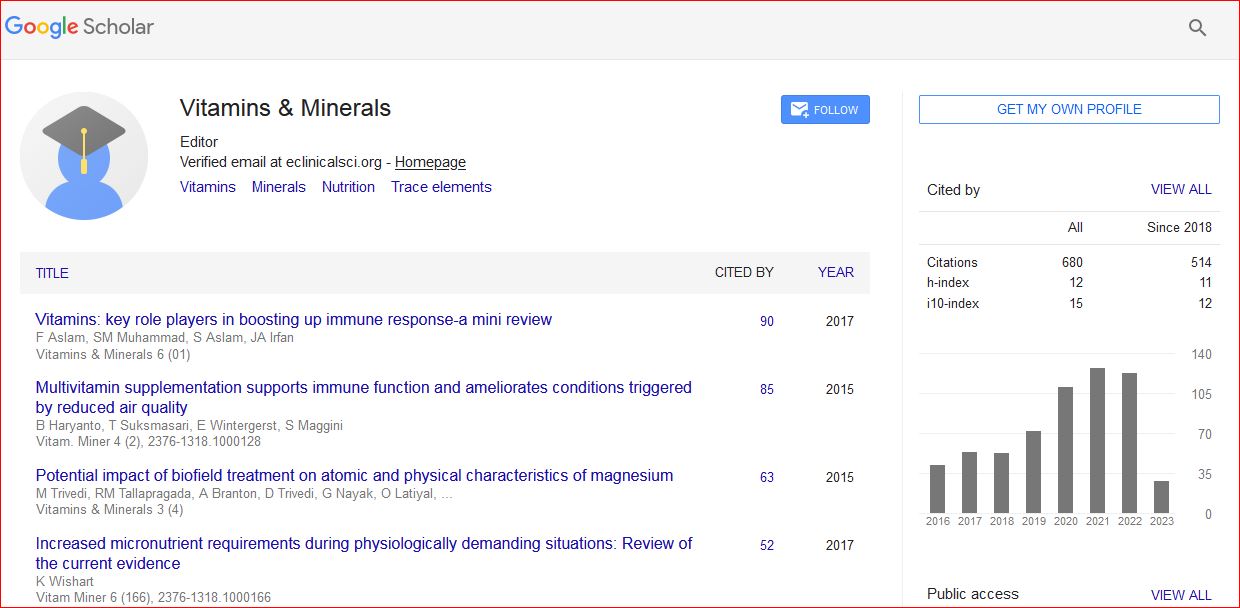
Vitamins & Minerals received 790 citations as per Google Scholar report