Perspective - (2025) Volume 14, Issue 4
Received: 02-Jul-2025, Manuscript No. jamk-25-177301;
Editor assigned: 04-Jul-2025, Pre QC No. P-177301;
Reviewed: 18-Jul-2025, QC No. Q-177301;
Revised: 23-Jul-2025, Manuscript No. R-177301;
Published:
30-Jul-2025
, DOI: 10.37421/2168-9601.2025.14.569
Citation: Müller, Sophie. ”Forensic Accounting: Evolving for Fraud Detection and Prevention.” J Account Mark 14 (2025):569.
Copyright: © 2025 Müller S. This is an open-access article distributed under the terms of the Creative Commons Attribution License, which permits unrestricted use, distribution and reproduction in any medium, provided the original author and source are credited.
Forensic accounting plays a crucial role in enhancing fraud detection and prevention mechanisms, particularly within the public sector. Its specific techniques and frameworks are essential for identifying financial irregularities. Moreover, it offers strategic recommendations for strengthening governance and internal controls to effectively mitigate public sector fraud risks [1].
Forensic accountants are indispensable in the fight against cybercrime and digital fraud, especially within the financial services sector. These professionals utilize specialized skills and investigative methods to trace digital footprints and analyze complex financial data. Their expert testimony is vital in safeguarding financial integrity in the digital age [2].
The advent of emerging technologies like Artificial Intelligence and Blockchain offers transformative potential for forensic accounting. These innovations can significantly enhance capabilities for fraud detection and prevention. They provide more sophisticated analytical tools and immutable transaction records, effectively identifying and deterring financial misconduct [3].
Empirical evidence from Nigeria highlights the efficacy of various forensic accounting techniques in financial fraud investigations. Methods such as data mining, financial statement analysis, and expert interviewing are practically applied. They demonstrate a critical role in uncovering complex fraudulent schemes and supporting subsequent legal proceedings [4].
Forensic accounting is integral to the proactive management of corporate fraud risk, as explored through systematic review. The literature synthesizes key strategies, tools, and challenges faced by organizations. It emphasizes leveraging forensic accounting expertise to prevent, detect, and respond to diverse forms of financial misconduct [5].
Big data analytics significantly influences forensic accounting capabilities, especially concerning fraud detection. The integration of big data tools enhances the ability to process vast datasets and uncover hidden patterns. This leads to the identification of fraudulent activities with greater speed and accuracy compared to traditional methods [6].
The evolving landscape of forensic accounting is being reshaped by emerging technologies such as AI, machine learning, and blockchain. These advancements present both opportunities and challenges for fraud examiners. Continuous skill development and adaptation are crucial to leverage these tools effectively in future fraud detection efforts [7].
A robust relationship exists between forensic accounting and corporate governance in fraud prevention and detection. Strong governance structures, combined with the specialized expertise of forensic accountants, create a powerful deterrent. This enhances an organization's ability to uncover and address fraudulent activities efficiently [8].
From a forensic accounting viewpoint, key factors contributing to financial statement fraud have been investigated. Identified determinants include weak internal controls and management pressure. Forensic accounting methodologies can proactively detect and mitigate these underlying causes of fraud [9].
The connection between forensic accounting, fraud risk management, and corporate governance practices is crucial, particularly in Nigeria. Integrating forensic accounting expertise into governance frameworks strengthens an organization's capacity. This helps to identify, assess, and mitigate fraud risks effectively, enhancing corporate accountability and transparency [10].
Forensic accounting serves as a critical discipline for bolstering fraud detection and prevention mechanisms within the public sector. Practitioners deploy specialized techniques and established frameworks to pinpoint financial irregularities. Their insights are instrumental in formulating strategic recommendations to fortify governance and internal controls, thereby reducing public sector fraud vulnerabilities [1]. In the financial services sector, forensic accountants are pivotal in confronting cybercrime and digital fraud. These experts employ a unique combination of specialized skills and advanced investigative methodologies to meticulously trace digital footprints and scrutinize complex financial data. Their capacity to provide authoritative expert testimony is paramount for maintaining financial integrity in the digital era [2]. The integration of cutting-edge technologies, such as Artificial Intelligence and Blockchain, holds immense promise for advancing forensic accounting practices. These innovations are poised to significantly improve capabilities in both detecting and preventing fraud. They offer more sophisticated analytical instruments and provide immutable records of transactions, thereby making the identification and deterrence of financial misconduct more potent [3]. Research conducted in Nigeria offers empirical validation regarding the effectiveness of various forensic accounting techniques in financial fraud investigations. The study scrutinizes the practical application of methods like data mining, thorough financial statement analysis, and expert interviewing. These techniques consistently demonstrate their vital role in exposing intricate fraudulent schemes and providing robust support for legal proceedings [4]. A comprehensive systematic review underscores the indispensable contribution of forensic accounting to the proactive management of corporate fraud risk. This review synthesizes extant literature to delineate key strategies, essential tools, and prevalent challenges encountered by organizations. It highlights the strategic utilization of forensic accounting expertise to anticipate, uncover, and respond to diverse manifestations of financial misconduct [5]. The adoption of big data analytics profoundly influences the operational capabilities of forensic accounting, particularly in the realm of fraud detection. Integrating these powerful tools substantially enhances the capacity to process voluminous datasets, thereby revealing previously concealed patterns. This integration facilitates the identification of fraudulent activities with superior speed and accuracy compared to conventional methodologies [6]. The future trajectory of forensic accounting is undeniably shaped by the emergence of new technologies, including artificial intelligence, machine learning, and blockchain. This evolving landscape presents both significant opportunities and complex challenges for fraud examiners. It mandates a continuous commitment to skill development and adaptive learning to harness these advanced tools effectively in prospective fraud detection endeavors [7]. There is a critical interplay between robust corporate governance and specialized forensic accounting expertise in the context of preventing and detecting fraud. This synergistic relationship creates a powerful barrier against financial misconduct. It significantly enhances an organization's intrinsic capability to not only uncover but also effectively address fraudulent activities [8]. Investigations into the fundamental determinants of financial statement fraud, viewed through a forensic accounting lens, reveal crucial insights. Researchers pinpoint various internal and external factors, such as inadequate internal controls and undue management pressure. The findings advocate for applying forensic accounting methodologies to proactively identify and mitigate these underlying causes of fraudulent behavior [9]. In Nigeria, the intrinsic link between forensic accounting, comprehensive fraud risk management, and sound corporate governance practices is particularly emphasized. Embedding forensic accounting expertise within organizational governance frameworks measurably strengthens the capacity to identify, meticulously assess, and effectively mitigate potential fraud risks. This integration ultimately bolsters overall corporate accountability and transparency [10].
Forensic accounting is crucial for fraud detection and prevention across various sectors, including public services and financial industries. It leverages specialized techniques like data mining, financial statement analysis, and expert interviewing to uncover complex financial irregularities and support legal proceedings. The field is significantly evolving with the integration of emerging technologies such as Artificial Intelligence, Blockchain, and Big Data analytics, which enhance capabilities for processing vast datasets, identifying hidden patterns, and deterring misconduct more effectively. These technological advancements provide sophisticated analytical tools and immutable transaction records, improving the speed and accuracy of fraud detection. Furthermore, forensic accounting plays a vital role in corporate fraud risk management and strengthens corporate governance frameworks. By identifying key determinants of financial statement fraud, such as weak internal controls, forensic methodologies proactively mitigate underlying causes. Its application not only safeguards financial integrity but also promotes accountability and transparency within organizations, preparing fraud examiners for future challenges.
None
None
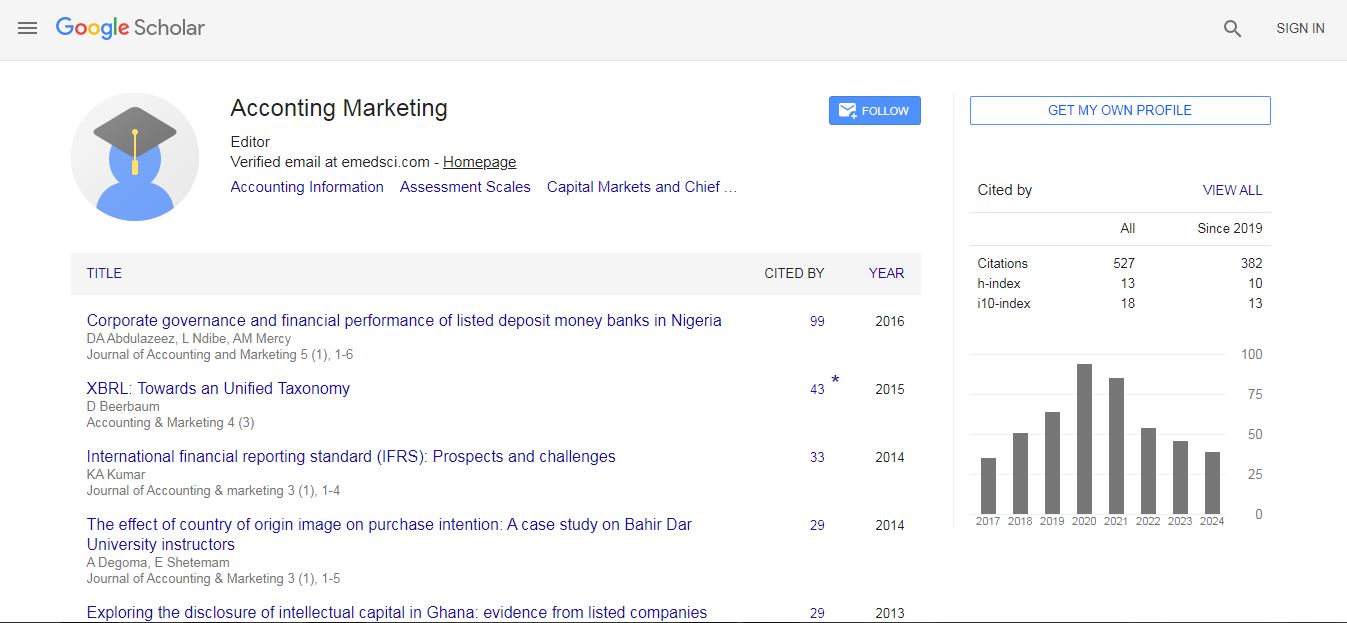
Accounting & Marketing received 487 citations as per Google Scholar report