Brief Report - (2025) Volume 15, Issue 5
Received: 01-Sep-2025, Manuscript No. Jsmds-25-175814;
Editor assigned: 03-Sep-2025, Pre QC No. P-175814;
Reviewed: 17-Sep-2025, QC No. Q-175814;
Revised: 22-Sep-2025, Manuscript No. R-175814;
Published:
29-Sep-2025
, DOI: 10.37421/2161-0673.2025.15.447
Citation: Tanaka, Yuuko. ”Exercise Drives Broad Physiological Adaptations for Health.” J Sports Med Doping Stud 15 (2025):447
Copyright: © 2025 Tanaka Y. This is an open-access article distributed under the terms of the Creative Commons Attribution License, which permits unrestricted use,
distribution and reproduction in any medium, provided the original author and source are credited.
Physical activity is a powerful driver of physiological adaptation, orchestrating complex changes across numerous bodily systems. A primary focus in exercise science revolves around skeletal muscle, where endurance training initiates intricate molecular pathways, modulating gene expression, protein synthesis, and energy metabolism, ultimately enhancing performance and resilience [1].
Beyond these overarching adaptations, specific cellular mechanisms are crucial for muscle health. For instance, the mitophagy-lysosomal axis plays a critical role in skeletal muscle's response to exercise [5].
This process involves the selective degradation of damaged mitochondria, which is essential for maintaining cellular quality control and optimizing mitochondrial function. Understanding this pathway offers insights into how muscles adapt to stress, improve oxidative capacity, and has implications for conditions like aging and metabolic disorders. In the context of aging, exercise serves as a potent intervention against sarcopenia, the age-related loss and dysfunction of skeletal muscle [8].
Research details how various forms of exercise can counteract declines by addressing molecular mechanisms such as mitochondrial impairment and altered protein turnover, thereby supporting muscle health and functional independence in older adults. Moreover, the influence of exercise extends to genomic adaptations, profoundly affecting gene expression and epigenetic marks in skeletal muscle and other tissues [9].
These fundamental changes are paramount to the long-term physiological benefits of physical activity, ranging from improved metabolic health to enhanced endurance, and open new avenues for personalized exercise prescriptions and therapeutic strategies. Systemic adaptations to exercise are equally significant, impacting vital organ functions. The cardiovascular system undergoes comprehensive adaptations to various forms of exercise, including both endurance and strength training [2].
These adaptations encompass structural and functional changes in the heart and blood vessels, where understanding physiological hypertrophy versus potential adverse remodeling is key, carrying substantial clinical implications for athletes and individuals with cardiovascular disease. Brain health also significantly benefits from physical exercise, through mechanisms such as neurogenesis, synaptic plasticity, and improved cerebral blood flow [4].
This engagement of neurological processes enhances cognitive functions, offers protection against neurodegeneration, and improves mood. Synthesizing evidence from various studies provides a comprehensive mechanistic view of exercise's wide-ranging impact on the brain. Bone tissue demonstrates intricate adaptations to mechanical loading induced by exercise, a process essential for both healthy bone maintenance and adaptation in disease states [6].
Studies reveal how osteocytes sense mechanical forces, translating them into cellular responses that regulate bone formation and resorption, which is crucial for designing effective exercise interventions to prevent and treat bone disorders like osteoporosis. Furthermore, exercise drives significant metabolic adaptations within adipose tissue, moving beyond its traditional role as a simple energy store [7].
These adaptations involve changes in lipolysis, fatty acid oxidation, and the browning of white adipose tissue, all contributing to improved metabolic health. Understanding these processes provides crucial insights into how physical activity can combat obesity and related metabolic disorders. The broader metabolic landscape is also profoundly shaped by physical activity. Exercise highlights its profound influence on overall metabolic health, exploring how physical activity impacts glucose homeostasis, lipid metabolism, and insulin sensitivity [3].
The molecular signals and adaptations occurring in various tissues, such as muscle and adipose tissue, collectively improve metabolic function, and offer insights into preventing and managing metabolic diseases. Finally, the emerging field of exercise and its profound influence on the gut microbiota is gaining significant attention [10].
Physical activity can modulate the composition and function of the gut microbiome, leading to beneficial effects on metabolic health, immune function, and inflammation. Discussions on the potential mechanisms involved and promising future research directions underscore the exciting interdisciplinary nature of this area.
Skeletal muscles are highly dynamic tissues, capable of significant adaptation in response to physical activity. Endurance training, for instance, initiates a complex cascade of molecular pathways that alter gene expression, protein synthesis, and energy metabolism. These intricate shifts ultimately lead to enhanced performance, greater endurance capacity, and increased muscle resilience. Comprehending these fundamental mechanisms is key to optimizing training protocols for athletes and developing targeted interventions for muscle-related conditions [1]. Further refining our understanding of muscle adaptation, the mitophagy-lysosomal axis has emerged as a critical pathway. Exercise modulates the selective degradation of damaged mitochondria, a vital process for maintaining cellular quality control and optimizing mitochondrial function. This pathway is pivotal for understanding how muscles respond to various stressors and improve their oxidative capacity, holding important implications for conditions like age-related muscle decline and broader metabolic disorders [5]. This leads into the intricate relationship between skeletal muscle aging, known as sarcopenia, and the benefits of exercise. Research details the molecular mechanisms driving muscle loss and dysfunction with age, such as mitochondrial impairment and altered protein turnover. Critically, various forms of exercise have been shown to counteract these age-related declines, offering significant clinical implications for maintaining muscle health and functional independence in older adults [8].
Beyond muscular adaptations, exercise exerts profound effects on other vital systems, starting with the cardiovascular system. This system demonstrates comprehensive adaptations to diverse forms of exercise, ranging from endurance to strength training. It involves structural and functional changes in the heart and blood vessels. Key discussions differentiate between beneficial physiological hypertrophy and the potential for adverse remodeling. The clinical implications of these adaptations are substantial, relevant for athletes striving for peak performance and individuals managing cardiovascular disease, providing a nuanced perspective on exercise's broad impact [2]. Concurrently, physical exercise offers substantial benefits to brain health. Its underlying mechanisms involve stimulating neurogenesis, enhancing synaptic plasticity, and improving cerebral blood flow. These actions collectively lead to improved cognitive functions, provide protection against neurodegeneration, and positively influence mood. Various studies synthesize compelling evidence, offering a comprehensive mechanistic view of how exercise impacts the brain and its overall well-being [4].
Metabolic health is another cornerstone significantly influenced by physical activity. Exercise profoundly impacts glucose homeostasis, lipid metabolism, and insulin sensitivity. It triggers molecular signals and adaptations in various tissues, including muscle and adipose tissue, which work in concert to improve overall metabolic function. Future research avenues continue to explore the full potential of exercise in preventing and managing a spectrum of metabolic diseases [3]. Specifically examining adipose tissue, studies show that exercise drives significant metabolic adaptations within this tissue, moving beyond its conventional role as a simple energy store. These adaptations include changes in lipolysis, enhancing fatty acid oxidation, and promoting the browning of white adipose tissue. All these contribute significantly to improved metabolic health. Understanding these adaptations provides crucial insights into how regular physical activity can effectively combat obesity and its associated metabolic disorders [7].
The skeletal system also responds remarkably to the physical demands of exercise. Bone tissue exhibits intricate mechanisms of adaptation to mechanical loading, which is crucial for both maintaining healthy bone density and addressing adaptation in various disease states. The process involves osteocytes, specialized bone cells, sensing mechanical forces and translating them into cellular responses that intricately regulate bone formation and resorption. A deep understanding of these principles is essential for designing effective exercise interventions aimed at preventing and treating common bone disorders like osteoporosis [6]. Furthermore, the reach of exercise extends to the very blueprint of our biology: genomics. Exercise profoundly influences genomic adaptations, modulating gene expression and epigenetic marks not only in skeletal muscle but across a variety of other tissues. These changes are fundamental to the long-term physiological benefits observed with consistent physical activity, ranging from improved metabolic health to enhanced endurance capabilities. Recognizing these genomic responses opens new and exciting avenues for developing personalized exercise prescriptions and innovative therapeutic strategies [9].
An increasingly recognized area of exercise research involves its profound influence on the gut microbiota. This burgeoning field reveals how physical activity can modulate the composition and function of the gut microbiome. Such modulation leads to a range of beneficial effects, including improvements in metabolic health, enhanced immune function, and reduced inflammation. The article discusses the potential underlying mechanisms involved and highlights promising future research directions in this exciting interdisciplinary area, suggesting that the gut microbiome is a key mediator of systemic exercise benefits [10].
Skeletal muscles are highly dynamic tissues, capable of significant adaptation in response to physical activity. Endurance training, for instance, initiates a complex cascade of molecular pathways that alter gene expression, protein synthesis, and energy metabolism. These intricate shifts ultimately lead to enhanced performance, greater endurance capacity, and increased muscle resilience. Comprehending these fundamental mechanisms is key to optimizing training protocols for athletes and developing targeted interventions for muscle-related conditions [1]. Further refining our understanding of muscle adaptation, the mitophagy-lysosomal axis has emerged as a critical pathway. Exercise modulates the selective degradation of damaged mitochondria, a vital process for maintaining cellular quality control and optimizing mitochondrial function. This pathway is pivotal for understanding how muscles respond to various stressors and improve their oxidative capacity, holding important implications for conditions like age-related muscle decline and broader metabolic disorders [5]. This leads into the intricate relationship between skeletal muscle aging, known as sarcopenia, and the benefits of exercise. Research details the molecular mechanisms driving muscle loss and dysfunction with age, such as mitochondrial impairment and altered protein turnover. Critically, various forms of exercise have been shown to counteract these age-related declines, offering significant clinical implications for maintaining muscle health and functional independence in older adults [8].
Beyond muscular adaptations, exercise exerts profound effects on other vital systems, starting with the cardiovascular system. This system demonstrates comprehensive adaptations to diverse forms of exercise, ranging from endurance to strength training. It involves structural and functional changes in the heart and blood vessels. Key discussions differentiate between beneficial physiological hypertrophy and the potential for adverse remodeling. The clinical implications of these adaptations are substantial, relevant for athletes striving for peak performance and individuals managing cardiovascular disease, providing a nuanced perspective on exercise's broad impact [2]. Concurrently, physical exercise offers substantial benefits to brain health. Its underlying mechanisms involve stimulating neurogenesis, enhancing synaptic plasticity, and improving cerebral blood flow. These actions collectively lead to improved cognitive functions, provide protection against neurodegeneration, and positively influence mood. Various studies synthesize compelling evidence, offering a comprehensive mechanistic view of how exercise impacts the brain and its overall well-being [4].
Metabolic health is another cornerstone significantly influenced by physical activity. Exercise profoundly impacts glucose homeostasis, lipid metabolism, and insulin sensitivity. It triggers molecular signals and adaptations in various tissues, including muscle and adipose tissue, which work in concert to improve overall metabolic function. Future research avenues continue to explore the full potential of exercise in preventing and managing a spectrum of metabolic diseases [3]. Specifically examining adipose tissue, studies show that exercise drives significant metabolic adaptations within this tissue, moving beyond its conventional role as a simple energy store. These adaptations include changes in lipolysis, enhancing fatty acid oxidation, and promoting the browning of white adipose tissue. All these contribute significantly to improved metabolic health. Understanding these adaptations provides crucial insights into how regular physical activity can effectively combat obesity and its associated metabolic disorders [7].
The skeletal system also responds remarkably to the physical demands of exercise. Bone tissue exhibits intricate mechanisms of adaptation to mechanical loading, which is crucial for both maintaining healthy bone density and addressing adaptation in various disease states. The process involves osteocytes, specialized bone cells, sensing mechanical forces and translating them into cellular responses that intricately regulate bone formation and resorption. A deep understanding of these principles is essential for designing effective exercise interventions aimed at preventing and treating common bone disorders like osteoporosis [6]. Furthermore, the reach of exercise extends to the very blueprint of our biology: genomics. Exercise profoundly influences genomic adaptations, modulating gene expression and epigenetic marks not only in skeletal muscle but across a variety of other tissues. These changes are fundamental to the long-term physiological benefits observed with consistent physical activity, ranging from improved metabolic health to enhanced endurance capabilities. Recognizing these genomic responses opens new and exciting avenues for developing personalized exercise prescriptions and innovative therapeutic strategies [9].
An increasingly recognized area of exercise research involves its profound influence on the gut microbiota. This burgeoning field reveals how physical activity can modulate the composition and function of the gut microbiome. Such modulation leads to a range of beneficial effects, including improvements in metabolic health, enhanced immune function, and reduced inflammation. The article discusses the potential underlying mechanisms involved and highlights promising future research directions in this exciting interdisciplinary area, suggesting that the gut microbiome is a key mediator of systemic exercise benefits [10].
Exercise profoundly influences human physiology, driving a wide range of adaptations across multiple organ systems. It significantly impacts skeletal muscle, enhancing endurance through molecular pathways that alter gene expression and energy metabolism, and improving cellular quality control via the mitophagy-lysosomal axis [1, 5]. Physical activity also effectively counteracts age-related muscle loss and dysfunction, providing critical clinical implications for older adults [8]. Beyond muscle, the cardiovascular system adapts structurally and functionally to various exercise forms, with implications for heart health in athletes and patients alike [2]. Exercise benefits brain health by promoting neurogenesis, synaptic plasticity, and improved cerebral blood flow, leading to enhanced cognitive function and mood [4]. Bone tissue adapts to mechanical loading, with osteocytes regulating bone formation and resorption, which is essential for preventing and treating osteoporosis [6]. Metabolic health is greatly improved, as exercise influences glucose homeostasis, lipid metabolism, and insulin sensitivity across muscle and adipose tissues [3]. Adipose tissue itself undergoes metabolic adaptations, including changes in lipolysis and browning, contributing to a healthier metabolic profile [7]. Furthermore, exercise induces profound genomic adaptations, modulating gene expression and epigenetic marks in various tissues, underlying long-term physiological benefits [9]. Finally, physical activity exerts a significant influence on the gut microbiota, altering its composition and function to benefit metabolic health, immune function, and inflammation [10]. Collectively, these adaptations underscore the widespread and fundamental benefits of exercise for overall health and disease prevention.
None
None
Indexed at, Google Scholar, Crossref
Indexed at, Google Scholar, Crossref
Indexed at, Google Scholar, Crossref
Indexed at, Google Scholar, Crossref
Indexed at, Google Scholar, Crossref
Indexed at, Google Scholar, Crossref
Indexed at, Google Scholar, Crossref
Indexed at, Google Scholar, Crossref
Indexed at, Google Scholar, Crossref
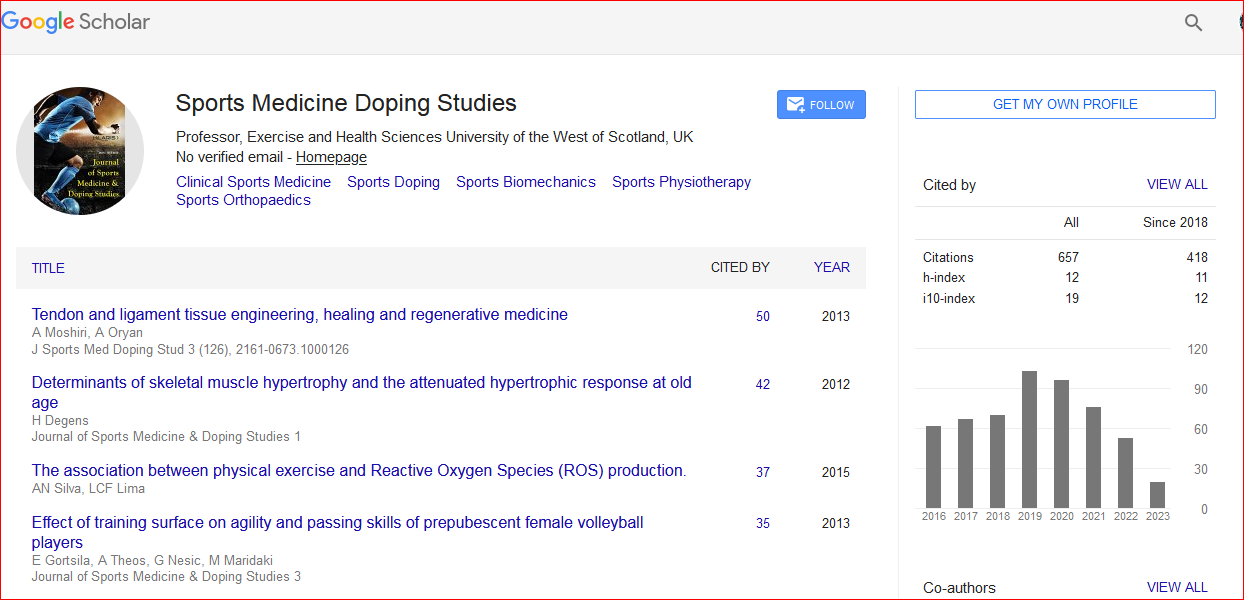
Journal of Sports Medicine & Doping Studies received 1022 citations as per Google Scholar report